
BLOGS
Churches across the country are stepping up. Read their stories and access other climate and energy resources here.

Sustaining Our Heritage: How Historic Buildings Can Support The Energy Transition
Accelerating the uptake of built environments that are all-electric, reducing energy demand, storing and sharing clean energy, and producing more energy than they use, will rely on deep retrofitting existing buildings as much as it will on designing new ones. Read more on historic buildings and The Energy Transition.
In the year 2050, all human activities need to be carbon neutral – meaning that we capture as much carbon as we burn. To accomplish this, we will need to reduce our usage and dependency on energy generated by fossil fuel sources within the built environment.
Under Building The Transition, the theme of World Green Building Week 2023 (September 11 - 15), The World Green Building Council highlighted three transitions that are essential to accelerate a sustainable built environment. Critical on the pathway toward carbon neutrality, The Energy Transition focuses on “accelerating the uptake of built environments that are all-electric, reducing energy demand, storing and sharing clean energy, and producing more energy than they use.”
Preserving the Past, Shaping the Future
When you envision a carbon-neutral world, you might be picturing a scene from Star Trek, with flying cars and glasses with built-in computers. On the contrary, our world in 27 years will look a lot like what we see right now, only different. Many of the buildings that exist today — the buildings we live in, work in, and worship in, will still be standing and operating. While we aggressively design buildings that are net-zero, net-positive, and carbon-neutral, we will simultaneously be retrofitting existing buildings to strive towards those same standards. The Energy Transition will rely on deep retrofitting existing buildings as much as it will on designing new ones.
Historic Buildings and The Energy Transition
Like a significant number of United Church buildings, historic buildings, often operating on conventional and inefficient fossil fuel-based energy systems, are typically correlated to high energy consumption and poor energy performance. Retaining, retrofitting, and repurposing these buildings, rather than replacing them can present significant energy-saving and carbon-reduction opportunities.
Energy efficiency coupled with building electrification are the main strategies for transitioning historic buildings towards the future. The first course of action is to make buildings as efficient as possible. This means well-insulating and air-sealing buildings to help eliminate heating and cooling intensities and keep as much energy used to provide comfort to building occupants. The second action is transitioning to building electrification by moving away from carbon-based non-renewable energy sources and toward clean renewable energy.
Tailored Energy Solutions for Historic Buildings
Due to their unique architectural intricacies, and diverse materials and techniques used in construction, retrofitting historic buildings to align with The Energy Transition faces distinct challenges. Recognizing that each building has its own set of obstacles and opportunities, tailored strategies for building-specific energy solutions become imperative.
From innovative insulation techniques that respect the original fabric of the structure to the installation of efficient HVAC systems that operate seamlessly within architectural constraints, these strategies need to be both adaptive and sensitive.
“Our church building was constructed in 1963 at a time when building energy standards were less stringent. We needed to work with the existing structure without compromising its architectural or structural integrity. The brick and concrete block walls and hot water heating system are constraints that needed to be considered during any of our proposed building modifications.” shares Ensor Nicholson, Board Member at Mount Royal United Church in Moncton, NB.
Embracing the Transition
Trinity United Church in Shelburne, ON is one of the many communities of faith within The United Church of Canada that are embracing change and taking action toward The Energy Transition.
“The current strength of our church is its willingness to accept change, to reinvent itself and find new ways to keep up with the time…to test our way forward and experience what it would look like to bring the whole church closer to today’s environmental standards.” shares Micheal Hofman, Property Chair of Trinity United Church.
In 2019, Trinity United reconfigured an entire room by insulating the outer exterior wall, installing hydronic baseboard heaters and EnergyStar ceiling fans, swapping T-12 fluorescent fixtures with LED fixtures and dimmable lights, and replacing two old single-paned windows with double-glazed units.
A year later, to further reduce its natural gas and electricity usage, Trinity United applied for a Faithful Footprints grant. With expert guidance and financial support from The United Church of Canada’s Faithful Footprints program, Trinity United replaced its hydronic boilers and the two main doors of the church. A year following the projects, Trinity United reduced its GHG emission by 34.6%, electricity usage by 38.1%, natural gas usage by 34.6%, and energy costs by 15.2%.
“The boilers were unusable and the front doors had not been upgraded since the church was built in 1903. Both these projects were well past their due date. The Faithful Footprints program supported our efforts to bring our aging church building up to modern environmental standards” expressed Rev. Dr. Candice Bist of Trinity United Church
Trinity United Church plans to continue its efforts to improve the energy efficiency of its building, taking on smaller inexpensive upgrades as they make their way around the church — replacing windows, insulating outside walls, and upgrading lighting on a room-to-room basis.
“The church building needs lots of work, but it is still a solid, well-built building from which to reimagine a new future — When we began working with Faithful Footprints, we did a DIY Energy Audit of the entire church building. The audit, along with Faithful Footprints’ many resources, brought to our attention some smaller items, specific to our building that we could attend to that would help energy loss throughout the building” shared Bist.
Take part in The Energy Transition
Is your faith community ready to advance The Energy Transition and retrofit your historic faith-building?
Read case studies on energy efficiency and decarbonization retrofits of buildings like yours.
Book a Green Audit and explore downloadable resources from Faith & the Common Good like Energy Star® Action Workbook for Congregations and DIY Walkthrough Audit
Fill out an Expression of Interest and speak to Faithful Footprints's building scientist and heritage building expert to plan your retrofit.

Ready for More: Runnymede United Retrofits for Greater Energy Savings
With more than a decade of experience working on energy conservation projects, Runnymede United Church retrofits for greater energy savings, replacing ceiling fans and installing heat pumps.
Deciding the scale and size of your building renovation projects can be complicated. Even with a handful of experiences with minor fixes and small repairs around your building, larger renovation projects can extend beyond the comfort zone of your community of faith.
With minor energy conservation projects, communities of faith focus on low-hanging fruit. These types of building modifications are low-cost, easy to implement, and offer good value for the money and effort invested. Examples include sealing with caulking or spray foam and upgrading lighting. Though these projects can improve energy conservation, larger-scale projects have the ability to provide a greater return on investment and result in greater energy-saving and carbon-reduction outcomes.
By building up confidence, knowledge, and project management skills – many communities of faith start off small and gradually make their way to larger-scale energy-efficiency and decarbonization building renovation projects.
Building up the Momentum
For Runnymede United Church, in Toronto, Ontario, building greening efforts date back over a decade. Since completing a Green Audit by Faith & the Common Good, in 2011, Runnymede United has engaged in a variety of energy conservation projects.
In 2012, they replaced old T12 4-foot fluorescent bulbs with more efficient T8 bulbs and ballasts, and later with LED T8 bulbs throughout the church. They also replaced outside flood lights with LED flood lights and halogen PAR 38 flood light bulbs and incandescent bulbs with LEDs in their sanctuary.
In 2016, they replaced their atmospheric-fired gas domestic hot water heater with an insulated, power-vented, high-efficiency, gas hot water heater.
From 2016 to 2017, they replaced three simple mechanical thermostats with three programmable Ecobee thermostats. The new thermostats conducted temperature setbacks at night and when the rooms were not in use.
And in 2017, they installed diverters on the wall outlets of their gym heating system, improving air circulation throughout the space – improving comfort, and reducing the accumulation of hot air at the ceiling level. Later that year, the church also added two inches of foam insulation to the gym roof.
Ready for More
Runnymede United was well-equipped. They have an active Property Committee that has engaged in various small-scale energy conservation projects for many years and support from their congregation – including PropCom, a group of property volunteers that meet weekly to work on repair, maintenance, and improvement projects. The church was ready to see greater energy saving.
The church started off with a list of four potential projects and realized they couldn't do all of them. After discussing the potential projects with contractors, experts, their PropCom group, and the finance and property committee, they narrowed their scope to two projects likely to have the most significant impact. These two projects were projected to have the greatest cost-benefit ratio – in terms of cost per dollar saved in operational cost, and per tonne of GHG reduced.
Ceiling Fans
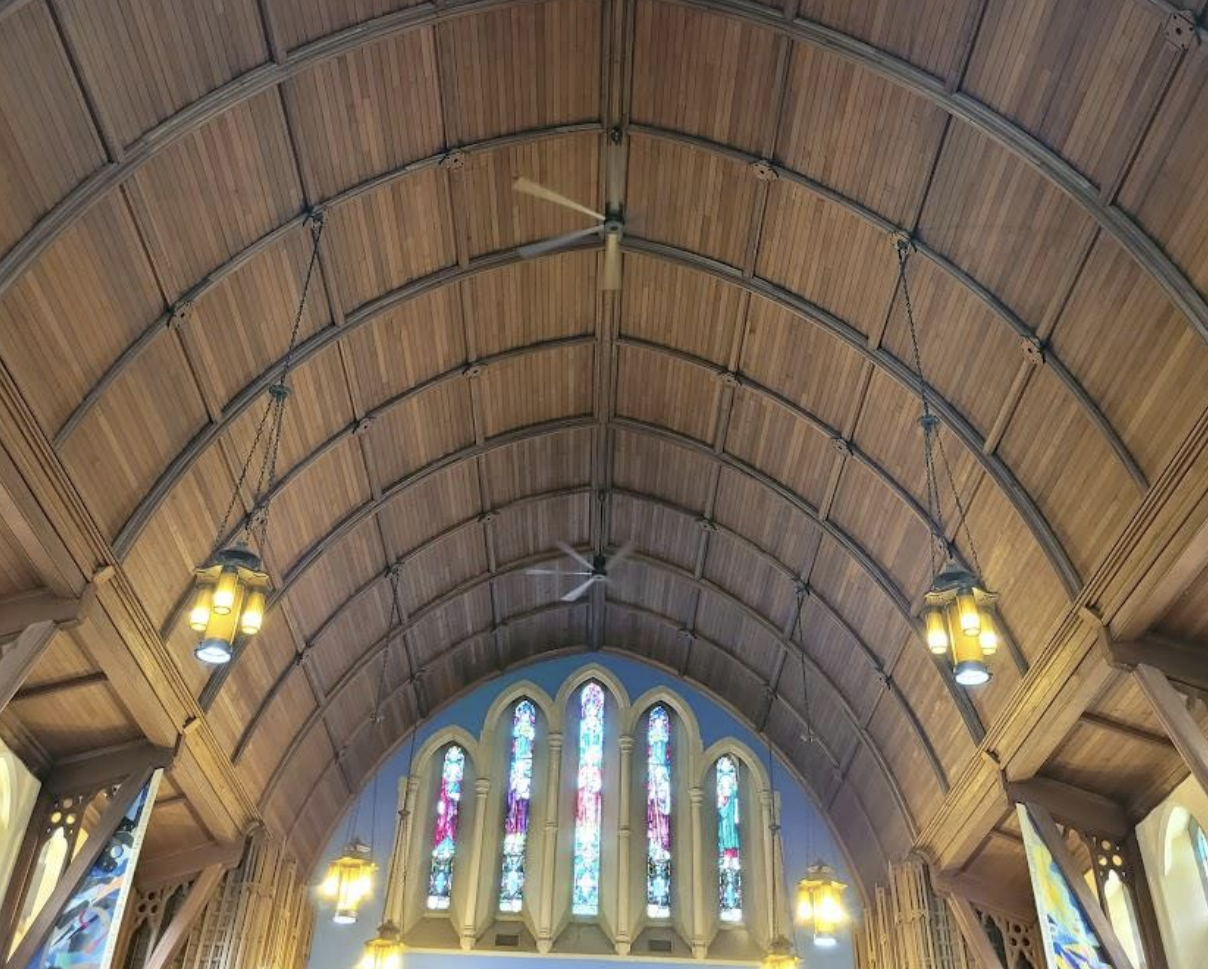
The first project replaced four ineffective and noisy ceiling fans in the sanctuary with four 8-foot modern energy-efficiency fans. The new fans will contribute to reduced energy loss in the church’s large 40-foot high ceiling and 7,000 sq ft space, throughout the entire year. In the colder months, the fans will enable the church to reduce the accumulation of warm air on the ceiling level, significantly reducing heat loss from the uninsulated ceiling. In the warmer months, the fans will improve air circulation at the floor level, improving congregational comfort, with only a small fraction of the energy usage that would otherwise be required for air conditioning.
Heat pumps
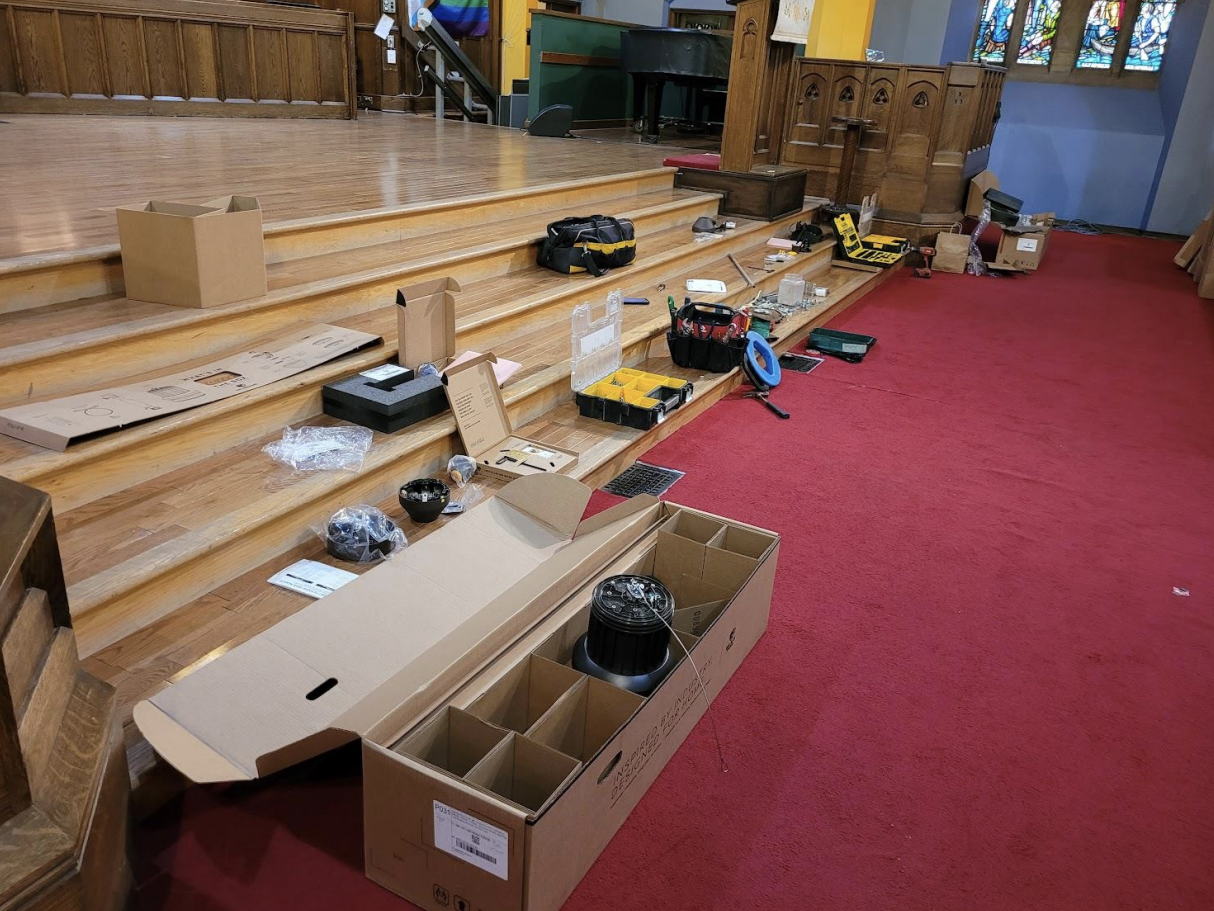
The second project replaced the church’s gas-fired steam heating system with heat pumps in the Memorial Hall in their sanctuary. The church installed two 36,000 BTU Mitsubishi split units.
“Compared to our previous gas-fired steam heating system, we hope the efficiency of the heat pumps will reduce our overall energy consumption and our GHG emissions,” states Don Dewees, Chair of Finance and Property Committees at Runnymede United Church.
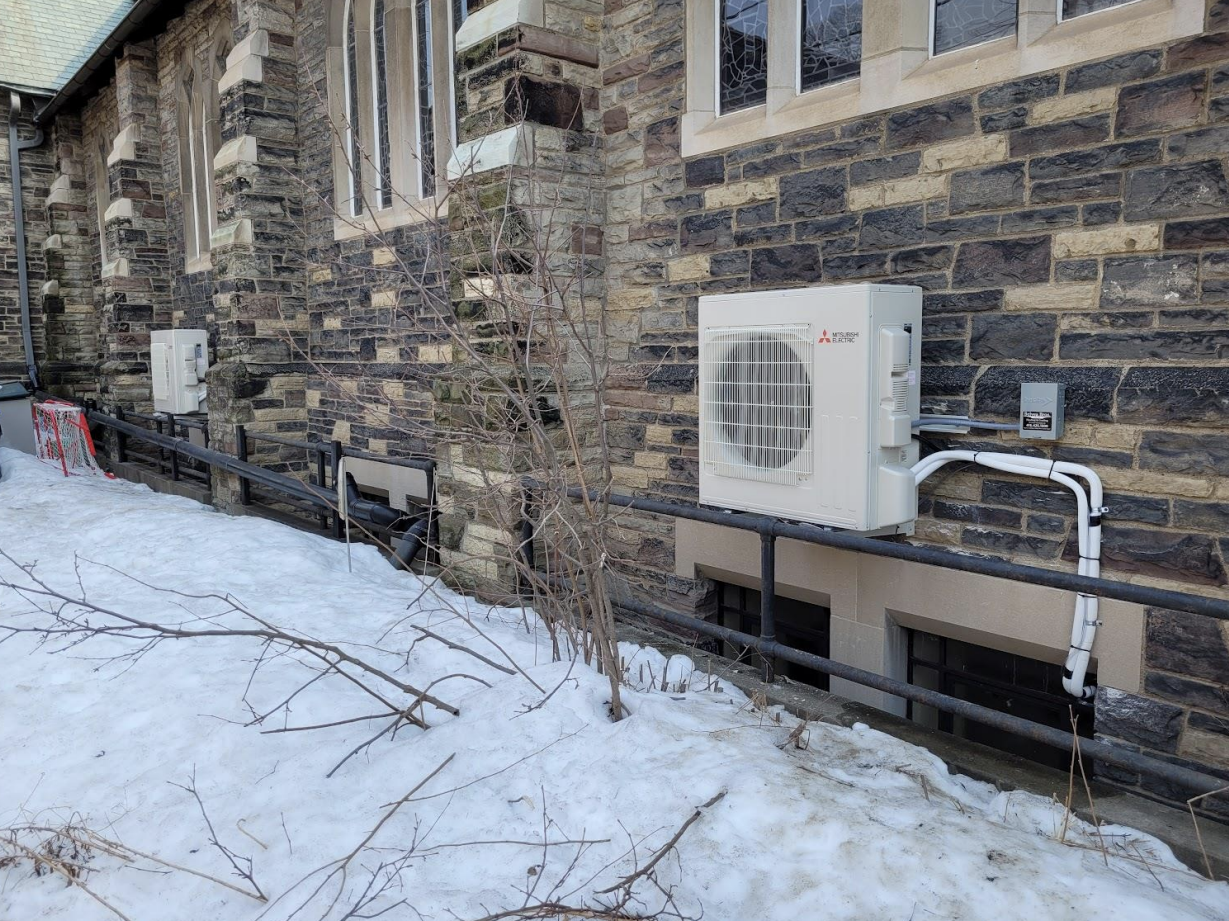
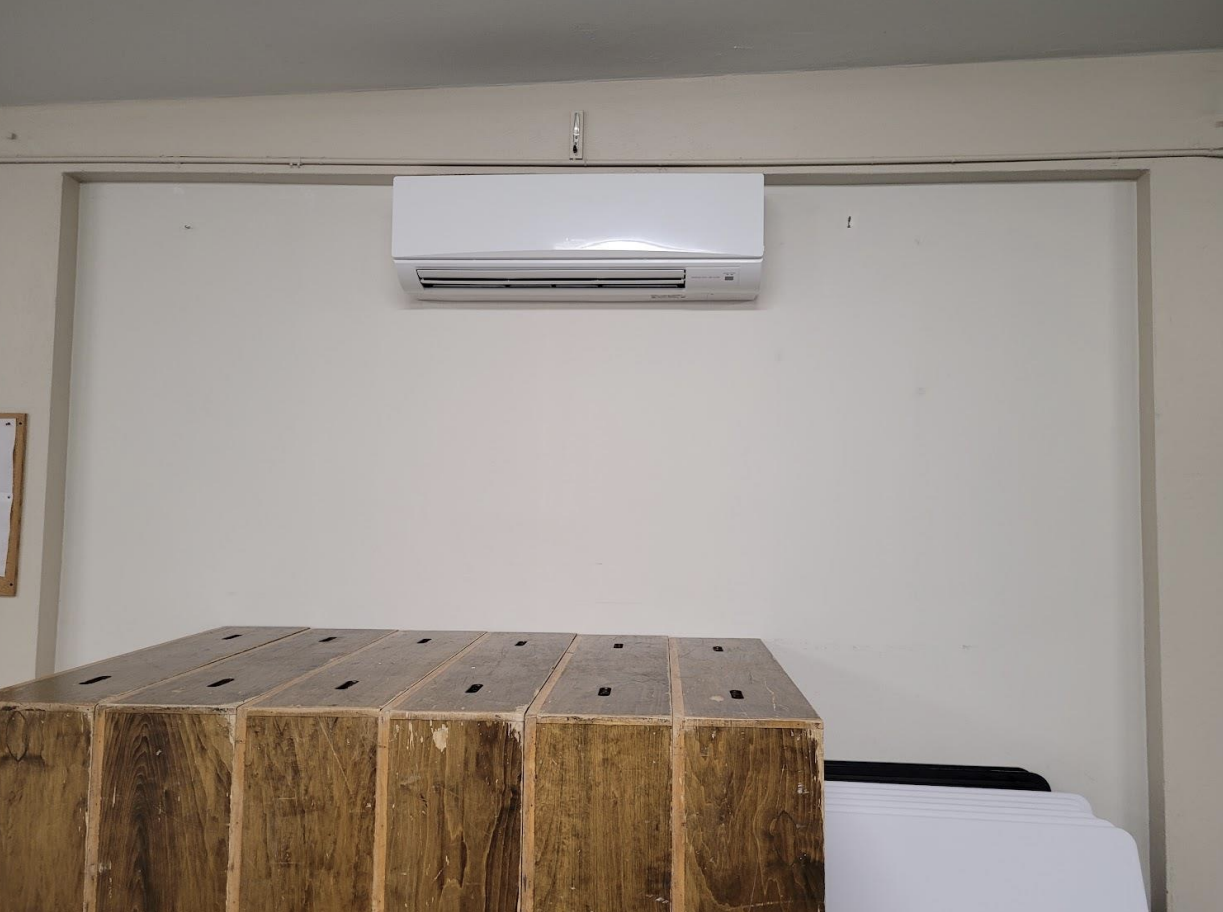
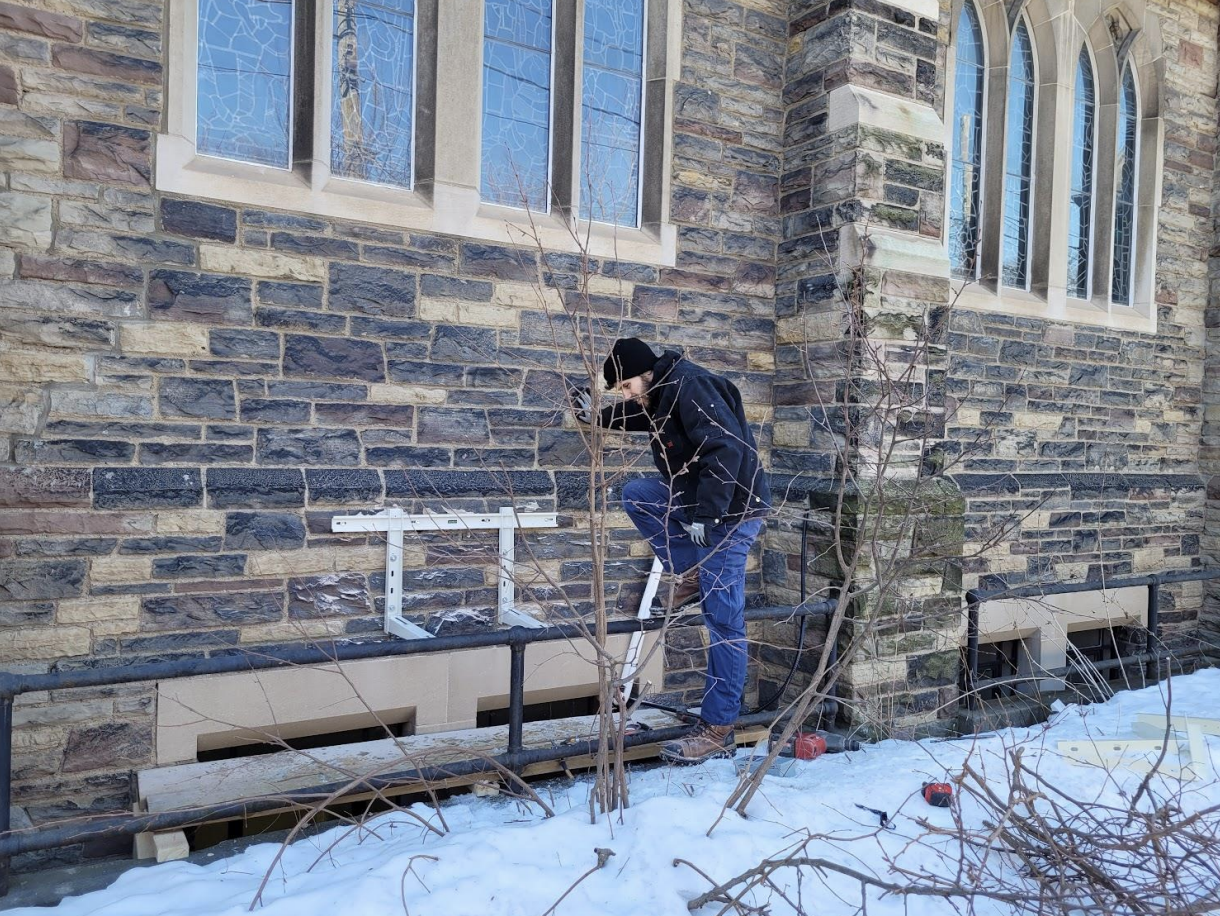
In addition to providing heat in the winter and cooling in the summer, as well as decarbonizing part of the church’s building operations, the newly installed heat pumps also improved the building’s heating and cooling control.
The previous system that was servicing the Memorial Hall was on the same steam valve as other parts of the building. Through the project, Runnymede United decoupled temperature control in the Hall from the radiators – allowing the church to control heating and cooling ventilation in different parts of the building separately and more precisely.
“We have one boiler that heats all of our space: the sanctuary, Memorial Hall, gym, offices, Sunday School rooms, meeting rooms – everything. Now that the heat pumps are installed, the radiators in Memorial Hall are turned off. The only heat in that room will come from the heat pumps. This will displace whatever steam heat that room has been using.” shares Dewees.
One project at a time
Runnymede United is an example of a community faith that has continued to green their building, one project at a time.
Dewees advises “If your planned projects are not time-constrained or dependent on one another, it's helpful to spread them apart and not do them at the same time”.
“Take a hard look at your building, do some research, and try to identify practical projects to take on and when you can afford to do them. Look for past experiences from communities of faith. Faithful Footprints is a great source to start.” shares Dewees. “Our practical experience from our previous projects helped us understand the magnitude of energy savings that potential projects might have. Our earlier interest and experience in energy conservation were really helpful in providing a good database. We have records of our hydro and gas meters going back 20-25 years. The reports provide a solid base for comparison. We can look at our consumption before the projects and afterward. Because we know more about our previous year's energy consumption, it’s easier to assess the magnitude of the savings that we should expect”.
“The heat pump project is a test force – we have air conditioning with heat pumps and several other heat pumps in other areas in the building. This is the first time we have installed them with the expressed goal of displacing gas in the winter. This coming winter we will find out if the heat pumps provide sufficient heat during the colder months. If the Memorial Hall heat pumps perform well, we will consider additional heat pump installations and further reductions in our greenhouse gas emissions.” adds Dewees.
Are you interested in taking your greening to the next level?
The more you can learn about your building, the more you can save energy, minimize maintenance costs, and maximize the usage of your building. Build up your confidence, knowledge, and project management skills to support your energy conservation and decarbonization retrofit projects. Book a Green Audit and explore the following Faith & the Common Good downloadable resources to learn what more you can do.
Energy Star® Action Workbook for Congregations
Faithful Footprints Program
The United Church of Canada’s Faithful Footprints program offers inspiration, tools, and grants to help its faith communities reduce their carbon footprint. With the Church’s commitment to reducing its greenhouse gasses (GHG) emissions by 80% by 2030, this one-of-a-kind program offers up to $30,000 in grants towards energy conservation and renewable energy projects (conditions apply).
Faith & the Common Good is the delivery partner for the Faithful Footprints program. To date, we have engaged over 400 congregations, camps, and buildings across the country. Your participation in the program puts your faith into action and helps the Church reach its target.
Aleyxa Gates Julien is the PR/Communications Coordinator for Faithful Footprints and can be reached at agatesjulien@faithcommongood.org.

Advocating for Fossil Fuel Divestment: Prairie to Pine Regional Council Holds Financial Institutions Accountable
The United Church of Canada’s Prairie to Pine Regional Council is leading the way in advocating for climate justice. On June 3, 2023, Prairie to Pine Regional Council passed Faith Communities to Divest from Fossil Fuels, a proposal to further the region’s efforts in advocating for divestment.
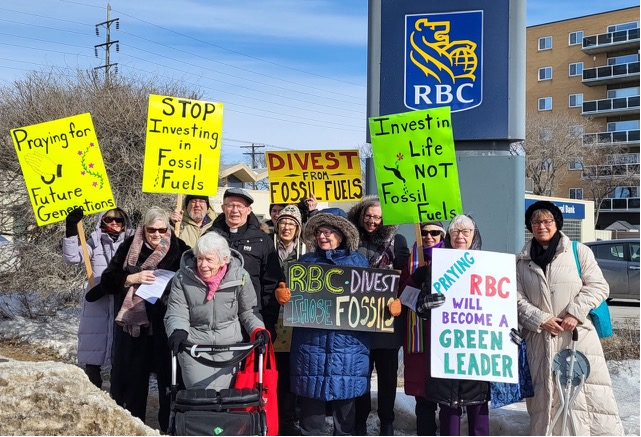
Image credit: Courtesy of Lynda Trono
Fossil fuel divestment advocates for ending the expansion of new coal, oil, and gas production, phasing out existing production of these fossil fuels, and accelerating the transition to alternative renewable energy. There is immense power in placing public pressure on the companies that actively support the extraction and production of fossil fuels, which can effectively advance this transition. This includes supporting tar sands, mountaintop removal, fracking, deepwater drilling, liquefied, natural gas, and coal mining. Millions of climate activists are provoking change by challenging actors such as financial institutions to divest from non-renewable energy sources and invest alternatively in transforming the energy sector to a renewable energy supply.
Religious institutions and communities of faith across the globe have been critical leaders in calling on governments and large corporations to divest fossil fuels. Faith-based gatherings such as GreenFaith‘s No Faith in Fossil Fuels: A Climate Finance Summit have brought together faith members across the globe to learn about how banks and asset managers continue to invest in fossil fuel industries and discuss how to hold these financial institutions accountable. Efforts like these equip and motivate faith leaders and communities of faith to take the bold steps necessary to effect real change.
The United Church of Canada's Commitment to Divestment
The United Church of Canada is committed to ensuring a deeper alignment of its investments with its values – and has made strides toward fossil fuel divestment. Strong votes at key shareholder proposals are helping advance better environmental, social, and sustainability governance and improvements to corporate practices. The church continues to sign on to various high-profile investor statements. For example, in 2021, The United Church of Canada joined 36 institutional investors, managing $5.5 trillion in assets, signing on to a new Canadian Investor Statement on Climate Change as a member of the Responsible Investment Association, pledging to manage assets in promoting the transition to a low carbon economy. The church also joined the Powering Past Coal Alliance (PPCA), a coalition of national and subnational governments, businesses, and organizations working to advance the transition from unabated coal power generation to clean energy.
Prairie to Pine Regional Council Takes Action in Winnipeg
Communities of faith and faith-based organizations are taking their own steps and advocating for others to end financial investment in fossil fuels. Spanning across Manitoba, Saskatchewan, and northwestern Ontario, The United Church of Canada’s Prairie to Pine Regional Council is leading the way in advocating for climate justice. They have been raising their spirited voices and calling for serious divestment in the fossil fuel industry by protesting against companies that invest in harmful oil and gas extraction.
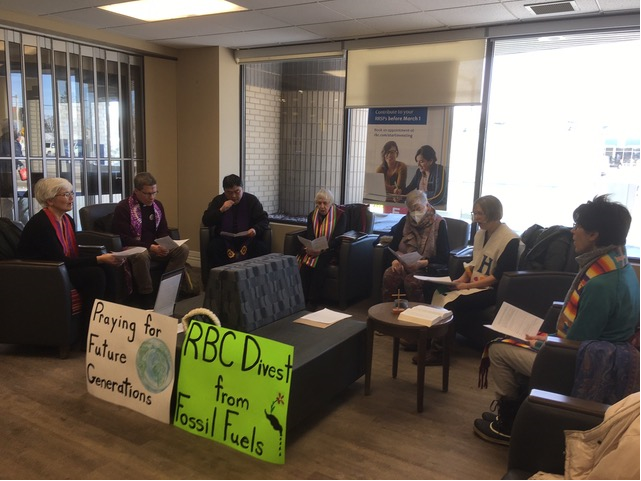
[Image credit: Courtesy of Lynda Trono
Since Ash Wednesday, several church leaders have gathered to pray weekly inside different branches of the Royal Bank of Canada (RBC) in Winnipeg.
Lynda Trono, retired United Church minister and one of the lead organizers, explains in a Winnipeg Free Press article, Praying in public for environmental justice, “We pray out of fear for future generations in this time of climate change. We fear that the banks who fund fossil fuel expansion will treat our current climate crisis in a ‘business-as-usual’ fashion and continue to invest in fossil fuel infrastructure. We pray with a sense of urgency for things to turn around.”
New Regional Policy Calling for Climate Change Divestment
On June 3, 2023, Prairie to Pine Regional Council passed Faith Communities to Divest from Fossil Fuels, a proposal brought to the region by Rev. Lynda Trono, Rev. Jeri Bjornson, and Diane Dwarka. The proposal’s objective is to further the region’s efforts in advocating for divestment and keeping financial institutions accountable.
The proposal highlights The 44th General Council’s commitment to intensify its historic commitment to climate justice through stronger denominational advocacy and investor action — a commitment which is reinforced by The United Church’s strategic plan. Shedding light on the pressing reality of climate change, the proposal states that “the current climate catastrophe calls us to build on the work that we have already undertaken and more intentionally engage all levels of our church”.
Through the agreement, Prairie to Pine Regional Council will:
Instruct the Regional Council Executive to review the Regional Council’s investment policies, investments, and the practices of its financial institutions, using the United Church in Canada’s “Responsible Investing Guiding Principles”, with a particular focus on climate justice and encouraging the transition from a carbon economy toward becoming leaders in a green economy.
Create an educational process to assist communities of faith and other ministries, their membership, and supporters to:
Communicate with their financial institutions with regard to any policies and practices that fall short of a transition to a green economy, particularly continuing investments in fossil fuel expansion projects.
Consider other actions such as switching to a more climate-conscious institution, divesting from less ethical investments, and transferring investments to ethical funds.
Support and promote a network within the Regional Council to assist its membership in living out the above commitments, and to study Committed to Climate Action: The 2021-2022 Sustainability Report | The United Church of Canada (united-church.ca) and study and act on recommendations found in the 44th General Council proposal GS08 Climate Justice Commitment.
Excitement and urgency surround the fossil fuel divestment advocacy commitment taken on by Prairie to Pine Regional Council. Encouraging others on a local and regional level to participate in similar climate work can strengthen the collective pressure to advocate to put an end to fossil fuels investment.
To read the entire policy, click here
Get Involved
To learn more and get involved in Praying in Public for Environmental Justice at Royal Bank of Canada branches, in Winnipeg, email lyndatrono@gmail.com.
Faithful Footprints Program
The United Church of Canada’s Faithful Footprints program offers inspiration, tools, and grants to help its faith communities reduce their carbon footprint. With the Church’s commitment to reducing its greenhouse gasses (GHG) emissions by 80% by 2030, this one-of-a-kind program offers up to $30,000 in grants towards energy conservation and renewable energy projects (conditions apply).
Faith & the Common Good is the delivery partner for the Faithful Footprints program. To date, we have engaged over 400 congregations, camps, and buildings across the country. Your participation in the program puts your faith into action and helps the Church reach its target.
Aleyxa Gates Julien is the PR/Communications Coordinator for Faithful Footprints and can be reached at agatesjulien@faithcommongood.org.

Turn on the Lights Campaign: St. Paul’s United Fundraiser
Many renovation projects depend on outsourced grants and funding opportunities to complete, but raising the necessary funds can be challenging. However, St. Paul’s United Church in Oakville, Ontario, was confident that their congregants could rise to the challenge and come up with a significant sum of money for the lighting retrofit they were planning.

St. Paul’s United Let There Be Light -
Turn on the Lights Campaign Tracker
Many renovation projects depend on outsourced grants and funding opportunities to complete, but raising the necessary funds can be challenging. However, St. Paul’s United Church in Oakville, Ontario, was confident that their congregants could rise to the challenge and come up with a significant sum of money for the lighting retrofit they were planning.
The church wanted a suitable longer-term solution to reduce the total energy used. After completing a Green Audit through Faith & the Common Good, the project team at St. Paul’s United decided they would tackle a major light retrofit throughout their entire building. Since the building was in relatively good shape, they were advised that the quickest energy-saving opportunity was to switch to LED lights.
With the help of a Faithful Footprints grant, St. Paul’s United expanded its bulb replacement to include replacing 84 bulbs and fluorescent tubes in their gymnasium, 21 light fixtures in one of their halls, and 23 small dome lights in their sanctuary and narthex, which were mini fluorescent bulbs.
Sorting Out Costs and Raising Funds
The Faithful Footprints grant covers two-thirds of a project’s costs, up to a maximum of $20,000 for energy efficiency-focused projects and an additional $10,000 if you are decarbonizing. To qualify, participating communities of faith must have matching funds that equate to one-third of total project costs and any funds required above the maximum Faithful Footprints grant amount.
Since the project scope focused on the efficiency of energy usage, St. Paul’s United qualified to receive up to $20,000. With the total cost of St. Paul’s project estimated to be around $23,000, the Faithful Footprints grant covered approximately $15,000. After receiving conditional approval for the Faithful Footprints grant, St. Paul’s United had to come up with around $5,000 to undergo the planned lighting renovations.
In addition to the church’s building maintenance fund, St. Paul’s United launched a campaign to raise funds to cover the rest of the costs for their lighting upgrade. The Turn on the Light Campaign laid out exactly where the money was going and the timeline of the retrofit.
The project team shared their plans with the congregation members, explaining how they would start with the balcony lights and slowly move towards the lights in the sanctuary.
Getting support for a cause can be that much easier when people understand the direct impact their donations will make. Harold Devenne, team lead, points to several reasons why their approach proved successful.
“Because we don’t have a lot of extra cash, the best way to raise funds is to give our congregation a specific project to fund. I find that if there’s a project, show them pictures of it, tell them what it is, tell them what it costs, and let them find a way in. As long as they can see and understand it, the money comes in fairly quickly.”
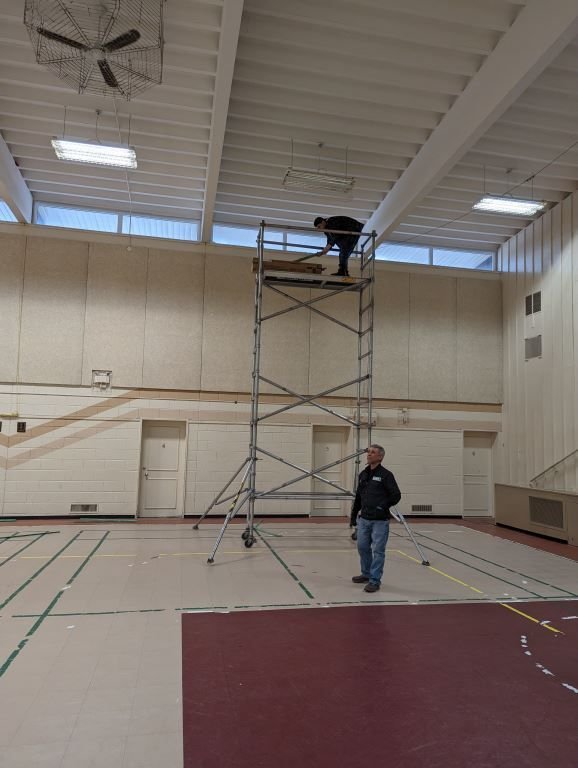
Replacing lights in the gymnasium at St. Paul’s United
While encouraging congregants to donate with an envelope titled “‘Let There Be Light,” the project team provided the opportunity for congregants to support particular areas of the lighting retrofit by categorizing the renovation into three levels of lights:
Pendant light - $272/per light
Dome light - $36/per light
Hall bulb - $57/per light
“It's a way to make them feel like they can contribute to any level, and understand what they are spending the money for,” Devenne says.
Within just four weeks, St. Paul’s United had enough funds raised from the congregation to cover their share of the total project costs.
“I was pretty confident that they were going to come up with the amount for the lights. I was surprised when we exceeded our goal and had enough to use for other building upgrades,” Devenne reflects.
Turning on the Lights
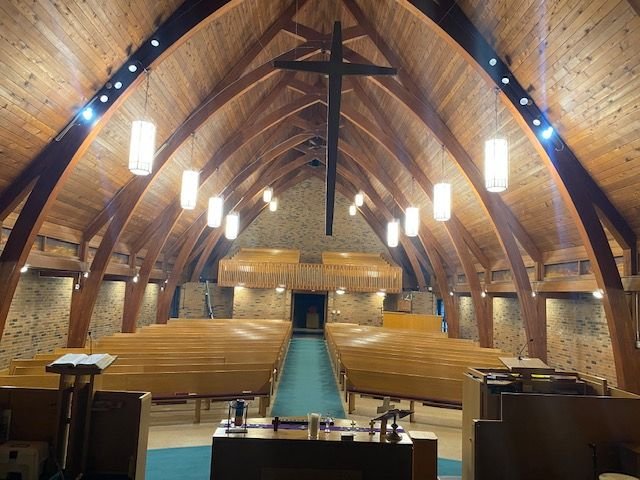
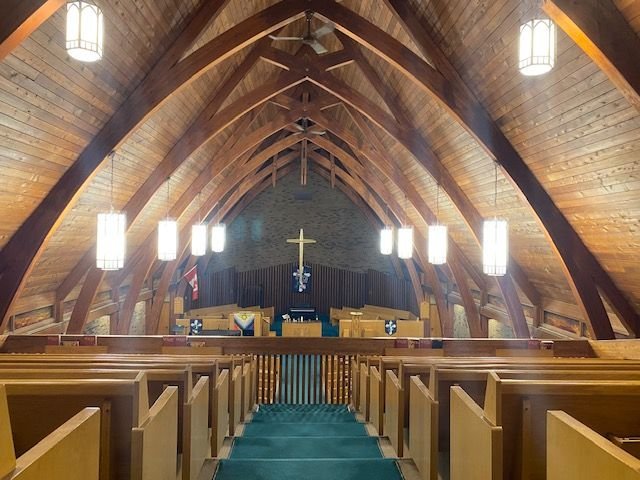
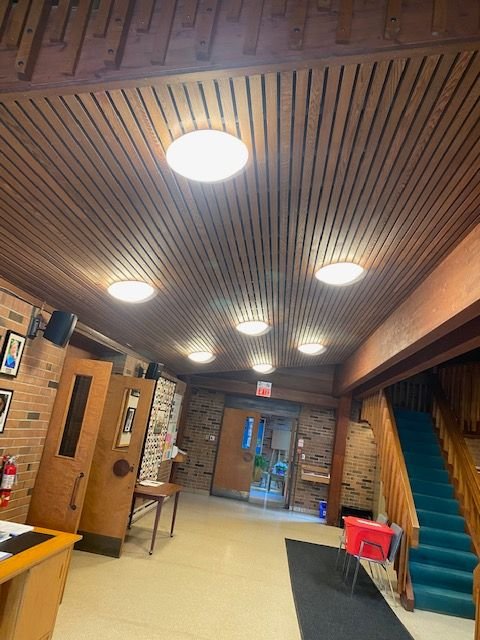
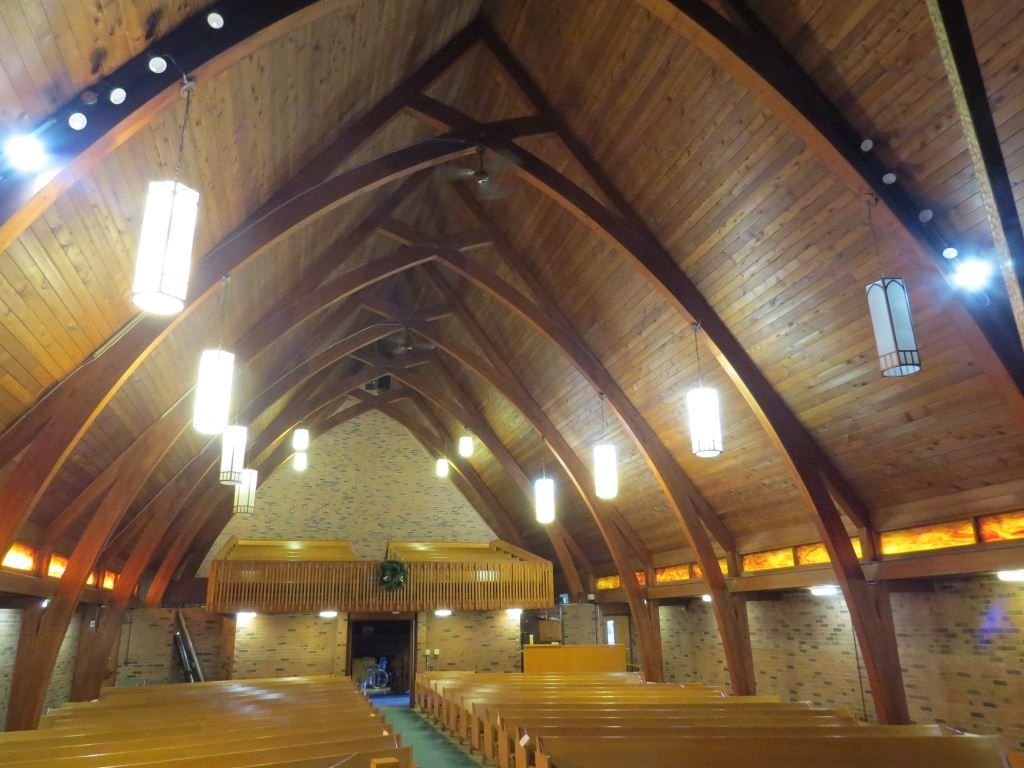
Since completing the renovations, St. Paul’s United has already seen a drastic difference in the quality of lighting.
“The LED bulbs add a little sparkle to the ceiling as well as more light than before while not being harsh,” Harold reports. “The new dome lights down the aisles and in the narthex produce more light than the old ones and look much better.”
With the recent upgrade, St. Paul's United looks forward to lowering its electricity bills. The church says they will continue seeking opportunities to reduce their energy consumption wherever possible.
Stay in the loop about St. Paul's Retrofit Project
Stay updated about St. Paul’s reductions in emissions, electricity usage, fossil fuel use, energy costs, and energy use intensity. Sign up for the Faithful Footprints Monthly Newsletter.
Faithful Footprints Program
The United Church of Canada’s Faithful Footprints program offers inspiration, tools, and grants to help its faith communities reduce their carbon footprint. With the Church’s commitment to reducing its greenhouse gasses (GHG) emissions by 80% by 2030, this one of a kind program offers up to $30,000 in grants towards energy conservation and renewable energy projects (conditions apply).
Faith & the Common Good is the delivery partner for the Faithful Footprints program. To date, we have engaged over 300 congregations, camps, and buildings across the country. Your participation in the program puts your faith into action and helps the Church reach its target.
Aleyxa Gates Julien is the PR/Communications Coordinator for Faithful Footprints and can be reached at agatesjulien@faithcommongood.org.

Decarbonizing building operations: an effective strategy for cutting emissions
Emissions reduction is the measurable reduction of the release of greenhouse gases (GHGs) like carbon into the atmosphere from a specified activity. Operational carbon, the amount of carbon emitted during the operating or in-use phase of a building, accounts for a large proportion of emissions released globally.
“The Faithful Footprints Grant helped us accomplish our goal to get as close to zero carbon emissions as possible for a historical building such as ours.”
- St. George and St. Andrew United Church, Annapolis Royal, NS
Emissions reduction is the measurable reduction of the release of greenhouse gases (GHGs) like carbon into the atmosphere from a specified activity. Operational carbon, the amount of carbon emitted during the operating or in-use phase of a building, accounts for a large proportion of emissions released globally. Building operations include the activities necessary to operate, maintain, and manage spaces. Tackling how we run our buildings is an effective mitigation strategy for lowering emissions.
With many new buildings designed to operate from renewable energy sources, existing older buildings are where a significant shift away from carbon-based operations will need to be focused. Deep retrofits of existing buildings are critical to driving emissions down within the Canadian built environment.
The United Church of Canada acknowledges its “particular responsibility as a religious institution” to dramatically reduce its carbon footprint. The Church has said the focus of its efforts must be its buildings since heating and lighting are its largest carbon emitters. Retrofitting its historical buildings can accelerate reductions, helping to meet its national goal of reducing carbon emissions by 80% by 2030..
Reducing operational carbon, one project at a time
“As a person who has converted to solar and electric heat pumps, I was eager to help move our church to becoming carbon neutral.”
- Alexander MacKay, Chair - Trustees, Central Trinity United Church, Breadalbane, PE
The transition to a building stock with zero or near zero operational carbon is a long way off. Deep retrofits require an extensive overhaul of a building’s systems. Lack of funding, resources, capacity, and tricky timelines, are other barriers that limit the consideration of full building decarbonization retrofits. While some United Church buildings have managed to go completely net zero, like Old Barns United Church in Lower Truro, Nova Scotia, most are taking the transition one project at a time.
With support from The United Church of Canada’s energy efficiency and decarbonization grant retrofit program, Faithful Footprints, faith communities across Canada are pushing the needle to reduce their operational carbon by replacing oil and gas-fueled heating and cooling systems with electrical and renewable alternatives
Central Trinity United Church in Breadalbane, PE, replaced an oil furnace and oil tank with heat pumps. With a similar project, St. George and St. Andrew United Church in Annapolis Royal, NS, replaced several oil furnaces and an oil tank with three heat pumps and an oil-fired hot water heater with an electrical hot water heater. Shawville United Church in Shawville, QC, replaced an oil boiler with an electric boiler, while Duncan United Church in Duncan, BC, replaced its last oil furnace with an air-to-air heat exchanger.
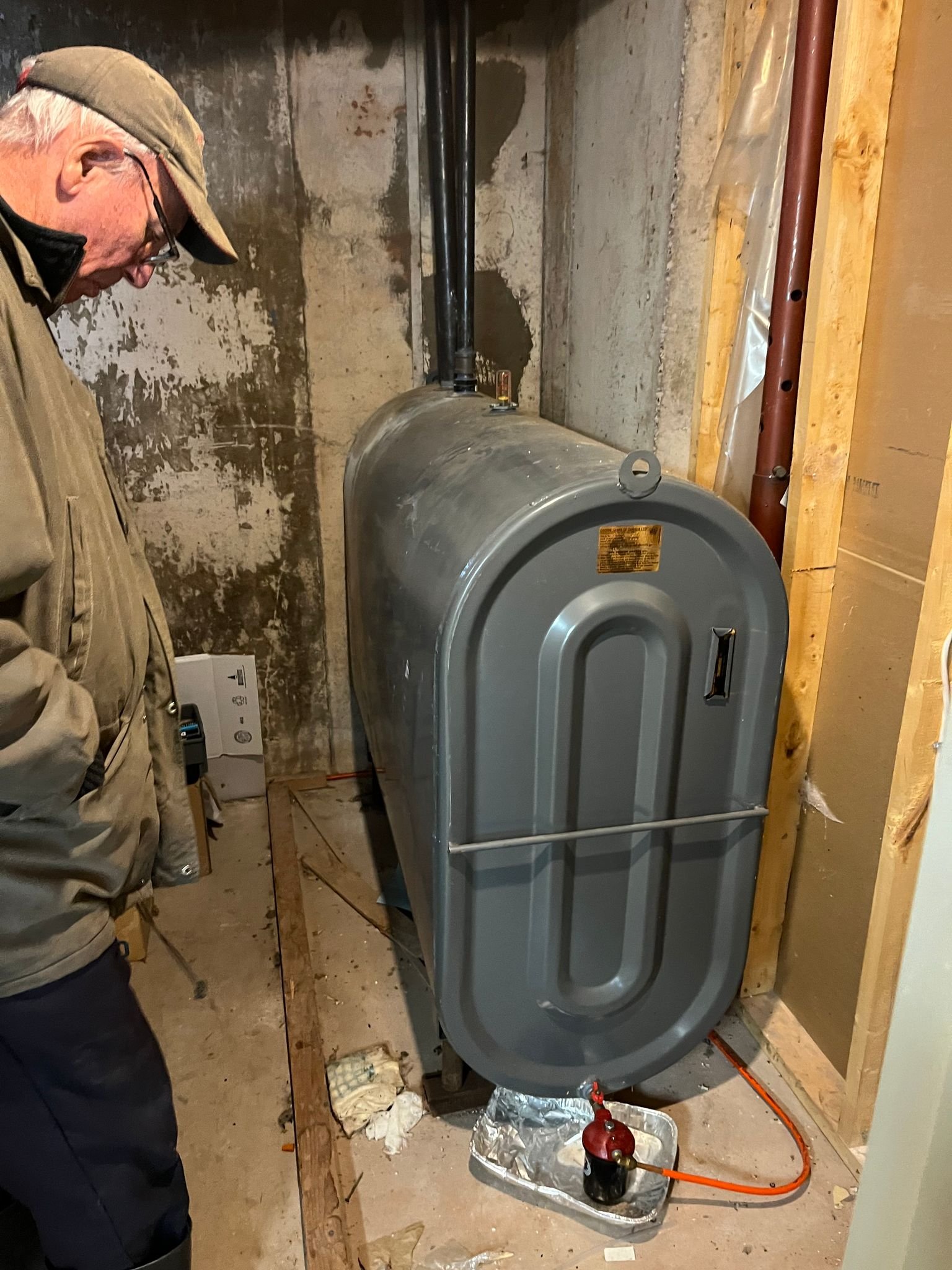
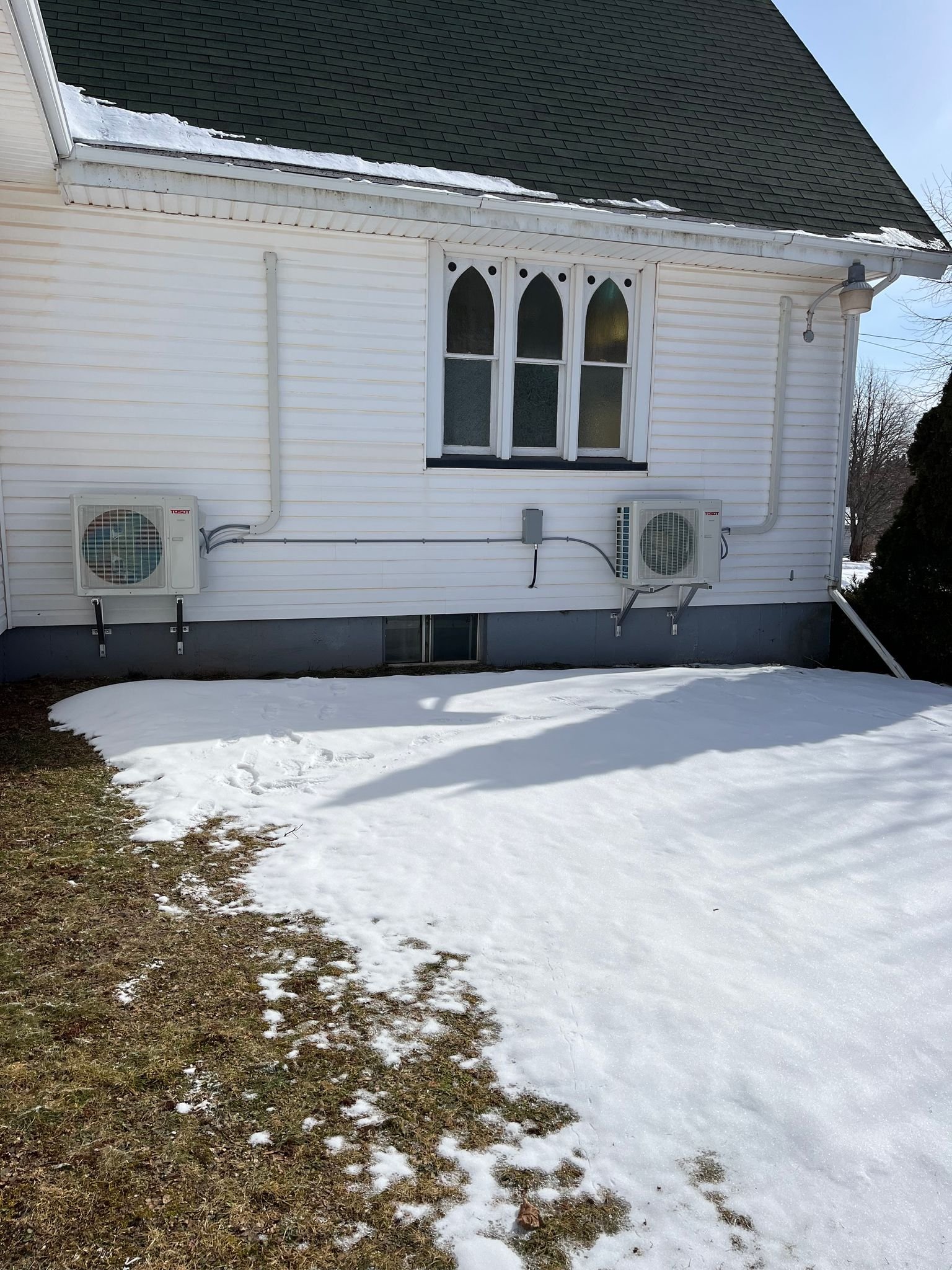
Oil tank that was removed and newly installed heat pumps at Central Trinity United Church, Breadalbane, PE


New ductwork to support heat pumps at St. George and St. Andrew United Church in Annapolis Royal, Nova Scotia


Boiler replacement at Shawville United Church in Shawville, QC

New air to air heat exchanger at Duncan United Church in Duncan, BC
Going deeper, doing more
“STASH is a system which stores heat pump energy on milder days of the year and makes it available to support the air pump on cold days when efficiencies to get heat are less efficient. When STASH technology becomes available, we will replace the basement heating system with an air source heat pump solution.”
- Keith Black, Chair - The Sunshine Greening Committee of Trinity United Church Acton, ON
Carrying out energy conservation and renewable energy projects has empowered faith members to think more deeply about how they can reduce their carbon emissions further. Climate-conscious communities like Trinity United Church in Acton, ON, replaced two gas furnaces with an air-forced heat pump system. They plan on adding additional heat pumps to their heat pump system once new technology is available.


Old gas furnaces and new air-forced heat pump system at Trinity United Church in Acton, ON
Faithful Footprints Program
The United Church of Canada (UCCan) Faithful Footprints program offers inspiration, tools, and grants to help its faith communities reduce their carbon footprint. With the Church’s commitment to reducing its greenhouse gases (GHG) emissions by 80% by 2030, this one of a kind program offers up to $30,000 in grants towards energy conservation and renewable energy projects (conditions apply).
Faith & the Common Good is the delivery partner for UCCans Faithful Footprints program. To date, we have engaged over 300 congregations, camps, and buildings across the country. Your participation in the program puts your faith into action and helps the Church reach its target.
Aleyxa Gates Julien is the PR/Communications Coordinator for Faithful Footprints and can be reached at agatesjulien@faithcommongood.org

Camp Fircom: The Off-Grid Effect
A mere 20 minutes from mainland Vancouver, Camp Fircom is a far cry from hectic city life. Located across the Howe Sound on Gambier Island, and accessible only by water taxi, the remote United Church camp has offered a “place of rest and healing” for 100 years.
A mere 20 minutes from mainland Vancouver, Camp Fircom is a far cry from hectic city life. Located across the Howe Sound on Gambier Island, and accessible only by water taxi, the remote United Church camp has offered a “place of rest and healing” for 100 years.
Ron Injates, who currently sits on the camp’s board of directors and property committee, sets the scene:
“It's such a unique location and experience being on the island. The kids who come here, they get on a boat and that's exciting from the second they leave the dock. We're not too far from town, but sort of in the middle of nowhere and totally off the grid at the same time.”
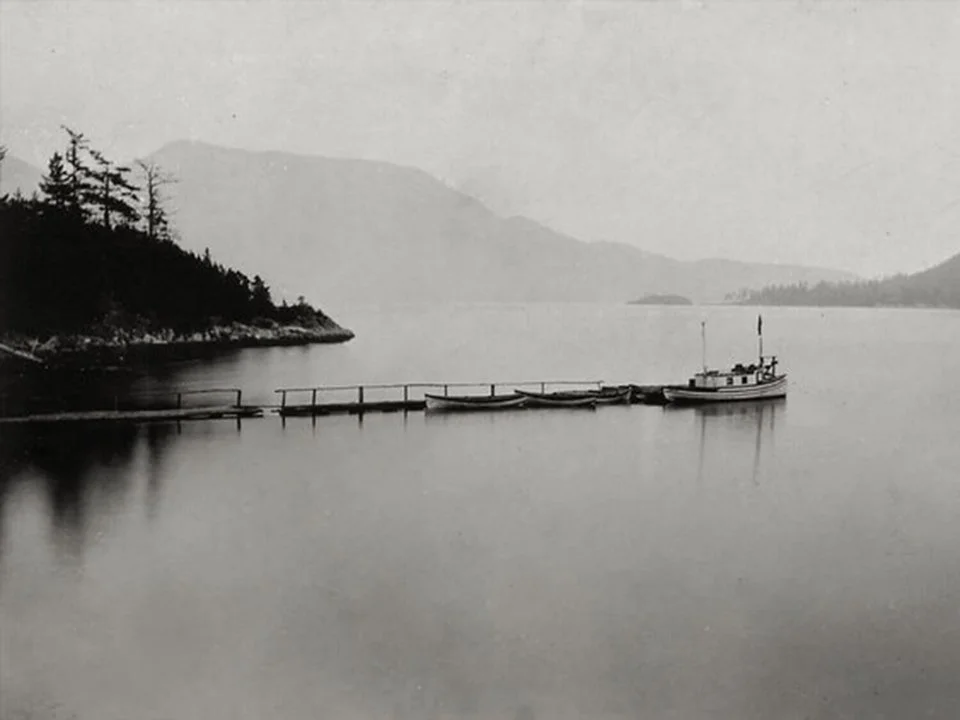
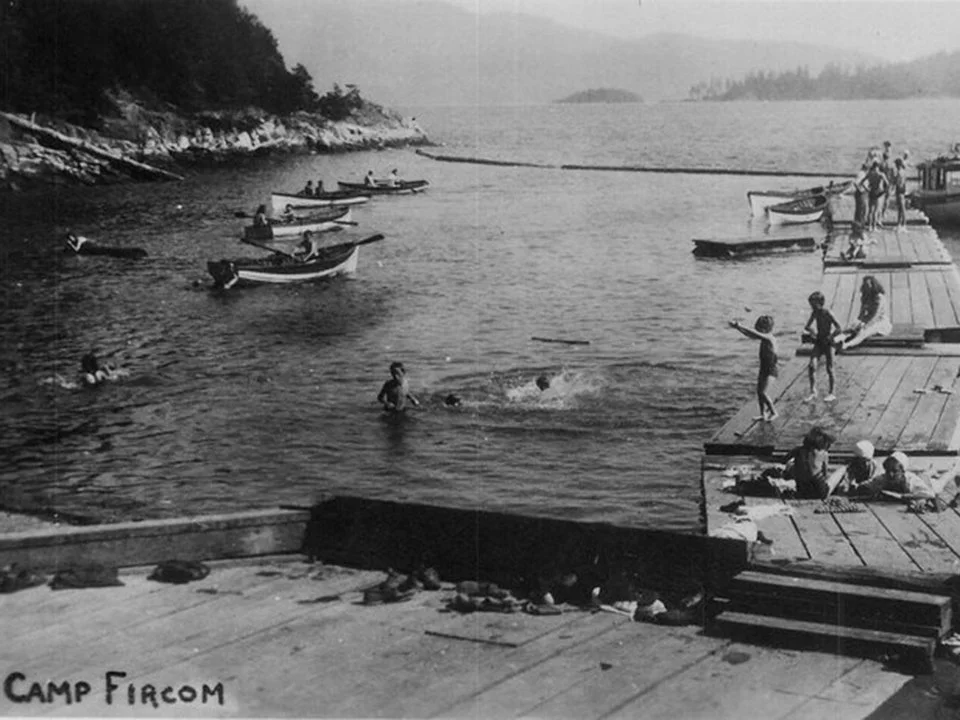
Since 1923, the site has supplied its own clean drinking water, sanitation, heat and energy. As Ron says, “Everything that a municipality would provide for you is basically what we have to provide for you.”
Unsurprisingly, “it's super expensive and super complicated,” because not only are they on the hook for all those services, but the fact that water is the only way to the camp brings a whole new level of complexity.
“That's what I tell kids who are here. Everything you see here came on a boat at one point, every little screw, every nut, every window,” Ron says.
And over the last century, little by little, barge trip by barge trip, Camp Fircom has been working to curate a site that celebrates and lives in harmony with the natural world.
In 2005, the camp closed to undergo major renovations that encompassed burying utilities, putting in a new sewage treatment plant, renovating old accommodations, and building new cabins and halls. The “rudimentary” power and energy provisions also got an upgrade, so when the doors reopened in 2011, the camp was offering 24-hour electricity for the first time. The commitment to the off-grid experience, however, meant that heat and electricity was still coming from propane and diesel generators.
Recognizing the unsustainability of their latest energy solutions, camp problem-solvers like Ron looked to the natural abundance of the sun and water to find alternative onsite power sources. Most recently, in November 2022, the camp installed a unique 16kW solar system on the roof of their south-facing, felicitously unobstructed archery shelter.
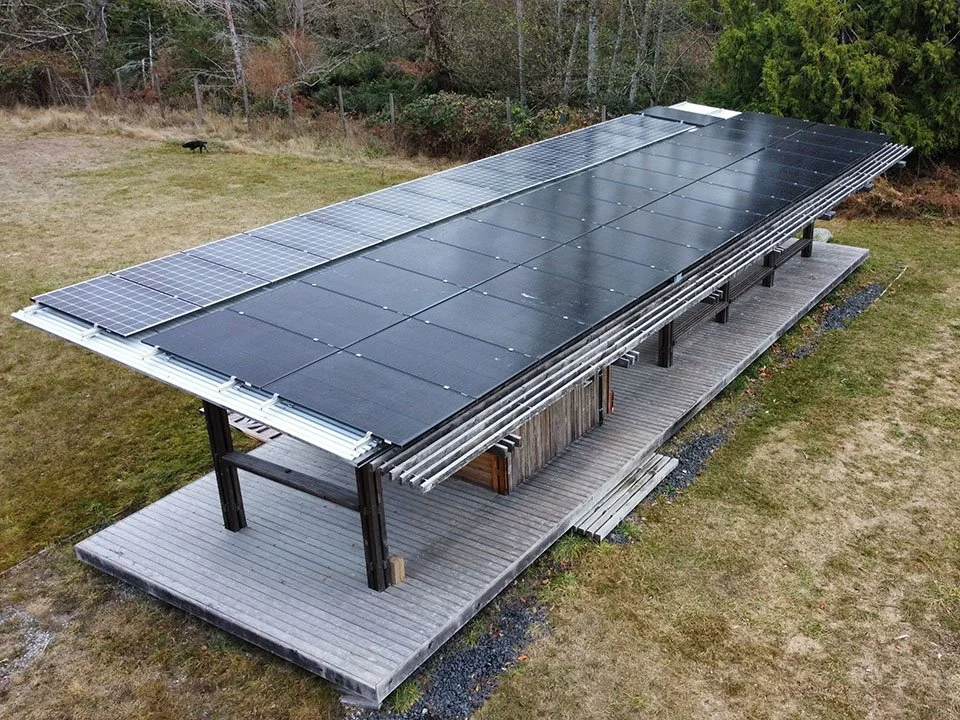

The project was a long time coming, as the process kicked off back in 2018, but the solar installation finally materialized courtesy of countless volunteer hours, barge trip donations, and grants from the United Church’s Faithful Footprints program and Vancity’s Envirofund. The original plan for the funding was to “harness the power of Fircom Creek,” which flows through the camp, via micro-hydro generation. But thick, vexing layers of bureaucratic red tape and the advent of COVID-19 pumped the brakes on the project, compelling the team to course correct and turn their focus to solar.
Reflecting on the lengthy, at times arduous journey and sweet victory of finally having the solar panels up, Ron says, laughing, “Sometimes I just go there and look at them.”
His heart is still set on getting a micro-hydro project up and running someday soon though, especially since, “It's the perfect complement to the solar we have here.”
“The creek is running all the time, so that would add up at night. It would run all winter and then, in the summertime, the creek dries up, actually, so then the solar would take over.”
Sharing the camp’s goal of being 90% renewably powered by 2030, Ron says, “In my perfect Camp-Fircom dream world, there'd be solar panels on all kinds of buildings around here and we'd have more power than we need — and no diesel bills!”
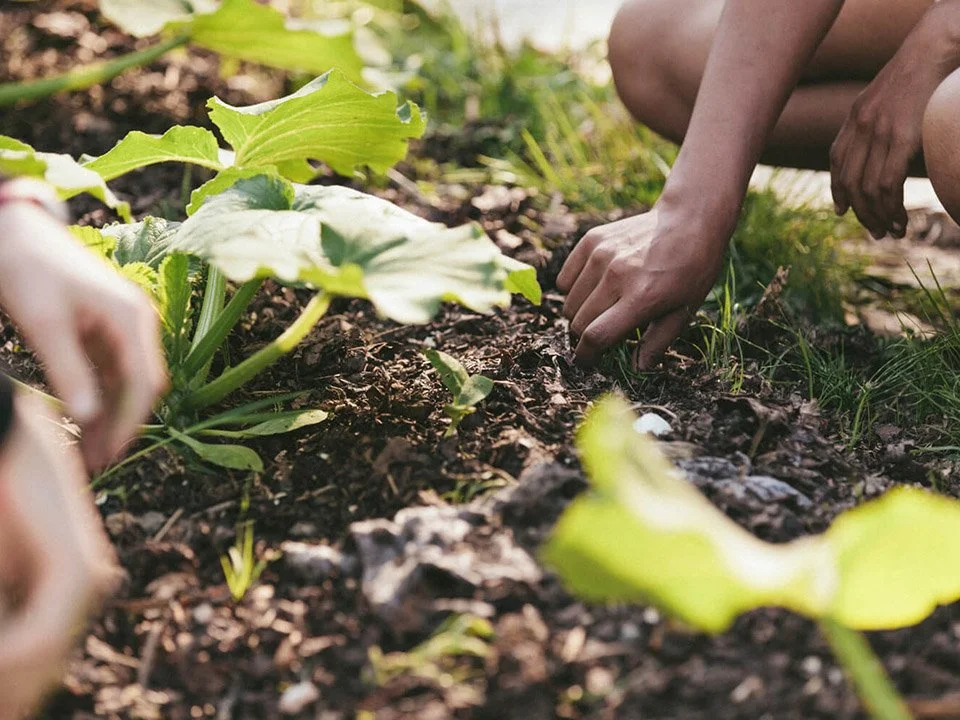
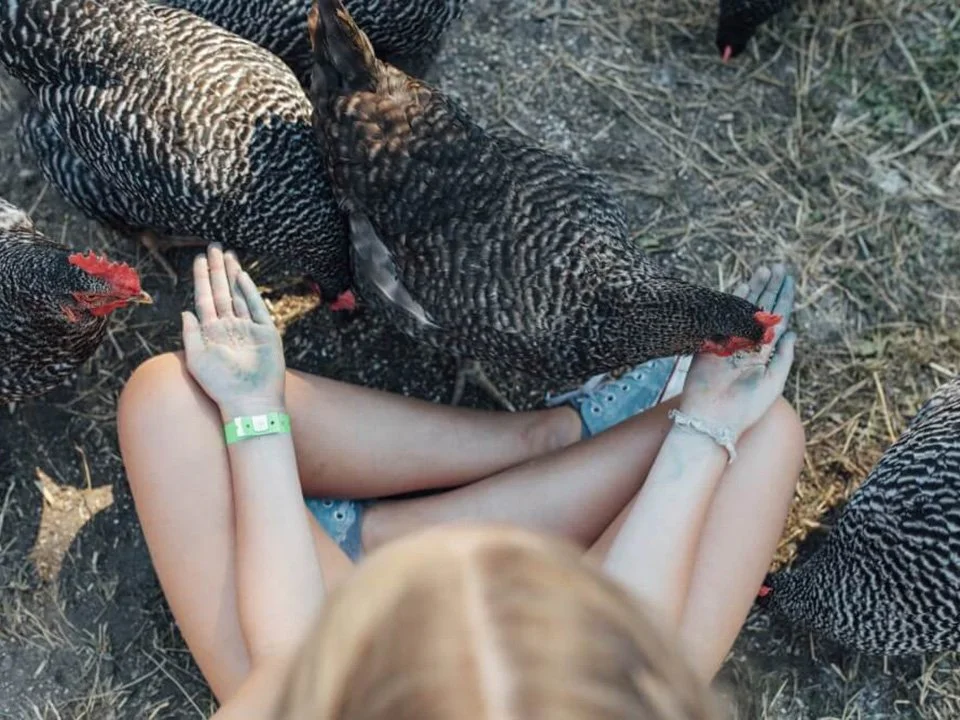
At Camp Fircom, responsible energy consumption and sustainability are central principles, palpable through the thoughtful design of their energy systems and conservation education, zero-waste compost and recycling practices, and organic farm (with chickens and everything!) supplying their kitchen 30 metres away.
“When you're talking to kids about conservation, or having a lighter footprint, or something like that, I think it's pretty difficult to do when you're in the city,” Ron says. “But when people come here, it’s obvious that you have an impact on things.”
“Even with something as mundane as the convenient flush of a toilet, I can walk them up and show them where the water comes from, where the water goes, what a well pump has to do to fill the toilet again, that kind of thing,” he continues, “So I think that has more of an impact than just droning on and only explaining things to kids, or adults really. It’s immediately apparent when you come here that everything you do has a consequence.”
And whether you’re a camper or staff member, volunteer or off-season visitor, all are invited to contemplate questions like,“How lightly can we tread upon the earth? How does the earth respond when we care for it and cultivate it thoughtfully?”

All photos courtesy of Camp Fircom.
Faithful Footprints Program
The United Church of Canada (UCCan) Faithful Footprints program offers inspiration, tools, and grants to help its faith communities reduce their carbon footprint. With the Church’s commitment to reducing its greenhouse gas (GHG) emissions by 80% by 2030, this one-of-a-kind program offers up to $30,000 in grants towards energy conservation and renewable energy projects (conditions apply).
Faith & the Common Good is the delivery partner for the UCCans Faithful Footprints program. To date, we have engaged over 300 congregations, camps, and buildings across the country. Your participation in the program puts your faith into action and helps the Church reach its target.
Cari Kilmartin is the Western Regional Coordinator for Faithful Footprints and can be reached by phone 780-216-1867 or email cari@newo.energy

Finding Funding: Middlewood United works to remain of service to its community
Across regions, many faith communities are unable to meet annual fees and maintenance costs and are struggling to keep up with the operational needs of their buildings. As a solution, a number of United Church properties are retrofitting their buildings with the goal of reducing their energy bills. They are creating rental opportunities by renovating old and unused spaces within their buildings.
Across regions, many faith communities are unable to meet annual fees and maintenance costs and are struggling to keep up with the operational needs of their buildings. As a solution, a number of United Church properties are retrofitting their buildings with the goal of reducing their energy bills. They are creating rental opportunities by renovating old and unused spaces within their buildings.
But all this involves upfront costs; community donations and ministry savings are not always enough to single-handedly pay for building renovations. Accessing funding is one of the key determinants as to whether faith communities have the ability to carry out their projects or not; often it’s the sole reason why properties don’t end up following through with their retrofit plans. Grants, rebates, and other financial incentives can help support congregations to complete these otherwise non-attainable renovations.
Seeking Funding: Middlewood United’s Retrofit Project
“It is our hope that by doing this project, we can reduce costs and lessen the financial burden on our members.”
- Philip Pulsifer, Treasurer of Middlewood United Church
As a small rural congregation trying to maintain its long-standing place within the community, Middlewood United Church, located in Middlewood, Nova Scotia, was one of the many faith communities in need of financial support to complete a building renovation and alleviate the economic burden on congregational members.
The church first began thinking about retrofitting its building in December 2019, when Rev. Vivan Moories, their minister at the time, brought the Faithful Footprints program to the attention of the congregation. Members at Middlewood United work very hard to offer fellowship and fundraise each year to help keep the ministry afloat and donate to the church’s building fund. Upon hearing about the 2-1 funding option the program offered, enthusiasm began to build among the church members, with particular support from the Trustee Chair.
An energy audit was done and the Trustee Chair gathered quotes from several contractors for insulating the congregation’s schoolhouse, replacing windows, installing a heat pump, and upgrading the electrical system.
Unfortunately, when the project proposal was shared with the congregation for approval, it was denied; the building’s roof (in need of replacing) was the priority concern, and funding for the overall costs of the potential projects was still to be obtained. Discouraged, the retrofit plans came to a halt.
Property Treasurer, Philip Pulsifer, refused to give up on the retrofit project, knowing that it would lead to long-lasting environmental and economical benefits for the church. He began brainstorming potential solutions that would bring his congregation aboard, investigating and seeking out financial support for the proposed projects and scraped up funds to replace the roof. A significant donation was made by a congregational member towards the roof, and funding for the retrofit project was secured from Lunenburg Municipal District in Lunenburg County, The United Church of Canada Innovation Fund, and Hunter United Church Building Fund, as matching funds in support of a Faithful Footprints grant.
With Philip’s determination, Middlewood United was able to redo their roof as well as proceed with the retrofit plan to insulate the schoolhouse and replace windows.


Searching For Funding: We’re Here to Help
Finding available grants, incentives, rebates, and programs is a time-consuming task, as Middlewood United Church can attest, but we are here to help! The Faithful Footprints program aims to make it easier for your faith community to learn more about potential regional opportunities to assist with your retrofit project. Our Regional Support Pages are categorized by Western Canada, Prairies Canada, and Atlantic Canada. Explore your region and discover eligible provincial and municipal incentive programs, and find matching funds to support your Faithful Footprints application.
Connect with Faithful Footprints Regional Support Centre Coordinators to determine which government incentives might be applicable to your project, and for assistance selecting suitable energy auditors, energy professionals, and contractor recommendations for your retrofit.
Faithful Footprints Program
The United Church of Canada (UCCan) Faithful Footprints program offers inspiration, tools, and grants to help its faith communities reduce their carbon footprint. With the Church’s commitment to reducing its greenhouse gas (GHG) emissions by 80% by 2030, this one-of-a-kind program offers up to $30,000 in grants towards energy conservation and renewable energy projects (conditions apply).
Faith & the Common Good is the delivery partner for the UCCans Faithful Footprints program. To date, we have engaged over 300 congregations, camps, and buildings across the country. Your participation in the program puts your faith into action and helps the Church reach its target.
Aleyxa Gates Julien is the PR/Communications Coordinator for Faithful Footprints and can be reached at agatesjulien@faithcommongood.org

Inspired by Respect for Creation: Old Barns United has gone Net Zero with Zero Dollars
Like many churches across Canada, regular attendance is not what it used to be. In rural communities especially, an aging population and a global pandemic have also kept people away. Old Barns United in Lower Truro, Nova Scotia is no exception, averaging about thirty people every Sunday, according to Bob Francis, a member of the Board of Stewards and Trustees.
Like many churches across Canada, regular attendance is not what it used to be. In rural communities especially, an aging population and a global pandemic have also kept people away. Old Barns United in Lower Truro, Nova Scotia is no exception, averaging about thirty people every Sunday, according to Bob Francis, a member of the Board of Stewards and Trustees.
An affirming church with a progressive congregation, Old Barns is over a hundred years old, and while the congregation has grown smaller, it is still a strong, active and engaged community.
Before the pandemic, the church was a place not only of worship, but also of deep conversation. People were affected not only by the goings on in the local community, but also by what they witnessed via the news. “There were a lot of stories on environment,” says Francis, who led a recent initiative to green the old church building. “The stories were about the gravity of the crisis of climate change, with an occasionalgood news story of people doing something about it.”

Woodlawn United Church (Dartmouth, NS) solar panels
One such good-news story came their way in the form of Phillip Kennedy, a new minister previously serving at Woodlawn United in Dartmouth. Woodlawn United had installed solar panels to reduce its greenhouse gas emissions and save money. Kennedy’s experience got people talking about doing the same at Old Barns.
“But COVID put the screws to all that,” Francis says. “At least, temporarily.”
Back into action in 2022
At the start of 2022, the board took up the conversation again, and Bob was willing to do the legwork and take action. He was an Atlantic regional manager before he retired and had no particular technical expertise, but he knew how to get things done.
The working group put together a wish list that included solar panels, heat pumps, changing the fluorescent light tubing to LED, and updating their older electric baseboard heaters, which took a long time to heat up and wasted quite a bit of energy in the process.
“It ended up being a major project,” Francis says.
He learned about the Faithful Footprints program and filled out an application. It was approved within two days. He found matching funding to cover the heat pumps and solar from Efficiency Nova Scotia’s Business Savings and Rebates program, which includes faith institutions. He also found an electrician willing to install the heaters on his own time, after hours.

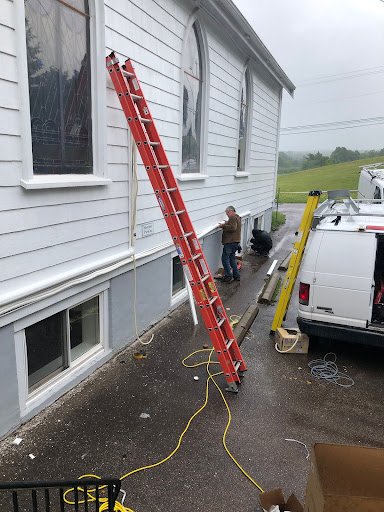

Since the project started in April, 2022, “We’re already seeing reduction in energy use,” Francis says. “In fact, we’ve produced 1,100kWh since October 20th. That’s pretty darn good considering the weather we’ve had. Today we produced 1.4 kWh of power, and we haven’t even seen the sun yet.”
Come the summer, Old Barns United won’t have any power bills at all. Already, they’ve turned their furnace off.


Follow the Money
It may come as a surprise to know that Francis says the easiest part of the project was finding the money. With a grant from the Hunter Fund, for United Churches in Nova Scotia, Old Barns United will have covered 100 % of the costs—that's about $61,000 total. “It won’t cost us a penny.”
It’s also remarkable that all this was accomplished in only a few months. The church board developed a plan, which was approved unanimously by the congregation in May. “It’s not hard to get unanimous approval when it’s not going to cost you anything,” Francis says.
The feedback has been unanimously positive too. “At a recent event everyone talked about how they never felt more comfortable in the building, ” Francis says. “We haven’t really broadly promoted it yet—we plan to do so when it gets warmer, but for now we’re letting other churches know about it.”. The congregation invites everyone to come visit.
It’s an impressive conversion in such a short time, one that significantly reduces Old Barns’ greenhouse gas emissions, saves them money, and creates a more comfortable space for the community. And to top it all off, the church is living the message in its Creed: “Living with Respect in Creation.”
Faithful Footprints Program
The United Church of Canada (UCCan) Faithful Footprints program offers inspiration, tools, and grants to help its faith-communities reduce their carbon footprint. With the Church’s commitment to reducing its greenhouse gases (GHG) emissions by 80% by 2030, this one of a kind program offers up to $30,000 in grants towards energy conservation and renewable energy projects (conditions apply).
Faith & the Common Good is the delivery partner for UCCans Faithful Footprints program. To date, we have engaged over 300 congregations, camps, and buildings across the country. Your participation in the program puts your faith into action and helps the Church reach its target.
Chris Benjamin is the Atlantic Regional Support Coordinator for the Faithful Footprints program and can be reached at chris.benjamin@ecologyaction.ca.

How Thermal Mass and Thermal Insulation Work for Your Faith Building
Many faith communities have buildings with exterior structures that are made out of wooden framing– hence low thermal mass. Without insulation between the walls, such buildings typically experience thermal heat loss. Find out what thermal mass and thermal insulation impact your faith building.
'Thermal mass' describes a material's capacity to absorb, store and release heat. Thermal movement – the transferring of heat – occurs much faster in materials with low thermal mass (eg. wood) than materials with high thermal mass (eg. bricks). These types of materials experience higher thermal conductivity than materials that absorb, store and release heat at a lower rate. Thermal Insulation helps to reduce the movement of heat between materials, especially of those with low thermal mass.
Many faith communities have buildings with exterior structures that are made out of wooden framing– hence low thermal mass. Without insulation between the walls, such buildings typically experience thermal heat loss. This happens when the air from outside comes into contact with the exterior of the building, moves through the material, enters the cavity between the walls, heats up, and then rises. This process, also known as a convection loop, causes constant movement of heat – thermal movement – within the walls (imagine the air moving up and down like an elevator) and sucks the thermal energy out of the warm side and deposits it on the other side of the building.


Trinity United Church (Rose Bay, NS) - Wooden Framed Building Exterior Example Source: John Hayne
Because wood is a conductor, the wooden framing holding up the structures of these buildings acts as a thermal bridge. That means it is colder than the insulation, causing high amounts of thermal conductivity, and moving your precious heating dollars outside.
Breaking it Down: How Buildings are Kind of Like Winter Coats
To explain how it works in more detail, consider your winter coat. In winter, to keep us warm, we pull on our parkas full of fluffy down or Thinsulate. On its own, the fluffy stuff doesn’t keep us warm; rather, it is the material’s ability to trap pockets of air. The better a material traps air pockets, the better it performs as an insulation. Similarly, adding insulation to the outside of your buiding holds the pockets of air, preventing them from moving, so they stay the same temperature for longer. Opposite to the coat's stuffing, the coat’s metal zipper acts as a thermal bridge which is why it can feel freezing cold compared to other parts of the coat. Designers have reduced the process of thermal bridging in winter coats, by adding insulated flaps over zippers. This additional fabric helps keep that thermal bridge (and our bodies!) warm. Similarly, adding “outsulation” or insulation that it on the outside of your structure, will help keep your building’s conductors warm and toasty.
What about Buildings with non-Wooden Exteriors?
Many of our faith-buildings are thermally massive structures. This means, these buildings absorb, store, and release large amounts of heat. These buildings are typically built out of some sort of derivative of rock, such as stone, masonry, plaster, rubble, brick or block. Unlike wood, these materials perform differently, as they are solid and not full of pockets of air that hold heat. Instead, these materials act like a thermal storage battery.


St. Augustine United Church (Winnipeg, MB) - Stone/Solid Masonry Building Exterior Example
Source: Mohammad Ziaei and Jesse Mass
Breaking it Down: How Thermally Massive Buildings are Kind of Like Stones
To clarify, imagine passing by a large stone on a cool but sunny fall day. If the sun has been shining on the stone all afternoon, the stone will be warm to touch; much warmer than the air or even the ground around you. This is because the sun has been “charging” the thermal battery of the stone, making it warm. When the temperature drops, the stone will release that energy to its surrounding environment. Thermally massive buildings act in the same way. They store the energy from the sun and from the radiators inside (which use the same kind of heat as the sun, that is, radiant). We may have all experienced the “stone cold” feeling of a faith building before the heating kicks on for the season. It takes a while for the heating to “prime” those thermal batteries, but when it does, the space stays thermally comfortable.
However, unlike buildings with wooden framed exteriors, insulating the outside of stone and stone-like structures can be done, but is not always recommended. Though there are some occasions where covering the outside of the building with insulation would improve the performance, such as in brick clad or masonry post War structures, in the case of stone buildings, adding the “outsulation” insulation can dramatically impact the beauty of the structure.
Getting to Know Your Building
The more you can learn about your building, the more you can save energy, minimize maintenance costs, and maximize the usage of your amazing faith community building. By understanding building science and how your building performs, you are able to make better decisions for the durability, and sustainability of the building that houses your faith community.
Start with free guides available on the Faith & the Common Good website, such as the DIY Faith Building Energy Audit Guidebook and the Energy Star Action Workbook for Congregations.
Faithful Footprints Program
The United Church of Canada (UCCan) Faithful Footprints program offers inspiration, tools, and grants to help its faith-communities reduce their carbon footprint. With the Church’s commitment to reducing its greenhouse gases (GHG) emissions by 80% by 2030, this one of a kind program offers up to $30,000 in grants towards energy conservation and renewable energy projects (conditions apply).
Faith & the Common Good is the delivery partner for UCCans Faithful Footprints program. To date, we have engaged over 300 congregations, camps, and buildings across the country. Your participation in the program puts your faith into action and helps the Church reach its target.
Stephen Collette is the Building Manager for Faith & the Common Good and can be reached at 705-652-5159 EDT, scollette@faithcommongood.org

Environmentally Progressive: Westworth United Expands its Mission with a Faithful Footprints Grant
With a belief that God calls us to make a positive difference in the lives of others and in the world, Westworth United Church strives to be “the hands and feet of Christ within Westworth and beyond”. Living with respect for Creation, Westworth United took on two energy retrofit projects to green their sacred space.

Leo Mol stained glass windows, Westworth United Church. Source: westworth.ca/about-us/history/
Known for the stunning Leo Mol stained glass windows in its 63-year-old sanctuary, Westworth United Church, in Winnipeg, Manitoba is also broadly celebrated in the community for its commitment to supporting local groups and refugee families. With its belief that God calls us to make a positive difference in the lives of others and in the world, Westworth United wants to be “the hands and feet of Christ within Westworth and beyond,'' and prides itself in demonstrating a living faith; one that is expressed not only in ministry, but also in mission, in and with the world. Part of this mission is to live with respect for Creation and to be ecologically and environmentally progressive. The congregation aspires to make a positive impact, and because of this commitment, they decided to green their sacred space by applying for a Faithful Footprints grant.
Two successful retrofit projects: How they got there
The Faithful Footprints retrofit projects perfectly align with Westworth United Church’s work of “being ecologically and environmentally progressive.”
-Faithful Footprints Prairies Regional Support Centre
Dr. Loraine MacKenzie Shepherd, the minister at Westworth United, knew their church needed additional renovations back in 2018. She had seen information about the Faithful Footprints Program on the Faith and the Common Good website and thought it would be a good fit, bringing it to the attention of the Westworth Outreach Team.This team works to inspire congregation members and the broader community to respond to environmental challenges, locally, nationally, and globally. They are responsible for a variety of environmental initiatives, including educational, promotional, and measurable environmental action. Their past efforts include upgrading the lighting in the building with LED, and replacing the original windows of the church with energy efficient ones.
The team contacted Stephen Collette, the Faithful Footprints’ Building Grants Manager, and filled out the program application after two consultations. Frank Wynes, the Property Team Manager at the time, said the process went quite smoothly thanks to the support of the Faithful Footprints team who kept him on track with every step in the application process.
After three months, their application was approved, which fit perfectly with their plan for the building renovation, as it came together with other grants they applied for. In the summer of 2019, Westworth United Church started their first Faithful Footprints project: removing and replacing insulation and roofing.
Upon completion of its first project, the church was motivated to continue their renovations. With continued support from the Faithful Footprints staff, Westworth United applied again for a grant. This time around, the church planned to install 20 new PVC windows – a suggestion recommended by Stephen, as the windows on the North side of the church which are on the ground level, were leaky, and were letting cold air enter into the building. In addition to raising funds for the project, the church received a second Faithful Footprints grant of $10,000 for the windows. The second project was completed by the end of 2020.

Removal and replacement of insulation and roofing on Westworth United’s sanctuary roof.

20 new PVC windows.
These two projects have helped Westworth United to decarbonize and become more energy efficient, supporting its aspirations of being environmentally progressive. A year following the projects, Westworth United has reduced its GHG emissions by 15.9%, and its natural gas usage by 16.0%.
“I would recommend the Faithful Footprints program for any congregation wanting to green their sacred spaces.”
-Frank Wynes, past Property Team Manager of Westworth United Church
Westworth United hopes to continue their climate efforts by pursuing additional energy saving upgrades, including:
Preserving and ensuring that the stain-glass windows in the chapel are energy efficient
Weatherproofing the gym windows with caulking and insulation
Replacing the lights in the sanctuary and narthex with LED lights
Installing low energy appliances
Adding dual-pane glass to the vestibule doors
Replacing dried caulking on older windows
Weather-stripping entry doors
Faithful Footprints Program
The United Church of Canada (UCCan) Faithful Footprints program offers inspiration, tools, and grants to help its faith-communities reduce their carbon footprint. With the Church’s commitment to reducing its greenhouse gases (GHG) emissions by 80% by 2030, this one of a kind program offers up to $30,000 in grants towards energy conservation and renewable energy projects (conditions apply).
Faith & the Common Good is the delivery partner for UCCans Faithful Footprints program. To date, we have engaged over 300 congregations, camps, and buildings across the country. Your participation in the program puts your faith into action and helps the Church reach its target.
Kalen Taylor is the Prairies Regional Support Coordinator for Faithful Footprints and can be reached at ktaylor@purposeconstruction.ca

Future Ready: Sandy-Saulteaux Spiritual Centre retrofits with Faithful Footprints Grant
The Sandy-Saulteaux Spiritual Centre is an accredited theological college located one mile east of Beausejour, Manitoba that offers cross-cultural learning and Indigenous ministry training, as well as a peaceful place on the land for retreats, meetings and gatherings. Its vision is to create a place where First Nations, Métis, Inuit, and Christian spiritual beliefs are respected, shared, and understood.
The Sandy-Saulteaux Spiritual Centre is an accredited theological college located one mile east of Beausejour, Manitoba that offers cross-cultural learning and Indigenous ministry training, as well as a peaceful place on the land for retreats, meetings and gatherings. Its vision is to create a place where First Nations, Métis, Inuit, and Christian spiritual beliefs are respected, shared, and understood.
Previously known as the Dr. Jessie Saulteaux Resource Centre, amalgamated with the Francis Sandy Theological Centre (originally located in southern Ontario) in 2011, becoming the United Church of Canada’s national theological college for training Indigenous peoples for leadership in their church and communities.
The Centre pictures its future as one that is growing with the need for training people for ministry in the Indigenous Church, and hopes to provide a retreat space for cross cultural youth, Prairie Jubliee, Mamawe Ota Askihk/Sharing Life Together Here on Earth events, sweat lodge ceremonies and much more.
Receiving a Faithful Footprints Grant
“It’s a very good program. It was easy to go through the application and there was a lot of support—it was really worthwhile.”
Robert Smith, Keeper of the Centre
With the aspiration to continue serving as a place for learning, training, and gathering, the comfortableness and the operational needs of the building space are important factors to consider. Past upgrades to the buildings include replacing light bulbs and fixtures and installing low-flush toilets. Robert Smith, the Keeper of the Centre, looks after and suggests improvements to the Centre’s buildings and surroundings. In 2018, after hearing about the Faithful Footprints program through a regional United Church of Canada gathering, Robert took initiative in looking further into the grant.
“What attracted me to the program was the funding […] to help the Centre be more environmentally friendly, reduce our greenhouse gas and carbon footprint, and reduce our hydroelectric bill in the future,” he said.
From there, Sandy-Saulteaux Spiritual Centre decided to continue their greening efforts with the support of a building retrofit. A tour and assessment of the Centre with Faithful Footprints Building Grants Manager, Stephen Collette, helped the Centre decide which upgrades would be most beneficial to their building. The Centre began retrofitting projects in 2019, and completed the rest of its renovations during the pandemic, while it was not hosting guests.
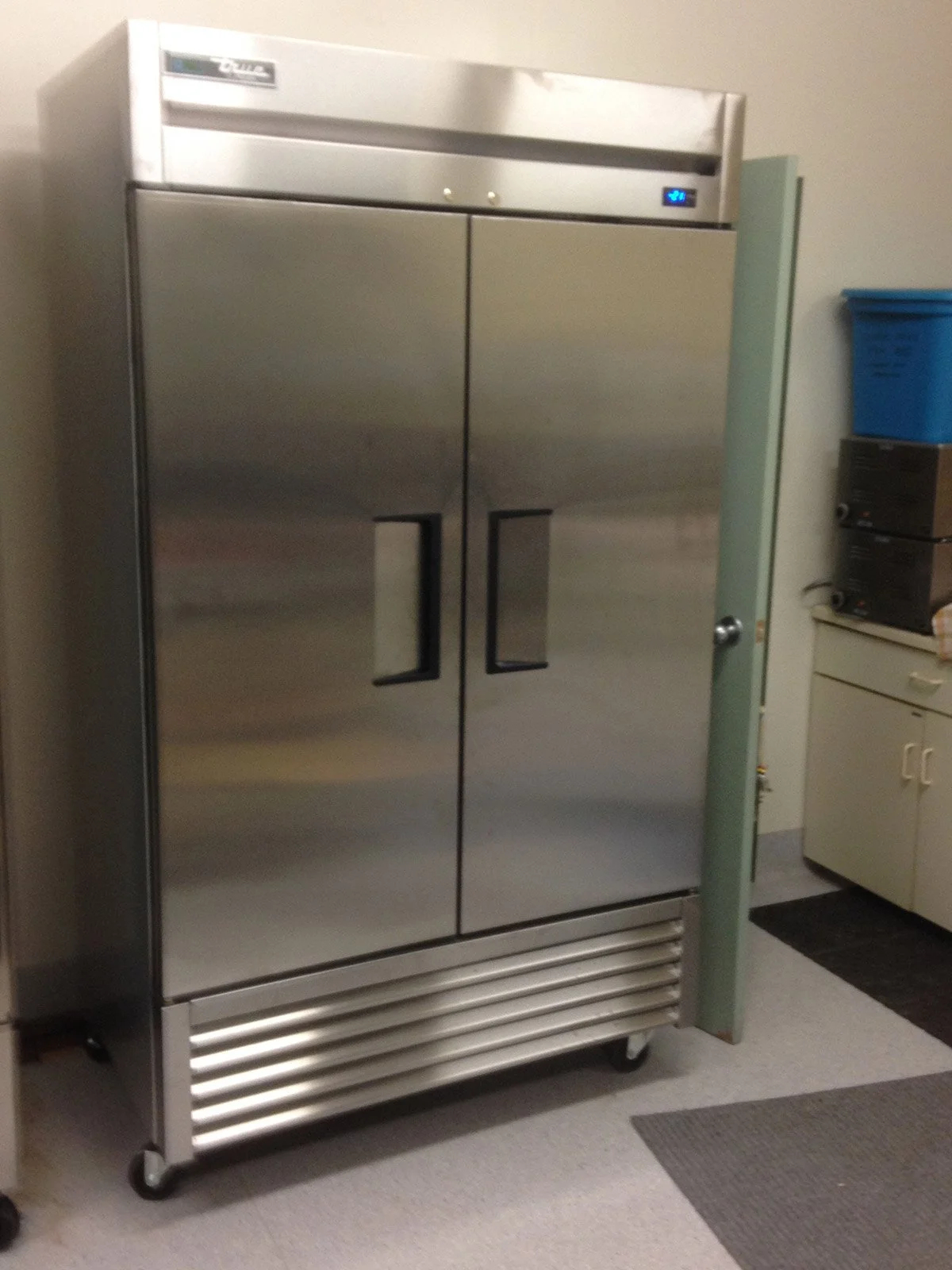
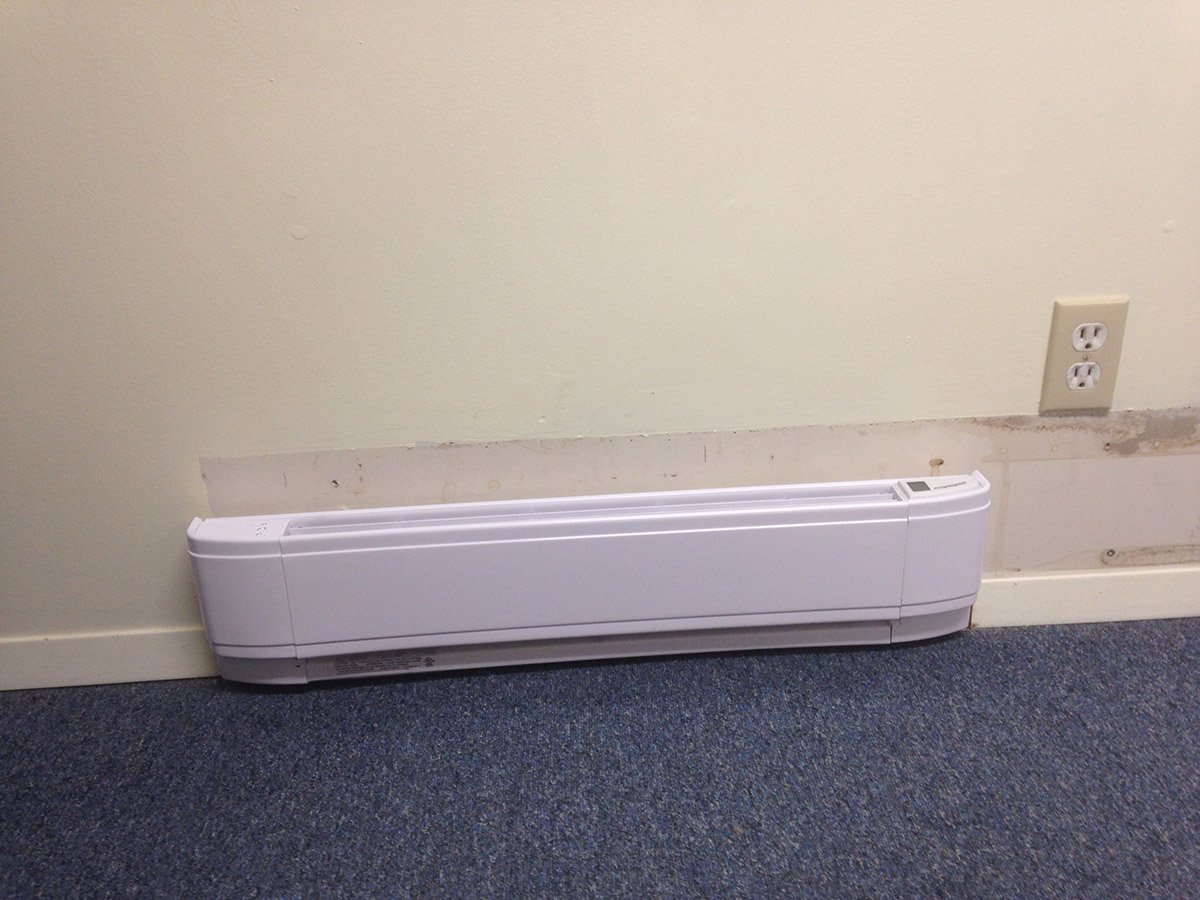
With the funding they received from the Faithful Footprints program, the Centre was able to replace all of their overhead lights with LEDs, invested in high-efficiency baseboard heaters in their office and lodges, and replaced their fridge and freezer. A year following these projects, Sandy-Saulteaux reduced its electricity usage by 22.1%, and energy costs by 9.5%.
Faithful Footprints Program
The United Church of Canada (UCCan) Faithful Footprints program offers inspiration, tools, and grants to help its faith-communities reduce their carbon footprint. With the Church’s commitment to reducing its greenhouse gases (GHG) emissions by 80% by 2030, this one of a kind program offers up to $30,000 in grants towards energy conservation and renewable energy projects (conditions apply).
Faith & the Common Good is the delivery partner for UCCans Faithful Footprints program. To date, we have engaged over 300 congregations, camps, and buildings across the country. Your participation in the program puts your faith into action and helps the Church reach its target.
Kalen Taylor is the Prairies Regional Support Coordinator for Faithful Footprints and can be reached at ktaylor@purposeconstruction.ca

Newo: An Extraordinary Organization with a Vision to Serve Community and Planet
An abundance mindset (you choose your own wage?!). Founded on a vision of sharing harmonious relationships with all Earth’s kin. Committed to decolonizing all levels of engagement and conducting business. Alberta-based, non-profit social enterprise, Newo.energy is all this and more.
An abundance mindset (you choose your own wage?!). Founded on a vision of sharing harmonious relationships with all Earth’s kin. Committed to decolonizing all levels of engagement and conducting business. Alberta-based, non-profit social enterprise, Newo.energy is all this and more.

Team installing solar panels on roof.

Cari Kilmartin
Cari Kilmartin, a member of the communications team explains the organizational structure: “We speak of Newo as a tree,” she says, describing how the roots are the board and the wider community of supporters, elders and partners, the trunk pertains to the organizational culture and administrative functions, and the branches of the tree refer to its services.
Roots
Founded in 2016, Newo grew out of the values encapsulated by the Spirit of the Land class of the University of Alberta Augustana Campus, led by Raj Rathnavalu, a former Buddhist monk. Cari participated as a student. “It was nothing like a university class,” she recalls, describing how the course involved engaging with farmers, ecologists, Indigenous leaders, and practicing meditation and contemplation. “We read Wendall Berry, Thomas King, The Inconvenient Indian, to quote a few books.”
The organization's name itself, Newo, was a gift from a Samson Cree First Nation Elder and signifies “four” in Plains Cree, encompassing the four elements (earth, air, wind and fire); seasons (winter, spring, summer and fall); directions (north, south, east, and west); and aspects of being human (mind, body, spirit and emotion).
Trunk
With a focus on Indigenous-settler relations, Newo’s internal structure and culture starts inwards, out. With weekly staff check-ins, “Newo tends to create a space for people to show up their full selves,” Cari says. “It’s about decolonizing ourselves first, because it is necessary to look inward. It can be a struggle; most people go through existential crisis, you come out on the other side stronger.”
Branches
Newo began with solar design and installation as its main service, and to date, the organization has completed 35 solar installations (that is, over 150 kW in ground mounts and off grid systems, over 250 kW in residential systems, and approximately 500 kW in commercial systems). Other services include energy audits and educational workshops. Newo is also exploring initiatives that include Indigenous food-security projects and pay-it-forward financing models.
As a Regional Support Centre for the United Church of Canada’s Faithful Footprints program, Newo has engaged about 30 United Church communities since starting in November 2021.
The program itself, delivered by the national multifaith environmental network, Faith & the Common Good, offers grants, tools and inspiration to help UCC congregations reduce greenhouse-gas (GHG) emissions 80% by 2030.
Two churches completed solar projects this spring: First United Church Wetaskiwin and Riverbend United Church, Edmonton. Newo assisted these church groups with the grant process as well as installing the solar panels, with the actual installation provided via their latest program, Pecamu Makoce (Stoney for “fixing the earth”). This program is an Indigenous-led training and employment program, specifically targeted to the Alexis Nakota Sioux Nation, and headed by one of Newo’s first ever trainees, Joby Yellowdirt (who is a member of Alexis). The program not only trains people for future employment, it also aims to equip participants with life skills such as money management and more.
Moving Forwards
Talking with Cari, her enthusiasm for the organization is palpable. Recently, thanks in part to Cari’s “love letter to Newo'', the group won an Alberta Emerald Award. Cari says she applied for the award as a surprise for the Newo team: “It was cool and exciting to be recognized.”
Currently, the team is working on their ‘trunk’, that is, their culture, and making it easier for people to help people. “A lot of people come into this group, there are tons of different perspectives that emerge,” she says.
When it comes to engaging broader audiences, Cari recommends basing communication efforts on where people are at, “rooted in compassion, and in an open, inviting space.”
Hopeful future

Team out in the field, in front of solar installation.
Is there reason for a hopeful future? “Depends on the day,” Cari admits. Being a member of such a unique organization like Newo is both “a blessing and a curse” in the sense that being in an orbit of like-minded people can prove a bit of a shock when you step out of it. “I have no idea how I am going to work for another organization,” she jokes.
“Newo really encourages me; on the whole, it’s easier to be hopeful. Ultimately, it starts with what you do, in your circle and then, cross your fingers,” she concludes.

How the Power of Perseverance Sustained the Tatamagouche Centre Rebuild Project
Following through with large-scale building renovations requires commitment and persistence, as there are many obstacles that are likely to arise. Financial barriers, resource shortages, and global issues can cause delays and even full on restructuring of project plans.
Following through with large-scale building renovations requires commitment and persistence, as there are many obstacles that are likely to arise. Financial barriers, resource shortages, and global issues can cause delays and even full on restructuring of project plans.
Over the past two years, due to COVID-19, Canadians experienced the brunt of timber scarcity, inflation, and building closures. United Churches and affiliated buildings were no exception. As a result, ministry transitioned online, and buildings and property plans were put on hold. But despite these challenges, many United Church properties were still able to see the crisis as an opportunity to retrofit their buildings, and become more sustainable, thanks to the support of the Faithful Footprints program.
“The Centre’s Board of Directors, Executive Director, and staff team all agreed that this moment presents a rare opportunity to do the first phase of their retrofit plans while the programs were closed.”
- Tatamagouche Centre Project Team, NS
The Tatamagouche Centre, also known as The Atlantic Christian Training Centre is a Community Ministry of the United Church of Canada, located in Tatamagouche, Nova Scotia. The Centre was one of the many communities that took full advantage of their building closure and continued their efforts to rejuvenate and upgrade it.
After a brief closure back in 2015, and through a deep, spiritual process of loss and renewed commitment, the Centre was on a promising track to turn things around for the Ministry. In the fall of 2016, the Centre’s Board of Directors, Executive Director, and staff team prepared a robust business plan for 2017-2021, renewing the Centre’s finances, programming, and administration. But everything changed in March 2020, and, as with many congregations across Canada, the Tatamagouche Centre was closed until further notice. Yet, through financial setbacks and the uncertainty of the pandemic, and with no idea as to when their work would continue, the working group persevered in their efforts. There was enough optimism amongst the team to consider doing a green retrofit.
Developing a Plan to Prosper: A 3-Phase Retrofit
The working group was confident in their ability to anticipate and mitigate potential risks that could come up in the process of completing their retrofit project. They were aware that the costs of the renovations might exceed original estimates, and were concerned that they might not have the in-house staff expertise pertaining to building, construction, and engineering, rendering them vulnerable to mistakes and exaggerated quotations. So, the team established a thorough mitigation strategy to confront these risks, including splitting their full project plans into three phases. The three phase plan would enable them to make informed and incremental changes in subsequent phases. This would allow them the opportunity to seek a feasible amount of funding for each phase, and lean on the extensive project management and community finance experience of a highly skilled advisory group of staff and experts.
Considering the challenges at the time, the Tatamagouche Centre applied to the Faithful Footprints retrofit grant to support the most strategic part of the green retrofit project. Phase 1 focused on replacing and insulating the main roof and re-doing the wall and windows in the chapel in preparation for Phase 2. Phase 1 was completed in June 2021.
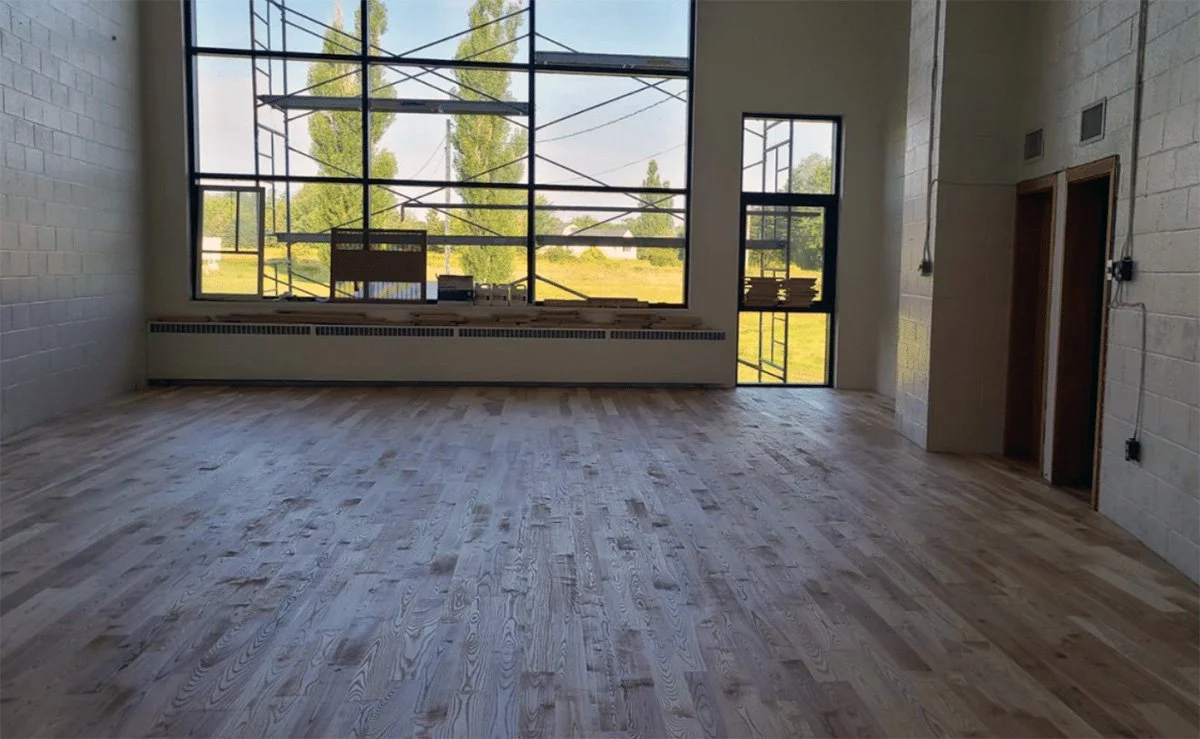
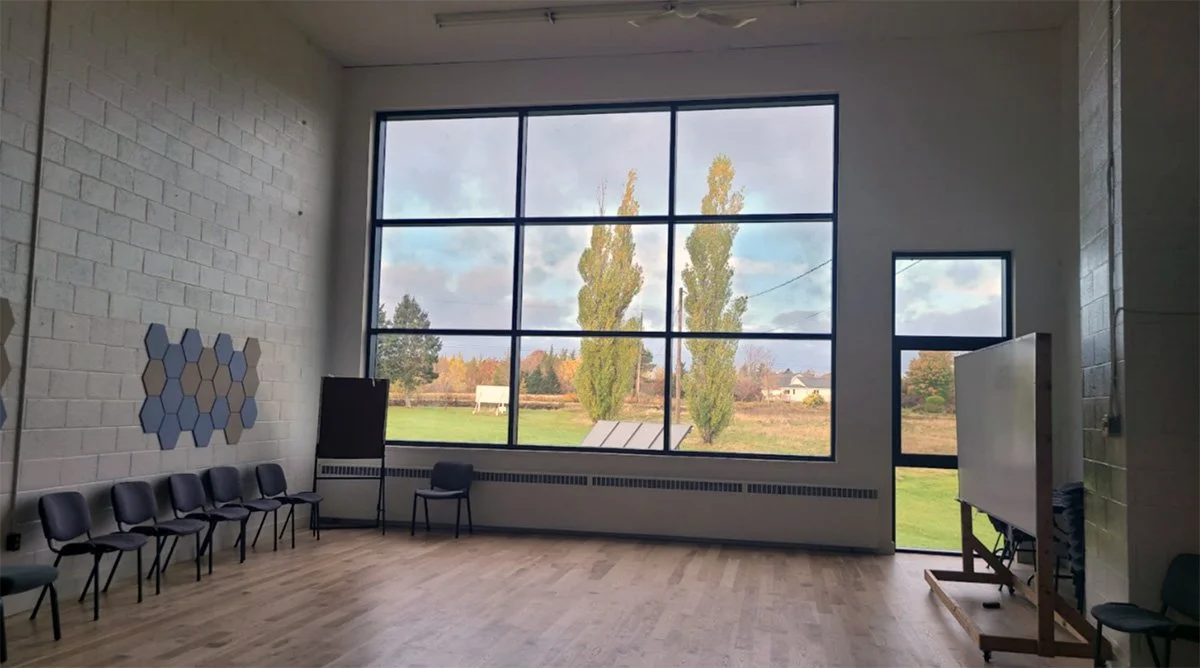
A year on, following these projects, the Tatamagouche Centre reduced GHG emissions by 44.9%, energy costs by 20.6%, electricity use by 38.1%, and fuel oil usage by 47.8%, demonstrating some of the highest energy and decarbonization reductions among United Church properties within the program. Even further reductions are expected over the next couple of years, as the team plans to complete the second and third phase of their retrofit project. Phase 2 will include a full electrical upgrade, heating and cooling replacement, with an overall envelope re-design. Phase 3 will include replacing remaining windows, repairing and insulating the exterior North-facing wall and re-cladding.
Building Up The Tatamagouche Centre
“We’re so grateful for your partnerships and donations. Every bit of loving support from our communities makes a difference.The support of our community has meant so much to us in these past years, and we thank you for your love and stewardship of the Centre. It has been a brutal time but we feel more resilient and hopeful than ever – the Tatamagouche Centre is more important and relevant than ever, and we see it enduring and flourishing.”
- Staff and Board of Tatamagouche Centre, NS
Behind the dedication to rebuilding the Tatamagouche Centre, there is a large supportive network who value the Centre deeply, including current and past participants, program leads, former staff, members of local communities, and hundreds of members of the United Church of Canada. Their devotion to sustaining the Centre is much larger than the building itself.
Thinking ahead, ten years from now, The Tatamagouche Centre’s vision is for their whole building to be updated, and to have hundreds of highly engaged members within the ministry. The team hopes to become known locally for their green retrofit. They hope faith communities with old buildings that have an interest in alternative energies and those who have heard about the breathtaking chapel, will flock to the Centre to learn more about how they accomplished their restoration goals.
You can read more about the spiritual meaning behind The Tatamagouche Centre’s Green Retrofit project in our guest blog ‘Retrofitting our Sacred Space with Faithful Footprints Funding’ written by Tatamagouche Executive Director, Nanci Lee.
Faithful Footprints Program
The United Church of Canada (UCCan) Faithful Footprints program offers grants, tools and inspiration to help its congregations reduce their carbon footprint. With the Church’s commitment to reducing its greenhouse gases (GHG) emissions by 80% by 2030, this one of a kind program offers up to $30,000 in grants towards energy conservation and renewable energy projects (conditions apply).
Faith & the Common Good is the delivery partner for UCCans Faithful Footprints program. To date, we have engaged over 300 congregations, camps, and buildings across the country. Your participation in the program puts your faith into action and helps the Church reach its target.
Aleyxa Gates Julien is the PR/Communications Coordinator for Faithful Footprints and can be reached at agatesjulien@faithcommongood.org

Topsail United’s Retrofit Project: A Supportive Team is the key to Success
Without the right tools, resources and team in place, renovating and updating a faith community building can seem difficult and overwhelming. In the case of Topsail United Church in Conception Bay South, Newfoundland, a supportive church community was key to the success of the church’s first efforts at greening its building and reducing their energy footprint.
"The most important lesson that our church community has learned from our partnership with Faithful Footprints is how easy it was to participate in the program. Our contacts at Faithful Footprints were always accessible and they walked us through the program steps promptly and efficiently."
– Paul Burt, Topsail United Church, Conception Bay South, NL
It's no secret that renovating and updating a faith community building or even just the sanctuary requires a lot of planning and support. Without the right tools, resources and team in place, this process can seem difficult and overwhelming.
Sometimes, support for a retrofit project can come from members of the congregation themselves. In the case of Topsail United Church in Conception Bay South, Newfoundland, a supportive church community was key to the success of the church’s first efforts at greening its building and reducing their energy footprint.
In addition to having an energetic and enthusiastic church community, it was equally important for the church to have the support of a team with building retrofitting expertise that could guide them throughout each stage of their project plans. The church found that team in the Faithful Footprints.
A United Church of Canada program, Faithful Footprints aims to bridge those gaps by providing United Church congregations, camps, or outreach ministries the appropriate tools, financial and educational resources, and supportive staff to fulfill their energy efficient and decarbonization building retrofit projects.
The Journey begins
Topsail United’s Board Chair, Paul Burt came to the Faithful Footprints grant program with the hope of reducing their energy costs and improving lighting quality – two very common reasons that congregations seek out this program. Within a few days of receiving their expression of interest, Faithful Footprints Building Manager, Stephen Collette went over the grant program with Paul, as is the first step of the program. This stage allows property managers to understand the possibilities that exist within the program, as well as any changes or suggestions that can be made to the initial retrofit idea. It is also an opportunity for Stephen to get in depth details about a building.
Burt explained that they had a wood framed building with a walkout basement, as the site slopes down towards the ocean. Newfoundland has one of the cleaner electrical grids in Canada, so it was no surprise that the building ran on all electric heat. Stephen said that the building’s energy usage was in great shape from a carbon perspective, with no oil appliances in use. What they did have was old electric baseboards and fluorescent tubes everywhere, and both of those were costing them energy dollars.
Even before applying to the Faithful Footprints grant, Topsail United’s idea for a mini-split heat pump and LED lighting retrofit had been discussed with enthusiasm in annual congregational meetings for the past three years but had been delayed due to COVID-19. With the virus curtailed, the energy-conscious congregants were excited to resume their plans and finally green their church building. Stephen agreed: it was a solid plan, with easy payback given the energy savings, and the bonus $20,000 support from the United Church of Canada. The church knew that they had some older fridges and freezers that needed replacing as well, but instead stuck to a budget and a plan that would allow them to do what they could with the money available to them.
Two months and ten days later, Topsail United’s project was completed from start to finish. This community is proof that with the right tools, resources, and willing team in place, anything is possible!

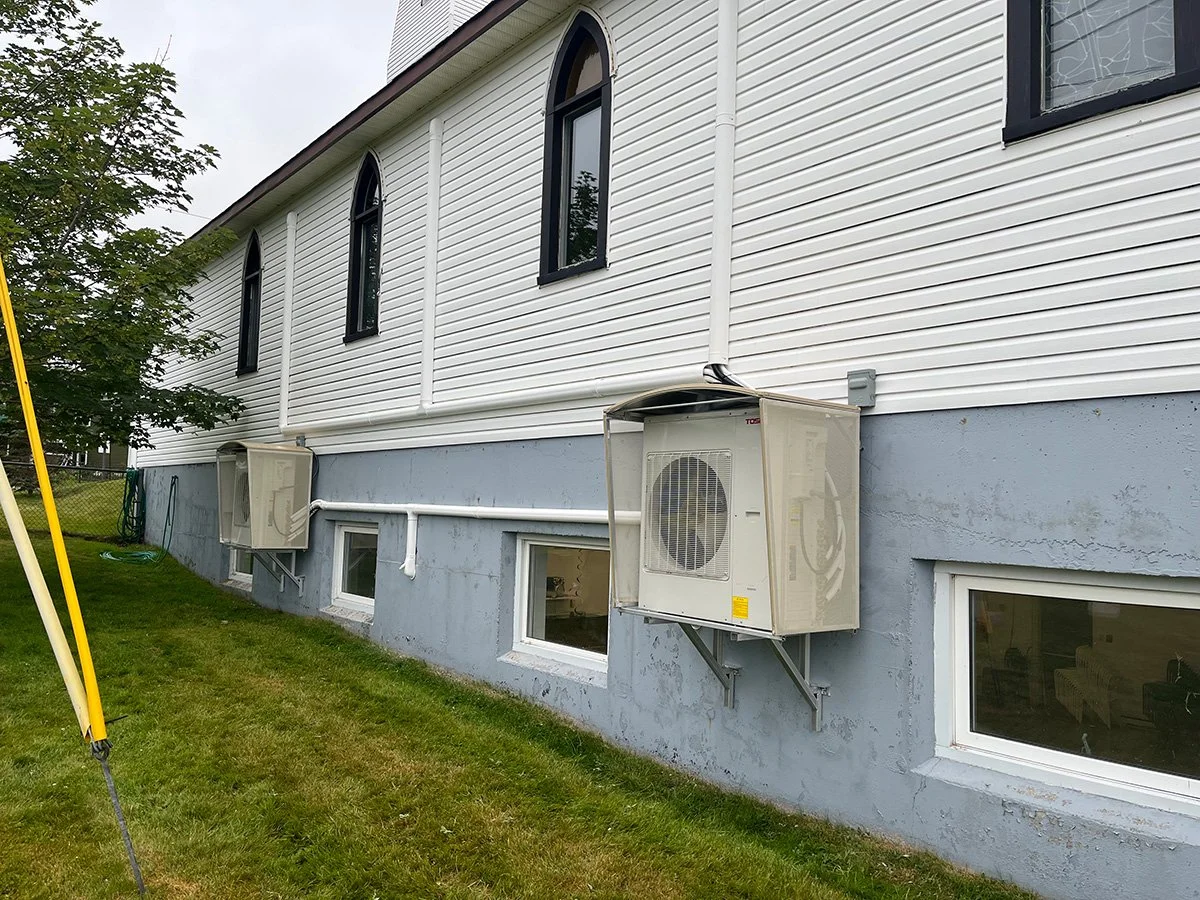
Topsail United installation of mini-split heat pump system


Topsail United with fluorescent lights and after the installation of LED lights
A year from now, the Faithful Footprint’s team will be reaching out to collect another year’s worth of energy data to compare the before and after energy savings and greenhouse gas reductions of Topsail United’s congregation's efforts.
Testimonials from Faithful Footprints participants
After successfully completing the program, many participating congregations have expressed how the support and guidance they received from the Faithful Footprints staff contributed to the success of their projects. Here’s what they say:
“Along the way we have learned that applying for grants in support of building renovations can be a large amount of work, but very worthwhile. Supporting large renovation projects of this type requires a dedicated group of people willing to stay on board for a long period of time.”
Rosemary Embree, Trenton United Church, Trenton, ON
“Once we decided to actually go for the project and pursue it with some dedication, things went very smoothly. We went from an idea, to a grant application the next day, to a fully funded project three months later."
Justin Wheler, St. Paul's United Church, Edmonton, AB
Explore our other stories on community, support, and collaborations:
Getting Started
The more you can learn about your building, the more you can save energy, minimize maintenance costs, and maximize the usage of your amazing faith community building.
Start with free guides that we have on our website. The DIY Faith Building Energy Audit Guidebook and the Energy Star Action Workbook for Congregations are amazing resources you can download, read, learn, and even take action with these free resources!
You can also utilize our professional knowledge with virtual Green Audits that look at energy, air quality, food, water, waste, maintenance, rental agreements, heritage and much more.
Faithful Footprints Program
The United Church of Canada (UCCan) Faithful Footprints program offers grants, tools and inspiration to help its congregations reduce their carbon footprint. With the Church’s commitment to reducing its greenhouse gases (GHG) emissions by 80% by 2030, this one of a kind program offers up to $30,000 in grants towards energy conservation and renewable energy projects (conditions apply).
Faith & the Common Good is the delivery partner for UCCans Faithful Footprints program. To date, we have engaged 300 congregations, camps, and buildings across the country. Your participation in the program puts your faith into action and helps the Church reach its target.
Stephen Collette is the Building Manager for Faith & the Common Good and can be reached at 705-652-5159 EDT, scollette@faithcommongood.org

Extreme Weather Neighbourhood Resilience and Your Energy-Efficient Faith Building
Wondering what energy efficiency has to do with emergency preparedness? Not knowing what our energy needs are makes it more challenging to manage or provide services. Depending on the service you would like to provide at times of extreme weather crisis, there are different building and energy systems to consider.
Extreme weather, ice storms, flooding, and wind events are increasing in frequency and affecting our communities on a more regular basis. The New York Disaster Interfaith Services (NYDIS) is a faith-based federation of service providers and charitable organizations who work in partnership to provide disaster readiness, response, and recovery services to New York City (NYC). Their goal is to help faith-based organizations (FBOs) in NYC be better prepared for climate disasters and able to offer support to their neighbourhoods. Recently, as part of their Faith Sector Community Preparedness Program (FSCPP) Summer 2022 ‘Lunch n Learn’ Webinar Series, I gave a talk called “Green Your House of Worship: Save $ and Increase Resiliency.” There were various non-profit and governmental organizations, and leaders from faith communities in attendance, all trying to grapple with the climate crisis and what their role would or could look like during an event, given that many NYDIS faith communities are within marginalized areas of the city with limited support in times of need.
In my talk, I discussed how lowering the energy footprint of your house of worship can increase its resilience and in times of crisis, with the right resources and a plan in place, serve as a community ‘climate disaster emergency hub.’
You may be wondering, what energy efficiency has to do with emergency preparedness. Well, not knowing what our energy needs are makes it more challenging to manage or provide services. Organizations on the call strongly supported my recommendation of using software like Energy Star Portfolio Manager to understand building energy usage and consumption. This unique software is an interactive resource management tool that enables users to benchmark their energy use, and track and improve the energy efficiency of any type of building, all in a secure online environment. The national benchmarking tool in Canada, the Energy Star Portfolio Manager is a great tool to use across a wide portfolio of properties, including United Church (UCCan) buildings as it can show congregations their energy data in a meaningful and easy to understand way. UCCan’s Faithful Footprints grant program is a proud supporter and user of the system.
Identifying Your Needs and Service Plans
Once you have a sense of your building’s energy consumption, you can then look at ways to lower it. Depending on the service you would like to provide at times of extreme weather crisis, there are different building and energy systems to consider. Do you wish to offer a place for neighbours to charge their phones and maybe get a cup of coffee? That could probably be supplied by a portable gas generator operating outside the building. For heat waves you may want to provide cold beverages. In the latter case, if you are still using that 1980’s fridge, the portable generator won’t be enough. You would also need good lighting throughout the building. LED lights would be a great option, as they are going to use way less electricity than incandescent lights. If you decide to offer meals, then you would need a lot of electricity for hot water, fridges, freezers, stoves, and more.* In many cases, a permanent backup generator can be the solution to offering multiple services, due to its wide array of uses. A backup generator can provide the capacity to have people stay overnight as well as offer public facilities like bathrooms and showers. It can help supply heating or air conditioning for temporary shelter as well.
Ultimately, in times of crisis, any service is a great help to the community. The first 72 hours after an extreme weather-related event is the most challenging as neighbours are at their greatest need. There are no right answers to what your faith community could offer. However, it is important to remember that equipping your building is only one aspect of preparing to be a climate disaster emergency hub. For instance, making sure you have enough volunteers and ensuring there are secure travel arrangements, safety precautions, and communication methods in place. All of this is critical in the planning process of preparing to serve your community during times of crisis.
Taking Part in City-Wide Extreme Weather Preparedness
It’s more than likely your municipality is already discussing climate-induced, extreme weather preparedness strategies. But they can’t do it alone. As pillars in the community, often located in central areas, FBOs can share the responsibility of responding to weather emergencies in becoming neighbourhood resilience hubs. In the case of Oakville, Ontario, as part of developing climate adaptation and community master plans to reduce vulnerability and increase resilience, the Town of Oakville works with local FBOs directly to roll out the OakvilleReady program. Faith & the Common Good is the inspiration behind this program and also a partner.

Funded by the Oakville Community Foundation, OakvilleReady has established neighbourhood extreme weather resilience hubs serving as care anchors. Currently, eight OakvilleReady hubs are operating across the city, including St. Paul United Church and Faithful Footprints participant, Maple Grove United Church.
Your municipality may also have local initiatives and financial incentives to help your faith group become better equipped to help the broader community during emergencies.

St.Paul United Church, Oakville, ON
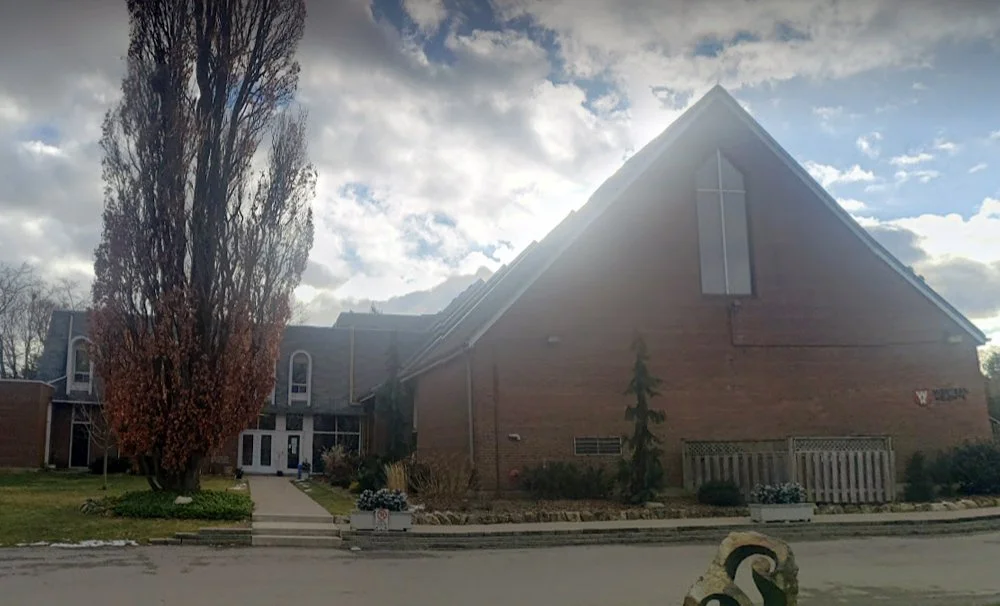
Maple Grove United Church, Oakville, ON
Getting started
By better understanding your building and its energy consumption, you can make informed decisions moving forward, concerning how you can take part in serving your community in times of crisis and local environmental disasters.
Start with free guides that we have on our website. The DIY Faith Building Energy Audit Guidebook and the Energy Star Action Workbook for Congregations are amazing resources you can download, read, learn, and even take action with these free resources!
You can also utilize our professional knowledge with virtual Green Audits that look at energy, air quality, food, water, waste, maintenance, rental agreements, heritage and much more. The more you can learn about your building, the more you can save energy, minimize maintenance costs, and maximize the usage of your amazing faith community building.
Faithful Footprints Program
The United Church of Canada (UCCan) Faithful Footprints program offers grants, tools and inspiration to help its congregations reduce their carbon footprint. With the Church’s commitment to reducing its greenhouse gases (GHG) emissions by 80% by 2050, this one of a kind program offers up to $30,000 in grants towards energy conservation and renewable energy projects (conditions apply).
Faith & the Common Good is the delivery partner for UCCans Faithful Footprints program. To date, we have engaged almost 300 congregations, camps, and buildings across the country. Your participation in the program puts your faith into action and helps the Church reach its target.
Stephen Collette is the Building Manager for Faith & the Common Good and can be reached at 705-652-5159 EDT, scollette@faithcommongood.org
*Warning! Gas stoves still need ventilation when in use, to prevent carbon monoxide poisoning.

Retrofitting to Serve Community Better - Camp Scugog’s Journey to a Four-Season Building
Camp Scugog is one of the oldest camps in Canada. Its buildings were not designed for all weather use. Camp staff knew that in order to maximize the use of the property, and expand capacity for winter operations, a building retrofit that involved installing a heating and cooling system to their property’s main facility was not only critical but necessary.
“For so many years we've wanted to be able to make better use of our property. We have over 300 acres and only having a summer camp really didn't seem fair. To be able to expand into the colder seasons and now the winter is just like a dream come true”
- Carol Rhynas, Assistant Director at Camp Scugog
United Church Fresh Air Camp, Camp Scugog, has been offering programming since 1912 to thousands of children, youth, and mothers affected by poverty and other barriers to wellbeing. Located in Nestleton, ON, on the shores of Lake Scugog and surrounded by over 300 acres of the beautiful natural landscape, the camp specializes in providing an outdoor camping experience, focused on community, stewardship, growth, play, and respect. With a dozen different programs, it aims to foster creativity and cooperation and to build a strong sense of self and community among campers.


Camp Scugog entrance gate and main facility building
Camp Scugog is one of the oldest camps in Canada. Its buildings were not designed for all weather use. Several staff members had been suggesting that it felt wasteful for their programs to only run two to three months a year. So, with a vision to create a year-round haven for inner city kids and their families and serve their community better, Camp Scugog embarked on a long journey to renovate their property.
Camp staff knew that in order to maximize the use of the property, and expand capacity for winter operations, a building retrofit that involved installing a heating and cooling system to their property’s main facility was not only critical but necessary.
Farm House Reno Geothermal Project: Towards a Four-Season Building
“Our new geothermal system is going to improve the lives of our staff and campers immensely”
- Gary Hoey, Assistant Director at Camp Scugog
As Camp Scugog’s first major green infrastructure build, the Farm House Reno would require the largest financial investment out of all its buildings. The staff was adamant about selecting a heating and cooling system that would be both economically and environmentally friendly. After much research, the camp decided to install a geothermal system. Geothermal is a renewable energy source that is both environmentally and economically sustainable. The ground source system uses water circulation to convert the natural underground temperatures of the Earth to a viable source of energy to heat and cool indoor spaces, without the need for additional energy conversion. In search of additional funding for the project, Camp Scugog applied for the Faithful Footprints grant. They were successful and in 2022, the Farm House was renovated with a geothermal heating and cooling system. Because of this retrofit, after over one hundred years of service, Camp Scugog is now equipped to run programs year-round.

Installation of geothermal piping. Credits: Gary Hoey

Camp Scugog Meadow after geothermal system installation
Newly installed vents in Dining Hall

Newly installed ducts in basement
Growing Capacity to Serve Better
“We can use the site and offer so much more, to many more kids and families”
- Carol Rhynas, Assistant Director at Camp Scugog
With their newly transformed four-season facility, Camp Scugog is in a position to provide additional programming and establish new programs specifically designed for the colder months. For example, the camp will now be able to host events and programs like Winter Weekends, March break, and leadership camps. The updated main facility will also provide additional programming space for their Nature School campers during the summer. It will also open doors for revenue-generating opportunities like event rentals and school groups.

Credits: Camp Scugog Website

Retrofitting: An Investment in the Future
“We get to be models for our kids. We get to lead in this fashion, teaching some the younger generations, and demonstrating to our campers more efficient models of heating and cooling for the future.”
- Gary Hoey, Assistant Director at Camp Scugog

The property’s Farm House renovation and geothermal system represent not only an investment in the future of Camp Scugog and its campers but also, in that of generations to come. The new four-season facility symbolizes an active effort to ensure the camp’s continued safety, growth, and success in welcoming and serving under-privileged youth and families. To highlight the retrofit, Camp Scugog plans to install a permanent display outside their main facility describing the geothermal project, how the system works, and recognizing donors who contributed to the project.
Interested in more retrofit stories?
Every month, the Faithful Footprints program approves several applications and welcomes new United Churches and affiliated properties into the program, and celebrates with those congregations that complete their projects and receive their final energy reduction results. Keep up with these amazing retrofit projects by subscribing to our Monthly Newsletter and following us on Facebook and Twitter.
Faithful Footprints Program
The United Church of Canada Faithful Footprints program offers grants, tools and inspiration to help its congregations reduce their carbon footprint. With the Church’s commitment to reducing its greenhouse gases (GHG) emissions by 80% by 2050, this one-of-a-kind program offers up to $30,000 in grants towards energy conservation and renewable energy projects (conditions apply).
Faith & the Common Good is the delivery partner for the Church’s Faithful Footprints program. To date, we have engaged almost 300 congregations, camps, and buildings across the country. Your participation in the program puts your faith into action and helps the Church reach its target.
Aleyxa Gates Julien is the PR/Communications Coordinator for Faithful Footprints and can be reached at agatesjulien@faithcommongood.org.

Cooling Older Buildings Cheaply
Hot and humid air is miserable for human comfort–deadly, even. That’s why, with summer upon us, Canadians are all looking at ways to beat the heat and stay cool within our buildings. Before chasing the newest technology (provided you can even afford it) it is worth considering the unique ways that some buildings can cool naturally, as well as quick and easy ways to keep the heat out.
Hot and humid air is miserable for human comfort–deadly, even. That’s why, with summer upon us, Canadians are all looking at ways to beat the heat and stay cool within our buildings. Before chasing the newest technology (provided you can even afford it) it is worth considering the unique ways that some buildings can cool naturally, as well as quick and easy ways to keep the heat out.
Cooling by Design: Smart Old Buildings
Many Church buildings are designed to enable natural cooling. In last month’s blog ‘Level up the energy efficiency of your building: Control air leakages’, I wrote about the ceiling vents found in many old faith community buildings and how these should be air sealed and insulated, so as to prevent heat loss in the cold weather. However, these ceiling vents actually benefited the building in the hotter months (pick your poison?). Their initial purpose was to cool the building down by creating a chimney effect to draw the hot air up. At the bottom, since we need a supply point, this was typically the windows along the sides of the sanctuary where the congregation gathered. These are hopper-style windows in the bottom of the stained glass (opening from the bottom hinge), or sash windows, that slide upwards. This cooling system would pull air across the congregation and then be sucked out the hole at the top. So if you can make those holes airtight in winter, and still operable in summer (just like normal doors and windows), then you can use the design to your advantage.

A pretty fresh air inlet that is also stained glass -St. Lambert United Church, Saint-Lambert, QC

A pretty exhaust chimney, that is also a steeple -St John the Evangelist United Church, Crapaud PEI
No sweat ways to keep it cool
Whether your building was built a century ago or a few decades back, there are several ways to cool your building that don’t involve spending a lot of money. Take a look around your building, and you will be surprised to find many design elements that help with cooling.
Try opening doors, especially on the north side and front and back of the building, to help create a supply source of air. If you have an attic hatch, a door to a tower, minaret, or steeple, opening the access point in the summer will create the draft and exit point in your building. This natural ventilation also called the stack effect or chimney effect works pretty well. This will, of course, pull hot summer air in, but the breeze itself can create a cooling effect.
Tip: Staying safe is always more important than a nice breeze. Do remember, that if people are crawling around in the attic, or up on old ladders that safety must come first. Ensure to always consider the safety risks beforehand.
Make sure to insulate the attic. Insulation protects from the heat in the summer, and the cold in the winter. The more insulation in the attic, the more comfortable it is in the summer and in the winter.
Ceiling fans in the sanctuary should be running in the summer. This is the simplest, low-cost mechanical step to take first. We actually want the fans blowing down on us so we feel a breeze on our skin. This does seem counterintuitive since the hot air is up there, but it is actually the movement of air across our skin from a fan that makes us feel cooler, through transpiration.
Tip: Only run the fans while people are in the building, and let the stack effect work on its own. Another trick is to flush the building out at night by opening windows, and hatches, and closing them all up during the day. This can cool a building, including your home, and helps reduce the need for mechanical interventions.
When all else fails
The above recommendations are great ways to save money, relieve your community of the hot scorching weather, and reduce the need for mechanical cooling in your building. However, the likelihood that any of these tips will completely eliminate the need for mechanical intervention is rare. With the effects of global warming, some of these recommendations may not be as efficient and even backfire in certain regions with high humidity. This is an issue that is experienced more and more across the country, so it is important to pay attention to your local weather beforehand and make a suitable judgment call.
But what kind of mechanical intervention is beneficial? Well, we’ve discussed before the use of heat pumps in faith community buildings as a way to save energy in the winter; but they also provide much more efficient cooling in the summer as well. The old window air conditioner you may have in the office is a beast and costs you a lot of money to run. Switching it out for a heat pump, and maybe ceiling fans in offices and rental spaces will be worth the upfront cost as they will pay for themselves quickly in happiness. I worked with one congregation who was putting heat pumps in just to make sure their administrator didn’t quit because it was too hot in her office in the summer!
By understanding your building better you can make better energy and environmental decisions moving forward. Start with free guides that we have on our website. The DIY Faith Building Energy Audit Guidebook and the Energy Star Action Workbook for Congregations are amazing resources you can download, read, learn, and even take action for these free resources!
You can also utilize our professional knowledge with virtual Green Audits that look at energy, air quality, food, water, waste, maintenance, rental agreements, heritage, and much more.
The more you can learn about your building, the more you can save energy, minimize maintenance costs, and maximize the usage of your amazing faith community building.
Faithful Footprints Program
The United Church of Canada (UCCan) Faithful Footprints program offers grants, tools, and inspiration to help its congregations reduce their carbon footprint. With UCC’s commitment to reducing its greenhouse gases (GHG) emissions by 80% by 2050, this one-of-a-kind program offers up to $30,000 in grants toward energy conservation and renewable energy projects (conditions apply).
Faith & the Common Good is the delivery partner for UCCans Faithful Footprints program. To date, we have engaged over 200 UCCan congregations, camps, and buildings across the country. Your participation in the program puts your faith into action and helps UCC reach its target.
Stephen Collette is the Building Manager for Faith & the Common Good and can be reached at 705-652-5159 EDT, scollette@faithcommongood.org

Level up the energy efficiency of your building: Control air leakages
We have been trained to think about energy efficiency best practices for buildings in terms of improving insulation. It’s an easy enough concept to understand because we can experience heat loss personally. However, we often overlook other influences that affect energy efficiency, such as air leakage. Learn more you can control air leakage in your faith building.
We have been trained to think about energy efficiency best practices for buildings in terms of improving insulation. It’s an easy enough concept to understand because we can experience heat loss personally. For example, on a cold day, if you don’t have a thick enough coat, you feel cold. It follows that more insulation will keep us warmer in colder weather. However, we often overlook other influences that affect energy efficiency, such as air leakage. If you have ever had the wind blowing up under your coat in winter, chilling you to the bone, you can probably envision the impact of air leakage as it relates to your buildings; a similar experience occurs when cold air enters through unsealed or exposed gaps. In addition to causing discomfort, air leakages in winter can create massive heat loss as well as condensation, resulting in damage to the building itself.

Old ceiling roundel at Calvary United Church in London, ON
Many faith community buildings are made of materials like stones, blocks, bricks, and plaster. These ‘heavy’ buildings are considered thermally massive, as they perform differently than our thermally insulative homes (having insulation in the walls). Thermally massive buildings act like energy batteries; they store heat in the masonry and then release it when the temperature drops. This process helps effectively regulate the indoor climate of the building. This is why tile floors on the north of a building feel cool. The tile floors remain cool because they don’t get warmed by the sun. By contrast, a stone path on a sunny but cold spring day feels really warm.
Air Leakages – A Loss of Hot Air
In many houses of worship, if insulation isn’t the issue, then air leakage is usually the main reason for heat loss. Since hot air rises, the taller the chimney the greater the draught. Typically, faith buildings are REALLY tall, often with a taller chimney attached to it, called a bell tower/spire. These chimneys are so tall that the leaking air is sucked out of the holes at the top of the ceiling or into the tower. This air leakage can be measured as cubic metres of air per minutes.
This means (jokingly) that you might as well be standing under the chimney with the collection plate until all the $20 bills are sucked up to plug the hole, because that’s how much it’s costing you!
The point is, the conditioned air is not where it needs to be. Instead, this air is exiting from around attic hatches and doors to the bell tower, and through old ceiling roundels. The image depicted above is an old ceiling roundel, and is basically a four foot diameter hole in the ceiling straight to the attic. This roundel is causing a large amount of heat to escape from the room to the upper attic. I’ve seen a church that had two – eight foot roundels in their sanctuary. Can you Imagine how much heating dollars were leaving those open holes out to the sky?
Plug it up!
There are several ways to reduce heat loss in faith buildings. For one, air sealing the holes in the ceilings, attic hatches and doors to attic spaces, is extremely important in saving energy. In the attic, consider installing an air barrier across the access, and then adding in some insulation. Batts of insulation in black garbage bags can be an easy and lightweight way to safely take care of this. The bags stop the air leakage, and the insulation adds thermal value to the hole. For attic hatches and doors, it is important to make sure they are tightly sealed. The same goes for doors; add weatherstripping and latches. You will see dramatic savings in your energy bills and a significant reduction in your building’s total carbon output. With the carbon you reduce and the money you save, you’ll be making a difference in your climate action goals.
Start the process with the free guides on our website. The DIY Faith Building Energy Audit Guidebook and the Energy Star Action Workbook for Congregations are amazing, free resources you can download, read, learn, and inspire action. You can also utilize our professional knowledge with virtual Green Audits that look at energy, air quality, food, water, waste, maintenance, rental agreements, heritage and much more.
The more you can learn about your building, the more you can save energy, minimize maintenance costs, and maximize the usage of your amazing faith community building.
Faithful Footprints Program
The United Church of Canada (UCC) Faithful Footprints program offers grants, tools and inspiration to help its congregations reduce their carbon footprint. With UCC’s commitment to reducing its greenhouse gases (GHG) emissions 80% by 2050, this one of a kind program offers up to $30,000 in grants towards energy conservation and renewable energy projects (conditions apply).
Faith & the Common Good is the delivery partner for UCCs Faithful Footprints program. To date, we have engaged over 200 UCC congregations, camps, and buildings across the country. Your participation in the program puts your faith into action and helps UCC reach its target.
Stephen Collette is the Building Manager for Faith & the Common Good and can be reached at 705-652-5159 EDT, scollette@faithcommongood.org

Creation Care - Our Collective Responsibility to Invest in our Planet
Now more than ever, collective effort is urgently needed to build on strong foundations which are rooted in creation care across our ministries. United Churches are setting an example of the importance of earth stewardship by putting their own homes in order.
“The Lord God took the man and put him in the garden of Eden to work it and keep it.”
- Genesis 2:15
Earth Day is an annual event where we step back, acknowledge local and global environmental protection efforts, and show our love for our common home. Many people celebrate this day by enjoying the great outdoors or sharing memorable photos of trips, encapsulating Earth’s breathtaking landscapes. This year’s Earth Day theme is ‘Invest in our Planet’ because the state and health of our shared home are under extreme threat. What used to be well-functioning ecosystems, providing us with services are becoming degraded, losing their integrity, or quickly disappearing.
Faith-based groups have a critical role to play in helping to change this around. Now more than ever, collective effort is urgently needed to build on strong foundations which are rooted in creation care across our ministries. With the increasingly devastating impacts of climate change, it is critical for the church to strive to protect the ecosystems which sustain us by encouraging church-wide participation to protect God's living world.

Congregational members landscaping at First United Church in Wetaskiwin, AB - Faithful Footprints Participant
As a community both locally and globally, it is part of our mission to take meaningful and faith-driven action to care for God’s Creation, by reducing our environmental footprint and overall impact on Earth. We are called to be good stewards of Earth through care and preservation and to live in harmony and not in dissonance with the environment that surrounds us. This includes ensuring that the production, management, and utilization of our resources do little harm to the environment.
In Canada, with the support of The United Church of Canada's Faithful Footprints program, United Churches are setting an example of the importance of earth stewardship. Over two hundred congregations from coast to coast to coast have been getting their own homes in order and contributing to sustainability and greening efforts by retrofitting their buildings to be more efficient and by transitioning to more renewable sources of energy.
“Our community and leadership see updating our facilities to better reflect our values, and the reality of climate change as part of our Christian mission.”
- Grace United Church, Dartmouth, Nova Scotia

Shawville United Church in Shawville, QC switched from an oil-fired boiler to an electric boiler. - Faithful Footprints Participant
“The Faithful Footprints program has provided us with the financial means to be better stewards of the Earth.”
- Eastminister United Church, Belleville, Ontario

Ralph Connor Memorial United Church in Canmore, AB transitioned to solar power - Faithful Footprints Participant
“This opportunity not only created a more energy-efficient building, but has created excitement about improving the environment, striving to continue to reduce our carbon footprint, and set an example for our congregation and the community.”
- St. Andrew’s United Church, Cochrane, Alberta

Oak Bank United Church in Oakbank, MB transitioned from four to two furnaces - Faithful Footprints Participant
This Earth Day, Faithful Footprints is inviting more congregations to join the program. We encourage your faith group to pause and consider how your community can help make a difference in the way you care for the Earth and live with respect for Creation, whether it be retrofitting your building, hosting a garbage cleanup, or planting native trees and pollinator-friendly plants on your property. Small or large, individually or collectively, there are many ways that your congregation can actively contribute to a safer, cleaner, and more sustainable home for us all.

Earth Day Celebration at Woodcliff United Church in Calgary, AB - Faithful Footprints Participant
Woodcliff United Church in Calgary, Alberta celebrated their upgrades with an Earth Day worship, highlighting their role of being good stewards of the Earth and how they can collectively make a difference in the world.
Begin your Creation Care journey or continue your stewardship with our free guides, including The DIY Faith Building Energy Audit Guidebook and Energy Star Action Workbook. You can also utilize our professional knowledge with virtual Green Audits that look at energy, air quality, food, water, waste, maintenance, rental agreements, heritage, and much more.
Faithful Footprints Program
The United Church of Canada (UCC) Faithful Footprints program offers grants, tools and inspiration to help its congregations reduce their carbon footprint. With UCC’s commitment to reducing its greenhouse gases (GHG) emissions 80% by 2050, this one of a kind program offers up to $30,000 in grants towards energy conservation and renewable energy projects (conditions apply).
Faith & the Common Good is the delivery partner for UCCs Faithful Footprints program. To date, we have engaged over 200 UCC congregations, camps, and buildings across the country. Your participation in the program puts your faith into action and helps UCC reach its target.
Stephen Collette is the Building Manager for Faith & the Common Good and can be reached at 705-652-5159 EDT, scollette@faithcommongood.org

LED Lights – A Bright Idea for Your Faith Building
Why should faith community buildings switch to LED lights? Well, what really drives the goal of using LEDs is energy and cost savings. Changing your faith-building lights to LEDs will pay for themselves easily and quickly. Get to know some tips on getting started.
Light Emitting Diodes, also known as LED lights, have become commonplace at home, but not so much with houses of worship. It's time that this changes.
For a bit of history, LED lights have been around for almost 100 years, however it wasn’t until the early 2000’s that we started to see them really being used. Where did we see them first? Christmas lights of course! The use of LED Christmas lights drove the cost per bulb down dramatically enough that the economy of scale picked up and we were spotting them more and more in fixtures of various kinds. Since then, incandescent bulbs are hard to get, and hazardous, mercury-containing compact fluorescent bulbs are on their way out. LED lights have been filling all the gaps within the lighting world today.
But wait, weren’t the old bluey-white LED Christmas lights ugly? Certainly! That blue-tinged white is referred to as a cool colour, while the yellow tinge we are familiar with from incandescents is referred to as warm colour bulbs. Fortunately, nowadays, you can buy warm or cool colour LED bulbs to meet your lighting needs. New and improved bulbs have also resolved the issue of brightness, as the old LEDs were not as bright as the incandescent bulbs.
So why should faith community buildings switch to LED lights? Well, what really drives the goal of using LEDs is energy and cost savings. Changing your faith-building lights to LEDs will pay for themselves easily and quickly. As you can see from the chart below, the savings on replacing your bulbs with LEDs is huge, and the payback can be measured oftentimes in months or even sooner (for example, 40 Watt exit lights have the potential to pay back in several weeks). With such large spaces, faith buildings can see drastic reductions in their energy usage when transitioning to LED lights.
From an aesthetics perspective, faith buildings can improve visibility, with brighter bulbs (lumens) as well as purchasing color-changing LED light bulbs (super popular on TikTok), which work via WiFi on any smartphone. This allows congregations to create cost-effective “stage lighting” in their spaces, for holidays, special events, or rentals.

Getting Started
Well, how does my congregation get started, you may ask? In the worship space, I always recommend changing all of the lights at the same time. This is because if you change lights at different times, there will be noticeable differences in the colour and warmth of the various types of lights. Although this isn't as important in other rooms, for the worship space and sanctuary, such disharmony is not ideal. Faithful Footprints participant, Trinity-Providence United Church in Bobcaygeon, Ontario, avoided this problem by installing new LED lights not only in one room but throughout its entire building.
“Now that we have LED lighting throughout our church, our church is a much brighter place!” - Armand Hachey, Co-Chair of Property at Trinity-Providence United, Bobcaygeon, ON

Trinity-Providence United Church installing new LED lights throughout its entire building.
For many congregations, changing lights can be done in-house, with worker bees, no need for professional assistance. New fixtures for the 2-foot and 4-foot fluorescent tubes are designed so that only the bulb needs changing–no messing around with ballasts or fixtures.
“We purchased 14 new light fixtures for the Parlour and Choir Room. Some of our Congregation members installed these new lights at no cost” - Paul Brown, Chair of Trustees & Property Committee at Palmerston United, Palmerston, Ontario

Before and After results of Palmerston United Church replacing light fixtures and installing LED lights.
Note: Please make sure to safely dispose of old fluorescent tubes and CFLs.
From Christmas lights to homes, LED lights can also be part of your congregation’s climate effort in becoming more energy-efficient. Pick a space in your building, and begin your transition today!
The more you can learn about your building, the more you can save energy, minimize maintenance costs, and maximize the usage of your amazing faith community building. Utilize our professional knowledge with virtual Green Audits that look at energy, air quality, food, water, waste, maintenance, rental agreements, heritage, and much more.
Faithful Footprints Program
The United Church of Canada (UCC) Faithful Footprints program offers grants, tools and inspiration to help its congregations reduce their carbon footprint. With UCC’s commitment to reducing its greenhouse gases (GHG) emissions 80% by 2050, this one of a kind program offers up to $30,000 in grants towards energy conservation and renewable energy projects (conditions apply).
Faith & the Common Good is the delivery partner for UCCs Faithful Footprints program. To date, we have engaged over 200 UCC congregations, camps, and buildings across the country. Your participation in the program puts your faith into action and helps UCC reach its target.
Stephen Collette is the Building Manager for Faith & the Common Good and can be reached at 705-652-5159 EDT, scollette@faithcommongood.org