
BLOGS
Churches across the country are stepping up. Read their stories and access other climate and energy resources here.

Powered Up: Park Royal United Installs Electric Charging Station
Energized by the success of their heat pump installation, Park Royal took on another efficiency project by installing an electric charging station for their minister.
For some communities of faith, efficiency extends beyond the walls of their building and into aspects of their church operations. Retrofitting their buildings has brought on curiosity in discovering new opportunities to enhance efficiency and stewardship. This has inspired communities to think creatively about how they can further optimize their resources and serve their community more effectively.
Last month, Park Royal United Church (Charlottetown, PE) received its one-year post-retrofit energy data for the Faithful Footprints funded project they carried out in 2023. The project involved installing seven heat pumps in its sanctuary, entranceway, and the area used by their daycare.
Park Royal United wasted no time and continued to seek additional ways to improve efficiency around its church. Energized by the success of their heat pump installation, Park Royal took on another efficiency project by installing an electric charging station for their minister.


Garth Sanderson, Treasurer at Park Royal United Church shares how the project came about:
"It all started with a phone call from Rev. Christine MacLeod, our minister, about 7 pm regarding church business. During our conversation, I asked her if she was still at the office working. To my surprise, she replied that she was at Hillside Motors (a car dealership) charging her car. My first thought was that we needed a more efficient way for Rev. Christine to use her time. A few days later, I discussed this with a church member who is also an electrician, and the idea was born.
We installed an outside plug suitable for a car charger. Mr. Alan Brown, a dedicated church member, built a secure box with doors around the plug to ensure safety. Rev. Christine had the charging cord and purchased a lock, so she is the only one with access to the plug. The total cost was $480 for the electrician and about $150 for the box supplies, totaling $630.
Rev. Christine and I worked out a payment plan for the electricity used on the days her car is plugged in. To date, this arrangement is working well, proving to be a winning idea for both the minister and the church. Rev. Christine now has a fully charged car when she leaves the office, allowing her to dedicate more time to church business and enjoy some well-deserved free time."

Eco-Momentum: Transcona Memorial United continues its green building renovations with $480k Canadian Government Support
After completing a retrofit project supported by a Faithful Footprints grant, Transcona Memorial United is continuing its greening efforts with $480,000 of federal funding for an ambitious energy efficiency and decarbonization upgrade.
When it comes to making buildings more eco-friendly, financial support and monetary resources can make a big difference in carrying out long lists of project ideas. Monetary support from government and private groups and organizations gives communities of faith a much-needed boost to make important changes to ensure the longevity of their building and community. Together, these funding opportunities help communities take on small to large building renovation projects, breathing new life into the structures that serve both spiritual and communal purposes.
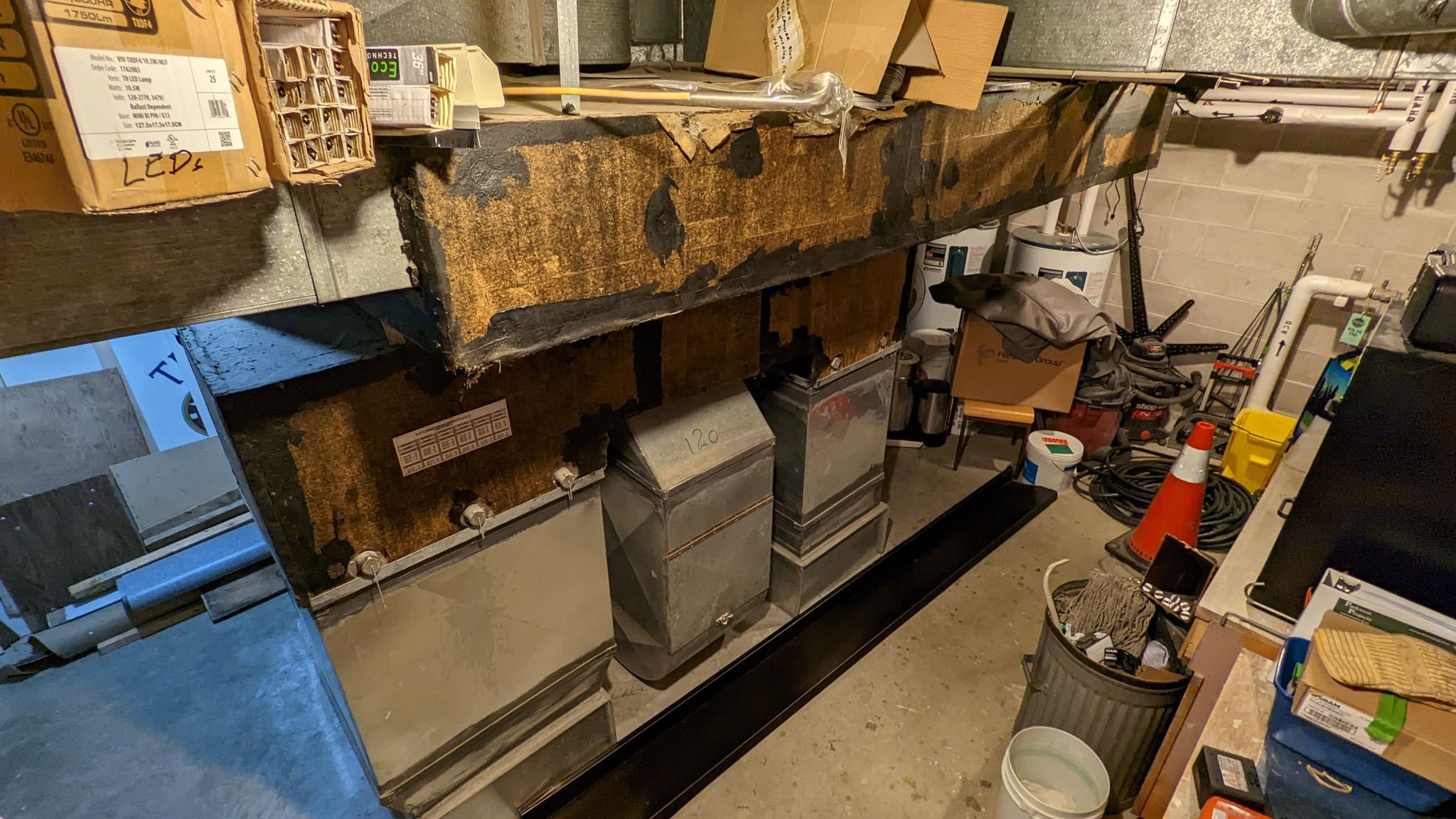
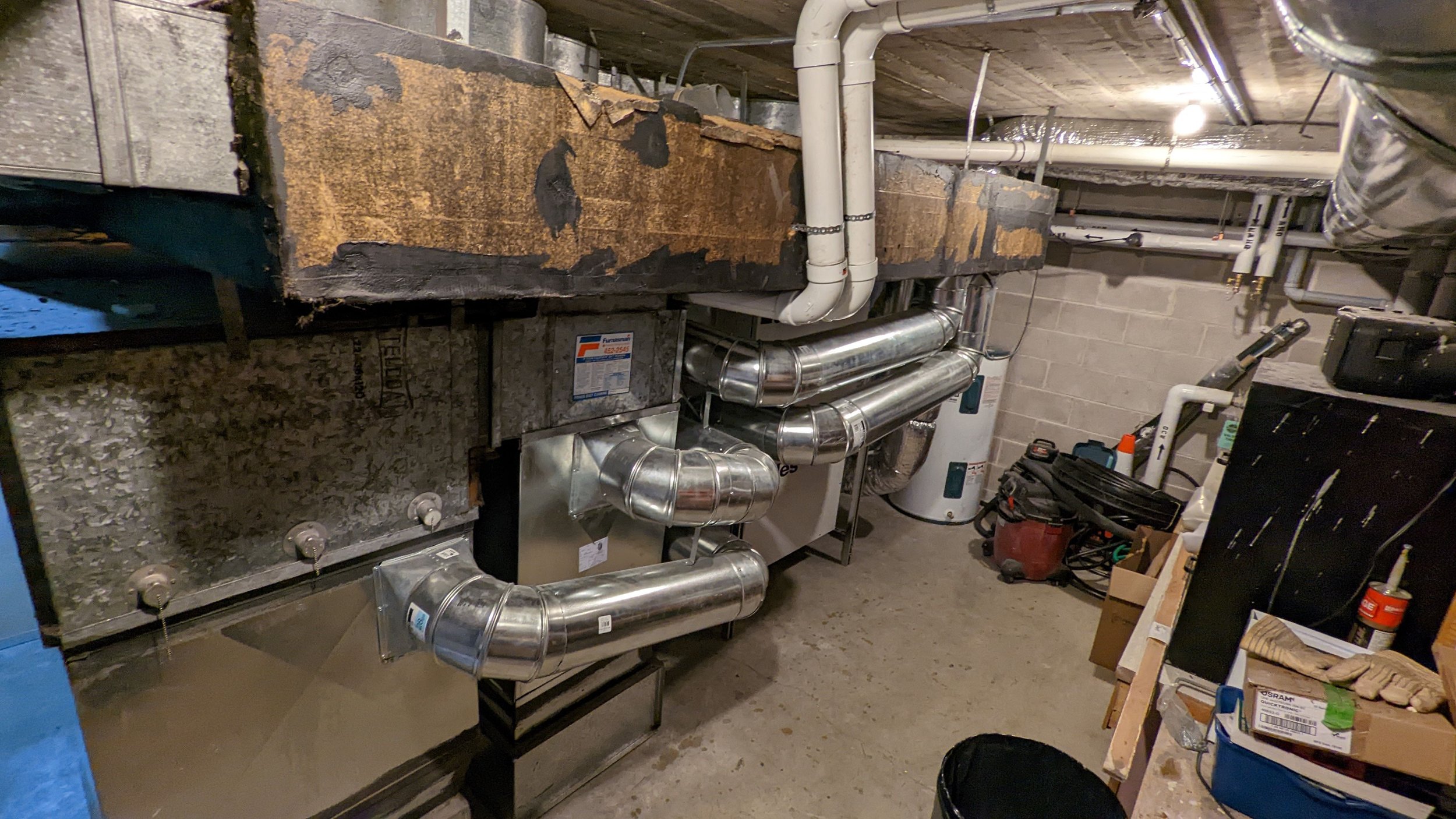
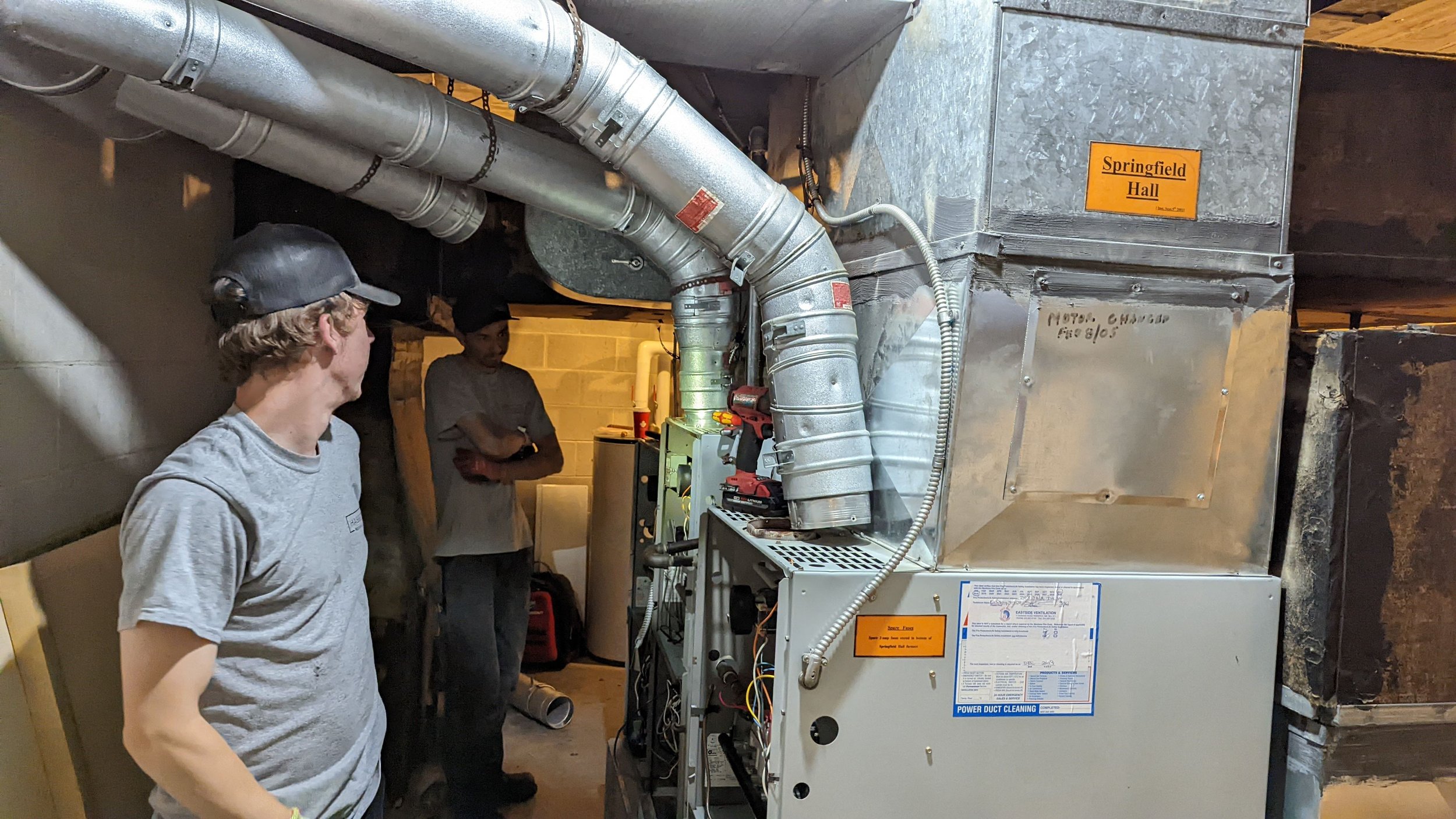
Some communities are lucky to have multiple opportunities to get funding for projects. Take Transcona Memorial United Church in Winnipeg, Manitoba, for example, who have been taking on transformative projects to green their building. In 2022, Transcona United received $30,000 in funding from a United Church of Canada Faithful Footprints grant to replace gas furnaces, transition from three to two, and install heat recovery ventilators. A year after completion, these projects helped Transcona Memorial United reduce its weather-normalized source EUI by 6.2%, GHG emissions by 12.3%, natural gas usage by 12.2%, and electricity usage by 5.5%.
Transcona Memorial United didn't stop there.
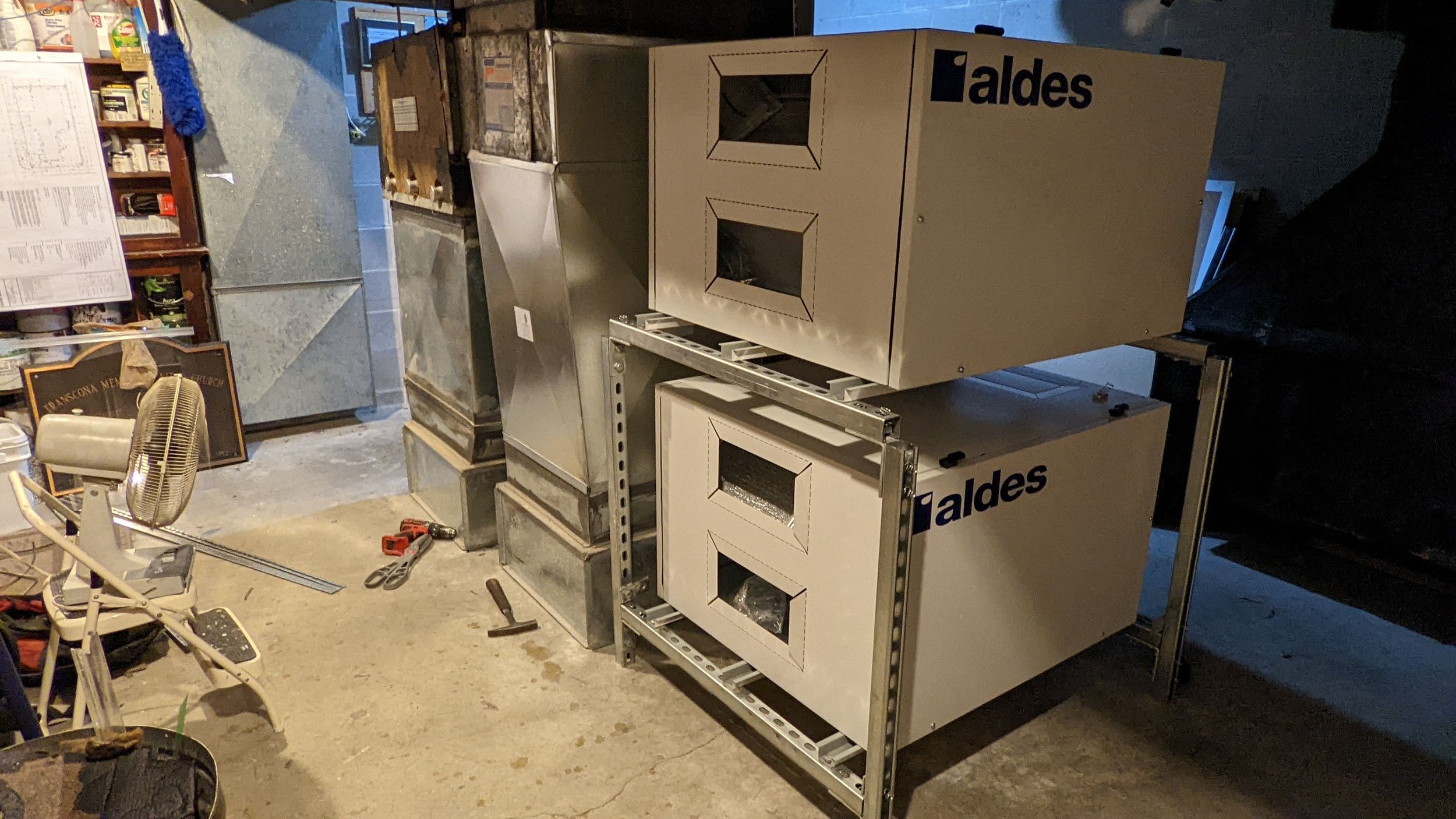
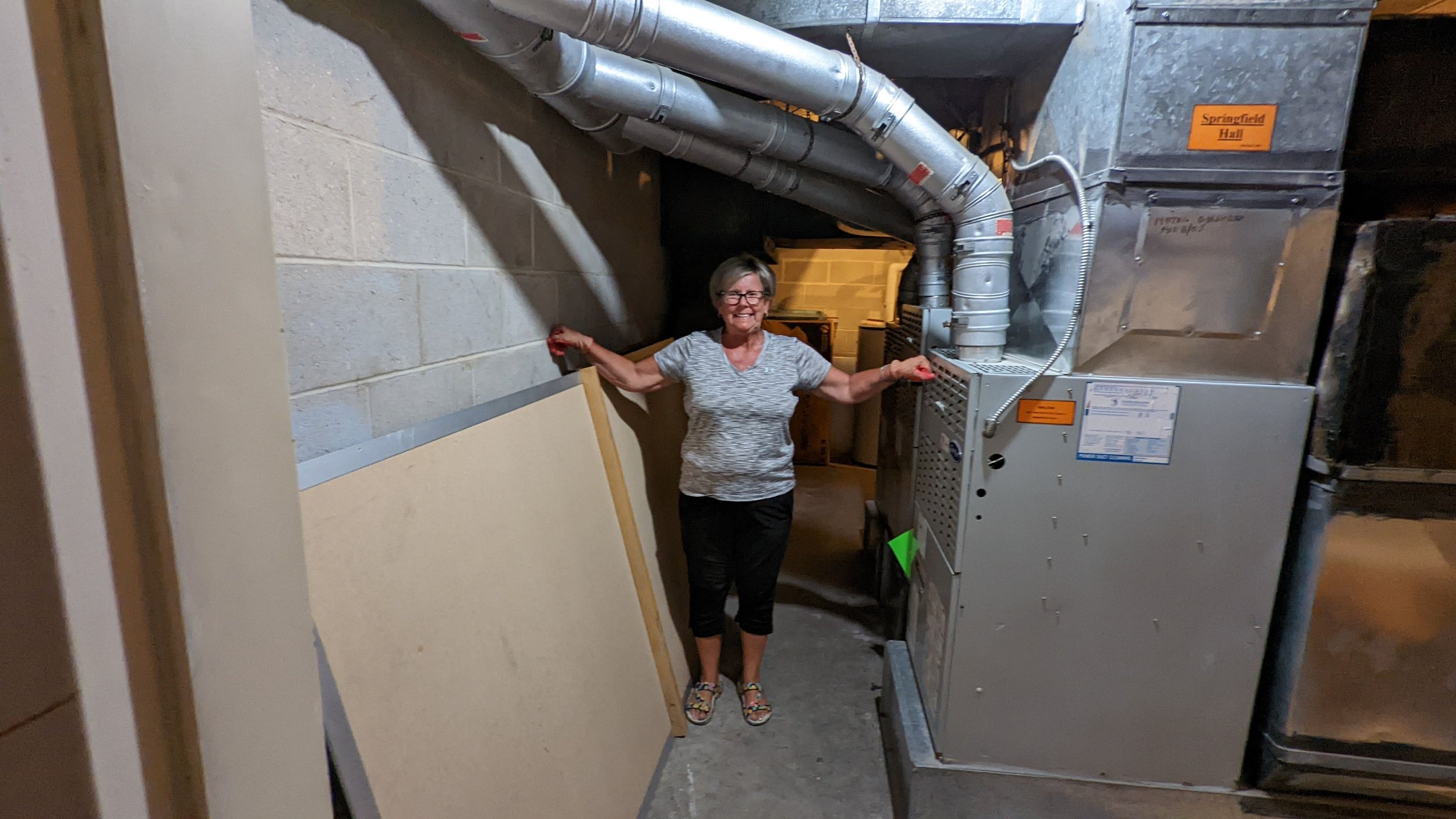
Funding for more green upgrades
Building on the momentum, the church will continue its journey towards a greener future. Seizing the opportunity to gain additional funding and fueling their mission to make their building more energy efficient and less dependent on fossil fuels, Transcona Memorial United is about to witness a remarkable transformation thanks to a significant federal investment. On June 20, 2023, the Honourable Dominic LeBlanc, Minister of Intergovernmental Affairs, Infrastructure and Communities, joined by local officials and community leaders, unveiled plans for an investment exceeding $480,000 supporting an ambitious energy efficiency upgrade at Transcona Memorial United Church.
The project is an extensive building renovation to further reduce the church's environmental footprint. Among the planned improvements are enhanced insulation, the replacement of gas furnaces with energy-efficient air-source heat pumps, and a lighting overhaul. Furthermore, a solar panel array will be installed to reduce electricity costs while contributing to a cleaner energy mix. The Heating, Ventilation, and Air Conditioning (HVAC) system will also receive an upgrade to enhance air quality and maintain a comfortable temperature. These upgrades are expected to result in an estimated 81.4% reduction in energy consumption and a 33.20-tonne annual decrease in greenhouse gas emissions.
This transformative project will be made possible by a federal investment of $484,151 through the Green and Inclusive Community Buildings (GICB) program, with an additional $50,000 contributed by the City of Winnipeg.
The GICB program is dedicated to enhancing the places where Canadians work, learn, play, live, and gather by reducing pollution, improving affordability, and creating employment opportunities. Through green upgrades to existing community buildings and new builds in underserved areas, the program ensures that community facilities are inclusive, accessible, and built to last while helping Canada work towards its net-zero emissions target by 2050. The GICB program aligns with Canada's Strengthened Climate Plan: a Healthy Environment and a Healthy Economy, focusing on reducing greenhouse gas emissions, increasing energy efficiency, and enhancing resilience to climate change. Over five years, it will allocate $1.5 billion toward green and accessible retrofits, repairs, and upgrades.
An investment good for the environment and community
This project is set to make a substantial impact on both the environment and the community. By investing in this infrastructure, the Government of Canada aims to stimulate economic growth, bolster community resilience, and enhance the lives of Canadians. Minister LeBlanc expressed his pride in supporting Transcona's efforts to build a more inclusive and stronger Winnipeg. This project transcends religious affiliations, fostering a sense of unity and well-being among the community.
Transcona Memorial United’s community gathering space is an accessible and safe facility that serves as a central hub for a wide range of community programs, catering to both seniors and youth. Among the programs that call this space home are the Transcona Seniors Pickleball Club, Transcona Girl Guides, the Alzheimer Society, and numerous others.
Russ Wyatt, City Councillor for Transcona Ward, acknowledged Transcona Memorial United Church's role as a community leader. Beyond religious activities, the church supports various non-religious groups such as the Transcona Council for Seniors, Transcona Food Bank, and youth organizations like the Cubs, Scouts, and Guides. The renovation project will undoubtedly enhance the well-being of countless residents in the Transcona community.
Breanna Drennan-Bilyk, Council Chair of Transcona Memorial United Church, expressed her delight at the positive impact this project would have on the community. She emphasized the importance of collaborative efforts in making a meaningful difference.
Stephen McKendry-Smith, Environmental Coordinator at Transcona Memorial United Church, highlighted the organization's long-standing commitment to assisting those in need within the community. The increased efficiencies resulting from this project will enable the church to extend its legacy of service while simultaneously reducing its carbon footprint. This is a vital step towards responsible stewardship of the Earth.
Rev. Carol Fletcher, Team Minister at Transcona Memorial United Church, expressed gratitude for the unwavering support from both the government and the community. This project, she noted, exemplifies the incredible outcomes that can be achieved when people unite for a common purpose.
As Transcona Memorial United progresses with additional upgrades, they set a bright example of the possibilities of what can happen when the deep commitment to greening and sustainability initiative converges with not only congregational or regional backing but also governmental support.
Keep an eye on their website for updates on the project.
Faithful Footprints Program
The United Church of Canada’s Faithful Footprints program offers inspiration, tools, and grants to help its faith communities reduce their carbon footprint. With the Church’s commitment to reducing its greenhouse gasses (GHG) emissions by 80% by 2030, this one-of-a-kind program offers up to $30,000 in grants towards energy conservation and renewable energy projects (conditions apply).
Faith & the Common Good is the delivery partner for the Faithful Footprints program. To date, we have engaged over 400 congregations, camps, and buildings across the country. Your participation in the program puts your faith into action and helps the Church reach its target.

Seven Minutes of Impact: Faithful Footprints Sparks Curiosity at The National Trust Conference
Stephen Collette, Faithful Footprints program's Building Grant Manager, and Building Expert, delivered a compelling presentation titled 'Faithful Footprints – A National Decarbonizing Strategy for the United Church of Canada.' as part of the The National Trust Conference 2023: Transforming Heritage. Stephen offers a thoughtful retrospective of his conference experience, detailing the reactions and responses elicited during the event.
Since its establishment in 2018, The United Church of Canada's Faithful Footprints program has garnered extensive support and recognition nationwide. The program's influence extends beyond its foundational goals, leading to invitations to prominent events, with the most recent being The National Trust Conference 2023: Transforming Heritage, hosted with the Canadian Association of Heritage Professionals (CAHP) and Indigenous Heritage Circle.
As the largest heritage learning and networking event in Canada, the conference brings together a diverse community of people dedicated to preserving the nation's rich heritage. This year’s conference brought together over 500 participants from a range of backgrounds – from professionals, craftspeople, and advocates, to developers, planners, heritage site operators, academics, students, and volunteers. The conference featured trade shows, dynamic sessions and workshops, and pivotal discussions around the future of heritage conservation.
As part of the conference's Environmental Reset – Championing Heritage Conservation as Climate Action theme, Stephen Collette, Faithful Footprints program's Building Grant Manager, and Building Expert, delivered a compelling presentation titled 'Faithful Footprints – A National Decarbonizing Strategy for the United Church of Canada.'
Stephen offers a thoughtful retrospective of his conference experience, detailing the reactions and responses elicited during the event.
Faithful Footprints in Seven Minutes: A Recap of Stephen's Spark Session at the Conference
With professionals from across Canada, the US, and even one from Australia, the conference was an impactful time to connect, share ideas, brainstorm in workshops, and learn from each other about challenges and opportunities within the heritage industry.
As part of the larger conversation, I had the honor of presenting at the conference, shedding light on the Faithful Footprints grant program as part of a group of presenters focused on sustainability and heritage. These sessions, called Spark Sessions, offer a unique format where each presenter has just 7 minutes to captivate and 'spark' the interest of the audience. The fast-paced nature of these sessions allows attendees to take away the essential details from multiple projects or programs in a short span. The experience is not only informative but also entertaining, with a clock-wielding individual ensuring each presentation stays within the allotted time. The dynamic and engaging nature of the Spark Sessions adds to their widespread popularity at the conference.
In my presentation, I addressed the program's key highlights, emphasizing how the climate crisis and the need to decarbonize is a missional pillar of the United Church of Canada. Delving into the collaborative efforts with Faith & the Common Good, I highlighted their role in translating this mission into reality through active engagement, support, and energy data tracking.
Sharing compelling data and statistics, the revelation that over 400 United Church properties have been engaged in the last 5 years sparked a surprising reaction. The scale of the portfolio, considering faith communities are the second-largest property owners in Canada after the federal government, prompted a notable reaction. Many attendees were surprised to discover that the United Church of Canada, alongside the Mennonite Church of Canada, stands as one of the only two faith communities with a national-level grant program—a fact that I posed as a thought-provoking question regarding the collective efforts of different faith traditions in addressing climate change.
Curiosity Unleashed: The Reception of Faithful Footprints
The overall reception of my talk on the Faithful Footprints grant program was incredibly positive. Engaging with the audience after the presentation and interactions throughout the conference revealed a consistent pattern of surprise, interest, and awe when people learned about the initiative.
It was enlightening to witness the genuine curiosity sparked by the concept of faith communities actively participating in sustainability efforts. Attendees often expressed amazement and a genuine interest in understanding why more faith communities aren't taking similar initiatives. Their questions echoed a sentiment of longing for spiritual guidance, emotional support, and community leadership in this critical time of crisis.
The reception of Faithful Footprints became a catalyst for a broader conversation, inviting reflection on the role of faith communities in the critical intersection of spirituality, environmental stewardship, and community leadership. A recurring question emerged: How could more faith communities step into this role? It's a question that goes beyond the confines of the conference room, resonating as a call to action for spiritual leaders. The answer, as I see it, echoes the timeless wisdom of Mahatma Gandhi: 'Be the change you want to see in the world.'
In the face of challenges and crises, there is a powerful opportunity for faith communities to not only provide spiritual solace but also to lead by example in environmental stewardship. The Faithful Footprints grant program stands as a testament to the transformative impact that can be achieved when we embody the change we wish to see, fostering a collective responsibility toward a more sustainable and harmonious world.

Stephen Collette is a Building Science Specialist, building scientist, sustainable building consultant, and heritage professional specializing in faith community buildings. Stephen is a Canadian Association of Heritage Professionals Member, a Leadership in Energy and Environmental Design (LEED) Accredited Professional, a Building Biology Environmental Consultant, and a Building Biology New Build Consultant.
Faithful Footprints Program
The United Church of Canada’s Faithful Footprints program offers inspiration, tools, and grants to help its faith communities reduce their carbon footprint. With the Church’s commitment to reducing its greenhouse gasses (GHG) emissions by 80% by 2030, this one-of-a-kind program offers up to $30,000 in grants towards energy conservation and renewable energy projects (conditions apply).
Faith & the Common Good is the delivery partner for the Faithful Footprints program. To date, we have engaged over 400 congregations, camps, and buildings across the country. Your participation in the program puts your faith into action and helps the Church reach its target.

Sustaining Our Heritage: How Historic Buildings Can Support The Energy Transition
Accelerating the uptake of built environments that are all-electric, reducing energy demand, storing and sharing clean energy, and producing more energy than they use, will rely on deep retrofitting existing buildings as much as it will on designing new ones. Read more on historic buildings and The Energy Transition.
In the year 2050, all human activities need to be carbon neutral – meaning that we capture as much carbon as we burn. To accomplish this, we will need to reduce our usage and dependency on energy generated by fossil fuel sources within the built environment.
Under Building The Transition, the theme of World Green Building Week 2023 (September 11 - 15), The World Green Building Council highlighted three transitions that are essential to accelerate a sustainable built environment. Critical on the pathway toward carbon neutrality, The Energy Transition focuses on “accelerating the uptake of built environments that are all-electric, reducing energy demand, storing and sharing clean energy, and producing more energy than they use.”
Preserving the Past, Shaping the Future
When you envision a carbon-neutral world, you might be picturing a scene from Star Trek, with flying cars and glasses with built-in computers. On the contrary, our world in 27 years will look a lot like what we see right now, only different. Many of the buildings that exist today — the buildings we live in, work in, and worship in, will still be standing and operating. While we aggressively design buildings that are net-zero, net-positive, and carbon-neutral, we will simultaneously be retrofitting existing buildings to strive towards those same standards. The Energy Transition will rely on deep retrofitting existing buildings as much as it will on designing new ones.
Historic Buildings and The Energy Transition
Like a significant number of United Church buildings, historic buildings, often operating on conventional and inefficient fossil fuel-based energy systems, are typically correlated to high energy consumption and poor energy performance. Retaining, retrofitting, and repurposing these buildings, rather than replacing them can present significant energy-saving and carbon-reduction opportunities.
Energy efficiency coupled with building electrification are the main strategies for transitioning historic buildings towards the future. The first course of action is to make buildings as efficient as possible. This means well-insulating and air-sealing buildings to help eliminate heating and cooling intensities and keep as much energy used to provide comfort to building occupants. The second action is transitioning to building electrification by moving away from carbon-based non-renewable energy sources and toward clean renewable energy.
Tailored Energy Solutions for Historic Buildings
Due to their unique architectural intricacies, and diverse materials and techniques used in construction, retrofitting historic buildings to align with The Energy Transition faces distinct challenges. Recognizing that each building has its own set of obstacles and opportunities, tailored strategies for building-specific energy solutions become imperative.
From innovative insulation techniques that respect the original fabric of the structure to the installation of efficient HVAC systems that operate seamlessly within architectural constraints, these strategies need to be both adaptive and sensitive.
“Our church building was constructed in 1963 at a time when building energy standards were less stringent. We needed to work with the existing structure without compromising its architectural or structural integrity. The brick and concrete block walls and hot water heating system are constraints that needed to be considered during any of our proposed building modifications.” shares Ensor Nicholson, Board Member at Mount Royal United Church in Moncton, NB.
Embracing the Transition
Trinity United Church in Shelburne, ON is one of the many communities of faith within The United Church of Canada that are embracing change and taking action toward The Energy Transition.
“The current strength of our church is its willingness to accept change, to reinvent itself and find new ways to keep up with the time…to test our way forward and experience what it would look like to bring the whole church closer to today’s environmental standards.” shares Micheal Hofman, Property Chair of Trinity United Church.
In 2019, Trinity United reconfigured an entire room by insulating the outer exterior wall, installing hydronic baseboard heaters and EnergyStar ceiling fans, swapping T-12 fluorescent fixtures with LED fixtures and dimmable lights, and replacing two old single-paned windows with double-glazed units.
A year later, to further reduce its natural gas and electricity usage, Trinity United applied for a Faithful Footprints grant. With expert guidance and financial support from The United Church of Canada’s Faithful Footprints program, Trinity United replaced its hydronic boilers and the two main doors of the church. A year following the projects, Trinity United reduced its GHG emission by 34.6%, electricity usage by 38.1%, natural gas usage by 34.6%, and energy costs by 15.2%.
“The boilers were unusable and the front doors had not been upgraded since the church was built in 1903. Both these projects were well past their due date. The Faithful Footprints program supported our efforts to bring our aging church building up to modern environmental standards” expressed Rev. Dr. Candice Bist of Trinity United Church
Trinity United Church plans to continue its efforts to improve the energy efficiency of its building, taking on smaller inexpensive upgrades as they make their way around the church — replacing windows, insulating outside walls, and upgrading lighting on a room-to-room basis.
“The church building needs lots of work, but it is still a solid, well-built building from which to reimagine a new future — When we began working with Faithful Footprints, we did a DIY Energy Audit of the entire church building. The audit, along with Faithful Footprints’ many resources, brought to our attention some smaller items, specific to our building that we could attend to that would help energy loss throughout the building” shared Bist.
Take part in The Energy Transition
Is your faith community ready to advance The Energy Transition and retrofit your historic faith-building?
Read case studies on energy efficiency and decarbonization retrofits of buildings like yours.
Book a Green Audit and explore downloadable resources from Faith & the Common Good like Energy Star® Action Workbook for Congregations and DIY Walkthrough Audit
Fill out an Expression of Interest and speak to Faithful Footprints's building scientist and heritage building expert to plan your retrofit.

Decarbonizing building operations: an effective strategy for cutting emissions
Emissions reduction is the measurable reduction of the release of greenhouse gases (GHGs) like carbon into the atmosphere from a specified activity. Operational carbon, the amount of carbon emitted during the operating or in-use phase of a building, accounts for a large proportion of emissions released globally.
“The Faithful Footprints Grant helped us accomplish our goal to get as close to zero carbon emissions as possible for a historical building such as ours.”
- St. George and St. Andrew United Church, Annapolis Royal, NS
Emissions reduction is the measurable reduction of the release of greenhouse gases (GHGs) like carbon into the atmosphere from a specified activity. Operational carbon, the amount of carbon emitted during the operating or in-use phase of a building, accounts for a large proportion of emissions released globally. Building operations include the activities necessary to operate, maintain, and manage spaces. Tackling how we run our buildings is an effective mitigation strategy for lowering emissions.
With many new buildings designed to operate from renewable energy sources, existing older buildings are where a significant shift away from carbon-based operations will need to be focused. Deep retrofits of existing buildings are critical to driving emissions down within the Canadian built environment.
The United Church of Canada acknowledges its “particular responsibility as a religious institution” to dramatically reduce its carbon footprint. The Church has said the focus of its efforts must be its buildings since heating and lighting are its largest carbon emitters. Retrofitting its historical buildings can accelerate reductions, helping to meet its national goal of reducing carbon emissions by 80% by 2030..
Reducing operational carbon, one project at a time
“As a person who has converted to solar and electric heat pumps, I was eager to help move our church to becoming carbon neutral.”
- Alexander MacKay, Chair - Trustees, Central Trinity United Church, Breadalbane, PE
The transition to a building stock with zero or near zero operational carbon is a long way off. Deep retrofits require an extensive overhaul of a building’s systems. Lack of funding, resources, capacity, and tricky timelines, are other barriers that limit the consideration of full building decarbonization retrofits. While some United Church buildings have managed to go completely net zero, like Old Barns United Church in Lower Truro, Nova Scotia, most are taking the transition one project at a time.
With support from The United Church of Canada’s energy efficiency and decarbonization grant retrofit program, Faithful Footprints, faith communities across Canada are pushing the needle to reduce their operational carbon by replacing oil and gas-fueled heating and cooling systems with electrical and renewable alternatives
Central Trinity United Church in Breadalbane, PE, replaced an oil furnace and oil tank with heat pumps. With a similar project, St. George and St. Andrew United Church in Annapolis Royal, NS, replaced several oil furnaces and an oil tank with three heat pumps and an oil-fired hot water heater with an electrical hot water heater. Shawville United Church in Shawville, QC, replaced an oil boiler with an electric boiler, while Duncan United Church in Duncan, BC, replaced its last oil furnace with an air-to-air heat exchanger.
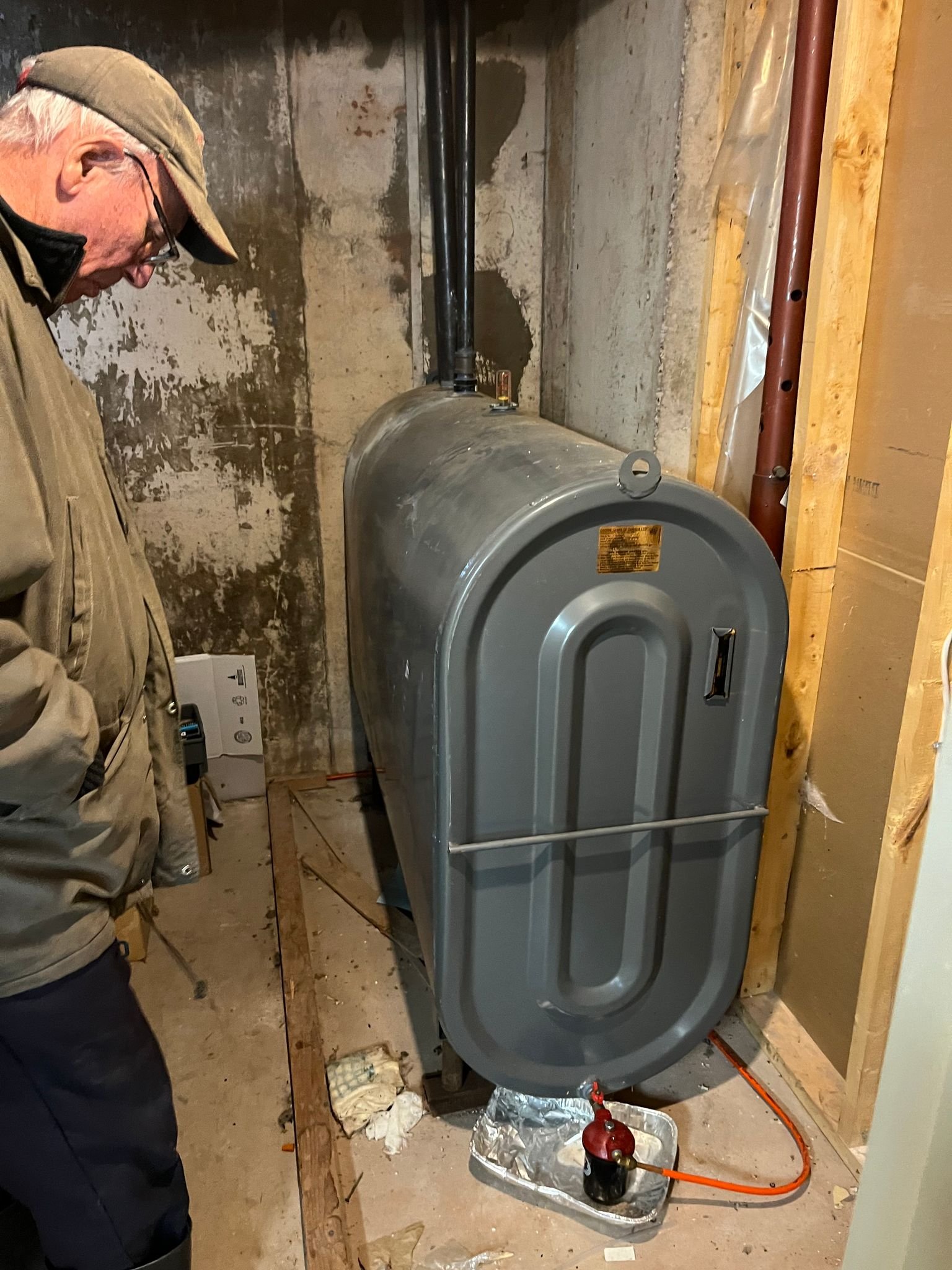
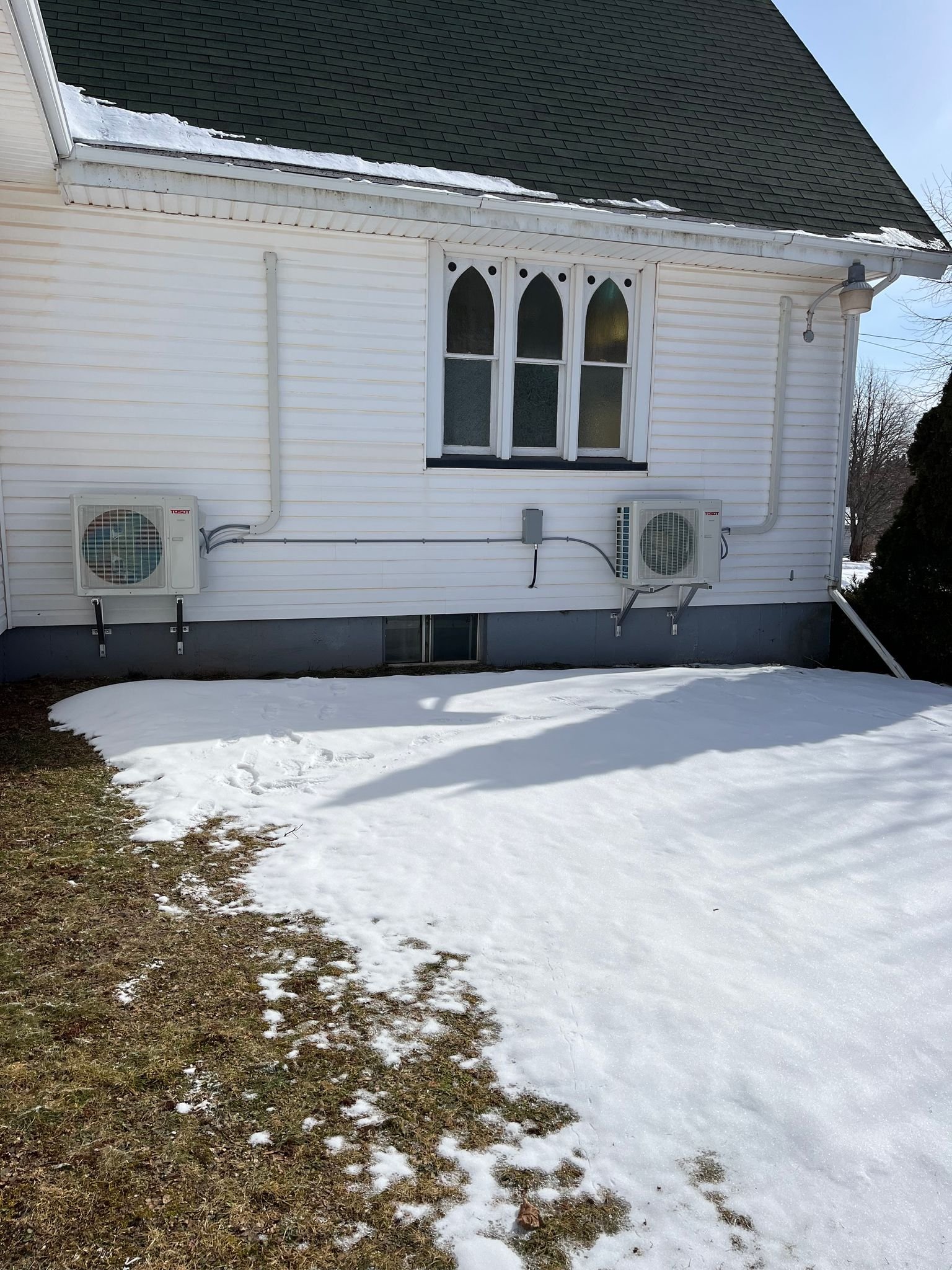
Oil tank that was removed and newly installed heat pumps at Central Trinity United Church, Breadalbane, PE


New ductwork to support heat pumps at St. George and St. Andrew United Church in Annapolis Royal, Nova Scotia


Boiler replacement at Shawville United Church in Shawville, QC

New air to air heat exchanger at Duncan United Church in Duncan, BC
Going deeper, doing more
“STASH is a system which stores heat pump energy on milder days of the year and makes it available to support the air pump on cold days when efficiencies to get heat are less efficient. When STASH technology becomes available, we will replace the basement heating system with an air source heat pump solution.”
- Keith Black, Chair - The Sunshine Greening Committee of Trinity United Church Acton, ON
Carrying out energy conservation and renewable energy projects has empowered faith members to think more deeply about how they can reduce their carbon emissions further. Climate-conscious communities like Trinity United Church in Acton, ON, replaced two gas furnaces with an air-forced heat pump system. They plan on adding additional heat pumps to their heat pump system once new technology is available.


Old gas furnaces and new air-forced heat pump system at Trinity United Church in Acton, ON
Faithful Footprints Program
The United Church of Canada (UCCan) Faithful Footprints program offers inspiration, tools, and grants to help its faith communities reduce their carbon footprint. With the Church’s commitment to reducing its greenhouse gases (GHG) emissions by 80% by 2030, this one of a kind program offers up to $30,000 in grants towards energy conservation and renewable energy projects (conditions apply).
Faith & the Common Good is the delivery partner for UCCans Faithful Footprints program. To date, we have engaged over 300 congregations, camps, and buildings across the country. Your participation in the program puts your faith into action and helps the Church reach its target.
Aleyxa Gates Julien is the PR/Communications Coordinator for Faithful Footprints and can be reached at agatesjulien@faithcommongood.org

Creation Care - Our Collective Responsibility to Invest in our Planet
Now more than ever, collective effort is urgently needed to build on strong foundations which are rooted in creation care across our ministries. United Churches are setting an example of the importance of earth stewardship by putting their own homes in order.
“The Lord God took the man and put him in the garden of Eden to work it and keep it.”
- Genesis 2:15
Earth Day is an annual event where we step back, acknowledge local and global environmental protection efforts, and show our love for our common home. Many people celebrate this day by enjoying the great outdoors or sharing memorable photos of trips, encapsulating Earth’s breathtaking landscapes. This year’s Earth Day theme is ‘Invest in our Planet’ because the state and health of our shared home are under extreme threat. What used to be well-functioning ecosystems, providing us with services are becoming degraded, losing their integrity, or quickly disappearing.
Faith-based groups have a critical role to play in helping to change this around. Now more than ever, collective effort is urgently needed to build on strong foundations which are rooted in creation care across our ministries. With the increasingly devastating impacts of climate change, it is critical for the church to strive to protect the ecosystems which sustain us by encouraging church-wide participation to protect God's living world.

Congregational members landscaping at First United Church in Wetaskiwin, AB - Faithful Footprints Participant
As a community both locally and globally, it is part of our mission to take meaningful and faith-driven action to care for God’s Creation, by reducing our environmental footprint and overall impact on Earth. We are called to be good stewards of Earth through care and preservation and to live in harmony and not in dissonance with the environment that surrounds us. This includes ensuring that the production, management, and utilization of our resources do little harm to the environment.
In Canada, with the support of The United Church of Canada's Faithful Footprints program, United Churches are setting an example of the importance of earth stewardship. Over two hundred congregations from coast to coast to coast have been getting their own homes in order and contributing to sustainability and greening efforts by retrofitting their buildings to be more efficient and by transitioning to more renewable sources of energy.
“Our community and leadership see updating our facilities to better reflect our values, and the reality of climate change as part of our Christian mission.”
- Grace United Church, Dartmouth, Nova Scotia

Shawville United Church in Shawville, QC switched from an oil-fired boiler to an electric boiler. - Faithful Footprints Participant
“The Faithful Footprints program has provided us with the financial means to be better stewards of the Earth.”
- Eastminister United Church, Belleville, Ontario

Ralph Connor Memorial United Church in Canmore, AB transitioned to solar power - Faithful Footprints Participant
“This opportunity not only created a more energy-efficient building, but has created excitement about improving the environment, striving to continue to reduce our carbon footprint, and set an example for our congregation and the community.”
- St. Andrew’s United Church, Cochrane, Alberta

Oak Bank United Church in Oakbank, MB transitioned from four to two furnaces - Faithful Footprints Participant
This Earth Day, Faithful Footprints is inviting more congregations to join the program. We encourage your faith group to pause and consider how your community can help make a difference in the way you care for the Earth and live with respect for Creation, whether it be retrofitting your building, hosting a garbage cleanup, or planting native trees and pollinator-friendly plants on your property. Small or large, individually or collectively, there are many ways that your congregation can actively contribute to a safer, cleaner, and more sustainable home for us all.

Earth Day Celebration at Woodcliff United Church in Calgary, AB - Faithful Footprints Participant
Woodcliff United Church in Calgary, Alberta celebrated their upgrades with an Earth Day worship, highlighting their role of being good stewards of the Earth and how they can collectively make a difference in the world.
Begin your Creation Care journey or continue your stewardship with our free guides, including The DIY Faith Building Energy Audit Guidebook and Energy Star Action Workbook. You can also utilize our professional knowledge with virtual Green Audits that look at energy, air quality, food, water, waste, maintenance, rental agreements, heritage, and much more.
Faithful Footprints Program
The United Church of Canada (UCC) Faithful Footprints program offers grants, tools and inspiration to help its congregations reduce their carbon footprint. With UCC’s commitment to reducing its greenhouse gases (GHG) emissions 80% by 2050, this one of a kind program offers up to $30,000 in grants towards energy conservation and renewable energy projects (conditions apply).
Faith & the Common Good is the delivery partner for UCCs Faithful Footprints program. To date, we have engaged over 200 UCC congregations, camps, and buildings across the country. Your participation in the program puts your faith into action and helps UCC reach its target.
Stephen Collette is the Building Manager for Faith & the Common Good and can be reached at 705-652-5159 EDT, scollette@faithcommongood.org

Fix What We Already Have: Renovate today’s buildings for a carbon-neutral tomorrow
When we think about the year 2050 and our climate goals of being carbon neutral in all of our activities, including operating our buildings, we often have this utopian vision of space age buildings. That vision is not what 2050 will look like; not even close.
When we think about the year 2050 and our climate goals of being carbon neutral in all of our activities, including operating our buildings, we often have this utopian vision of space age buildings. That vision is not what 2050 will look like; not even close.

Source: Archdaily.com
80% of the buildings of 2050 are actually standing right now, right here. That’s right: 80%.
You are living in them, working in them, and worshipping in them today; so we won’t be building, but rather, renovating our way to a solution. This means that these buildings need to be improved today. We need to upgrade the energy efficiency of our places of faith, our community spaces, our religious homes, schools and offices. We must move all of these buildings towards carbon free energy sources as soon as possible.
But surely knocking down these old buildings will be better for the environment, you say? Actually not. Embodied energy or embodied carbon is the energy it took to extract, transport, manufacture/process, ship, build and operate the building for all of these years. If you were to knock these buildings down, you would also have to add the energy in transportation and disposal of the same building. A replacement would have even more embodied energy and it would take typically 30-40 years of operation to eventually overcome all of that embodied energy in the process, compared to using the existing building.
Old buildings will actually help to save the planet. Improving your existing building to use less energy is not only a great thing to do, it is the right thing to do.

Source: Serverfarm, April 2020.
Faithful Footprints Program
The United Church of Canada (UCC) recognized an opportunity to live out its climate mission through upgrading its building stock, by launching the Faithful Footprints program. This program offers grants, tools and inspiration to help UCC congregations reduce their carbon footprint. With its commitment to reducing its greenhouse gases (GHG) emissions 80% by 2050, UCC’s one of a kind program offers up to $30,000 in grants towards energy conservation and renewable energy projects (conditions apply).
Faith & the Common Good is the delivery partner for the Faithful Footprints program. As a staffer and sustainable building consultant for this national, multifaith network, I was asked to be the voice on the other end of the phone for congregations. Also a building scientist, and a heritage professional specializing in faith community buildings, I’m a nerd! I’m a nerd, here to help you save energy, reduce your carbon footprint, and save the planet, all while lowering your operational costs so you have more money for mission.
To date, we have engaged over 200 UCC congregations, camps, and buildings across the country.
Your participation in the program puts your faith into action and helps UCC reach its target.
More energy efficiency actions you can take
As you start on your energy efficiency journey, you also might want to make use of the free guides that we have on our website. The DIY Faith Building Energy Audit Guidebook and the Energy Star Action Workbook for Congregations are resources you can download, read, learn from, and take action!
You can also utilize our professional knowledge with virtual Green Audits that look at energy, air quality, food, water, waste, maintenance, rental agreements, heritage and much more.
The more you can learn about your building, the more you can save energy, minimize maintenance costs, and maximize the usage of your faith community building.
Stephen Collette is the Building Manager for Faith & the Common Good and can be reached at 705-652-5159 EDT, scollette@faithcommongood.org

How can rural and isolated faith communities take climate action?
As Canadians, when it comes to actions we can take to protect the climate, we automatically think about energy conservation. We head over to the local hardware store for some caulking, insulation, a new Energy Star window etc., to fix up our buildings that will in turn, help lower maintenance costs, save energy, and save the planet.
As Canadians, when it comes to actions we can take to protect the climate, we automatically think about energy conservation. We head over to the local hardware store for some caulking, insulation, a new Energy Star window etc., to fix up our buildings that will in turn, help lower maintenance costs, save energy, and save the planet.
But that only works if you live in a city or close to a large hardware store. Have you thought about how difficult it is to get an energy audit for a fishing port village church on a remote coast of Newfoundland, with the nearest energy auditor over three hours away? Have you thought about trying to fly in new windows and doors to a remote northern Manitoba reserve’s church without any being damaged?
These are real challenges faced by people who experience nature at its most powerful. In contrast, those of us with steady, reliable power, clean drinking water, and experts who are accessible to us in under an hour, forget that what we have is not common for most rural communities.

Rural Church, Alberta. By Debby Hudson on Unsplash.
The United Church of Canada (UCC) recognized this concern when launching the Faithful Footprints program for United Church properties. With UCC’s commitment to reducing its greenhouse gases (GHG) emissions 80% by 2050, this one of a kind program offers grants, tools and inspiration to this end. It offers up to $30,000 in grants towards energy conservation and renewable energy projects (conditions apply).
Since Faith & the Common Good is the delivery partner, and I am the Building Manager for this national organization, I was asked to be the voice on the other end of the phone for interested congregations. I am a sustainable building consultant, a building scientist, and a heritage professional specializing in faith community buildings. Ya got me: I’m a nerd! I’m a nerd not just for downtown city churches, but for the rural churches reaching out, wanting to know what they can do because they see the effects of climate change more than most; because they care as much as anyone else.
As of June 2021, over 200 UCC congregations, camps, and buildings across the country have participated in the program. Your participation in this program puts our faith into action and helps UCC reach its target.

Left to right: Emma Norton (Ecology Action Centre), Tom Urbaniak (FCG Chair), Stephen Collette (FCG Building Manager). Union Presbyterian Church, Louisbourg, Nova Scotia.
More help is at hand
Need more help? Start with downloading the free guides that we have on our website. The DIY Faith Building Energy Audit Guidebook and the Energy Star Action Workbook for Congregations are amazing, free resources that you can read, learn from, and even take action!
You can also utilize our professional knowledge with virtual Green Audits that look at energy, air quality, food, water, waste, maintenance, rental agreements, heritage and much more.
The more you can learn about your building, the more you can save energy, minimize maintenance costs, and maximize the usage of your place of worship.
Stephen Collette is the Building Manager for Faith & the Common Good and can be reached at 705-652-5159 EDT, scollette@faithcommongood.org
Faith & the Common Good is the delivery partner for UCCs Faithful Footprints program.

What You Don’t Know Can Hurt You: When your faith building is wasting energy and money!
The more you learn about your building, the more you can save energy, minimize maintenance costs, and maximize the usage of your amazing faith community building.
Within our faith communities we all help out; that’s the ‘community’ in faith community. Some people take care of the building — often the most thankless job, because if they do a good job, no one notices anything. These dedicated people care about the building, but unfortunately don’t always understand how their building works, which is completely normal. In highschool, we were not taught how to maintain our homes let alone maintain and operate large, oftentimes massive places of worship. For example, the huge decorative ceiling grilles in many places of worship are, from my experience, 95% of the time open to the attic. One church I worked with had four 8-foot diameter ceiling vents and the congregation couldn’t worship in the space in the summer because the heat coming off the roof drove them out! How would people know this? They wouldn’t, since we don’t have anything comparable in our homes. So to the building maintenance teams reading this, don’t be hard on yourselves.
How then, can you make a difference? Start with the free guides available on our website. The DIY Faith Building Energy Audit Guidebook and the Energy Star Action Workbook for Congregations are amazing resources you can download, read, learn, and from there, take action. You can also utilize our professional knowledge with virtual and in person (when safe for all) Green Audits that look at energy, air quality, food, water, waste, maintenance, rental agreements, heritage and much more.
The more you learn about your building, the more you can save energy, minimize maintenance costs, and maximize the usage of your amazing faith community building.

UCC’s Faithful Footprints: Helping congregations get to net-zero
For the United Church of Canada (UCC), faith buildings are its largest, overarching carbon contributor and its biggest fixed expenses. By correcting heating, cooling and lighting gaps in buildings, congregations can reduce their carbon emissions and cut costs.
With UCC’s commitment to reducing its greenhouse gases (GHG) emissions 80% by 2050, the Faithful Footprints Program offers grants, tools and inspiration to this end. As of April 2021, over 200 UCC congregations, camps, and buildings across the country have participated in the program. Your participation in this program is putting our faith into action and helping UCC reach its target.

Stephen Collette is the Building Manager for Faith & the Common Good and can be reached at 705-652-5159 EDT,
scollette@faithcommongood.org
Faith & the Common Good is the delivery partner for UCCs Faithful Footprints program.

Faith Climate Accountability in Action
The United Church of Canada has committed to reducing its greenhouse gases by 80 percent by 2050, and local congregations across the country are already responding, aided by more than $3 million in available grant money from the denomination.
Faithful Footprints putting climate accountability in action

Energy retrofits power renewed mission for faith communities
The jury is still out on the Canadian government’s recent climate accountability act but not everyone is waiting for a verdict.
The United Church of Canada has committed to reducing its greenhouse gases by 80 percent by 2050, and local congregations across the country are already responding, aided by more than $3 million in available grant money from the denomination.
St Paul’s United Church, in Magog, QC, for example, needed to replace an older, gas-powered furnace (named Betsy). Staying with steam heat looked too costly, but what to do with the ancient, cast iron radiators? St. Paul’s found a Quebec-based company to convert the radiators to standalone electric units. It was an elegant solution: converting to electric is projected to reduce the church’s carbon emissions by 15%, reusing the radiators kept them out of the landfill, and employing a local company helped strengthen the region’s green economy.
“This is literally a case of the church putting its money where its mouth is,” said Mardi Tindal, former United Church Moderator and spokesperson for the greening program, known as Faithful Footprints. “The United Church has long advocated for climate justice and greenhouse gas reduction. Integrity demands that we get our own house in order.”
St. Paul’s United is one of 148 United Church communities of faith across Canada seeking to reduce their carbon emissions, assisted by grants of up to $30,000 from the Faithful Footprints program.
By aggregating carbon impact data from these greening projects, the United Church will be able to track progress towards its climate goals.
““The best time for us to start living as a healthy part of the world was decades ago. The next best time is today,” said United Church of Canada Moderator Right Rev. Dr. Richard Bott. “All of us, especially the church, need to be part of healing God’s creation.””

“When we designed the Faithful Footprints program, tracking and reporting were very important,” says Tindal, who made climate change a priority in her term as the church’s elected leader, 2009 to 2012. “Of course, we know we will stumble along the way. But being transparent about our successes and failures is how we will ultimately achieve our goals.”
A UCC 2019-2020 Sustainability Report, tracking progress in the first two years of the program, has just been released.

For more information about the United Church of Canada’s 2019-2020 Sustainability Report or the Faithful Footprints initiative, contact:
Mardi Tindal, former Moderator, United Church of Canada
mardi.tindal@gmail.com
Lucy Cummings, Senior Advisor, Faith & the Common Good
lcummings@faithcommongood.org
Faithful Footprints is a United Church of Canada climate program delivered by Faith & the Common Good.
How a Community can Grow through a Building Project
Volunteers, EAC staff and architects formed the ambitious project team responsible for the 2015-2016 renovation that doubled the office space within the building and cut the building’s energy consumption in half. Through the project, a great community was developped.
How a Community can Grow through a Building Project
The Ecology Action Centre has operated in many different buildings, from a downtown office space to an old house to its current building which Is a renovated saltbox style house. The Ecology Action Centre (EAC) is currently housed in a building that is 104 years old and yet it is considered one of the most energy-efficient office buildings in Canada.

The Ecology Action Centre and its green transition.
A building forms the center of an organization’s operations and should always reflect the values that the organization wishes to promote to everyone around them. The EAC bought and renovated 2705 Fern Lane in 2005 in the hopes that their workspace would finally represent the values that it wished to promote and preserve. Many United Church congregations in Atlantic Canada have older buildings compared to the EAC building and these churches have just as many opportunities to improve their energy efficiency.
Volunteers and the Community
Volunteers, EAC staff and architects formed the core project team responsible for the 2015-2016 renovation. This project team was responsible for doubling the office space within the building and at the same time cutting the building’s energy consumption in half. The EAC project team chose ambitious goals and other teams such as green teams or sustainability committees in faith-based buildings can do the same. There are many examples of green teams or sustainability teams being formed across Atlantic Canada to make environmental changes within their communities. Woodlawn United Church located in Dartmouth, Nova Scotia has formed a Sustainability Committee as well as Beacon United Church, located in Yarmouth, Nova Scotia.

Energy Efficiency Volunteers at Trinity United Church, Rosebay, Nova Scotia.
In the beginning, the EAC renovation team identified what they needed, what they wanted and what resources were available to them to make the proposed changes a reality. United Churches across Canada can access the same initial professional advice by using the Faithful Footprints website. Through the Faithful Footprints website, congregations or “green teams” can access the information they need to connect with building professionals that can help make their building project a success.
Planning is very important if you want to ensure that your building will last another 100 years. You need to consider the increased risks of extreme storm weather, the increased extreme cold/hot climatic conditions as climate change continues to occur. The renovation team at the EAC knew that future winters would be more extreme and planned for increased insulation that could withstand the test of time. Any green team must face the harsh reality of our current climate; we will never have the same winters we experienced 50 years ago and so we cannot continue to design buildings as we did 50 years ago.
Once the renovation team had a plan in place, they then proceeded to fundraise for the project and apply for various grants that were available. There are retrofit grants and rebates available in Atlantic Canada for non-profit organization projects (including church buildings) information about these funding programs can be found on the Faithful Footprints website.
Volunteers were then gathered to perform different tasks that would lower the overall capital cost of the project. Donated steel door insulation cut-outs were gathered and organized by volunteers. Volunteers applied natural non-toxic preservatives to spruce siding used on all exterior walls. Volunteers applied clay-based plaster and paints to the inside walls and helped reuse insulation in the attic. Over 150 volunteers dedicated more than 1,800 hours to the renovation, in addition to our full-time building crew. Nothing brings together a community like a building project and there are many people that like to help build things whether they are already connected to your community or not.
Focusing on the Future
It is important throughout a renovation project to think about the long-term goals and make decisions based on those goals. The renovation team was focused on ensuring that the building would let in more sunlight to help heat the building and provide natural sunlight for staff during the daytime. There was also a focus on preserving some historical aspects which led to reusing flooring materials, leaving original wallpaper in specific rooms and reusing doors inside the building. As people enter our building, after having seen our new exterior finishing, many are shocked when they see the number of old doors we have re-used inside our building.

Energy Efficiency Volunteers at Trinity United Church, Rosebay, Nova Scotia.
Applying energy efficiency strategies in your building does not mean “Out with the old, and in with the new!” Single pane church windows can be preserved and/or re-used. Beautiful church steeples can be preserved by simply insulating specific areas of the steeple. Foundations can be better preserved by adding exterior insulation.
There are many examples across Canada of United Churches becoming rejuvenated from the energy efficiency improvements and climate change initiatives they have made. United Churches in Atlantic Canada have also been doing their part, especially Rockingham United Church, St. Paul’s United Church and Rose Bay Trinity United Church. Visit the Faithful Footprints, Inspiration Page, for more ideas.
The Ecology Action Centre and our newly renovated building is a place of learning and sharing for anyone interested in addressing climate change. As the Atlantic Information Hub for the Faithful Footprints Program, anyone willing to improve their church is welcome to organize a building tour or give Ben Grieder, the Atlantic Regional Coordinator, a call, 902-422-0199 or email, bengrieder@ecologyaction.ca.
“One of the great features of the Faithful Footprints program is that there is support for a range of different energy action projects. Taking care of the basics is a vital part of any congregation’s energy management journey.” Stephen Collette, Building Audit Manager, Faith and the Common Good

Climate Justice: Building the World We Want To Live In
Partnering with Purpose Construction, as a support Hub in the Prairie region, Faithful Footprints is going beyond carbon reductions and working towards climate justice.

Lisa Atkinson - Purpose Construction graduate and lead hand trainer
Kalen Taylor, the Executive Director of Purpose Construction, is an award-winning social entrepreneur whose work focuses on growing social enterprise businesses that build a sustainable future, while creating trades training opportunities, long term jobs and economic opportunities in marginalized communities. Purpose Construction is a non-profit social enterprise construction company that provides trades training and employment to people with barriers to traditional labour force access. Purpose Construction provides long term, living wage employment to refugees, Indigenous peoples, single mothers and people transitioning out of the justice system, while delivering competitively priced commercial and residential construction services.
Some days, dinner conversation at my house feels like a ping-pong match between fear and hope for the future. My partner is an environmental scientist, working for Inuit governments across Northern Canada as they grapple with the rising impacts of climate change and increased industrial development in Canada’s arctic regions. From her side of the table, we hear about the rising human impact of the climate crises and the urgent need for change. Some days, the scale of the challenge feels overwhelming. And it can be.
I have been lucky enough to spend my time working on some truly groundbreaking climate justice projects that give me a deep sense of hope for the future, and the chances to build an inclusive green economy that provides opportunities for environmental, economic and social prosperity for all our communities.

Vicki Nelson - Purpose Construction trainee
From my end of the dinner table, I talk about Indigenous-owned social enterprise creating green jobs in northern First Nations building renewable energy. Social enterprise creating living wage jobs for refugees building energy-efficient, low income housing. I talk about how something as simple as a job insulating buildings can create long term career opportunities for people transitioning out of the prison system. How that job can lead to families reuniting with their children, getting access to safe and secure housing for the first time in their lives.
In some ways, dinner conversation in my family represents the yin and yang of the climate change conversation happening globally today. The road ahead is challenging, to be sure, but it’s also full of hope and possibility.
Climate justice calls on us to ask, “what kind of world do we want to live in?” Climate Justice challenges us to tackle climate change in ways that safeguards the rights of the world’s most vulnerable, and focuses on building a green economy for tomorrow that provides access to sustainable livelihoods and prosperity for those people most marginalized in our communities.
Climate justice is about reconciliation with Indigenous nations, it’s about safeguarding the rights of migrants, it’s about ensuring that both the burdens of addressing climate change and the benefits of the new green economy are shared equally by all.
Today, we have a chance to invest in carbon reduction at the same time as building a new green economy that creates opportunities for the most vulnerable among us.
It is in this spirit of hope that Faith & the Common Good has partnered with Purpose Construction in Manitoba to deliver the newly launched United Church of Canada “Faithful Footprints” carbon reduction program -- a program designed to provide inspiration, tools, and grants to help the church and its communities of faith live their climate commitments.
The Faithful Footprints program provides up to $30,000 in grant funding per congregation to support United Church communities to invest in insulation, heating system replacement, the installation of energy efficient windows, appliances and renewable energy system. This funding opportunity represents a chance to lower utility bills in faith buildings, reduce our carbon footprint and invest in the long term sustainability of our communities.
By partnering with Purpose Construction to act as a Faithful Footprints Support Hub in the Prairie region, we are going beyond carbon reductions. We are working towards climate justice. Purpose Construction will bring our knowledge to the table supporting congregations through the grant application and project delivery process. And in addition to that, congregations will have the option of working with Purpose Construction to perform energy efficiency upgrades, creating training opportunities in the green building trades for refugees, newcomers, Indigenous peoples and those transitioning out of the justice system. We are building opportunities and economic inclusion for those too often pushed to the margins.

Sinai Mosazghi - Purpose Construction graduate and lead hand trainer
Purpose Construction is also excited to share our climate justice learning and services throughout the region. As part of our Faithful Footprints regional hub work, we will establish a multi-faith Spirited Climate Action Forum in order to encourage diverse faith based and multi-sectoral allied groups to work together and help create a regional climate collaborative network in the Prairies that will continue beyond the life of this project.
Together, we are working to ensure that the green economy of tomorrow is an inclusive economy for all Canadians.
Want to learn more? Contact Faithful Footprints Prairies Regional Coordinator, Jill Hisco by phone 204-943-0908 or by email.