
BLOGS
Churches across the country are stepping up. Read their stories and access other climate and energy resources here.

St. James & St. John United Church progresses toward full heat pump adoption across all its buildings
St. James & St. John United Church in Miramichi, New Brunswick is transitioning to energy-efficient mini-split heat pumps across its buildings, with current efforts targeting its Church Centre, its most space.
St. James & St. John United Church, located in Miramichi, New Brunswick, operates three buildings including its manse, church, and its church Centre, which houses offices, Sunday School, and a number of congregational activities.
In response to rising fuel costs and the environmental impact of fossil fuels, the church has been transitioning to mini-split heat pump systems as the primary source of heating across all its buildings. As part of this commitment, mini-splits were installed in the main church building, allowing the congregation to eliminate its reliance on oil for heating.
Focusing on where it matters most
Between the church’s two remaining buildings, upgrading the Church Centre was the next top priority, as it is used most frequently by both the congregation and the wider community. The Centre is a hub for community programs and activities and hosts the church’s offices, Sunday School program, bible studies, dessert theatres, church suppers and special events. The church also rents the building on a regular basis to an organization that teaches English language primarily to immigrants, a yoga group, pickleball players, and to other organizations.
“The Centre is vital to who we are and how we operate as a congregation. It’s where all daily activities take place.” shares Kimberley Shaddick, Office Administrator at St. James & St. John United Church
The church directed all of the funds received from the Faithful Footprints program to upgrade the heating system in the Church Centre. The improvements included removing the existing oil furnace, oil tank, and radiators throughout the building. Although some mini-split units were already in place, several rooms and areas remained underheated. The church replaced three older mini-splits in the auditorium, originally installed in 2013, and installed new units in two rooms with rental potential, two offices on the main floor, and one in the foyer.
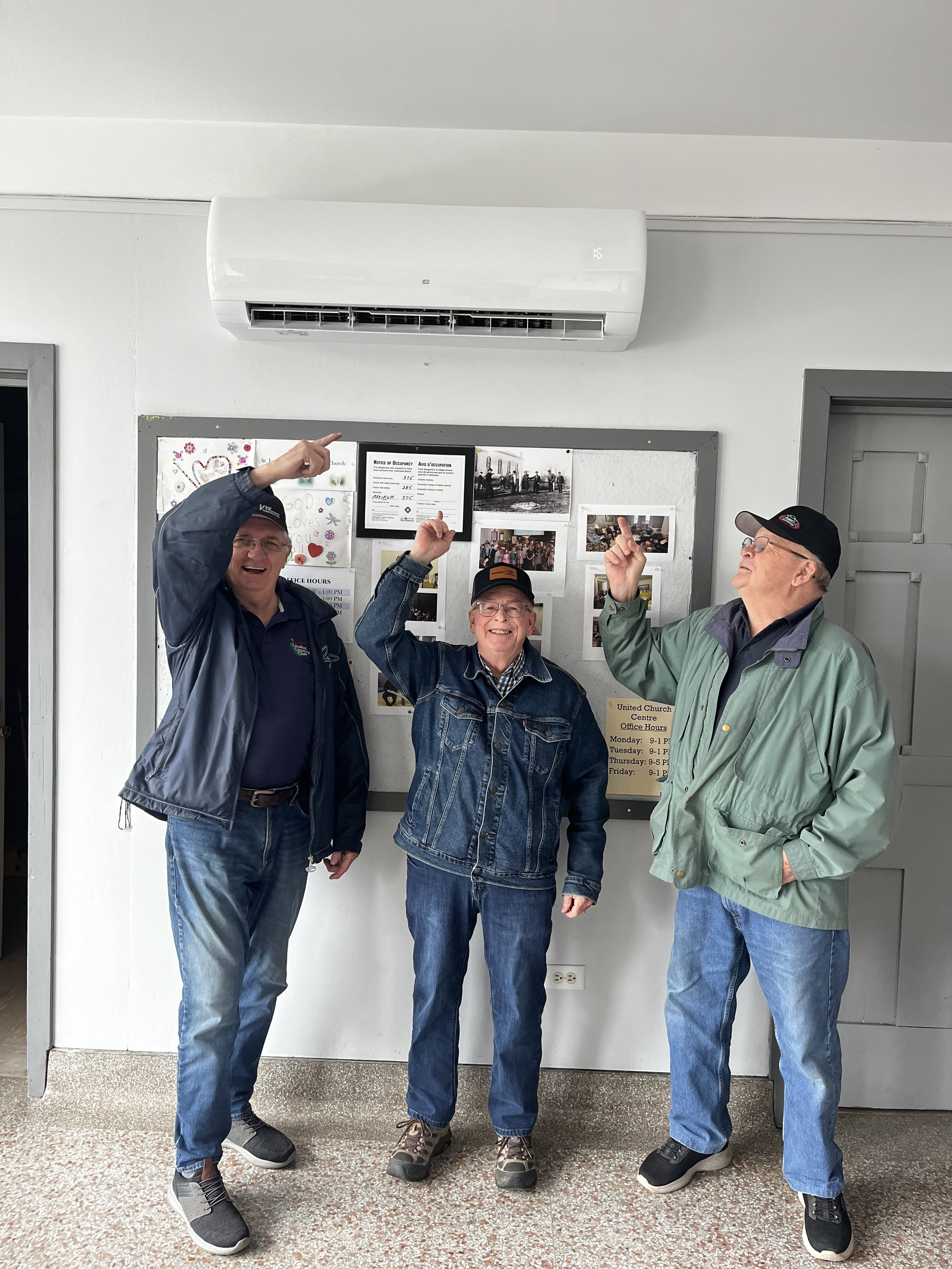
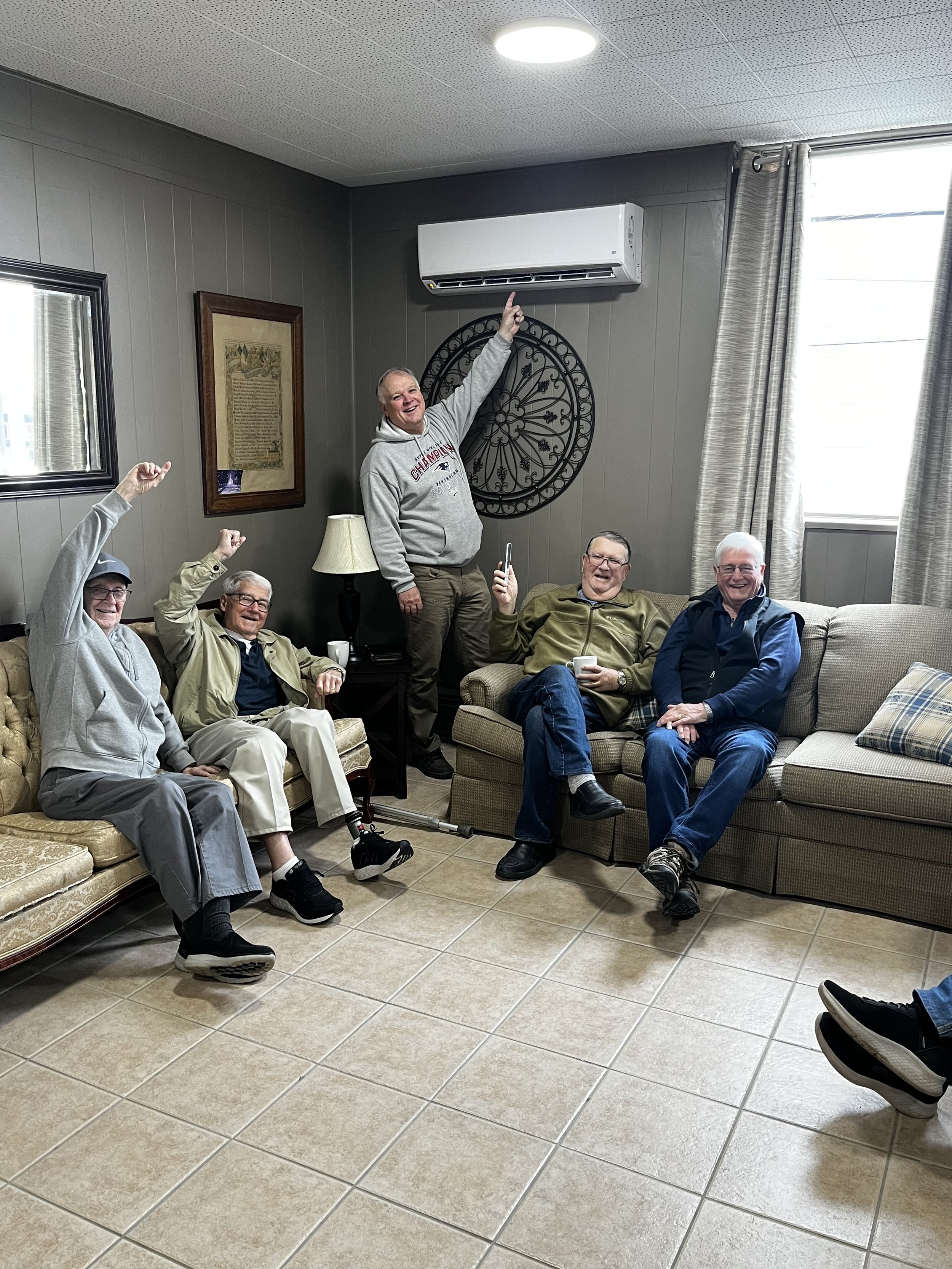

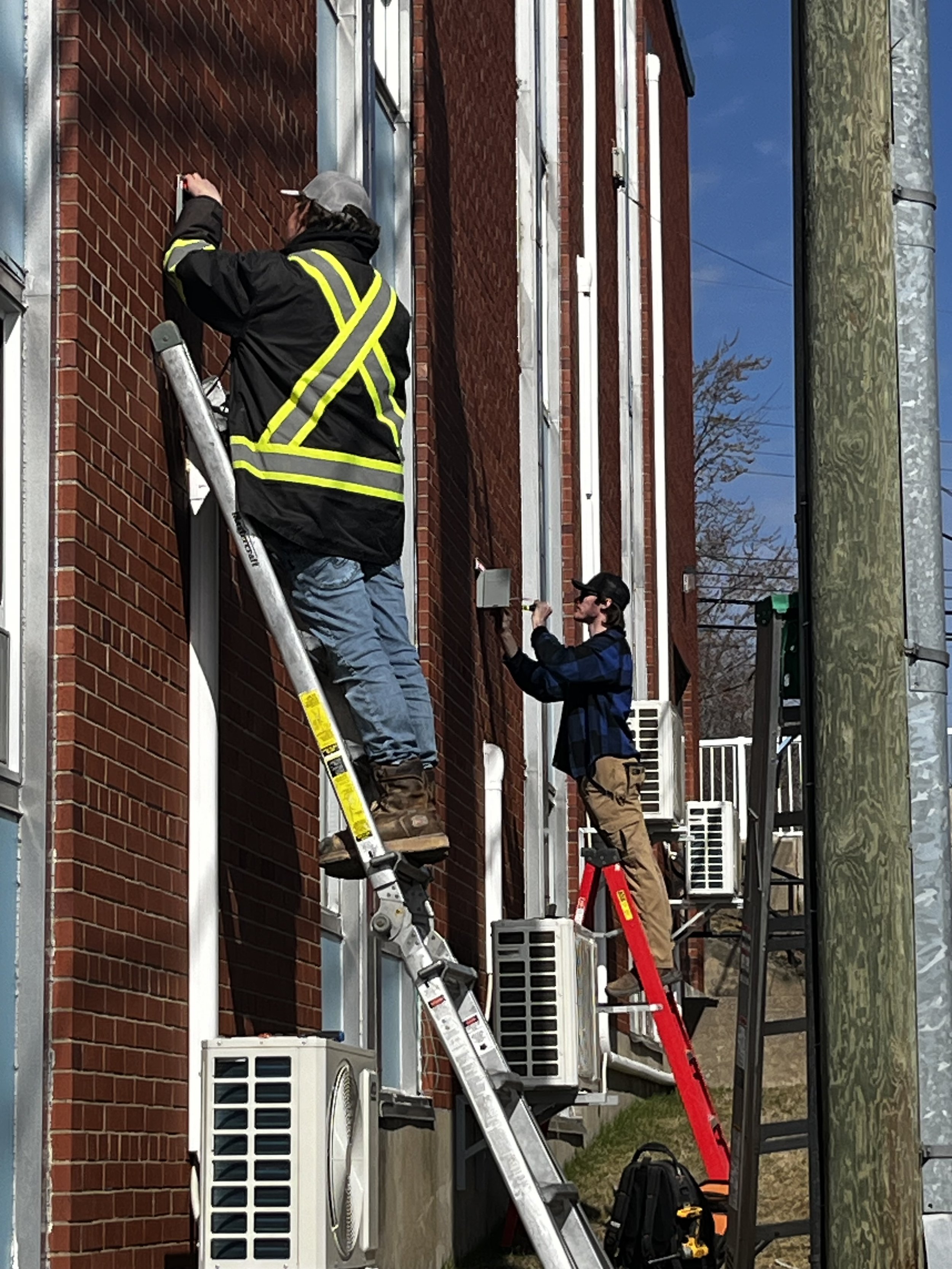
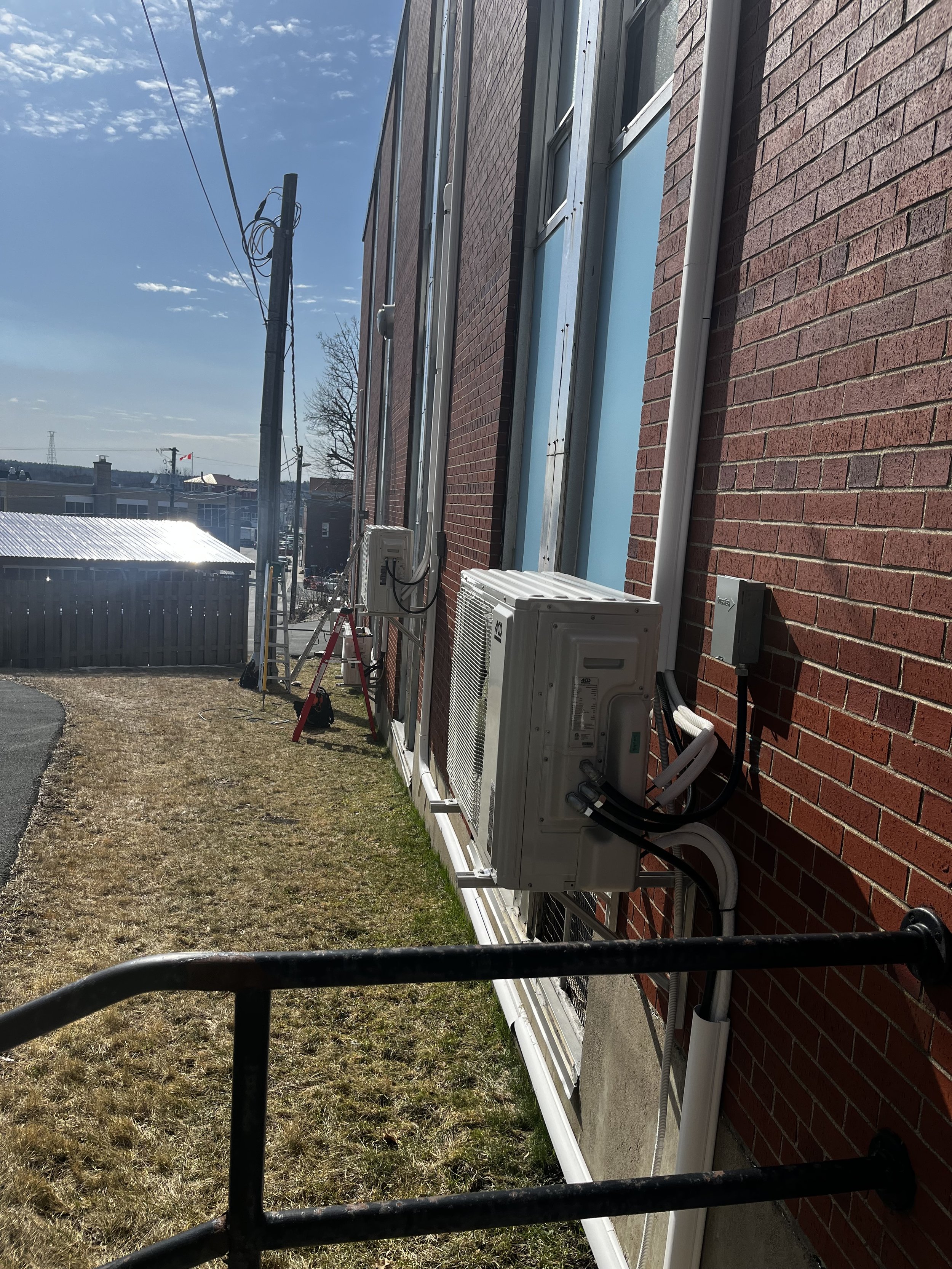
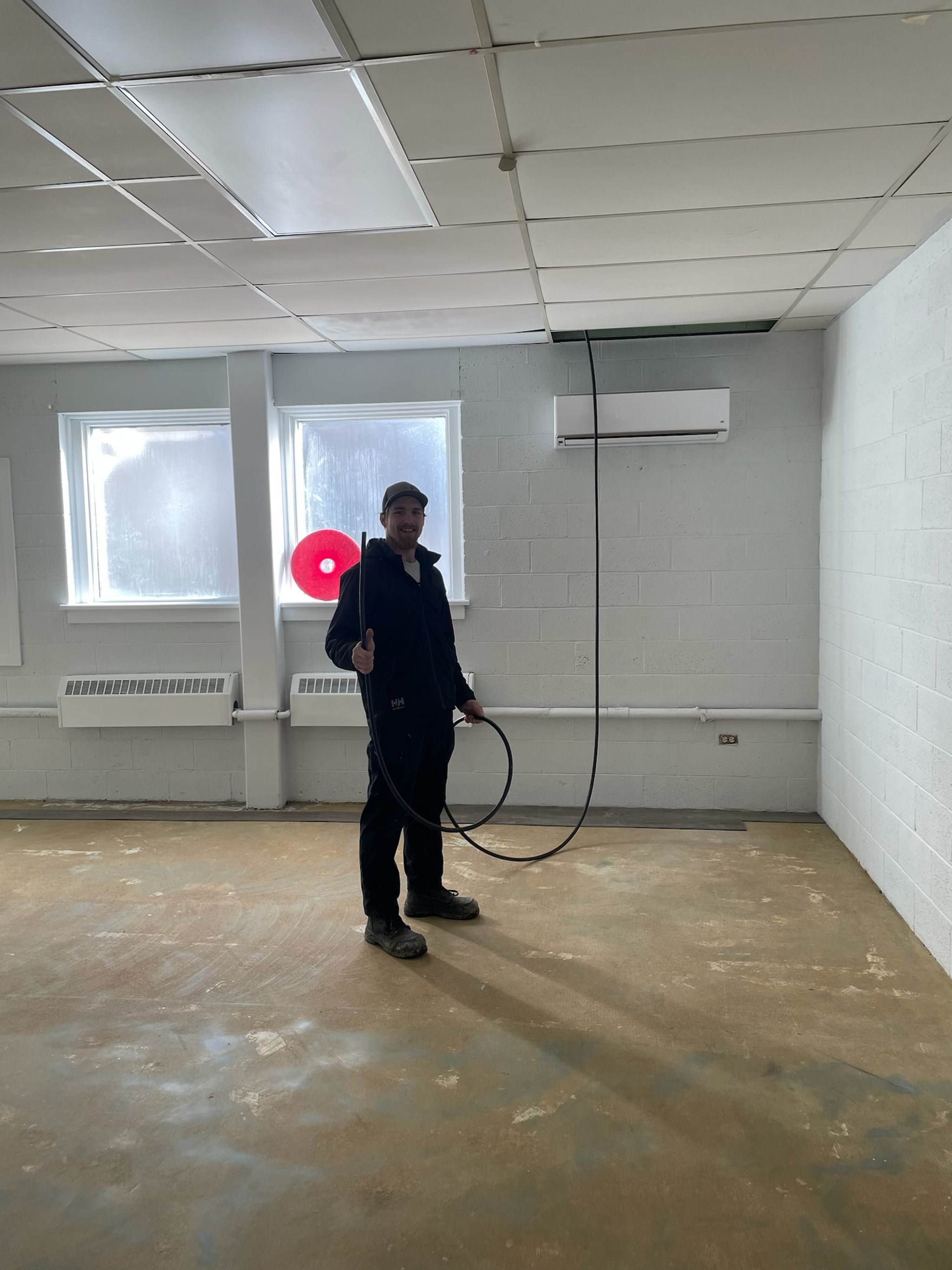
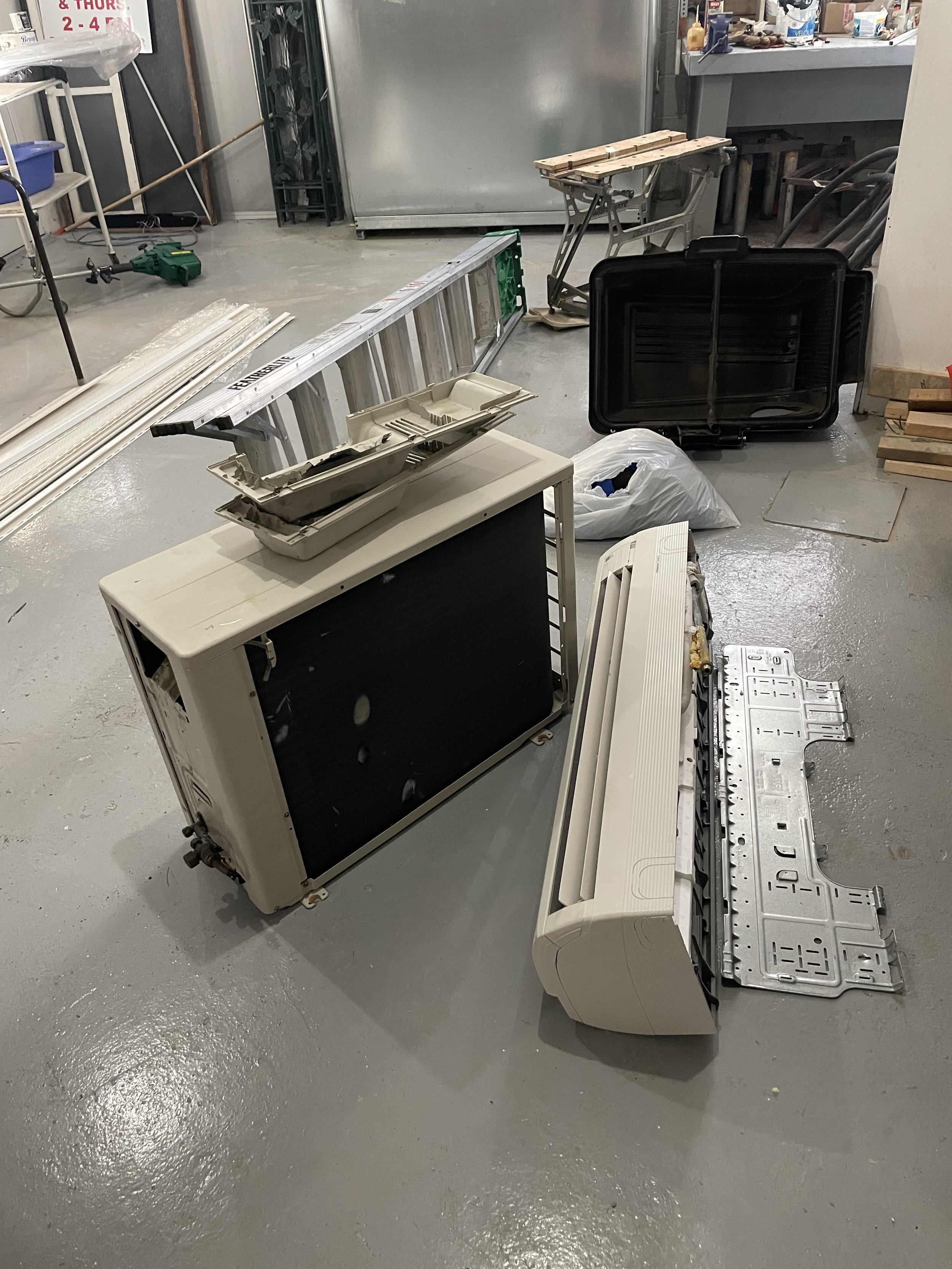
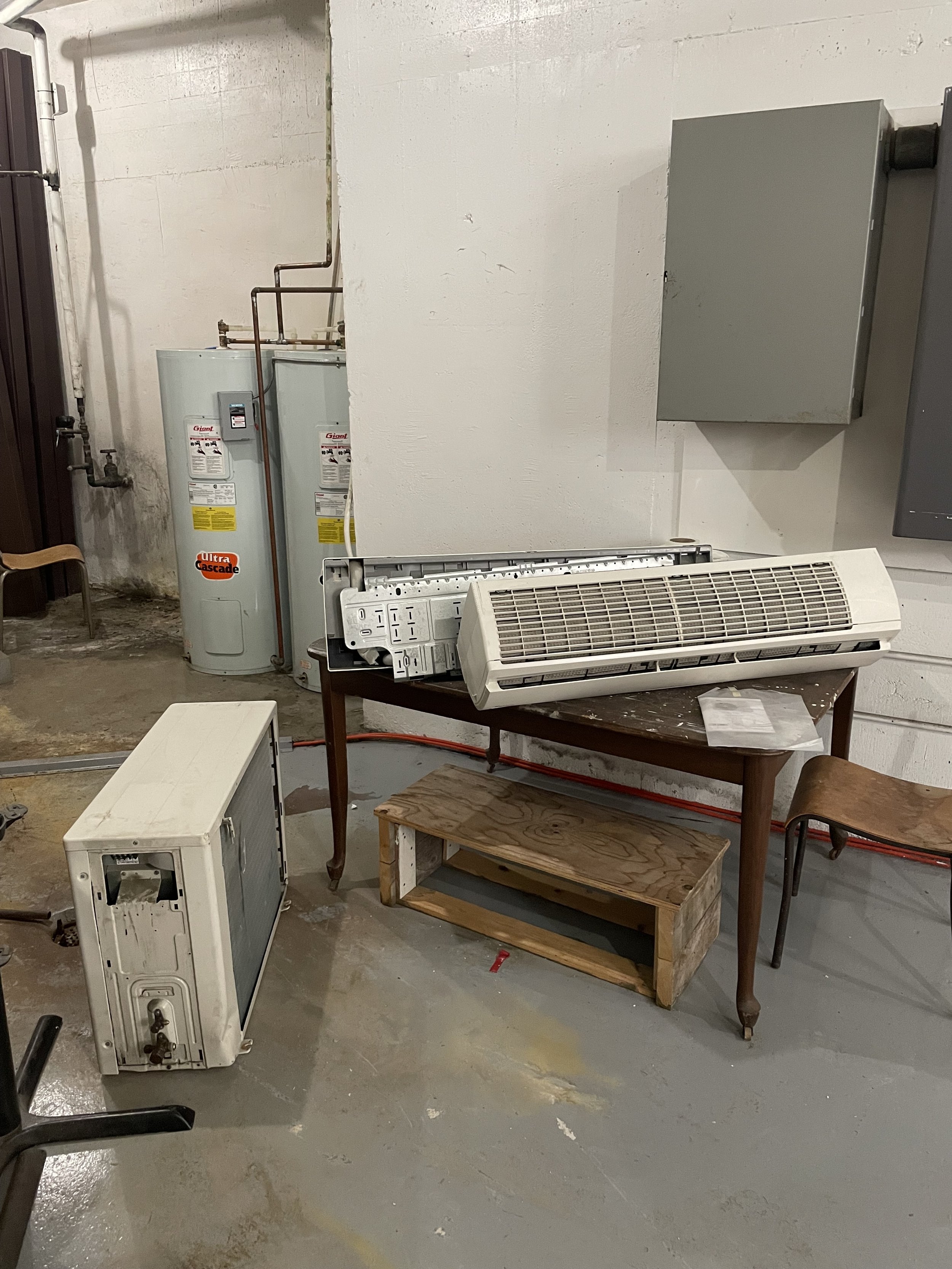
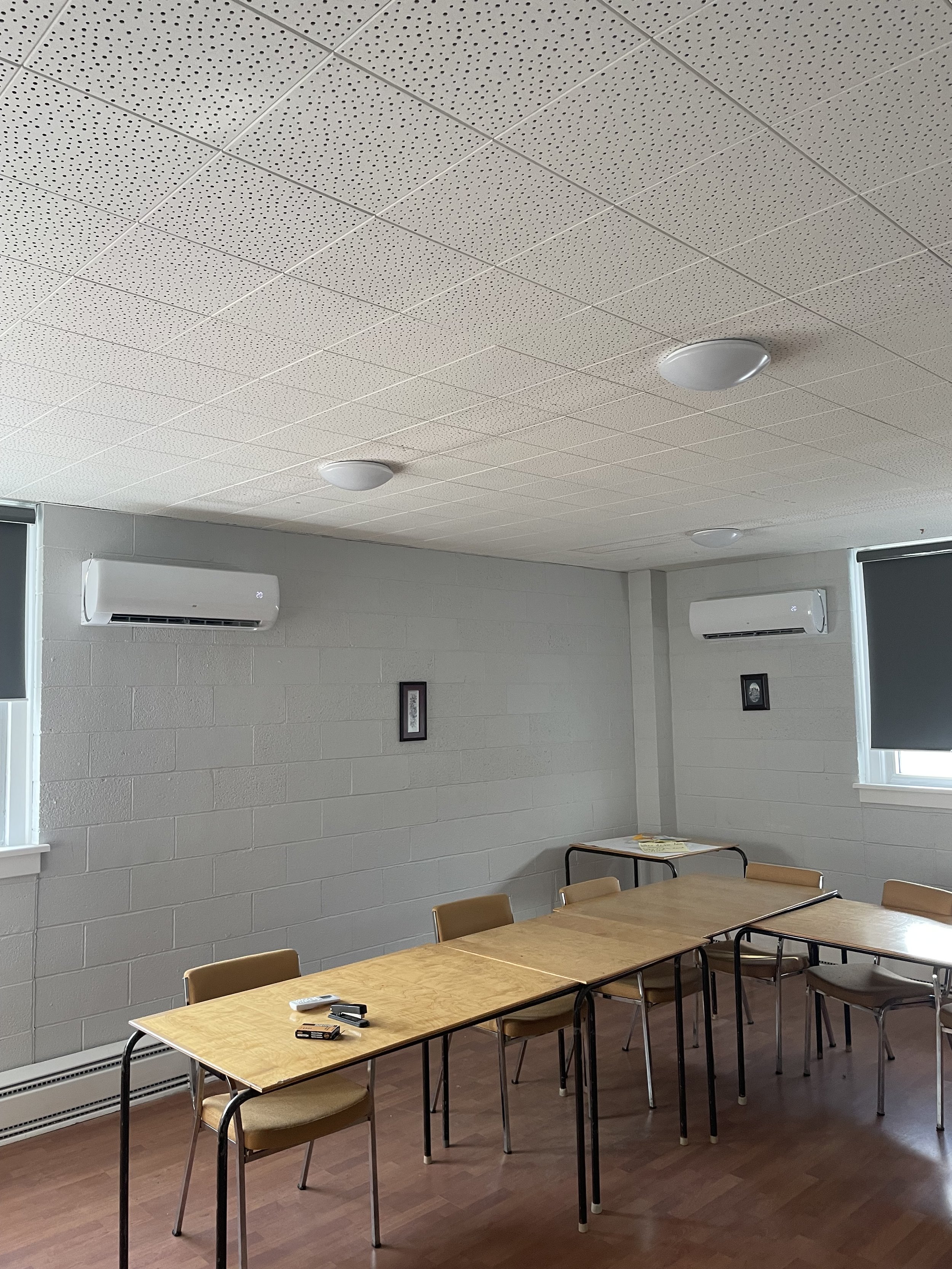
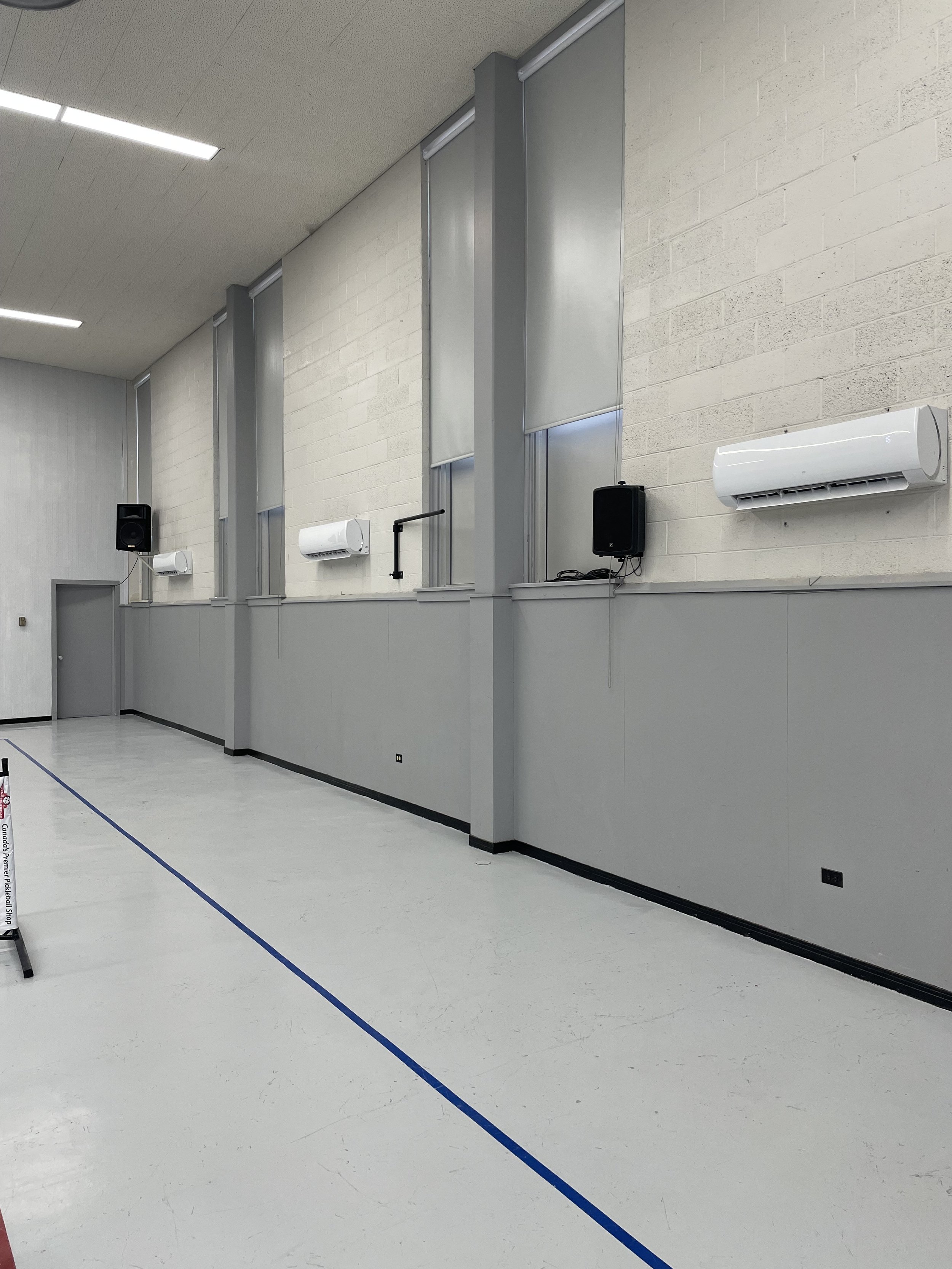
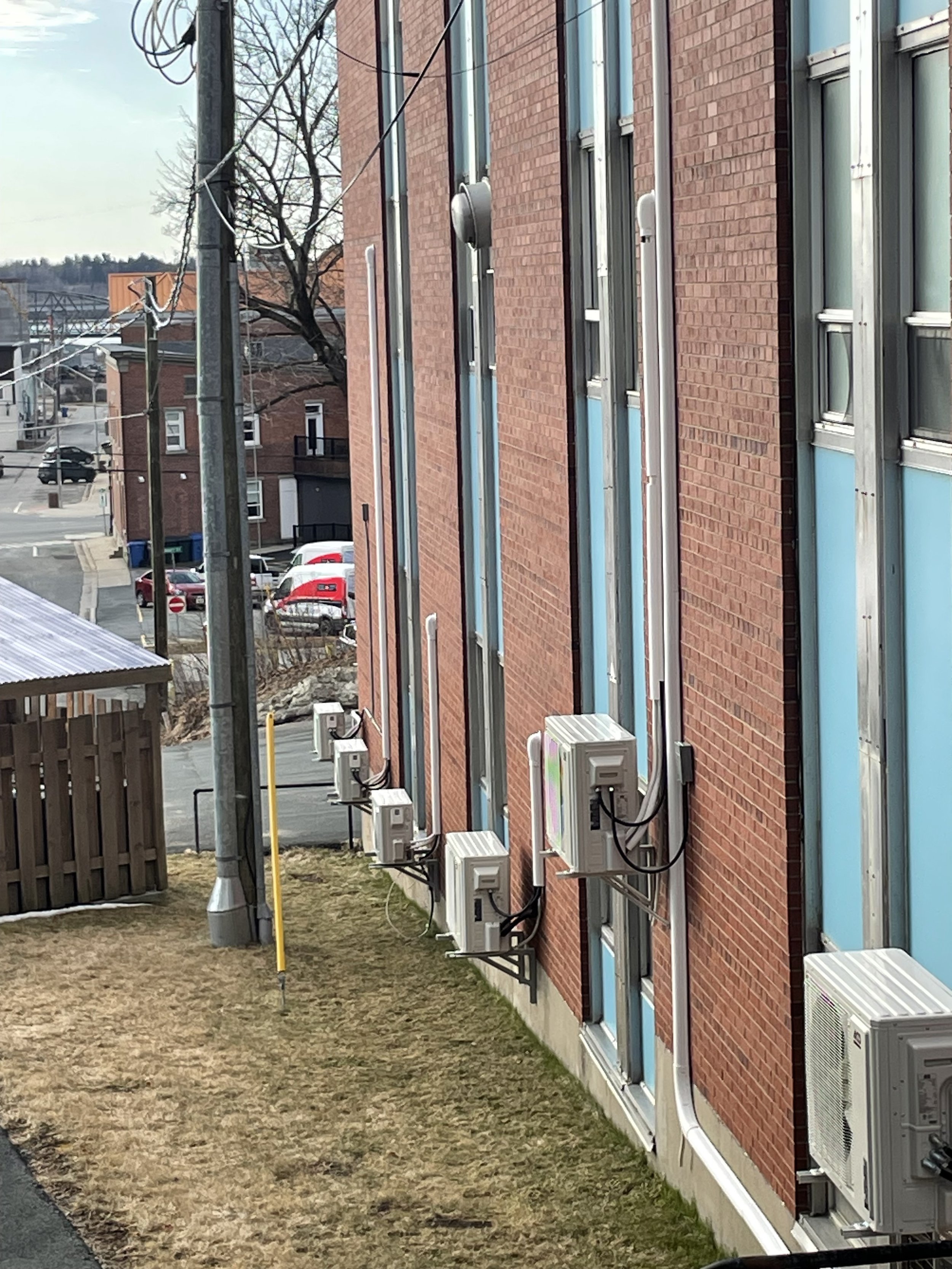
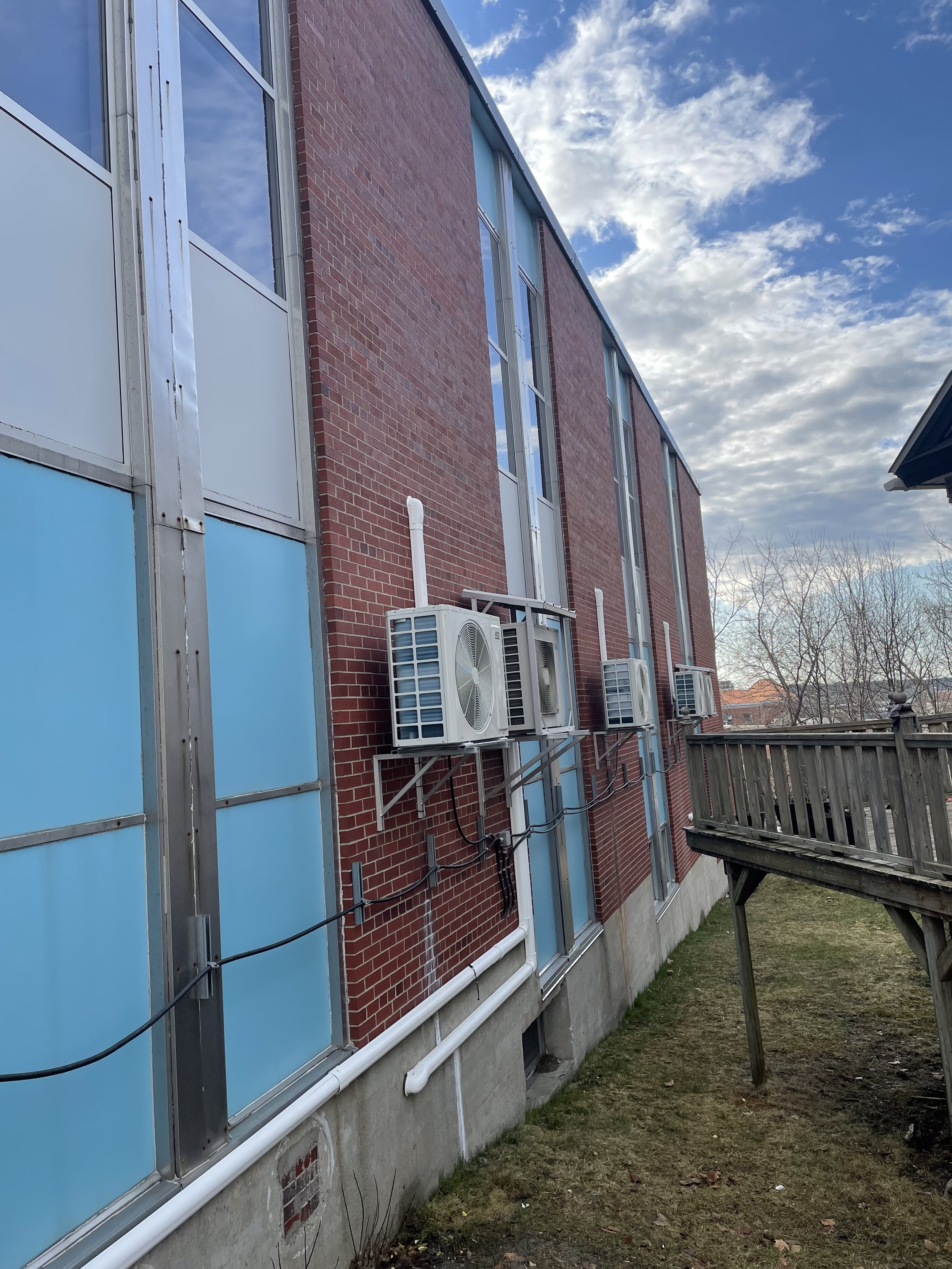
“Installing the heat pumps in our Centre would increase our rental possibilities and allow us to rent a couple of our rooms, bringing in more income. We often have large gatherings that include the congregation and visitors and the planned upgrades would help to provide a more comfortable meeting space.” states Shaddick
Continuing work throughout the Centre
While the heating system upgrade marked a major step forward, St. James & St. John United Church recognizes that further improvements can still be made to enhance the overall efficiency, accessibility, and usability of the Church Centre. Future projects for the Centre include upgrading a basement bathroom, replacing the roof, and installing new, energy-efficient windows throughout the building. Plans are also underway to relocate the minister’s and church administrator’s offices from the second floor to the main level, making them more accessible to aging members and those with mobility challenges. Beyond the Church Centre, the church building itself is in need of exterior painting, with interior updates to follow. These ongoing efforts reflect the congregation’s commitment to maintaining a welcoming, functional, and sustainable space for both its members and the broader community.
Testimonial
“Through the generous support of the Faithful Footprints grant and guidance from the program staff, we were able to install seven new mini splits throughout our Church Centre. These units are not only keeping us nice and warm in the cold months and cool in hotter weather, but also enabling our faith community to lower our carbon footprint. Because of this upgrade we will also have better control of heat in individual rooms throughout our large building compared to our previous central heating system. We will lower our monthly costs and energy consumption, making it all around, more efficient and certainly more appealing to entice new renters.” — Kimberley Shaddick, Office Administrator at St. James & St. John United Church

Finding Funding: Middlewood United works to remain of service to its community
Across regions, many faith communities are unable to meet annual fees and maintenance costs and are struggling to keep up with the operational needs of their buildings. As a solution, a number of United Church properties are retrofitting their buildings with the goal of reducing their energy bills. They are creating rental opportunities by renovating old and unused spaces within their buildings.
Across regions, many faith communities are unable to meet annual fees and maintenance costs and are struggling to keep up with the operational needs of their buildings. As a solution, a number of United Church properties are retrofitting their buildings with the goal of reducing their energy bills. They are creating rental opportunities by renovating old and unused spaces within their buildings.
But all this involves upfront costs; community donations and ministry savings are not always enough to single-handedly pay for building renovations. Accessing funding is one of the key determinants as to whether faith communities have the ability to carry out their projects or not; often it’s the sole reason why properties don’t end up following through with their retrofit plans. Grants, rebates, and other financial incentives can help support congregations to complete these otherwise non-attainable renovations.
Seeking Funding: Middlewood United’s Retrofit Project
“It is our hope that by doing this project, we can reduce costs and lessen the financial burden on our members.”
- Philip Pulsifer, Treasurer of Middlewood United Church
As a small rural congregation trying to maintain its long-standing place within the community, Middlewood United Church, located in Middlewood, Nova Scotia, was one of the many faith communities in need of financial support to complete a building renovation and alleviate the economic burden on congregational members.
The church first began thinking about retrofitting its building in December 2019, when Rev. Vivan Moories, their minister at the time, brought the Faithful Footprints program to the attention of the congregation. Members at Middlewood United work very hard to offer fellowship and fundraise each year to help keep the ministry afloat and donate to the church’s building fund. Upon hearing about the 2-1 funding option the program offered, enthusiasm began to build among the church members, with particular support from the Trustee Chair.
An energy audit was done and the Trustee Chair gathered quotes from several contractors for insulating the congregation’s schoolhouse, replacing windows, installing a heat pump, and upgrading the electrical system.
Unfortunately, when the project proposal was shared with the congregation for approval, it was denied; the building’s roof (in need of replacing) was the priority concern, and funding for the overall costs of the potential projects was still to be obtained. Discouraged, the retrofit plans came to a halt.
Property Treasurer, Philip Pulsifer, refused to give up on the retrofit project, knowing that it would lead to long-lasting environmental and economical benefits for the church. He began brainstorming potential solutions that would bring his congregation aboard, investigating and seeking out financial support for the proposed projects and scraped up funds to replace the roof. A significant donation was made by a congregational member towards the roof, and funding for the retrofit project was secured from Lunenburg Municipal District in Lunenburg County, The United Church of Canada Innovation Fund, and Hunter United Church Building Fund, as matching funds in support of a Faithful Footprints grant.
With Philip’s determination, Middlewood United was able to redo their roof as well as proceed with the retrofit plan to insulate the schoolhouse and replace windows.


Searching For Funding: We’re Here to Help
Finding available grants, incentives, rebates, and programs is a time-consuming task, as Middlewood United Church can attest, but we are here to help! The Faithful Footprints program aims to make it easier for your faith community to learn more about potential regional opportunities to assist with your retrofit project. Our Regional Support Pages are categorized by Western Canada, Prairies Canada, and Atlantic Canada. Explore your region and discover eligible provincial and municipal incentive programs, and find matching funds to support your Faithful Footprints application.
Connect with Faithful Footprints Regional Support Centre Coordinators to determine which government incentives might be applicable to your project, and for assistance selecting suitable energy auditors, energy professionals, and contractor recommendations for your retrofit.
Faithful Footprints Program
The United Church of Canada (UCCan) Faithful Footprints program offers inspiration, tools, and grants to help its faith communities reduce their carbon footprint. With the Church’s commitment to reducing its greenhouse gas (GHG) emissions by 80% by 2030, this one-of-a-kind program offers up to $30,000 in grants towards energy conservation and renewable energy projects (conditions apply).
Faith & the Common Good is the delivery partner for the UCCans Faithful Footprints program. To date, we have engaged over 300 congregations, camps, and buildings across the country. Your participation in the program puts your faith into action and helps the Church reach its target.
Aleyxa Gates Julien is the PR/Communications Coordinator for Faithful Footprints and can be reached at agatesjulien@faithcommongood.org

Why a Heat Pump For Your Place of Worship?
For faith communities, replacing a heating system is one of the single largest capital cost expenses (the other one is replacing the roof). Most congregational spaces have either boilers with radiators, or furnaces with ductwork that consume oil, gas or propane. While the typical lifespan may be 25 years for these appliances, I have seen many span decades of service.

Dundas Cardigan, PEI
For faith communities, replacing a heating system is one of the single largest capital cost expenses (the other one is replacing the roof). Most congregational spaces have either boilers with radiators, or furnaces with ductwork that consume oil, gas or propane. While the typical lifespan may be 25 years for these appliances, I have seen many span decades of service.
Sure, they keep going, so why change them? Well, just like you and I, we get less efficient with age. For instance, a furnace from the 1990s may have started out at, say, 84% efficient (meaning, for simplicity’s sake that 84% of the fuel is turned into heat, and 16% of the energy is wasted), but after 25+ years may be operating in the low 70% range. Older furnaces and boilers could be much, much lower efficiency. Now take your gas/oil/propane bill for the year and find what that 30% costs you per year. It is a lot! Your payback to switching becomes much clearer.
Instead of swapping out old units for new ones and carrying on, many congregations are switching to air source heat pumps.

Kings United, Bay Fortune NS
You may know these as mini-splits, or just heat pumps. These are electrically powered, so they remove the need for fossil fuels within your building. They work like a refrigerator taking cold air from the outside of the building, and with a fan blowing it over a coil with a refrigerant in it. There is a compressor, and basically it makes heat. How much heat? Well, for every unit of electricity it uses, it can make 3-4 units of heat! Compare this to an electric baseboard where 1 unit of electricity makes about .75 units of heat, and you get the efficiency picture really quickly. Now the cool thing (literally) about these is that they can run backwards and also make cool air, so it also supplies air conditioning to the building. With climate change and other factors to consider, such as more and more permanent tenants in these spaces, air conditioning helps to make renting your various spaces much easier.
Again, it is even more efficient than your regular air conditioning. So you may have seen the mini split systems with a head on the inside, and the compressor on the outside, which being split in two units, is where the name comes from. But you can also have a compressor on the outside run to a new furnace blower box and supply conditioned air to your existing ductwork. There are also rooftop units for those larger buildings and mechanical systems.

Brunswick Street Mission, Halifax NS

The main question people ask is will they still provide heat in the really cold winter? The answer is yes. Newer units, especially ENERGY STAR® approved units, have dual stage compressors, so they can basically “go around again” and extract more heat from the coils. Yes, the efficiency of the unit does drop as it gets really cold. So if you are working at 4:1 efficiency at -12C, then maybe 3:1 at -19C and 2:1 at -26C, as a rough example. That’s a conversation to have with your HVAC contractor.
I know that the Faithful Footprints grant program (see below) has approved heat pumps for ALL climate zones across the country, with everyone praising the comfort and energy savings gained. So consider heat pumps wherever you are as a way to reduce your energy costs and impact upon the climate.
You can also utilize our professional knowledge with virtual Green Audits that look at energy, air quality, food, water, waste, maintenance, rental agreements, heritage and much more.
The more you can learn about your building, the more you can save energy, minimize maintenance costs, and maximize the usage of your amazing faith community building.
Faithful Footprints Program
The United Church of Canada (UCC) Faithful Footprints program offers grants, tools and inspiration to help its congregations reduce their carbon footprint. With UCC’s commitment to reducing its greenhouse gases (GHG) emissions 80% by 2050, this one of a kind program offers up to $30,000 in grants towards energy conservation and renewable energy projects (conditions apply).
Faith & the Common Good is the delivery partner for UCCs Faithful Footprints program. To date, we have engaged over 200 UCC congregations, camps, and buildings across the country. Your participation in the program puts your faith into action and helps UCC reach its target.
Stephen Collette is the Building Manager for Faith & the Common Good and can be reached at 705-652-5159 EDT, scollette@faithcommongood.org
How a Community can Grow through a Building Project
Volunteers, EAC staff and architects formed the ambitious project team responsible for the 2015-2016 renovation that doubled the office space within the building and cut the building’s energy consumption in half. Through the project, a great community was developped.
How a Community can Grow through a Building Project
The Ecology Action Centre has operated in many different buildings, from a downtown office space to an old house to its current building which Is a renovated saltbox style house. The Ecology Action Centre (EAC) is currently housed in a building that is 104 years old and yet it is considered one of the most energy-efficient office buildings in Canada.

The Ecology Action Centre and its green transition.
A building forms the center of an organization’s operations and should always reflect the values that the organization wishes to promote to everyone around them. The EAC bought and renovated 2705 Fern Lane in 2005 in the hopes that their workspace would finally represent the values that it wished to promote and preserve. Many United Church congregations in Atlantic Canada have older buildings compared to the EAC building and these churches have just as many opportunities to improve their energy efficiency.
Volunteers and the Community
Volunteers, EAC staff and architects formed the core project team responsible for the 2015-2016 renovation. This project team was responsible for doubling the office space within the building and at the same time cutting the building’s energy consumption in half. The EAC project team chose ambitious goals and other teams such as green teams or sustainability committees in faith-based buildings can do the same. There are many examples of green teams or sustainability teams being formed across Atlantic Canada to make environmental changes within their communities. Woodlawn United Church located in Dartmouth, Nova Scotia has formed a Sustainability Committee as well as Beacon United Church, located in Yarmouth, Nova Scotia.

Energy Efficiency Volunteers at Trinity United Church, Rosebay, Nova Scotia.
In the beginning, the EAC renovation team identified what they needed, what they wanted and what resources were available to them to make the proposed changes a reality. United Churches across Canada can access the same initial professional advice by using the Faithful Footprints website. Through the Faithful Footprints website, congregations or “green teams” can access the information they need to connect with building professionals that can help make their building project a success.
Planning is very important if you want to ensure that your building will last another 100 years. You need to consider the increased risks of extreme storm weather, the increased extreme cold/hot climatic conditions as climate change continues to occur. The renovation team at the EAC knew that future winters would be more extreme and planned for increased insulation that could withstand the test of time. Any green team must face the harsh reality of our current climate; we will never have the same winters we experienced 50 years ago and so we cannot continue to design buildings as we did 50 years ago.
Once the renovation team had a plan in place, they then proceeded to fundraise for the project and apply for various grants that were available. There are retrofit grants and rebates available in Atlantic Canada for non-profit organization projects (including church buildings) information about these funding programs can be found on the Faithful Footprints website.
Volunteers were then gathered to perform different tasks that would lower the overall capital cost of the project. Donated steel door insulation cut-outs were gathered and organized by volunteers. Volunteers applied natural non-toxic preservatives to spruce siding used on all exterior walls. Volunteers applied clay-based plaster and paints to the inside walls and helped reuse insulation in the attic. Over 150 volunteers dedicated more than 1,800 hours to the renovation, in addition to our full-time building crew. Nothing brings together a community like a building project and there are many people that like to help build things whether they are already connected to your community or not.
Focusing on the Future
It is important throughout a renovation project to think about the long-term goals and make decisions based on those goals. The renovation team was focused on ensuring that the building would let in more sunlight to help heat the building and provide natural sunlight for staff during the daytime. There was also a focus on preserving some historical aspects which led to reusing flooring materials, leaving original wallpaper in specific rooms and reusing doors inside the building. As people enter our building, after having seen our new exterior finishing, many are shocked when they see the number of old doors we have re-used inside our building.

Energy Efficiency Volunteers at Trinity United Church, Rosebay, Nova Scotia.
Applying energy efficiency strategies in your building does not mean “Out with the old, and in with the new!” Single pane church windows can be preserved and/or re-used. Beautiful church steeples can be preserved by simply insulating specific areas of the steeple. Foundations can be better preserved by adding exterior insulation.
There are many examples across Canada of United Churches becoming rejuvenated from the energy efficiency improvements and climate change initiatives they have made. United Churches in Atlantic Canada have also been doing their part, especially Rockingham United Church, St. Paul’s United Church and Rose Bay Trinity United Church. Visit the Faithful Footprints, Inspiration Page, for more ideas.
The Ecology Action Centre and our newly renovated building is a place of learning and sharing for anyone interested in addressing climate change. As the Atlantic Information Hub for the Faithful Footprints Program, anyone willing to improve their church is welcome to organize a building tour or give Ben Grieder, the Atlantic Regional Coordinator, a call, 902-422-0199 or email, bengrieder@ecologyaction.ca.
“One of the great features of the Faithful Footprints program is that there is support for a range of different energy action projects. Taking care of the basics is a vital part of any congregation’s energy management journey.” Stephen Collette, Building Audit Manager, Faith and the Common Good
Now fly: Wesley United Church takes the lead in St. Andrews, New Brunswick
Across the country, United Churches are doing their part to address the climate crisis by getting their houses in order and reducing their own carbon emissions. Through a partnership with Faith & the Common Good, the United Church of Canada is offering grants and support for churches to measure their energy use and reduce their climate pollution, in ways that save money and strengthen congregational renewal.
Across the country, United Churches are doing their part to address the climate crisis by getting their houses in order and reducing their own carbon emissions. Through a partnership with Faith & the Common Good, the United Church of Canada is offering grants and support for churches to measure their energy use and reduce their climate pollution, in ways that save money and strengthen congregational renewal. The initiative, called Faithful Footprints is about living climate commitments, for future generations, and for all of creation. To inspire your congregation to get involved, we have stories from participating congregations.

Wesley United Church building is 152 years old and Faithful Footprints allows for renovations and updates while saving money.
Now fly: Wesley United Church in St.Andres, New Brunswick

The treasurer has the pulse of the church,” says Barb Sheen of Wesley United, in the tiny town of St. Andrews, New Brunswick. “We are always looking to reduce our costs.”
When Barb heard about the FF grant and brought it to the attention of the renovation committee, and church board, she secretly thought it sounded too good to be true, “but in our case it was true.”
Prior to the grant, Wesley United had already started a renovation project thanks to receiving a bequest. They had been visioning for two years about how they would use it to benefit the congregation and community at large: “We wanted to think bigger, widen our doors, asking, ‘what can we do to participate, what can we accomplish?’”

The Church building is 152 years old, “so there is no problem to find things to do,” Barb jokes. “As the stars lined up, we lined up.”
They restored some of the stain glass windows, revamped the heating systems, and with the FF grant and a fundraising campaign, they were able to pay for insulating much of the sanctuary, eliminating drafts by caulking the cracks in the original floors and doors and putting in energy-saving lighting in the halls and sanctuary. Of the $155,000 spent on renovations and energy-saving initiatives, they garnered $30,000 back.

Similarly to all the churches in the program, the congregations’ participation was key.
“We invited them all the way, kept the communication alive and they really came on board,” Barb says. With consistent updates at the forefront, “it gave us a real sense of energy use in the church, and to actually see what we were able to accomplish.” Nine months later they had finished the renovations.
“We have spread our wings and will continue to go further as we move into 2020,” concludes Barb. “The Faithful Footprints program has helped us do that.”
Helpful Hand-holding
Preparing a grant application can be daunting, but Stephen Collette, Grant Project Manager for the Faithful Footprints program is here to help! Stephen ensures your application form is properly completed and that your energy efficiency package will actually save you money. Stephen’s assistance helps expedite the application approval process tremendously, with typical turnaround times under two weeks, and often in a matter of days.
The Faithful Footprint program also features support hubs for United Church congregations in the Prairies and Atlantic Canada. “We know that lack of capacity is one of the major obstacles to “Greening” our sacred spaces, so we are proud to be working with Ecology Action Centre in Halifax and Purpose Construction in Winnipeg to pilot how to provide in-person support to United Churches around energy efficiency action,” said Cummings. Guided by regional multi-faith advisory circles, the hubs are lead by local building and energy efficiency experts and aim to connect congregations with municipal and provincial energy incentives, recommend contractors, and foster collaboration among other local places of faith facing similar challenges.
UCC Carbon Baseline Report
The United Church of Canada is committed to reducing its carbon emissions by 80% by 2050, in line with the Paris Climate Targets. With an initial focus on buildings – one of the church’s largest sources of emissions – the program Faithful Footprints will be working with 500 congregations by 2025 to reduce their energy use and energy costs.In 2016 the UCC General Council commissioned Caring for Creation, Our Communities and Our Congregations: The Case for a National Carbon Reduction Program for Faith Buildings. Faithful Footprints is the beginning of implementing those learnings.
As people of faith, we recognize that to bring truly inspiring climate leadership to our communities, we must practice what we preach. Together we can renew our congregations, care for the planet, save money, and stop climate pollution.
Stay tuned for a full feature of Faithful Footprints in the February 2020 edition of the United Church of Canada’s Mandate Magazine.

Our Neighbours, Ourselves, and all of Creation
The Green Covenant asks them “to care for our neighbours, ourselves and all of Creation by: integrating the love of Creation in our worship and spiritual lives. We will lead by example and ask those who use our building to partner in this covenant.”
In 2011, Saint Andrew’s United Church in Halifax, NS, celebrated a ‘Greening Sunday’ and covenanted with God and each other to be a Green Church. The Green Covenant asks them “to care for our neighbours, ourselves and all of Creation by: integrating the love of Creation in our worship and spiritual lives, increasing environmental awareness and education, practicing stewardship by conservation of natural resources, and working with others for environmental justice. As a congregation and as individuals, we will make every effort possible to reduce our carbon and ecological footprint. We will lead by example and ask those who use our building to partner in this covenant.”
Saint Andrew’s has already been practicing this covenant for the past several years by:
Including climate change and other ecological concerns in worship and celebrating ‘The Season of Creation’ in worship and education for all ages,
Partnering with Shambhala to co-sponsor ‘Sacred Earth Awake’ film series,
Having a professional energy audit on our building,
Converting from oil heat to natural gas, and
Changing the lighting to CFC or LED lights,
Using and promoting Fair Trade coffee and other products,
Organizing climate justice events and supporting First Nations communities as they raise awareness about the effects of the Alberta oil sands on their lives.
They are continuing to invite members, groups – especially youth, staff and neighbours to share suggestions and to act together to more fully integrate our care of Creation in all that we do. Including:
Make every effort to save heat and paper,
Include ‘Green Tips’ in the weekly bulletin,
Increase the number of recycle bins,
Use environmentally friendly cleaning products,
Designate ‘idle free’ areas,
Install bike racks,
Collect/recycle ink cartridges,
Search for a biodegradable alternative to Styrofoam (for the Sunday Supper for the homeless),
Explore the possibilities of a community garden and/or fruit tree planting on church property, and
Advocate to stop the destructive impacts of the Alberta tar sands and work for a provincial moratorium on Hydraulic Fracturing.
Check out more from St. Andrew's United Church on their website: www.standrewshfx.ca

A Hub for Community Growth - Beacon United Church Energy Efficiency Journey
“This was part of a larger plan to make sure the building remained used and had income to help offset the costs of operation. Another initially controversial move to use the auditorium space for a heavy metal festival, which ended up being a great fit, as “the music was amazing and the festival attendees very respectful!””
Story from the Ecology Action Centre website.
Beacon United Church's Energy Efficiency Story (2016)
At 22,000 square feet, Beacon United Church and its attached community space is not easy to heat. Especially so in a cold, humid climate like Yarmouth, a small town of just under 6,800 on the southern-most tip of Nova Scotia. Like many places of worship around Canada, just six years ago it was struggling to make ends meet in a rural town, with a declining population and a declining congregation. The church was up for sale – the congregation had agreed that it could no longer pay for upkeep and operations. However, this church has taken a leap into the future by becoming a hub for community growth and environmental justice amongst its congregation and the local population.
“I received some comments of concern but once they saw how good a space this was for some activities that even the congregation enjoys, the concern dispersed. ”
One of the more notable projects is the former chapel, which has been turned into a multi-purpose room to accommodate for just about any user-group. It’s mostly used by a group of local seniors who enjoy the space three times a week. Stephen Sollows, the green enthusiast at Beacon United Church, recalls some resistance that he encountered when he initially proposed that the space be turned from a small chapel into a multi-purpose space. “I received some comments of concern but once they saw how good a space this was for some activities that even the congregation enjoys, the concern dispersed,” he recalls with a laugh. Of course, this was part of a larger plan to make sure the building remained used and had income to help offset the costs of operation. Sollows also recalls another initially controversial move to use the auditorium space for a heavy metal festival, which ended up being a great fit, as “the music was amazing and the festival attendees very respectful!”
The multi-purpose room also received some energy-efficiency-influenced changes. Since the enormous building is heated by the same oil-fired heating system, they had a heat pump installed so that the room could be heated without turning up the heat in the entire building. Finding the appropriate lighting was a challenge, as certain colour spectrums make reading difficult for aging eyes. Beacon found that by using LED lights on the blue (cold) spectrum, reading was easier. Furthermore, the quiet LEDs replaced old fluorescent tubes that made some high-pitched buzzing noises. This retrofit did not put a large dent in the pocket of the church: it was covered by a New Horizons grant.
Another initiative of the church to reach out has been its enormous community garden, started 4 years ago. This garden has 130 plots. Two-thirds of the plots are owned by members of the community, one-third of the plots belong to the church. The space is used by many of the user groups of the church, even the youth-oriented groups, to learn about gardening. It also includes a labyrinth, where anyone is welcome to walk and meditate.
The garden had issues with storm-water management, as there was a slope from the large parking lot towards the garden. The church planted a storm water garden with native plant species that has successfully mitigated this problem.
Next steps for Beacon United are big: they have had a solar assessment done and are in the process of having an ASHRAE level energy assessment from a local energy consultant who is generously giving the assessment at a very discounted price. They are looking forward to implementing the money and greenhouse gas savings measures as soon as they can.