
BLOGS
Churches across the country are stepping up. Read their stories and access other climate and energy resources here.

Finding the right heating system for Arden United
Arden United Church explores heat pump options that balanced cost, performance, and nd the everyday realities of their building.
Upgrading a faith building to a low-carbon heating system is more than just swapping out old equipment. It requires careful planning, informed decision-making, and a willingness to learn how new technology fits a building’s unique layout and patterns of use. In 2023, Arden United Church in Arden, Ontario, began this process by exploring options that balanced upfront costs, heating performance, and the everyday realities of their building. What started as a replacement project became an opportunity to reduce carbon emissions, lower energy costs, and build confidence in operating a modern, sustainable heating system.
Over the past 15–20 years, Arden United had undertaken numerous energy conservation and greening projects, using church members hands-on experience in building renovation, construction, and energy efficiency. For this more technical project, the church was fortunate to have Bill Wong, a volunteer on the Stewards Committee, bring over 25 years of professional experience designing and implementing renewable and low-carbon energy systems in Canada, including heat pumps. Bill became the project lead for the heating system upgrade, overseeing contractors, coordinating the installation, and managing the commissioning of the new system.
Finding a heating system that works best
With strong support by the entire congregation, Bill and the Stewards Committee spent early 2024 carefully evaluating different heat pump configurations. The church weighed performance against cost, recognizing that every choice came with trade-offs. A cold-climate heat pump capable of operating down to –30°C offered the greatest coverage but required a significantly higher upfront investment. A standard system operating to –20°C, supported by electric resistance heating during the rare coldest days, became a more practical and cost-effective option, one that would still meet comfort needs while keeping the project affordable.
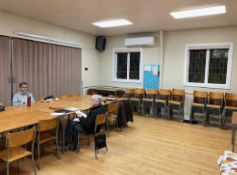
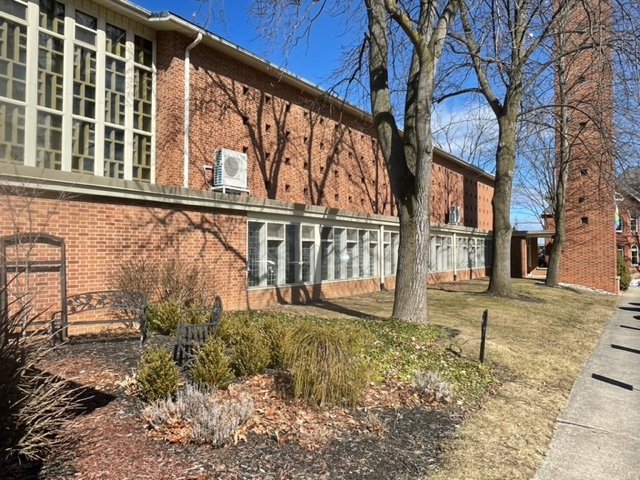
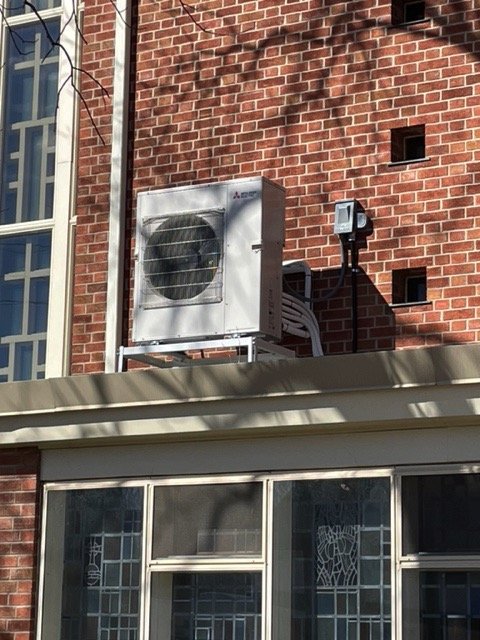
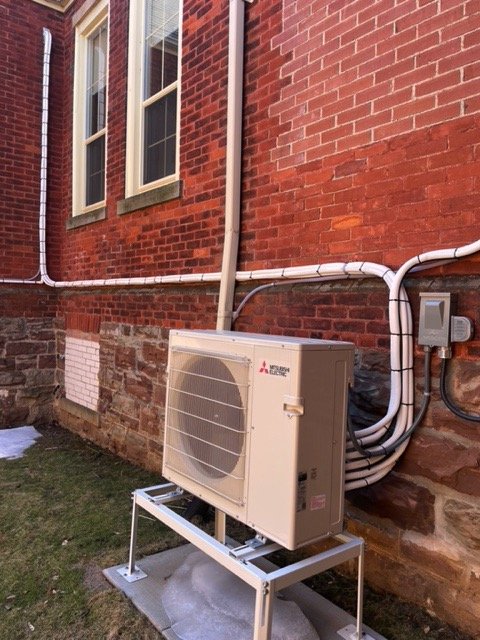
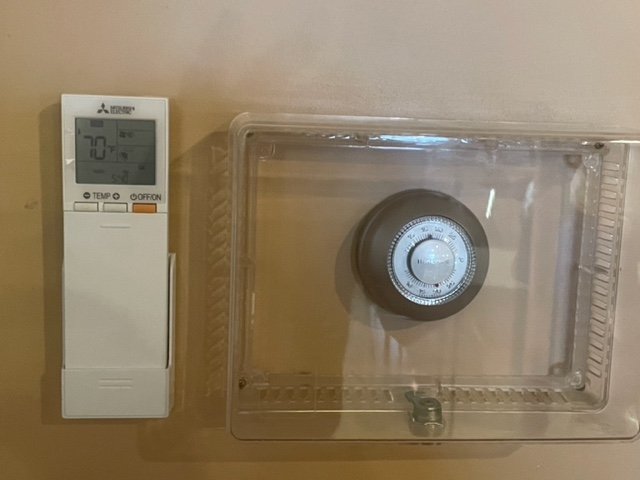
As part of this decision-making process, the church also took a closer look at how the building is actually used. The social room frequently hosts meetings and community events when the sanctuary itself does not need heating. Rather than warming the entire building unnecessarily, Arden United decided to include a smaller, wall-mounted heat pump dedicated to the social room. This zoned approach allowed the church to heat only the spaces in use, improving efficiency and making the system better suited to daily activities.
After careful system sizing and cost analysis, Arden United finalized a configuration that reflected their building’s needs: a 5-ton central air source heat pump to replace the aging oil furnace, paired with a 3-ton ductless wall-mounted unit for the social and meeting room. Along the way, the church encountered some challenges, including sourcing the less common 5-ton unit, which required a brand switch to stay within budget, and early communication issues between the outdoor unit and controller. Despite these hurdles, installation was successfully completed in October 2024.
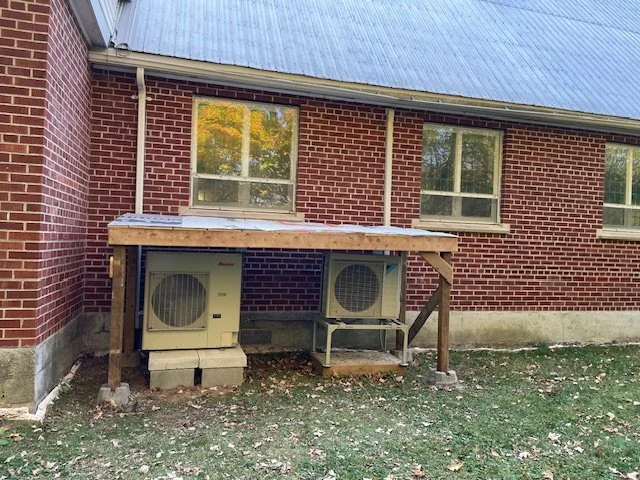
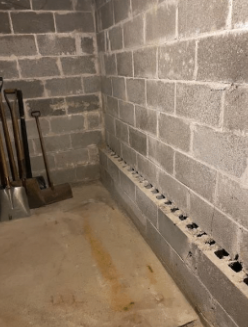
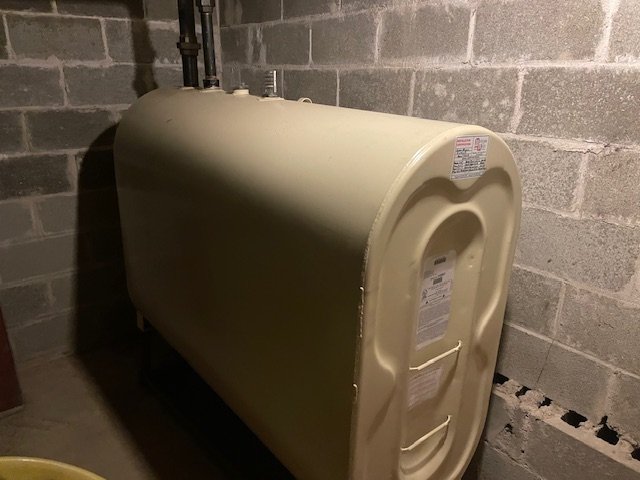
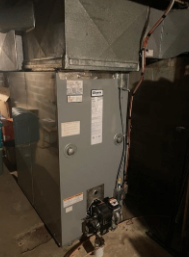
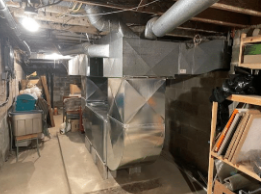
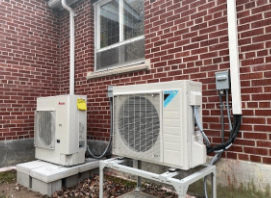
A year following their projects, Arden United was able to reduce its source energy use intensity by 6.1%, total GHG emissions by 88.1%, and energy costs by 7.1%.
Getting to know the new system
Once the system was in place, the learning continued. As the congregation settled into using the new heat pumps, members focused on understanding how to operate the system efficiently and make the most of its features. The Stewards Committee received training to manage both systems, monitor energy use, and experiment with scheduling and comfort setpoints. Comparing utility costs with previous years has become part of an ongoing effort to refine how the system is used and to share insights with the wider congregation.
The church also hosted educational seminars and tours for members and the wider Arden community. These gatherings highlighted both the benefits of heat pump technology and the practical lessons learned through the project. One year after completion, Arden United shared the system’s impact on emissions reduction and operating cost savings with the congregation and other stakeholders.
“While we can’t reverse the climate emergency by our action alone, nor fix the entire problem of global warming, we can at least do our bit to be better stewards of what we can control.” says Bill Wong, Chair of the Stewards Committee and project lead
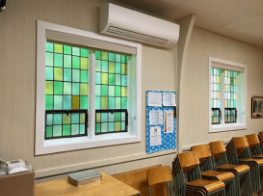
Although Arden United is a relatively small church, the community sees this project as a journey rather than an endpoint. Looking ahead, they hope to continue their greening efforts through future projects such as replacing old appliances with Energy Star models, upgrading the hot water system to a tankless electric heater, renovating stained-glass windows, and eventually greening the manse, which is still heated by oil.
Faithful Footprints Program
The United Church of Canada’s Faithful Footprints program offers inspiration, tools, and grants to help its faith communities reduce their carbon footprint. With the Church’s commitment to reducing its greenhouse gasses (GHG) emissions by 80% by 2030, this one-of-a-kind program offers up to $30,000 in grants towards energy conservation and renewable energy projects (conditions apply).
Faith & the Common Good is the delivery partner for the Faithful Footprints program. To date, we have engaged over 500 congregations, camps, and buildings across the country. Your participation in the program puts your faith into action and helps the Church reach its target.

St. John United seizes opportunity to boost efficiency after major pipe leak
Years of thoughtful efficiency upgrades led St. John’s United Church to replace its aging steam system in 2023, but just months later, an unforeseen pipe failure revealed the realities of tackling aging infrastructure.
Over the years, St. John's United Church of Georgetown and Glen Williams, Ontario have taken thoughtful steps to make its building more efficient and resilient. What began with smaller upgrades like installing LED floodlights above the chancel and in the north parking lot, grew into more significant projects, including a new metal roof on the original church and an upgraded HVAC system for the building’s addition and office areas.
One of the church’s most impactful upgrades took place in the fall of 2023. Realizing the inefficiencies of their aging steam boiler system, the church made the decision to convert to high-efficiency hot water boilers with a higher operating pressure.
“The original steam pipes, which had heated the building for decades, had corroded over time.” says Robin Allison of St. John’s United Church of Georgetown and Glen Williams
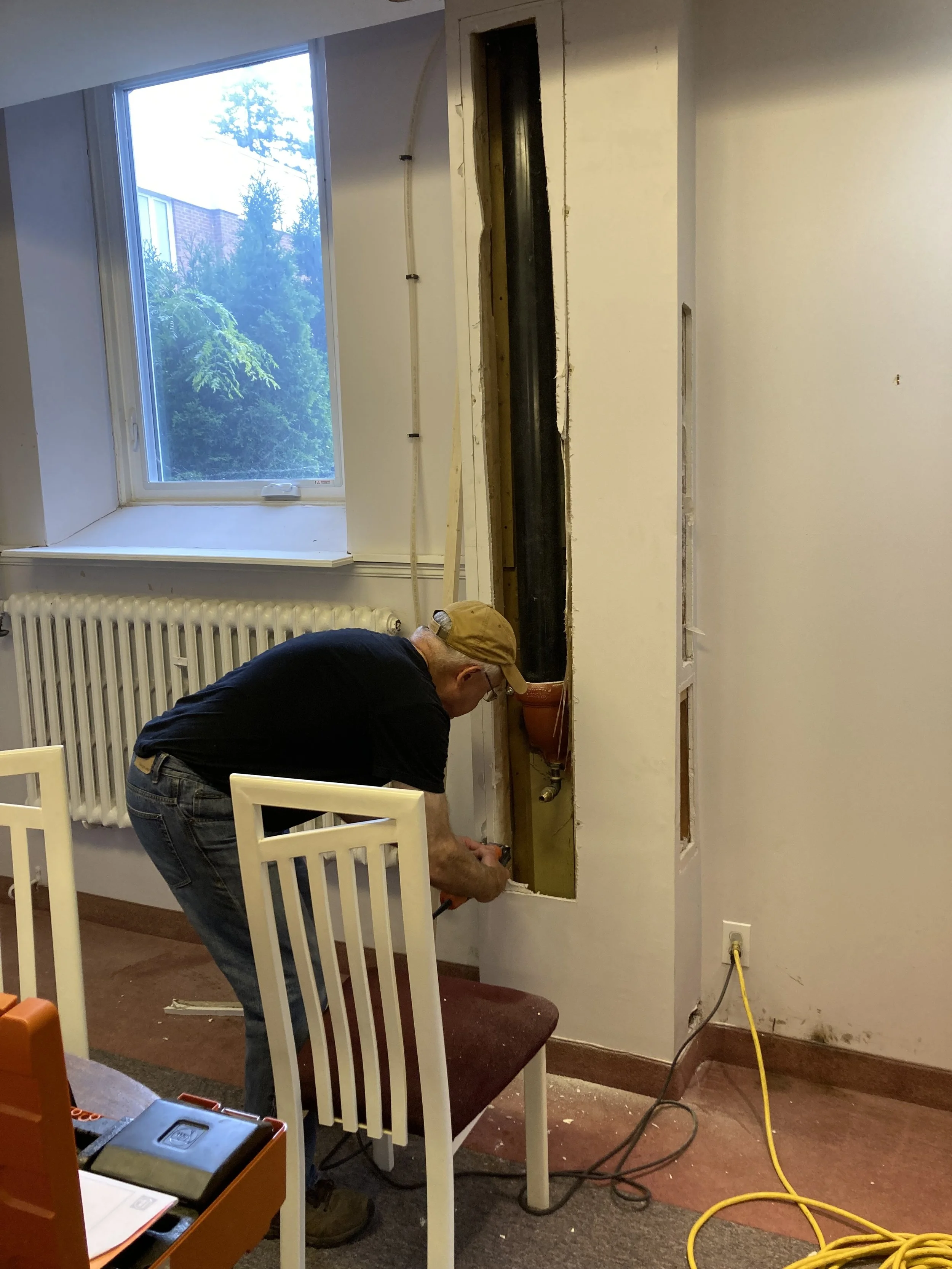
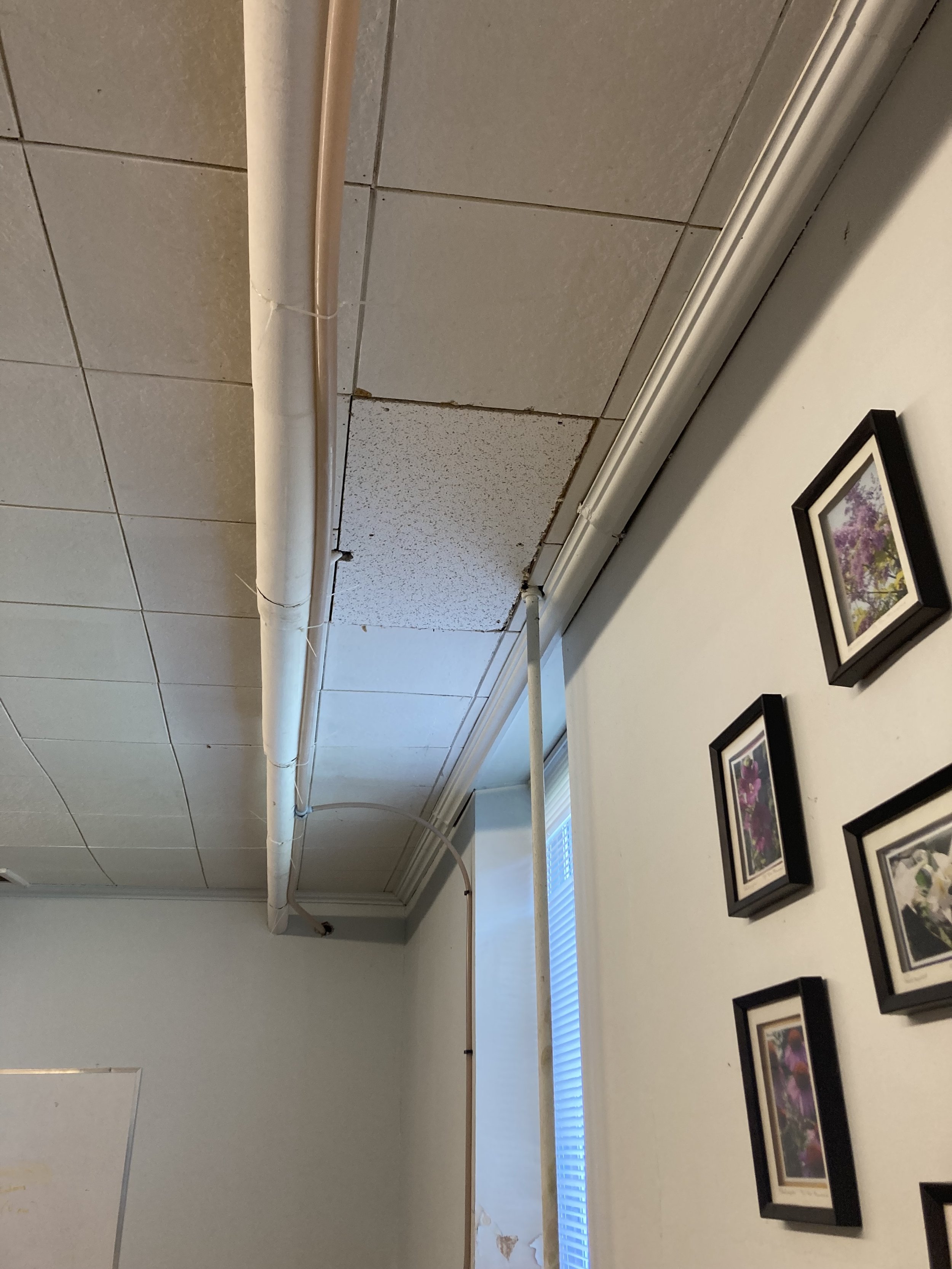
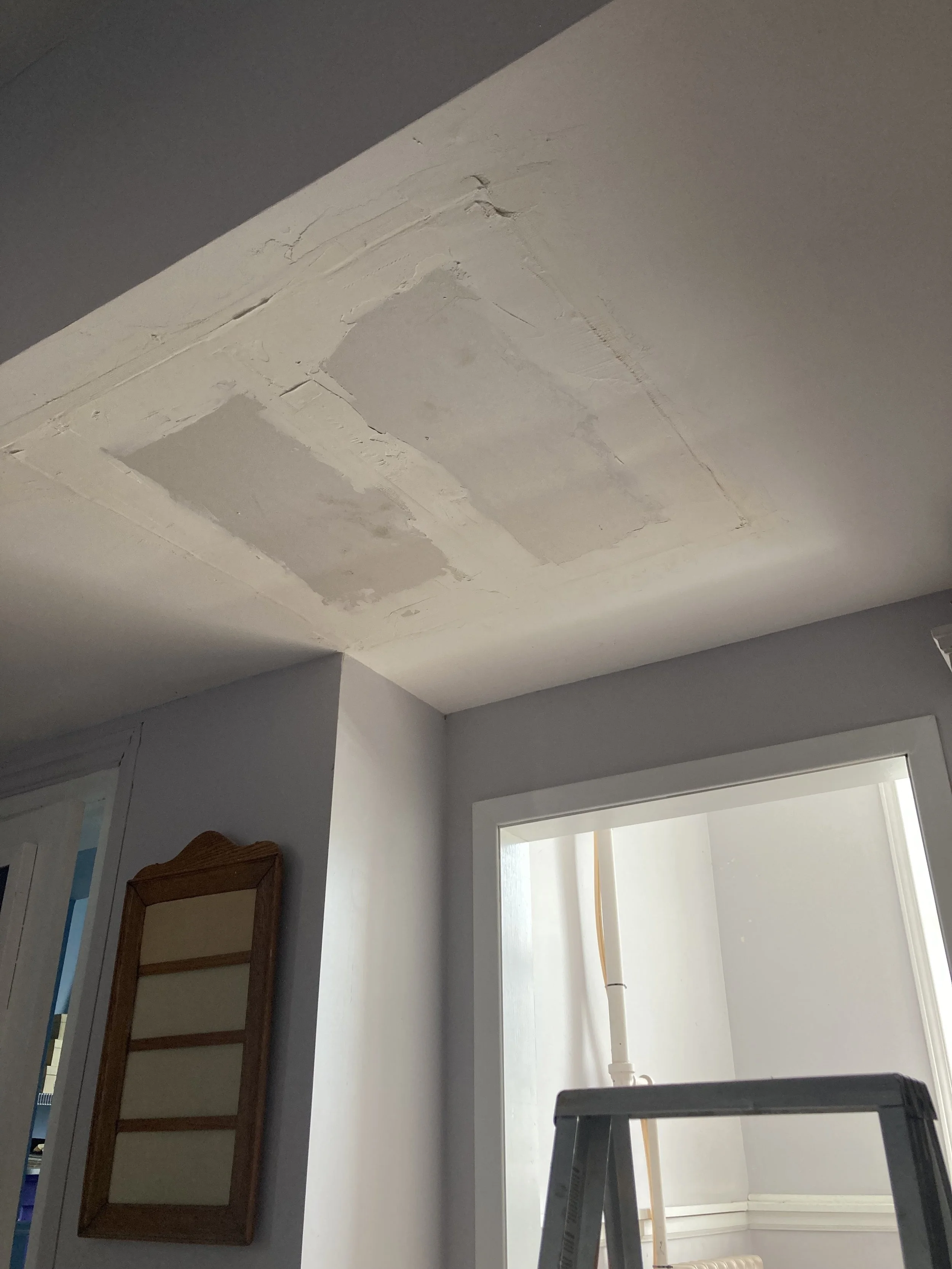
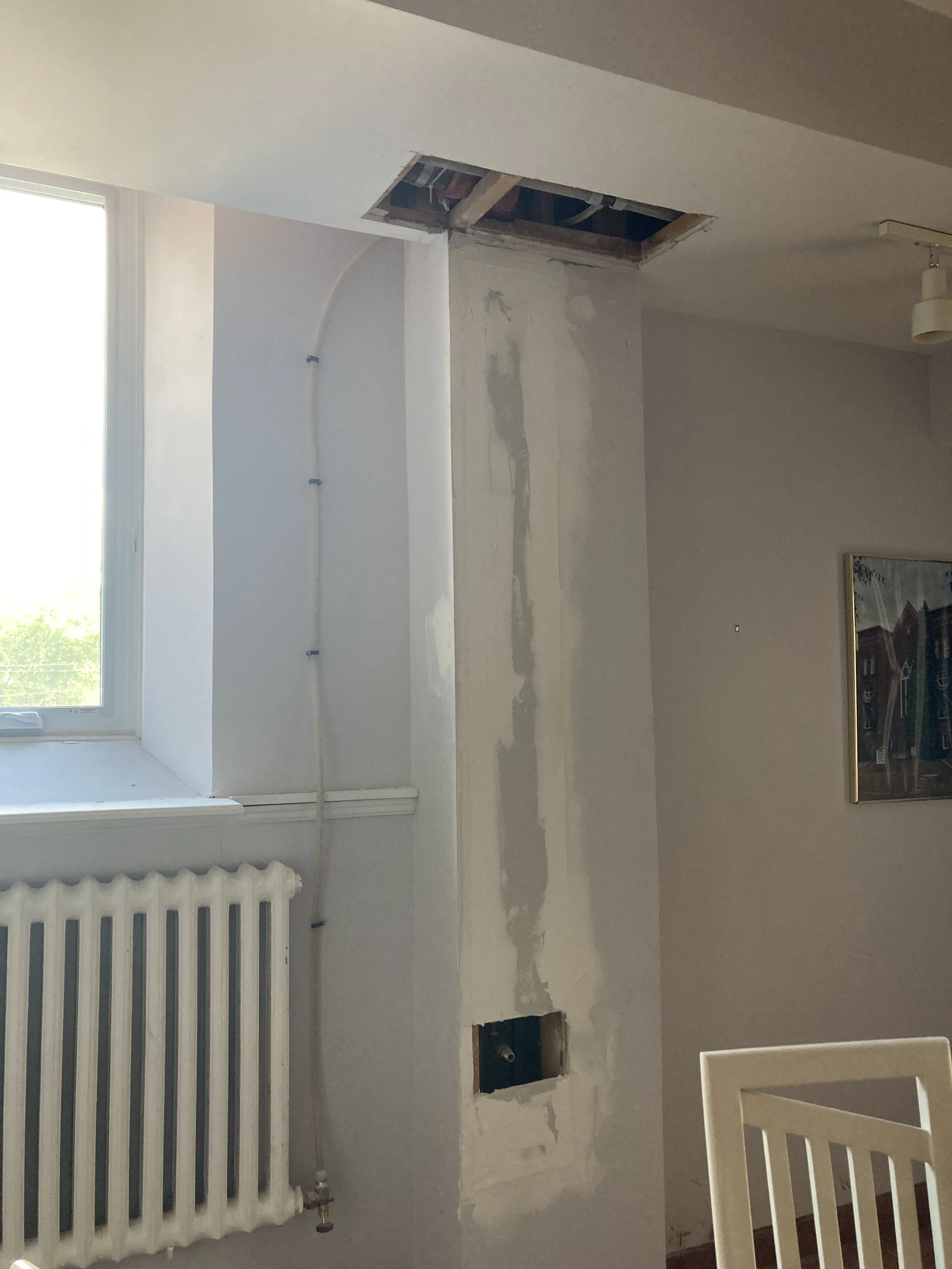
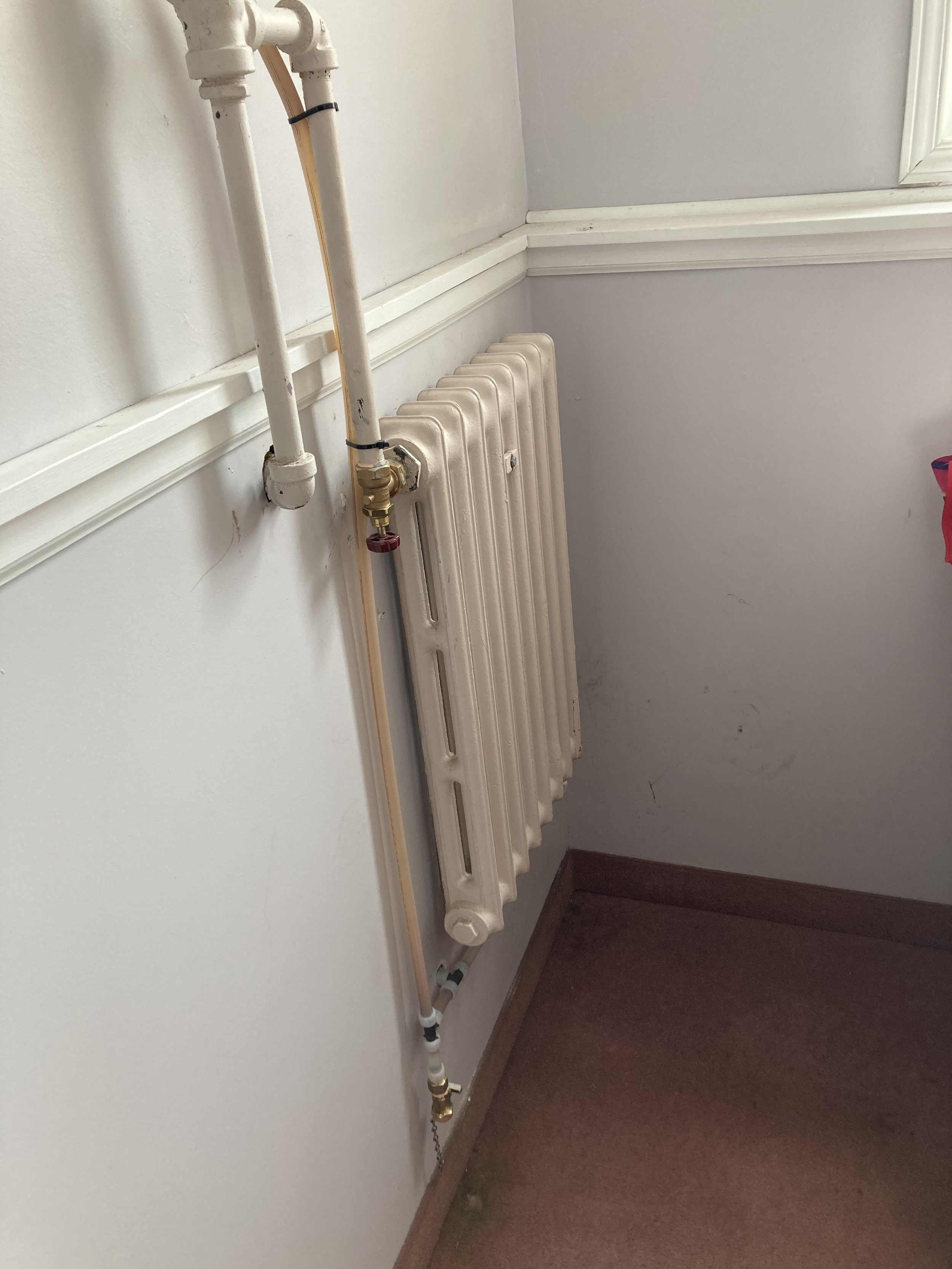
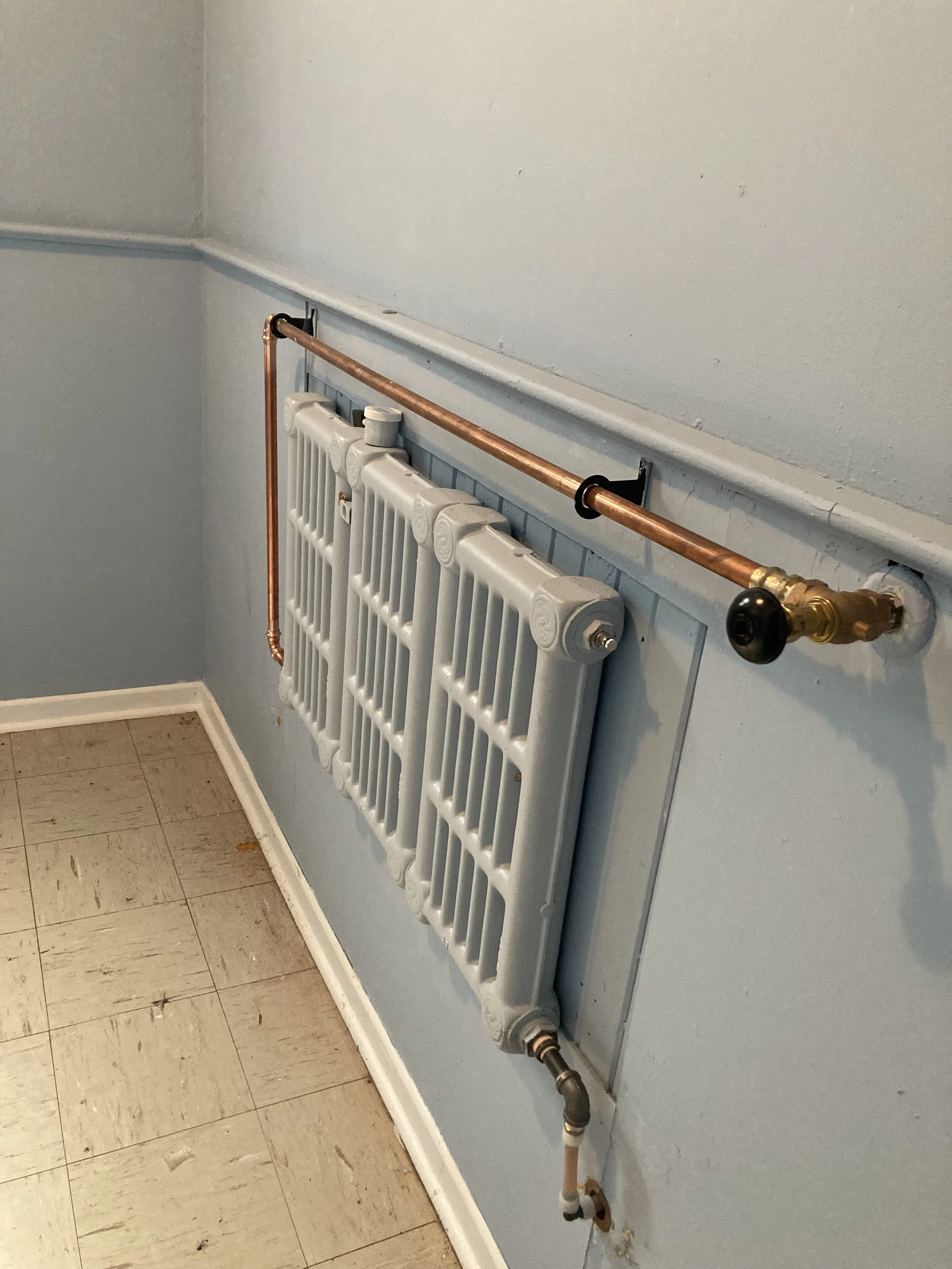
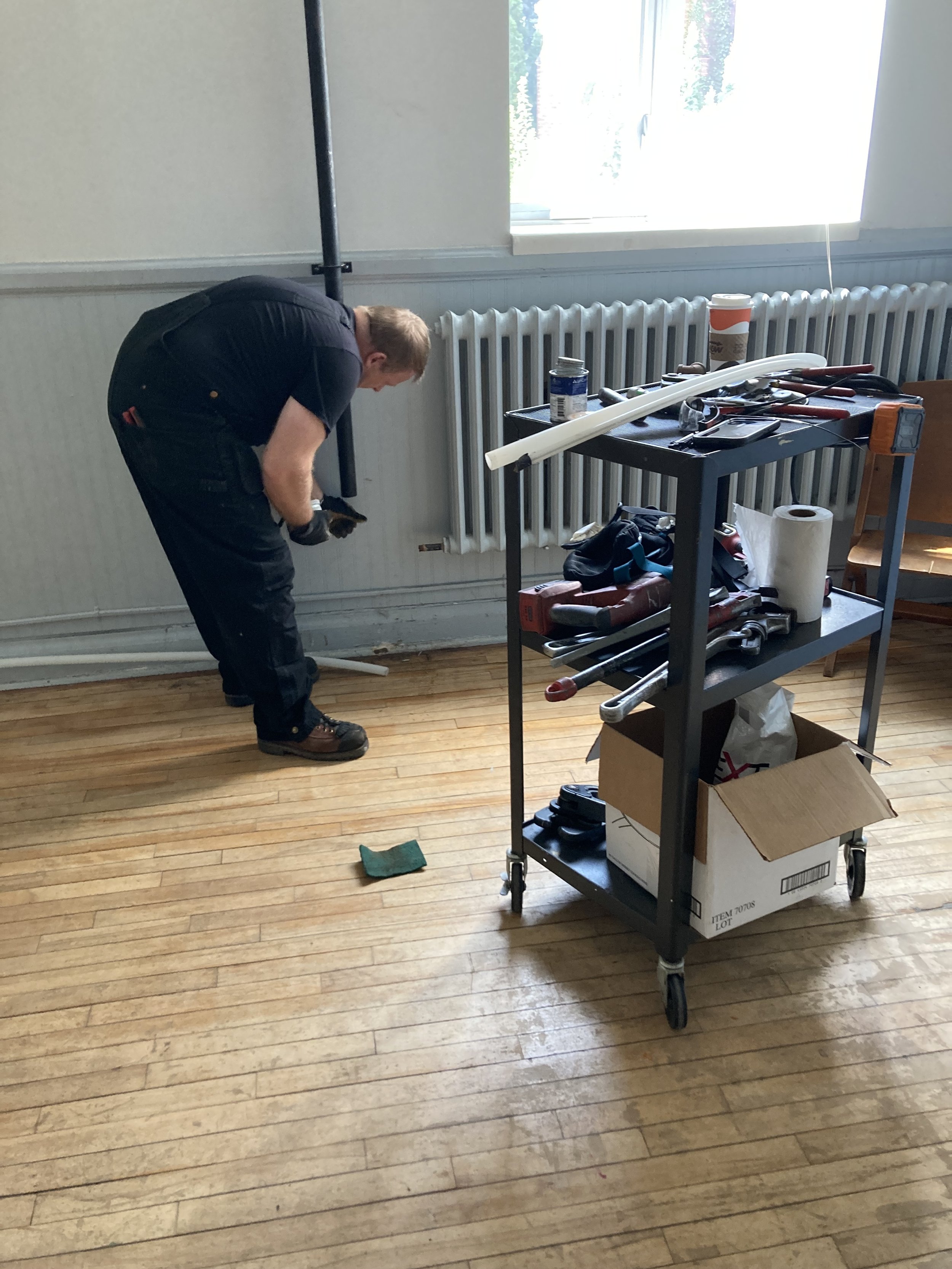
However, in April 2024, just months after the conversion, a major pipe leak was discovered in the lower storage room. Instead of delaying action, the church quickly arranged a temporary repair and pressure-tested the entire system to assess the extent of the issue. The test revealed multiple weak spots and additional leaks hidden throughout the piping. Rather than simply patching the problem, St. John saw an opportunity to strengthen the system for the long term.
Strengthening the system for the long run
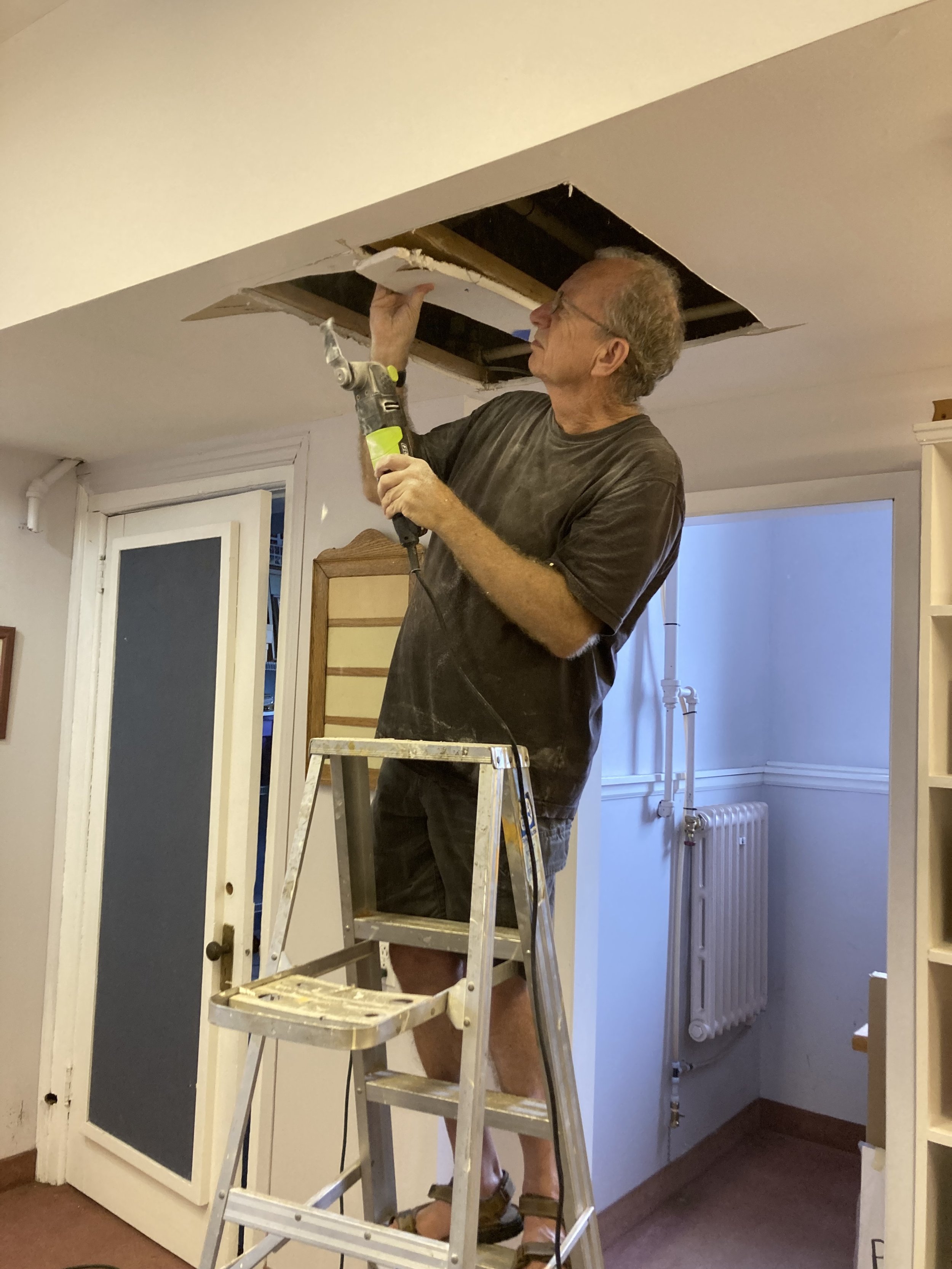
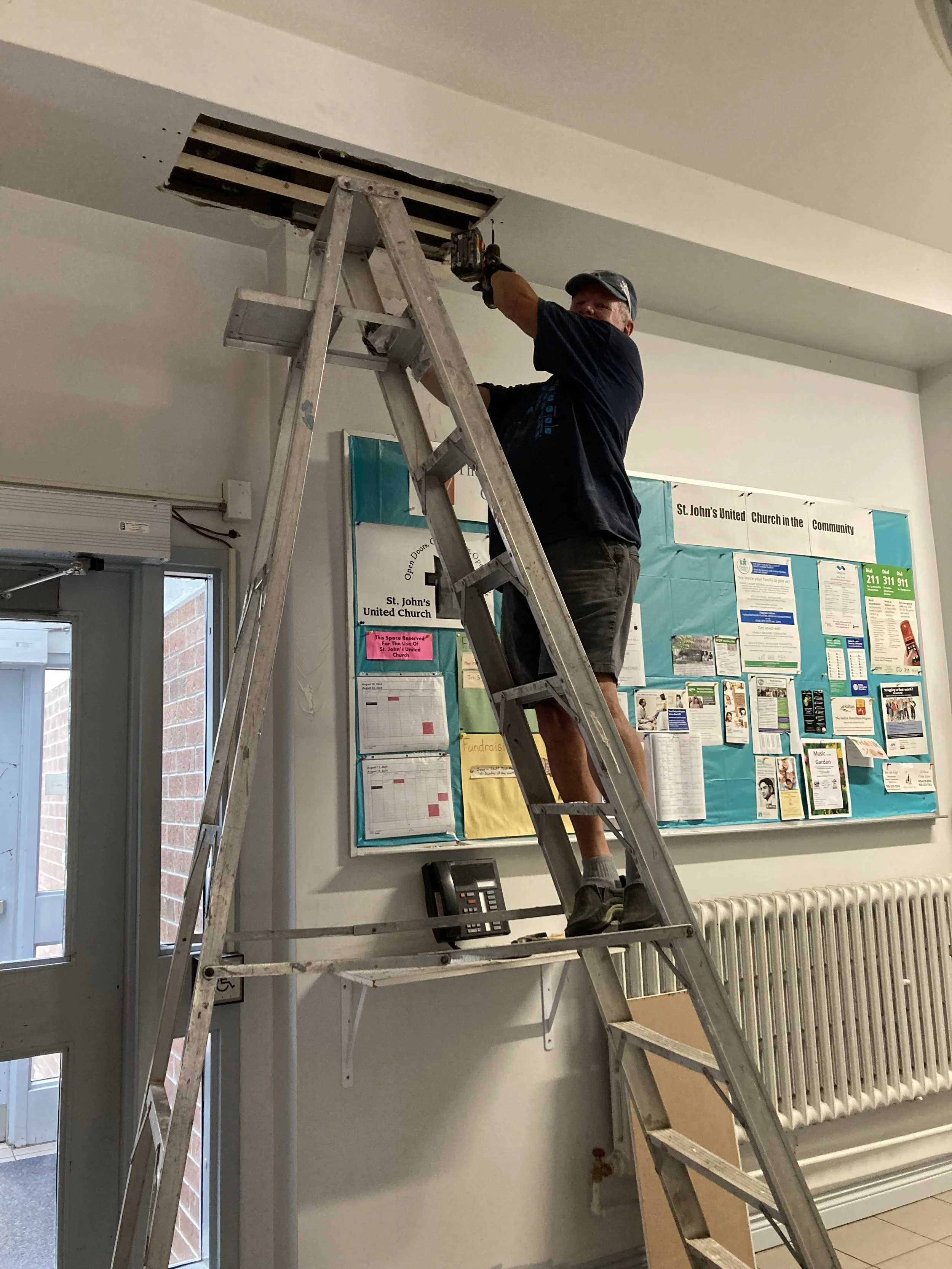
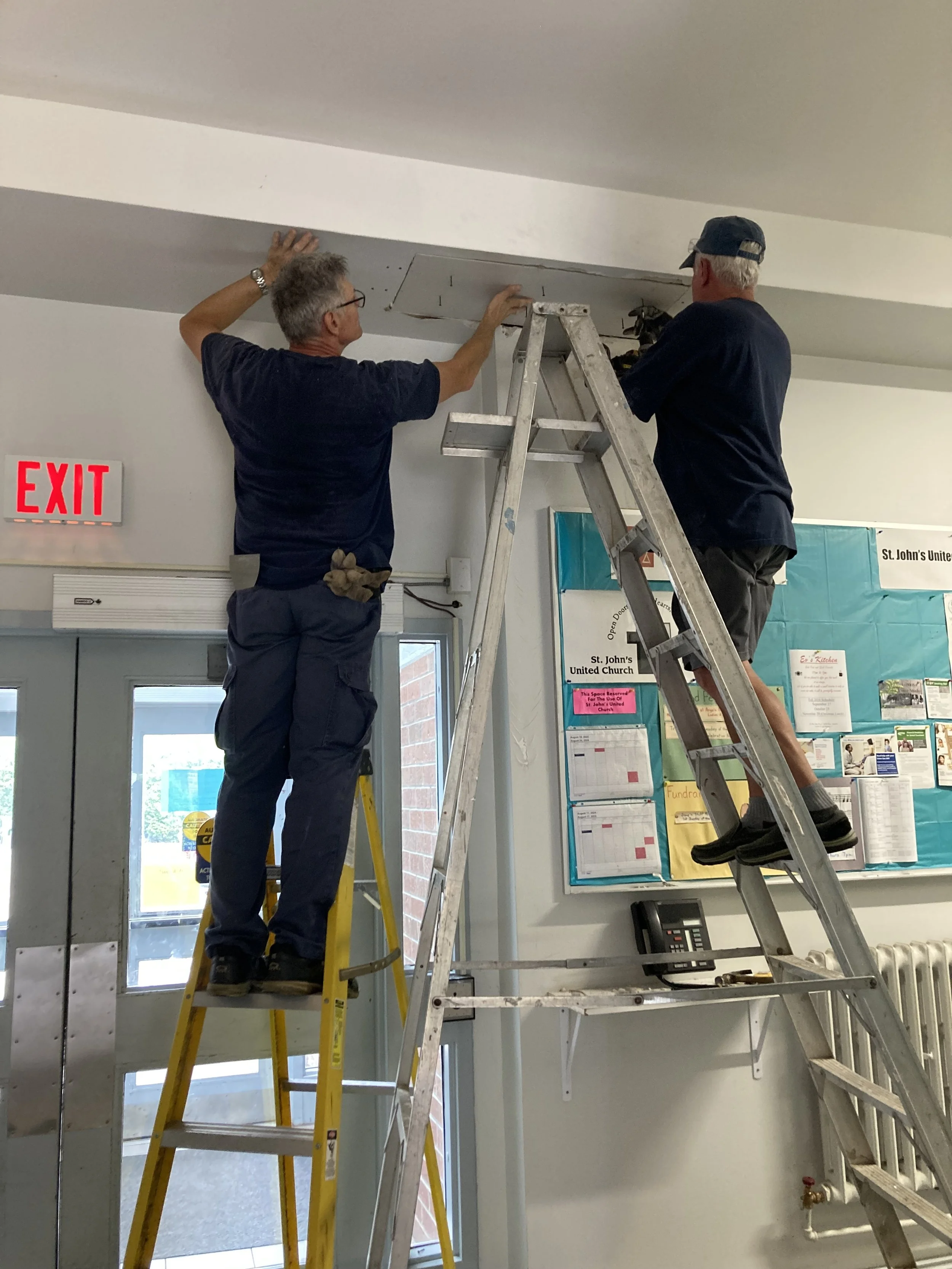
In June 2024, St. John’s United Church applied to the Faithful Footprints program to help offset approximately $60,000 in hot water pipe remediation costs. Anticipating unforeseen issues, the church set aside a $10,000 contingency and planned to reduce costs by completing drywall removal, restoration, and painting in-house.
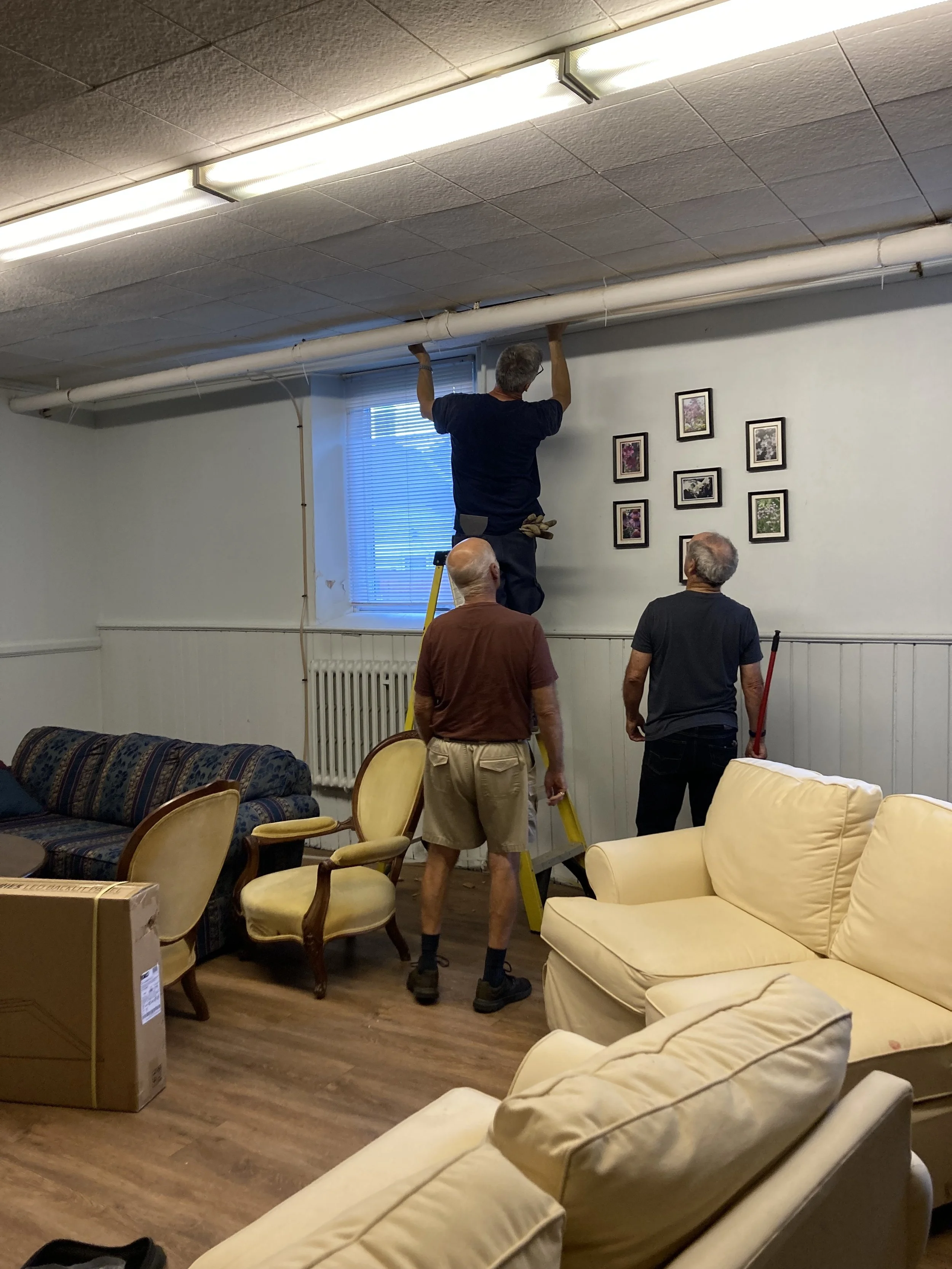
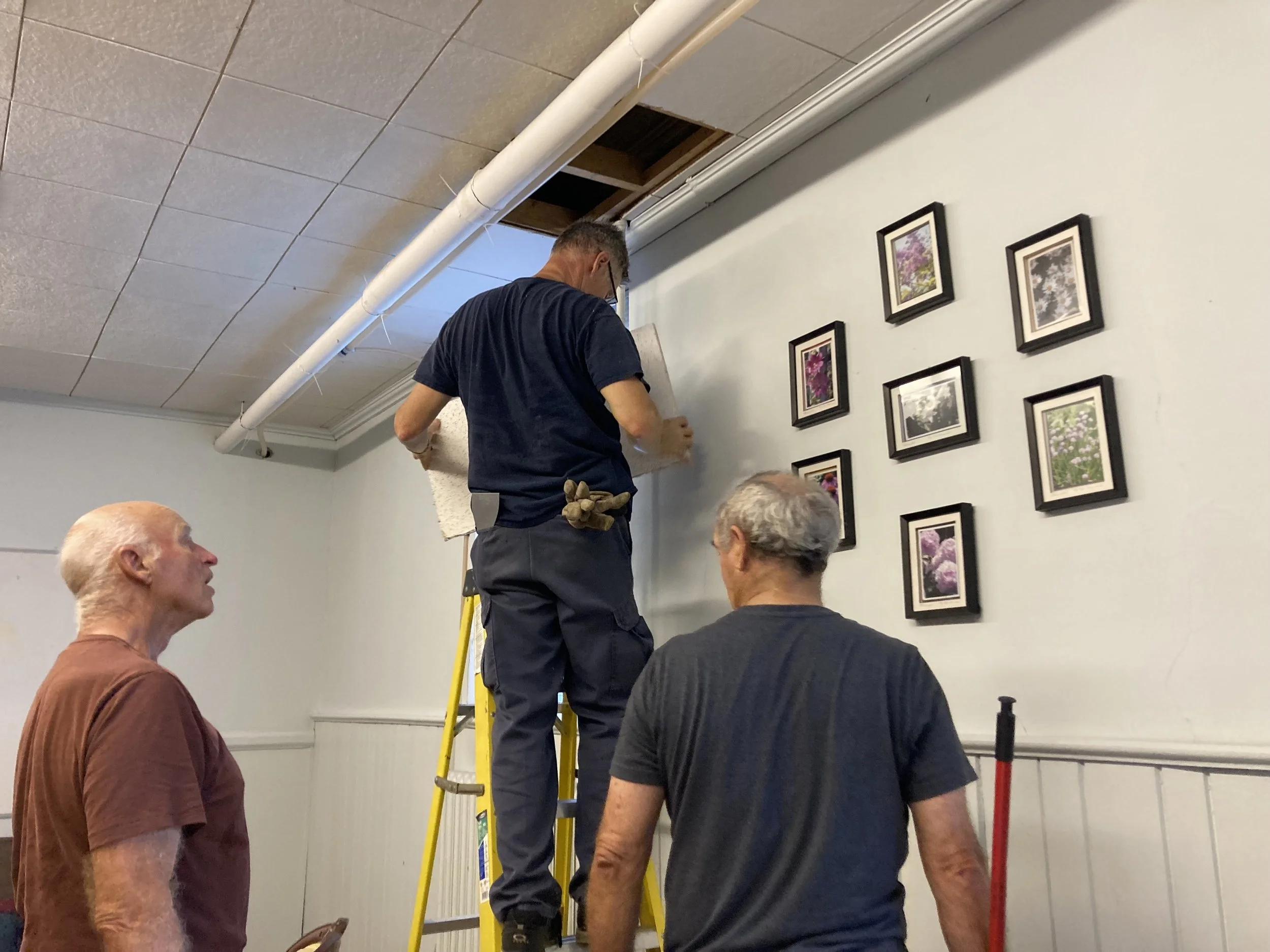
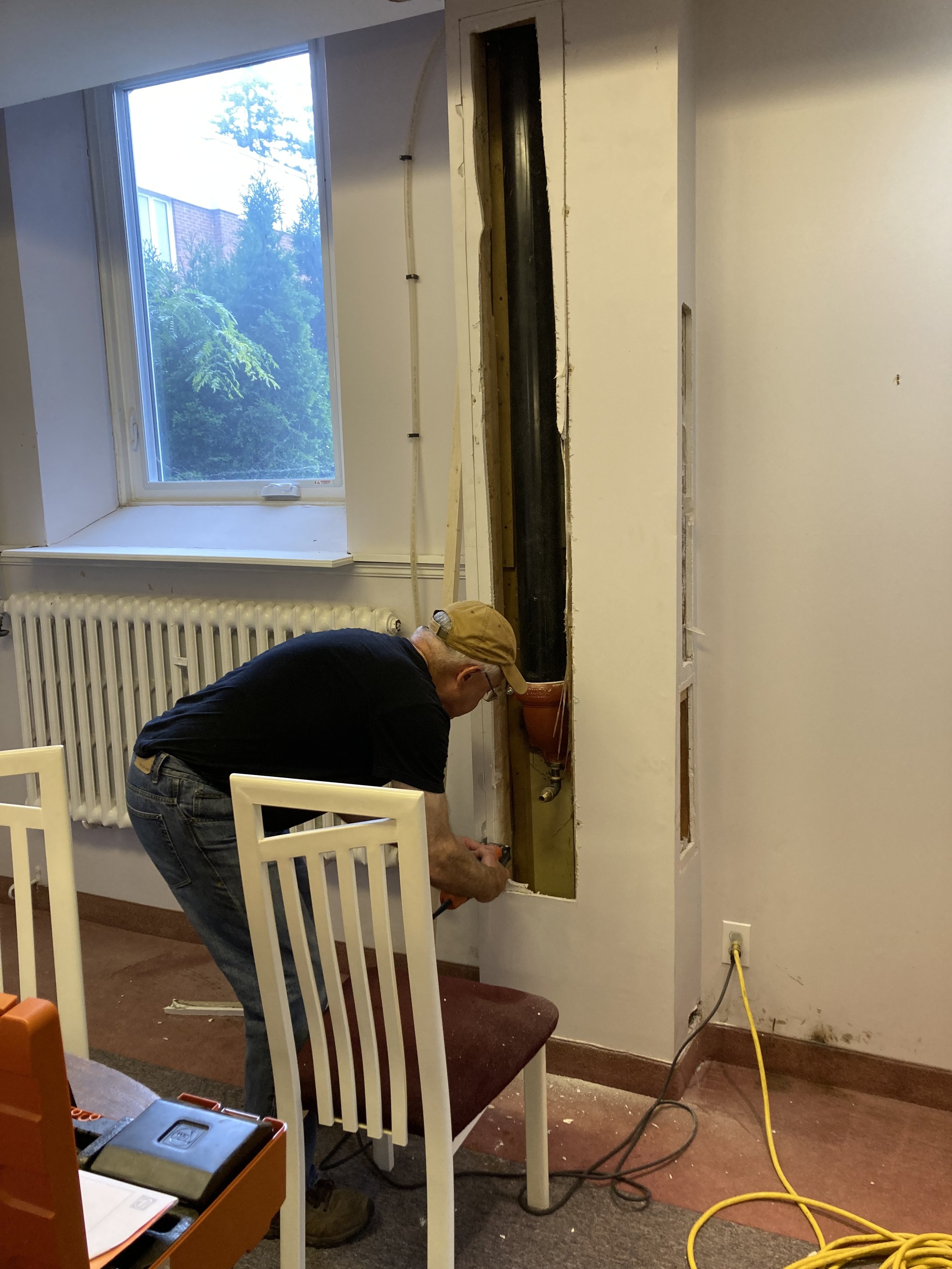
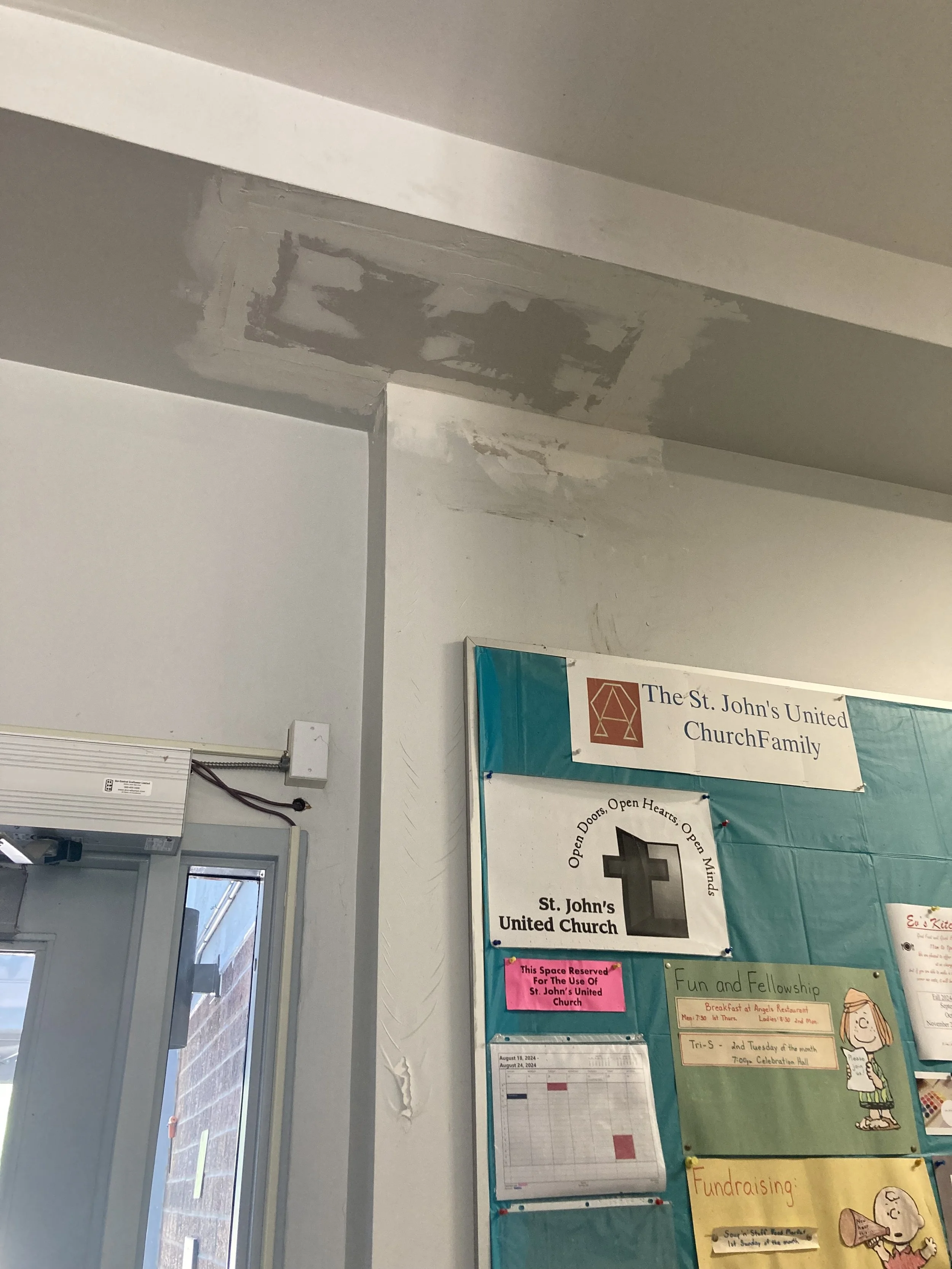
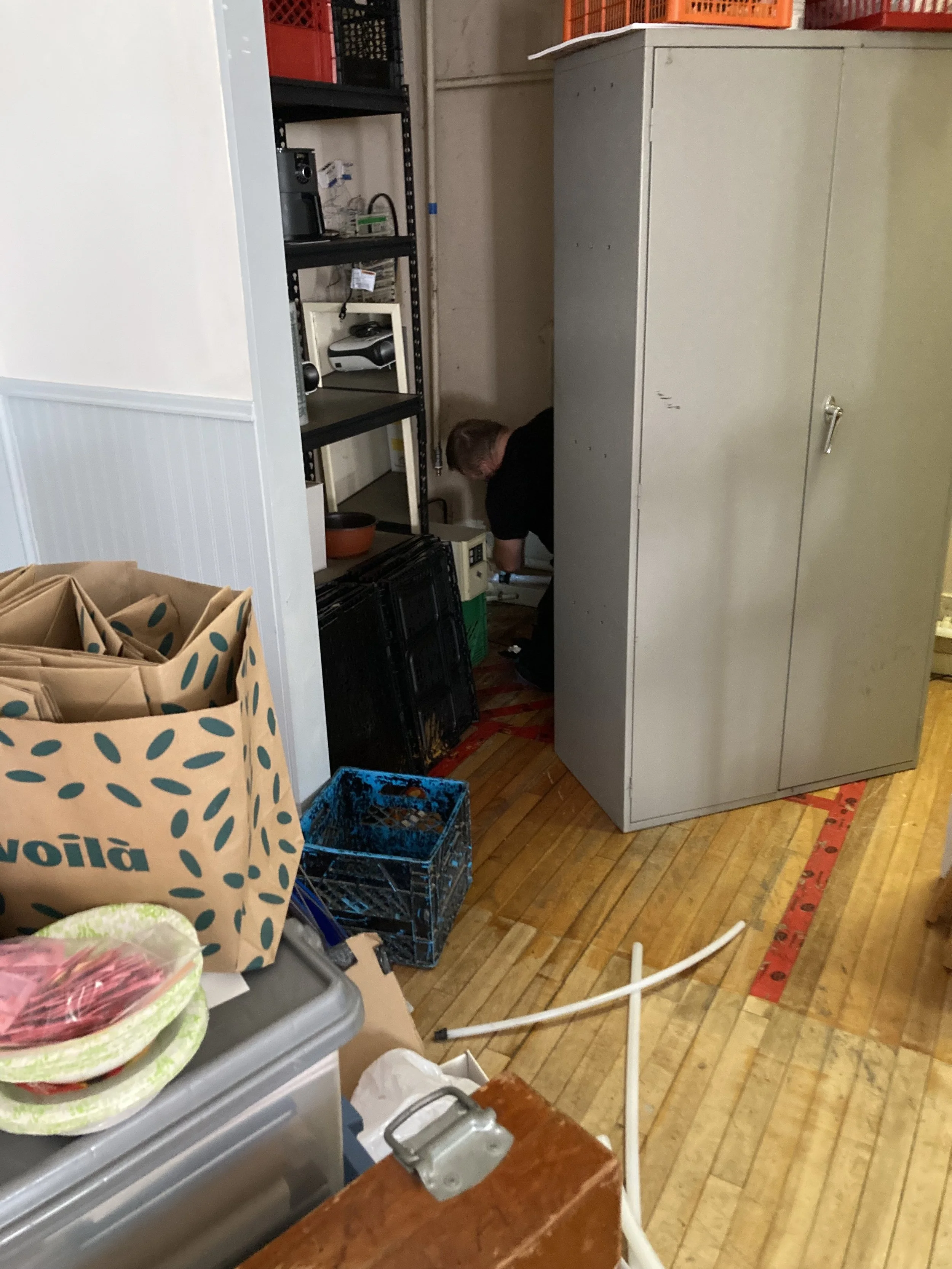
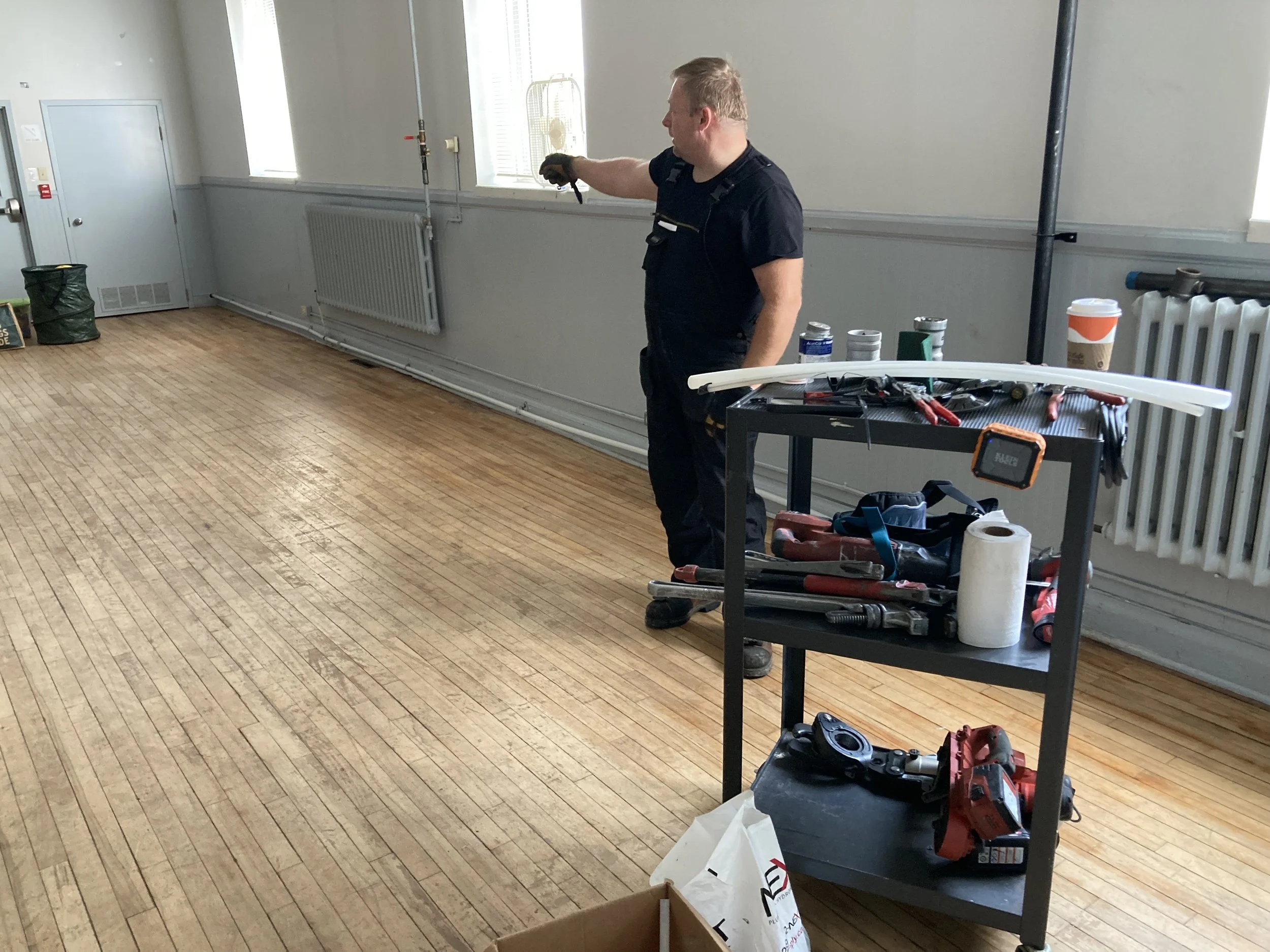
During the church’s summer shutdown, while worship took place at a neighboring church, a pipe fitter replaced all compromised sections. By July, members had exposed identified leak areas, and by August, pipe repairs were completed, the grant was approved, and drywall restoration followed
“Thanks to the help from a Faithful Footprints grant, St. John’s United was able to complete a major restoration project in our church, and upgrade our hot water pipe system which was necessary. We now have a long-term, low maintenance solution to our heating system concerns that have been ongoing for years. Completing the retrofit will help ensure comfortable conditions in our facility for years to come.” states Allison
Future projects
St. John’s United Church’s most recent renovation shows that building upgrades involve more than installing new equipment. Even when a main issue appears resolved, new challenges can emerge, requiring foresight, flexibility, and a willingness to address them head-on. Despite unexpected setbacks, the church remains committed to continuous improvement, using each project as inspiration to do more.
“Additional needs will continue to emerge, and each will be approached with energy efficiency as the top priority. We are a very active community facility and as the number of events and renters increase, we need to upgrade as much as possible to reduce daily operating costs long term. With more and more of the community coming to our building it was incumbent on us to be perceived as “green” and energy efficient.” says Allison
Next, St. John United plans to install LED lighting throughout the building, add low-speed, high-volume ceiling fans in the sanctuary, insulate the sanctuary attic, refurbish the community hall’s wood floor, and pave the north parking lot.
Faithful Footprints Program
The United Church of Canada’s Faithful Footprints program offers inspiration, tools, and grants to help its faith communities reduce their carbon footprint. With the Church’s commitment to reducing its greenhouse gasses (GHG) emissions by 80% by 2030, this one-of-a-kind program offers up to $30,000 in grants towards energy conservation and renewable energy projects (conditions apply).
Faith & the Common Good is the delivery partner for the Faithful Footprints program. To date, we have engaged over 500 congregations, camps, and buildings across the country. Your participation in the program puts your faith into action and helps the Church reach its target.

First United reduces heat loss with targeted building upgrades
First United Church in Vermilion, Alberta decided to take a closer look into their ongoing heating issues to better understand what practical improvements could make their buildings.
Heat loss is one of the most costly and least visible challenges facing church buildings. Drafts, aging equipment, and inefficient systems drive up energy bills month after month. For many communities of faith, the issue isn’t a lack of care, it's knowing where to start.
In the fall of 2023, First United Church in Vermilion, Alberta decided to take a closer look into their ongoing heating issues. The church recognized that proactive steps were needed to better understand what practical improvements could make their buildings.
“The Church Board knew that there were some areas, such as the windows, that needed some attention, and were worried that the furnaces were getting older and what would we do if one cratered in the middle of a cold snap.” says Rex Cunningham of First United Church.
After reaching out to the Faithful Footprints Program, First United received a formal energy audit that was completed by the program’s Western Support Centre, Newo Global Energy. The audit confirmed what the church had suspected, significant heat loss, inefficient energy use, and concerns about aging furnace systems, while also highlighting additional areas for improvement.
Identifying areas to improve heat loss
The audit pinpointed exactly where heat was escaping and where energy use was highest. Consisting of two connected spaces, the Sanctuary and Office (Building A) and the Hall and Kitchen (Building B), the audit highlighted several high-impact opportunities to significantly reduce ongoing heat loss for each building. The church approached improvements strategically, addressing each recommendation based on urgency, impact, and long-term energy savings:
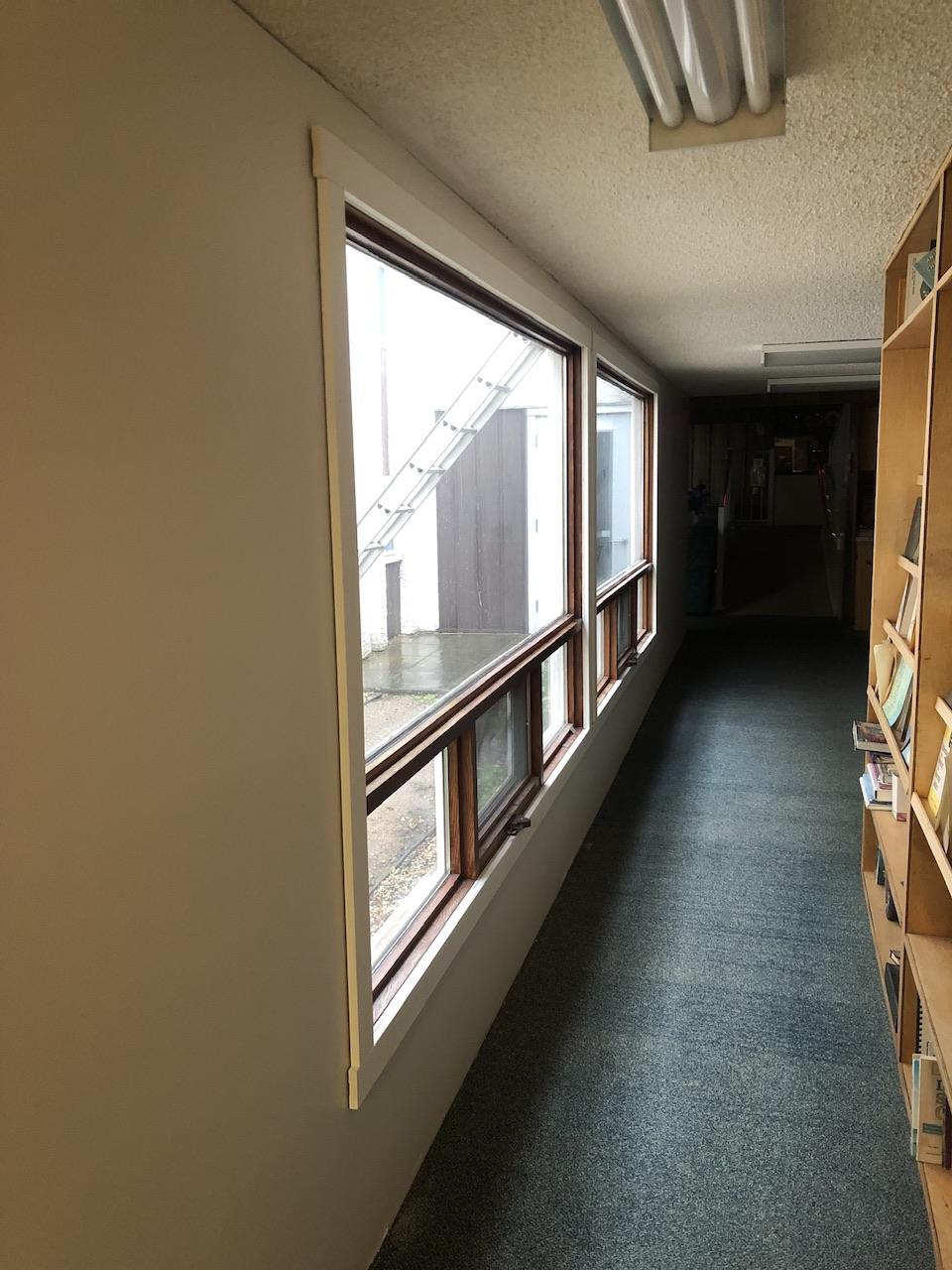
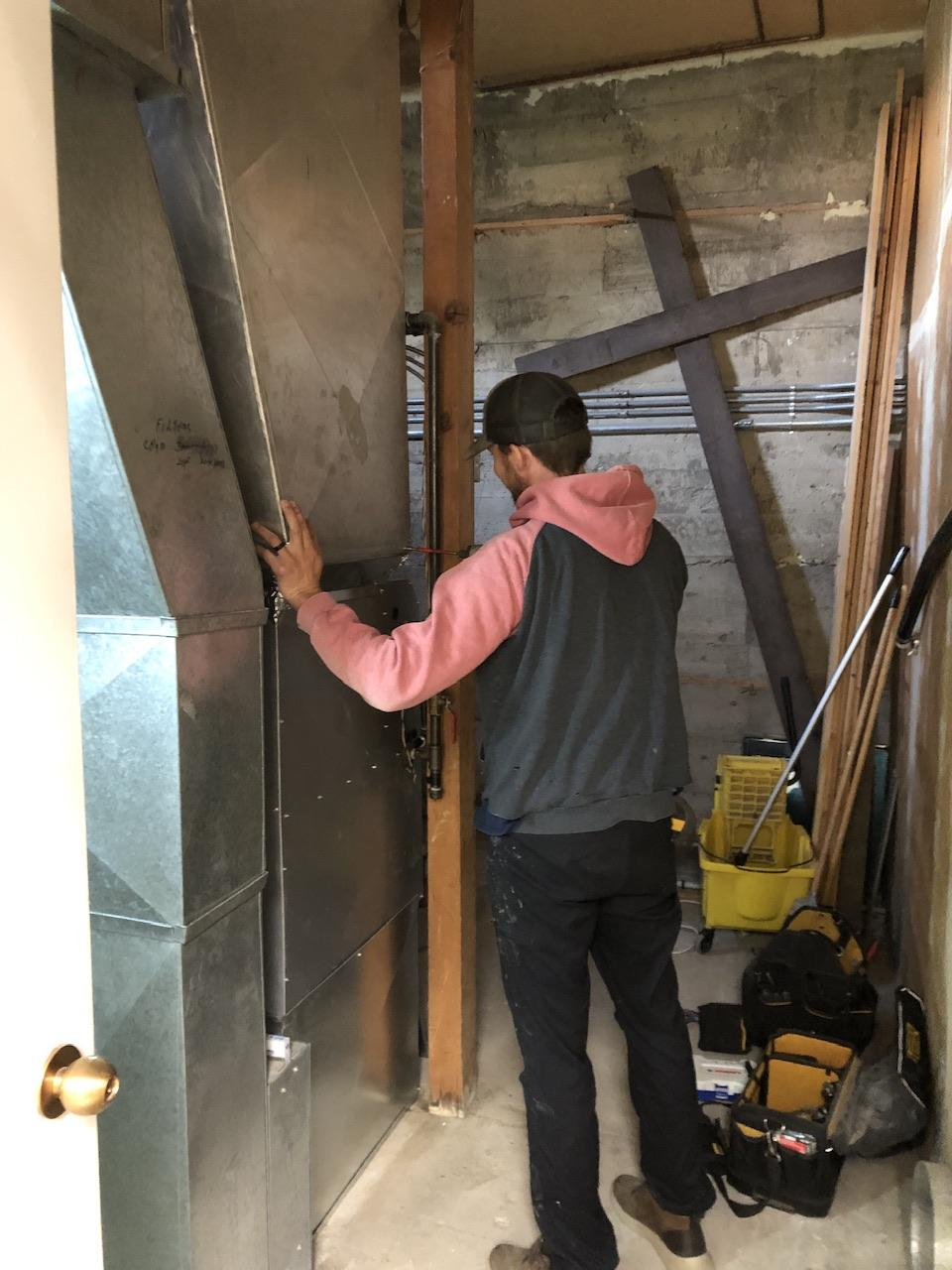
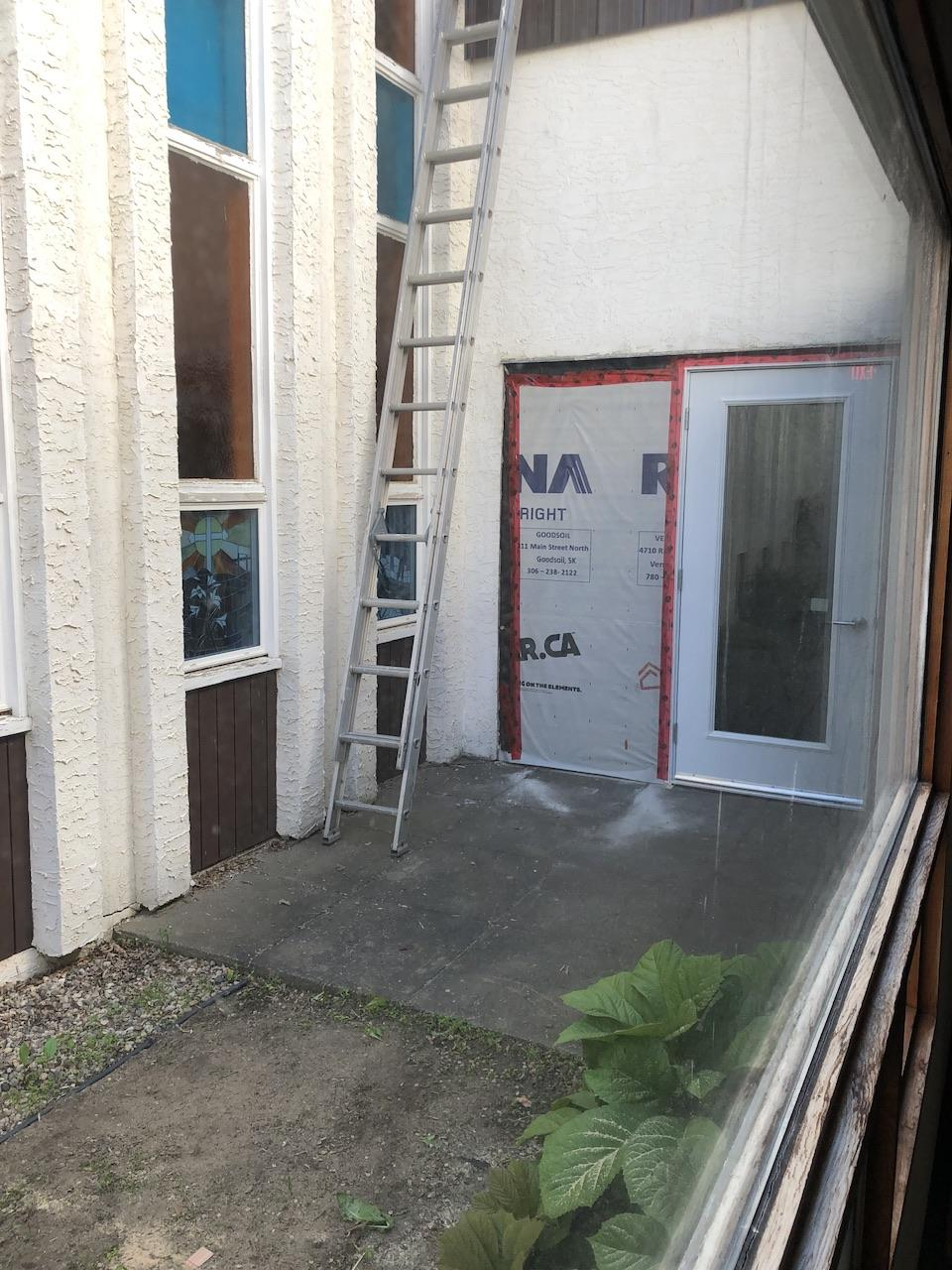
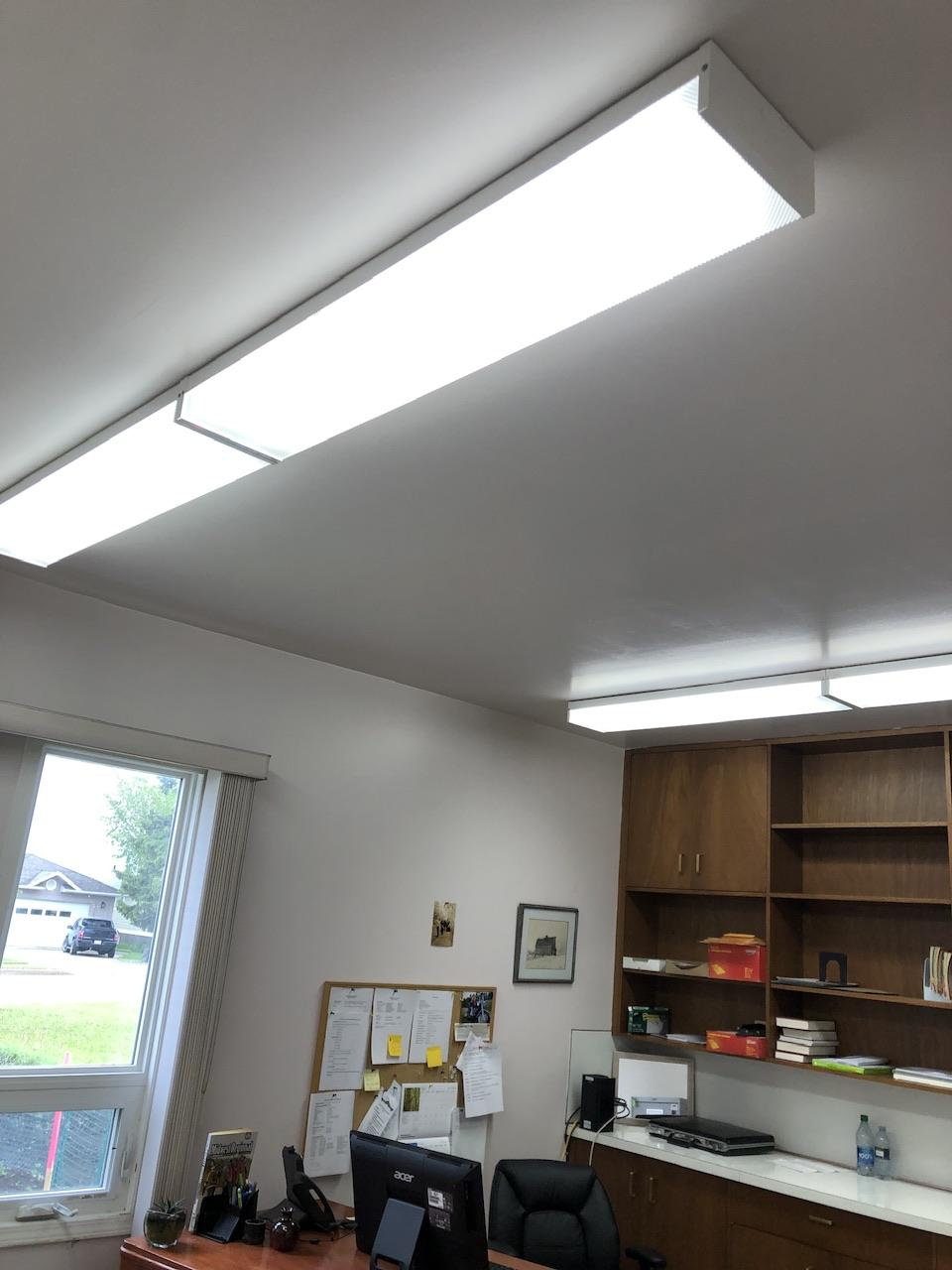
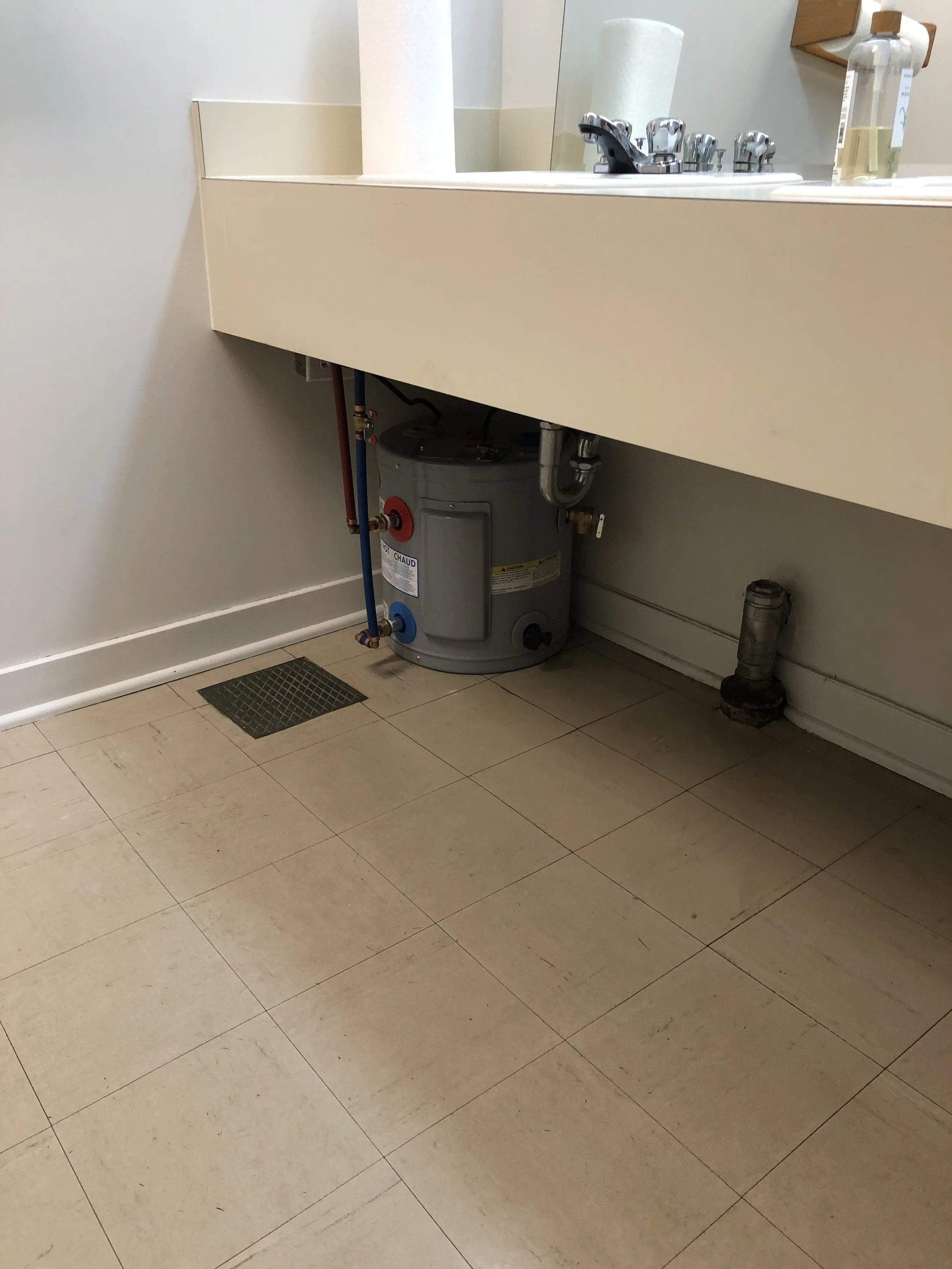
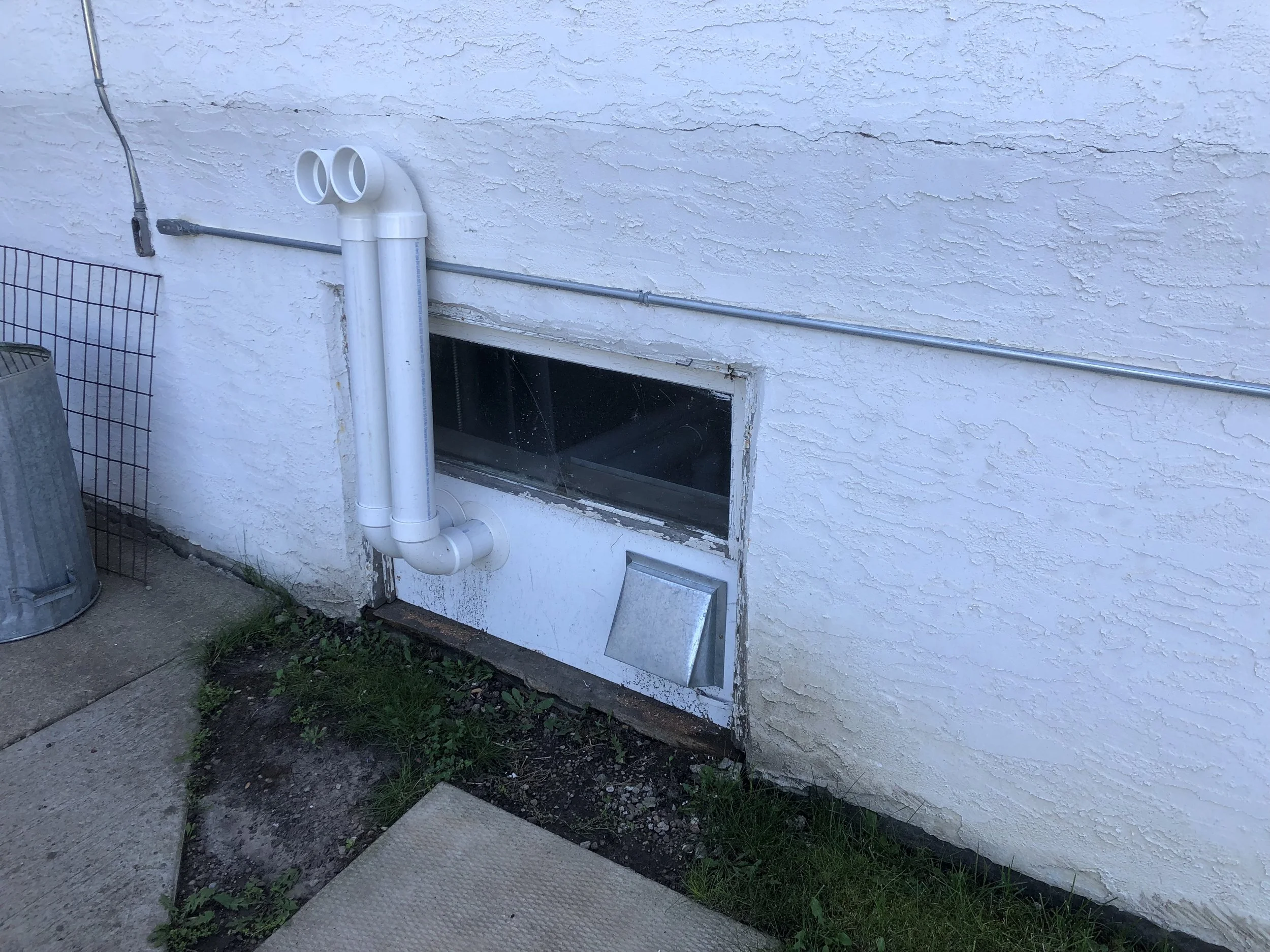
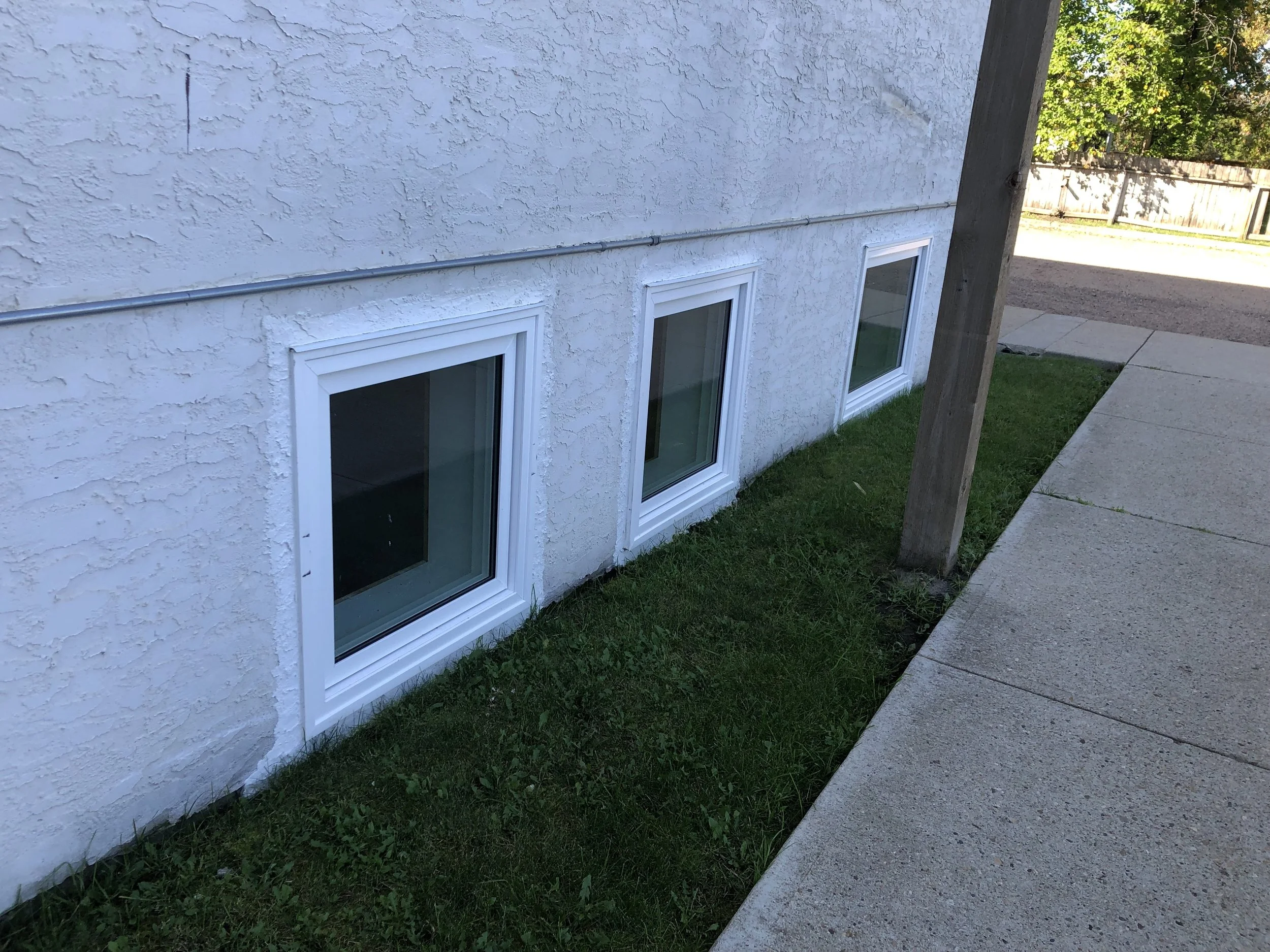
Improvements began with air sealing doors and windows using weather stripping and caulking. Lighting upgrades followed, with fluorescent fixtures in Building B replaced with LED fixtures. To reduce unnecessary energy use, heating in the office is now only turned on when the space is occupied. Aging furnaces from the 1990s were replaced with five new ENERGY STAR–certified Napoleon furnaces installed by a local contractor. Natural gas hot water tanks were removed and replaced with electric water heaters. Finally, window upgrades and insulation improvements were done in Building B’s basement and the hallway between buildings, where sealed windows were partially replaced with insulated walls and a new door, significantly reducing heat loss.
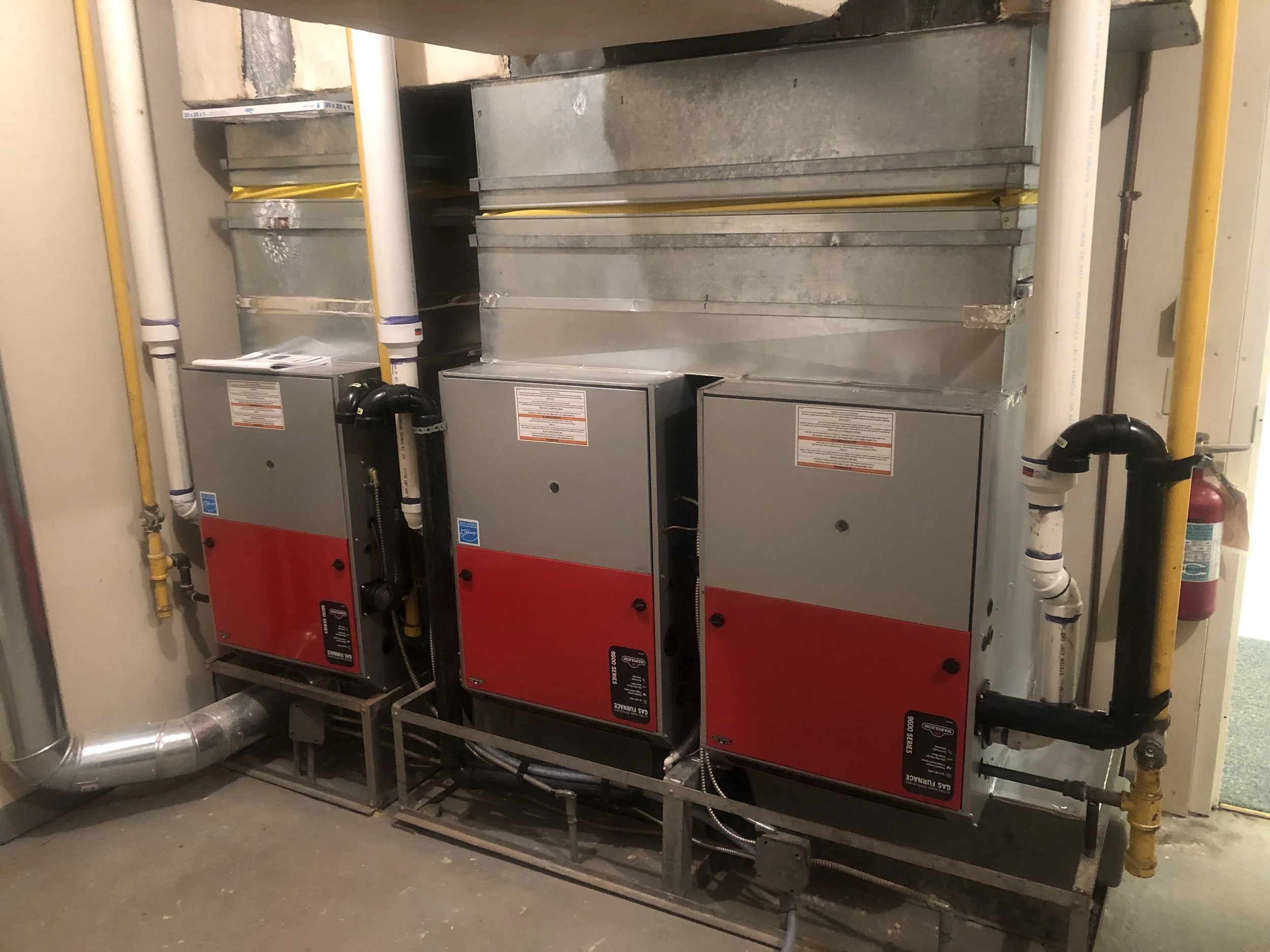
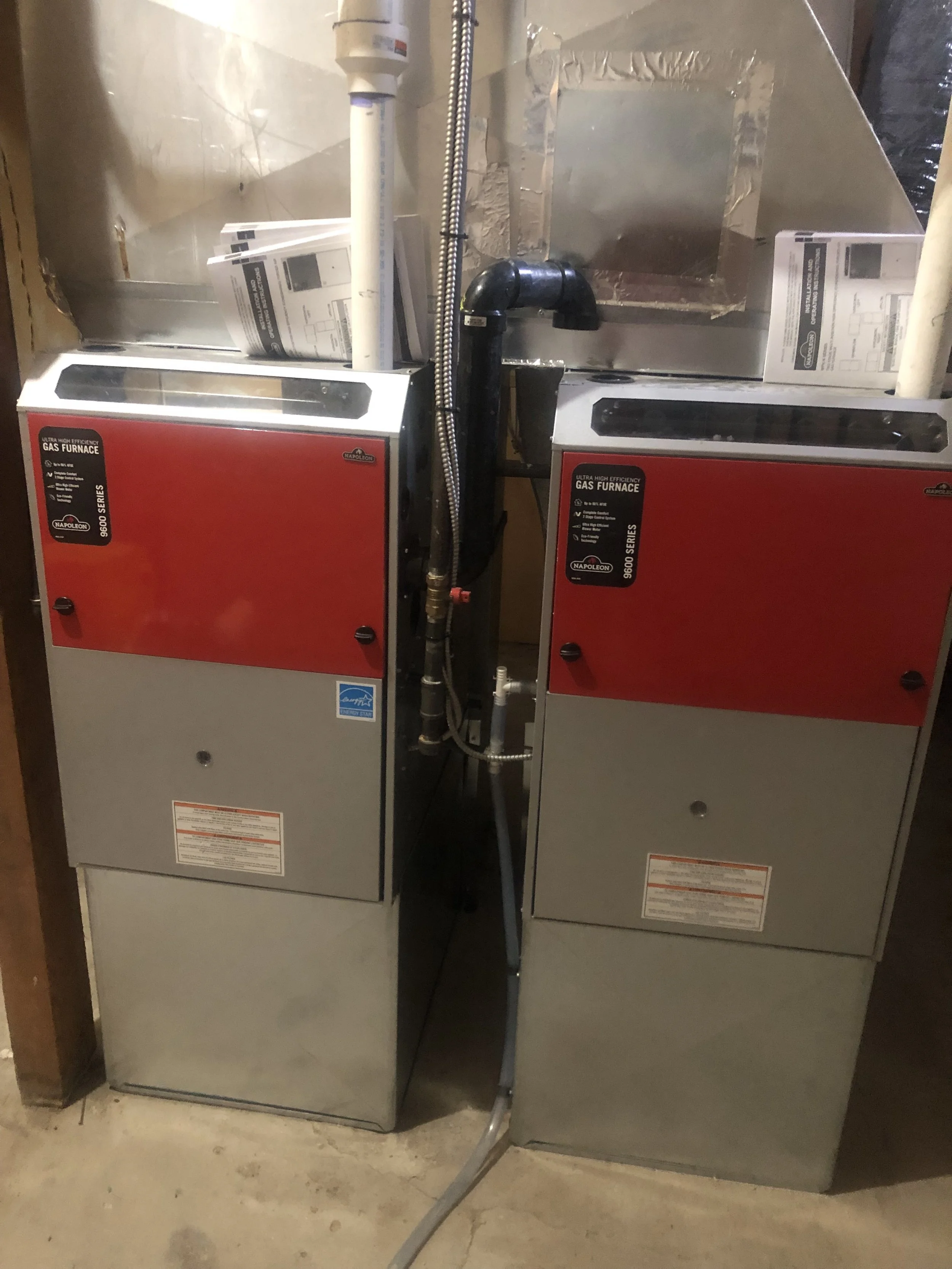

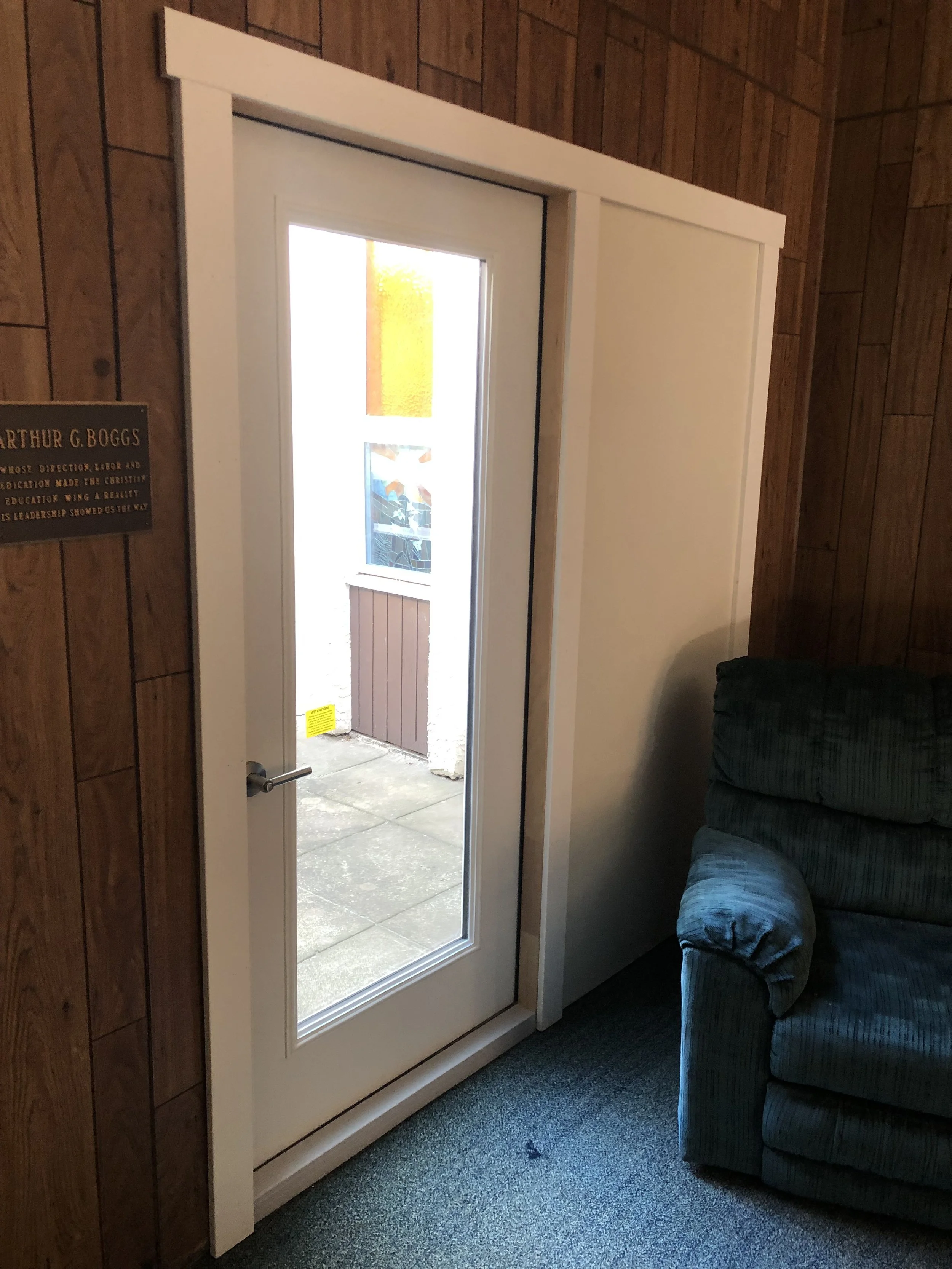
“Receiving the Faithful Footprints grant enabled our congregation to make more efficient use of the money that we spent on heating and powering our facility — making our building more economical as well as reducing our carbon footprint. The support allowed us to move forward into the future more confidently, now that our infrastructure is in tip-top shape” says Cunningham
Faithful Footprints Program
The United Church of Canada’s Faithful Footprints program offers inspiration, tools, and grants to help its faith communities reduce their carbon footprint. With the Church’s commitment to reducing its greenhouse gasses (GHG) emissions by 80% by 2030, this one-of-a-kind program offers up to $30,000 in grants towards energy conservation and renewable energy projects (conditions apply).
Faith & the Common Good is the delivery partner for the Faithful Footprints program. To date, we have engaged over 500 congregations, camps, and buildings across the country. Your participation in the program puts your faith into action and helps the Church reach its target.

Whitehorse United’s comprehensive energy study leads to biggest upgrade yet
Conducting a comprehensive energy study can reveal new opportunities and strategies to improve building efficiency. An assessment at Whitehorse United Church in Whitehorse, Yukon led to the church’s largest energy project to date, a full HVAC upgrade incorporating air source heat pump technology.
Energy upgrades and building projects can significantly reduce energy consumption and carbon emissions, but sometimes the most innovative approaches aren’t obvious. Conducting a comprehensive energy study and building assessment can reveal new opportunities and strategies to improve efficiency that may not have been previously considered. At Whitehorse United Church in Whitehorse, Yukon, this approach led directly to the congregation’s largest energy project to date, a full HVAC upgrade incorporating air source heat pump (ASHP) technology.
Rebuilt in 1993–1994 after a devastating fire, its building was constructed to above-code efficiency standards, including R28 walls, temperature-controlled cycling block heater outlets, and T8 fluorescent lighting. For the past decade or so, the congregation has continued to undergo a handful of energy saving upgrades to lower both consumption and operating costs, as well as intentional routine maintenance and repairs.
Projects have included:
2012 – Installed LED sanctuary lighting.
2015 – Renovated the kitchen with LED lighting and Energy Star–rated appliances.
2016 – Commissioned a study from a local engineering firm to explore alternatives to the oil heating system, identifying HVAC upgrades that could reduce oil use.
2017 – Further studied non-fossil fuel heating options before replacing the underground oil tank with an above-ground storage system.
2018 – During a roof replacement, upgraded insulation from R40 to R68.
2018–present – Tested and adopted various LED lighting alternatives throughout the building.
Identifying new opportunities through a comprehensive study
Whitehorse United Church’s commitment to sustainability ultimately led to one of its largest renovation projects to date after a comprehensive energy assessment. Between 2019 and 2021, the church commissioned a detailed engineering study to develop a plan, outlining which projects could be managed by in-house volunteers and which exceeded the congregation’s capacity, requiring advanced engineering, outside expertise, and additional funding.
The study identified the integration of air source heat pump (ASHP) technology as a new opportunity to further reduce the church’s fossil fuel consumption. Implementing HVAC upgrades with ASHPs represented the largest and final step in the comprehensive energy upgrade plan.


Beyond past improvements
While the church had invested years of effort and resources, much of the cost for this HVAC upgrade was not accounted for in the original project budget. Smaller-scale improvements and upgrades were largely funded and completed in-house. These included ventilation adjustments, the conversion of T8 fluorescent lighting to ballast-free LED tubes, and other modest measures. The church allocated over $26,000 from Special Gift Funds (bequests) to in-house improvements and the detailed engineering work needed for the HVAC upgrades. Additional funds were also raised internally by the congregation to support these efforts. Despite these contributions, Whitehorse United required external support to carry the full HVAC upgrade through to completion
Making the final step possible
For the HVAC upgrade, the church sought external support. Whitehorse United Church established a strong relationship with the Yukon Government’s Energy Solutions Centre (ESC), which offered up to 40% capital cost rebates for qualifying energy efficiency measures. Working closely with the ESC team, the church secured available rebate funding and maximized its eligibility. In addition, the church submitted a $75,000 funding application to the Yukon Government’s Community Development Fund to help cover project costs, benefiting from its status as a facility regularly used by local community and charitable groups. Grant funding through Faithful Footprints further supported the HVAC work, covering the replacement of analog system controls with a modern automated system, insulation of cold air ducts, installation of insulated airflow control dampers, and the addition of two cold-climate air source heat pumps, one in the sanctuary and one in the church hall in the basement.
Faithful Footprints Program
The United Church of Canada’s Faithful Footprints program offers inspiration, tools, and grants to help its faith communities reduce their carbon footprint. With the Church’s commitment to reducing its greenhouse gasses (GHG) emissions by 80% by 2030, this one-of-a-kind program offers up to $30,000 in grants towards energy conservation and renewable energy projects (conditions apply).
Faith & the Common Good is the delivery partner for the Faithful Footprints program. To date, we have engaged over 500 congregations, camps, and buildings across the country. Your participation in the program puts your faith into action and helps the Church reach its target.

Hope United Church upgrades from 1926 steam boiler to energy-efficient heat pumps
Hope United Church in Alvinston, ON took many steps to reduce energy use. However, aging infrastructure led them to finally replace their 1926 steam boiler with a new heat pump system.
Hope United Church located in Alvinston, Ontario has long been mindful of its energy use and heating costs. The congregation has taken intentional steps to reduce consumption including lowering the heat when the building is not in use, encouraging small groups to meet in members’ homes, and even having the minister and secretary work from home offices to avoid heating the entire building.
However, despite these thoughtful efforts, the aging infrastructure of the building made energy efficiency increasingly difficult. The steam boiler hadn’t had a major repair since 1985, and the original steam pipes, dating back to a 1926 addition were beginning to fail. New leaks occurred each year at great expense to repair. It became clear to the congregation that it was time to replace the outdated system.
Addressing a long standing issue
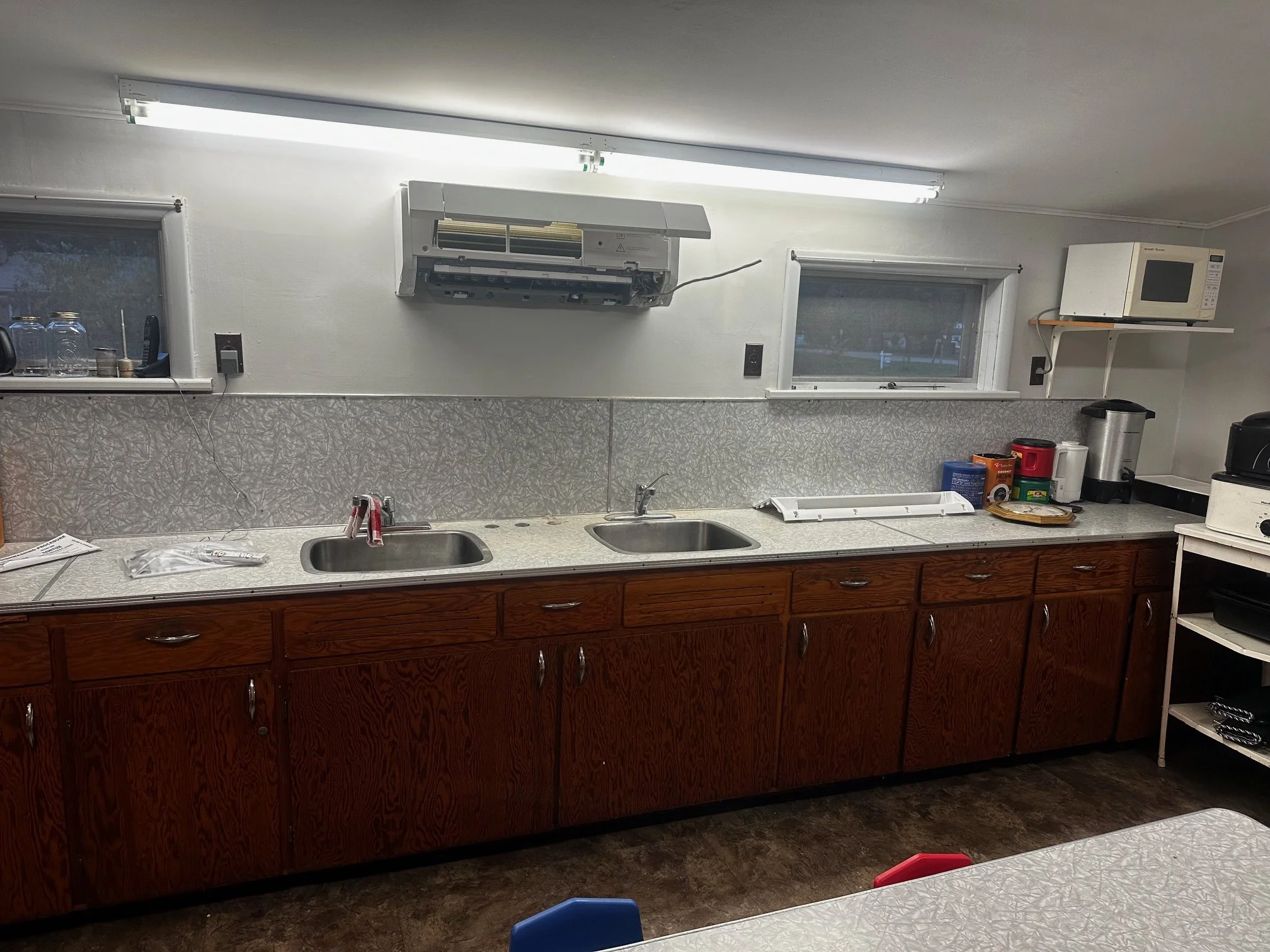
Recognizing the need to move away from its aging gas-powered boiler and steam heating system, Hope United began exploring more efficient and sustainable options. To assess the possibilities, they invited four heating contractors to provide quotes and recommendations for various replacement alternatives.
None of the contractors recommended a steam heat replacement. A key reason was the shortage of certified professionals in the area qualified to service steam heating. Instead, the church was presented with several alternative options, including a hot water piping system, a forced air furnace with new ductwork, and an electric heat pump system, each offering varying levels of efficiency, cost, and complexity.
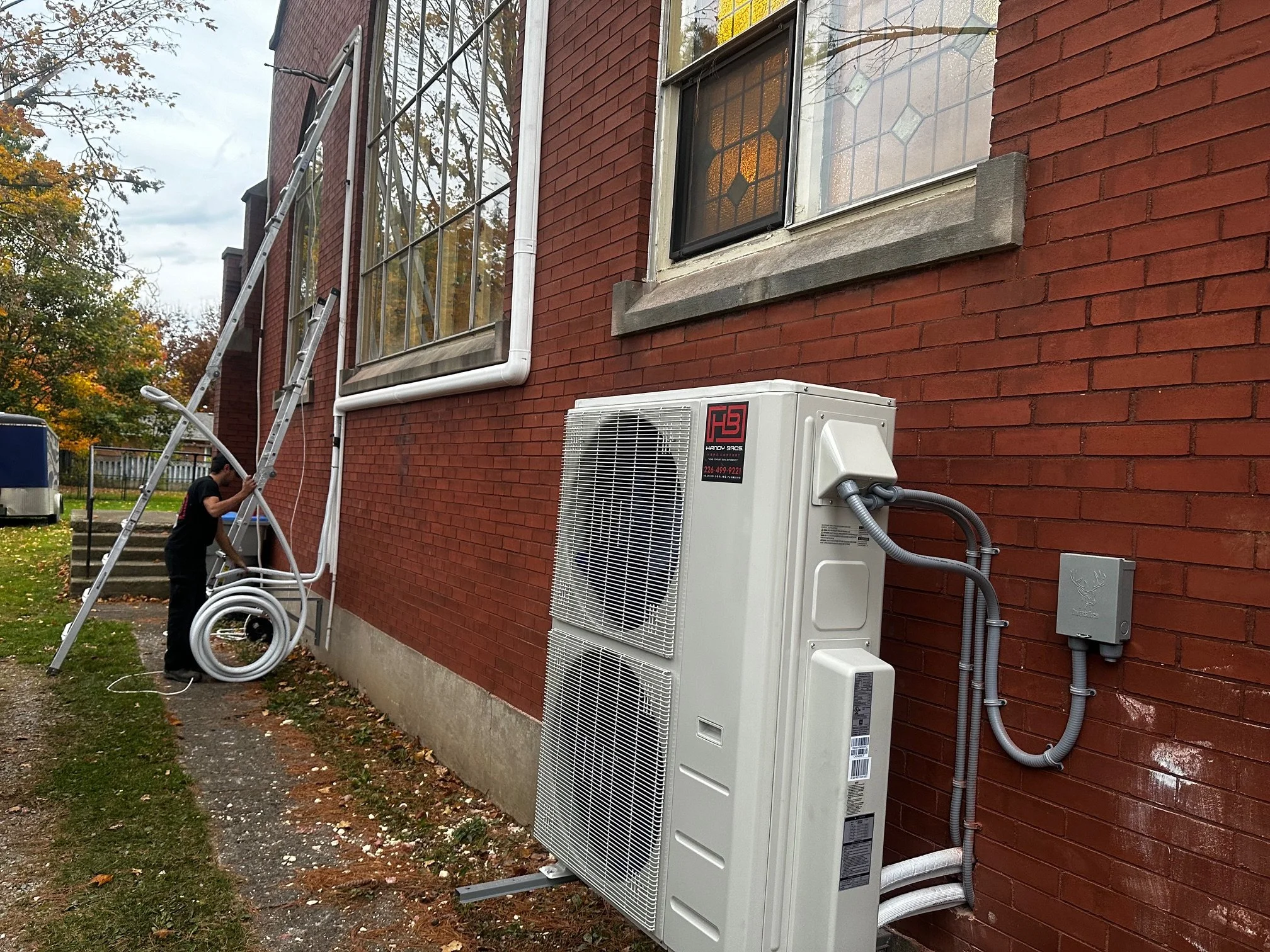
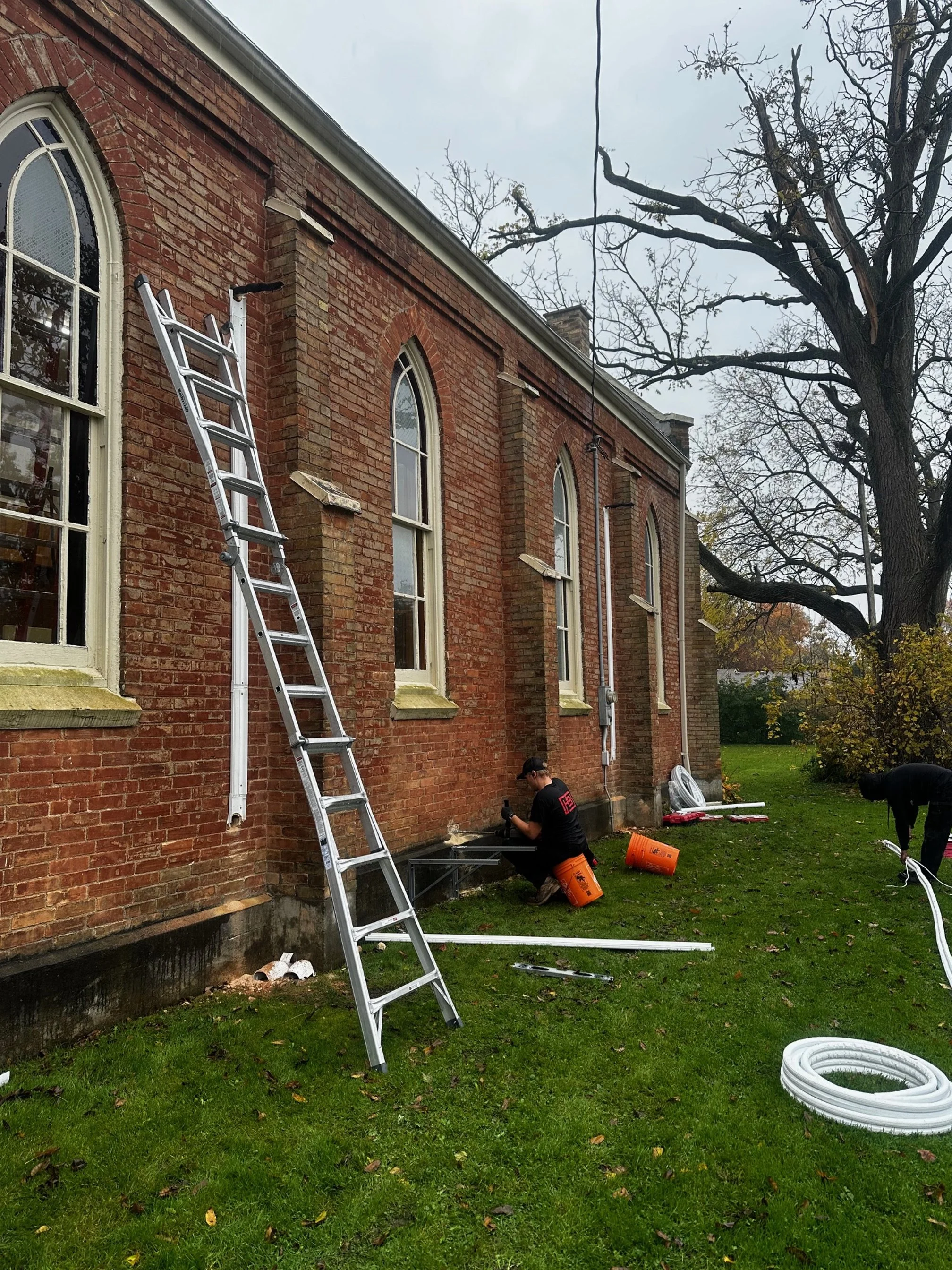
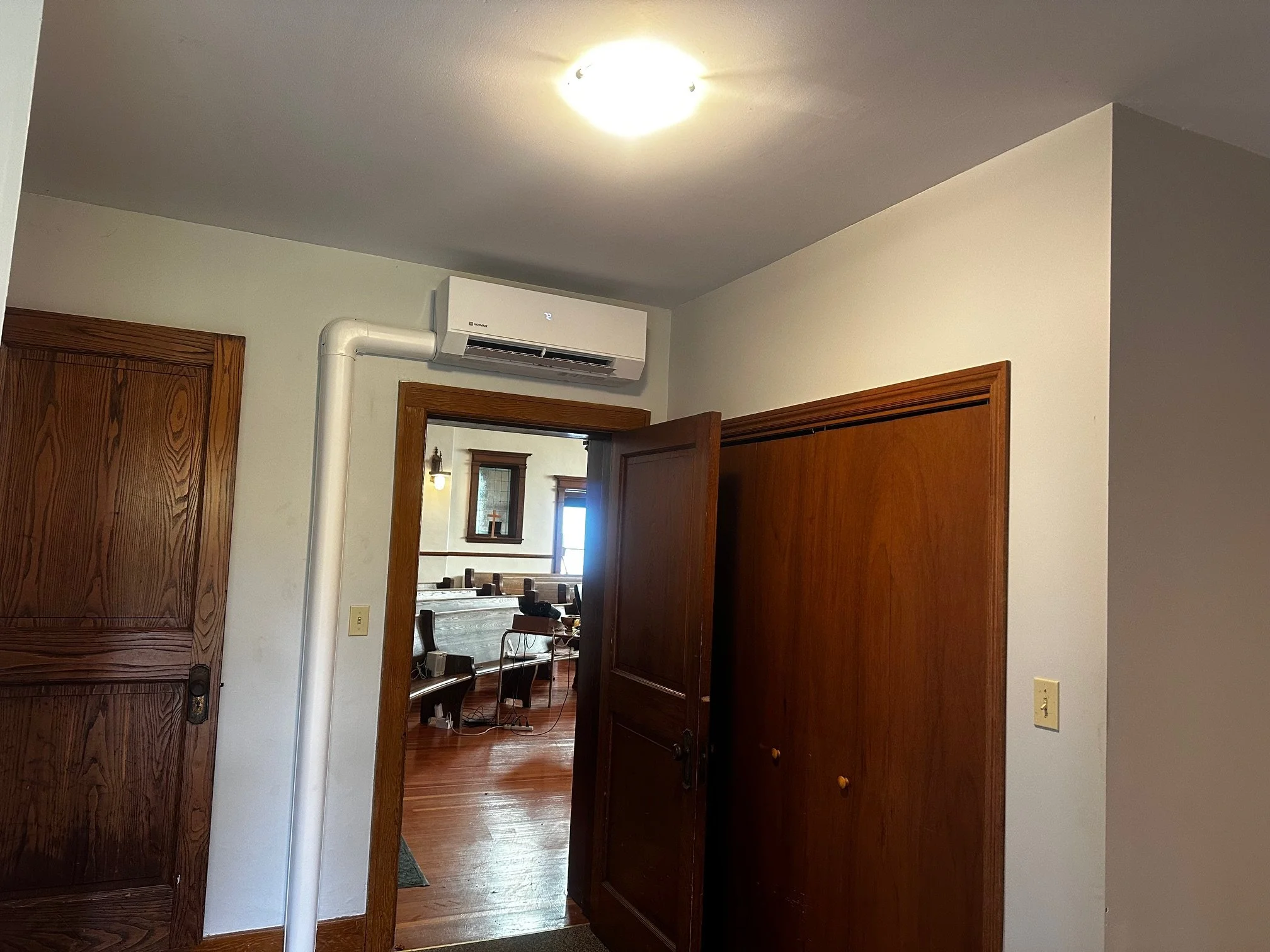
The church selected an electric heat pump system with five independent heating zones throughout the building, recognizing it as the most modern and energy-efficient replacement out of the suggestions.
“While the quotes for each option were somewhat competitive, we had decided that a heat pump solution would be the best choice so that we can move away from fossil fuels. With nine indoor heat pumps installed we would also be able to heat the church in zones and only heat the rooms that are being used by the congregation”





Funding the heating replacement
To fund the replacement of its outdated heating system, Hope United Church relied on both external grants and the generosity of its congregation. The church received a quote from Handy Bros Home Comfort to fully heat and air condition the building using an electric heat pump system at a total cost of $57,880.86.
Hope United received a $30,000 Faithful Footprints grant to support the project. To help cover the remaining project costs, the church has launched a special furnace fund donation appeal, mailing over 100 letters to members and adherents. Many in the Hope United community had come on board to support the much-needed heating upgrade following an announcement from the pulpit. A generous offer has also been made by a congregation member to provide a short-term loan to help manage any temporary cash flow as fundraising efforts continue.
“Although our congregation is small, we were confident that we would be able to raise the additional funds required to pay for the switch to green energy through a fund raising campaign within our congregation and the community”
Testimonial
“We are delighted to have worked with Faithful Footprints to replace our steam boiler system with a completely new heat pump system. After accumulating some memorial donations that were earmarked for building improvements, in January 2023, our congregation requested that the Official Board look for energy saving improvements to the church. Initially the focus was to look at increasing the insulation in the building. While looking for financial assistance, we came across the Faithful Footprints grant program and it changed our perspective. With a grant available through the United Church of Canada program, we were able to install heat pumps.”

St. James & St. John United Church progresses toward full heat pump adoption across all its buildings
St. James & St. John United Church in Miramichi, New Brunswick is transitioning to energy-efficient mini-split heat pumps across its buildings, with current efforts targeting its Church Centre, its most space.
St. James & St. John United Church, located in Miramichi, New Brunswick, operates three buildings including its manse, church, and its church Centre, which houses offices, Sunday School, and a number of congregational activities.
In response to rising fuel costs and the environmental impact of fossil fuels, the church has been transitioning to mini-split heat pump systems as the primary source of heating across all its buildings. As part of this commitment, mini-splits were installed in the main church building, allowing the congregation to eliminate its reliance on oil for heating.
Focusing on where it matters most
Between the church’s two remaining buildings, upgrading the Church Centre was the next top priority, as it is used most frequently by both the congregation and the wider community. The Centre is a hub for community programs and activities and hosts the church’s offices, Sunday School program, bible studies, dessert theatres, church suppers and special events. The church also rents the building on a regular basis to an organization that teaches English language primarily to immigrants, a yoga group, pickleball players, and to other organizations.
“The Centre is vital to who we are and how we operate as a congregation. It’s where all daily activities take place.” shares Kimberley Shaddick, Office Administrator at St. James & St. John United Church
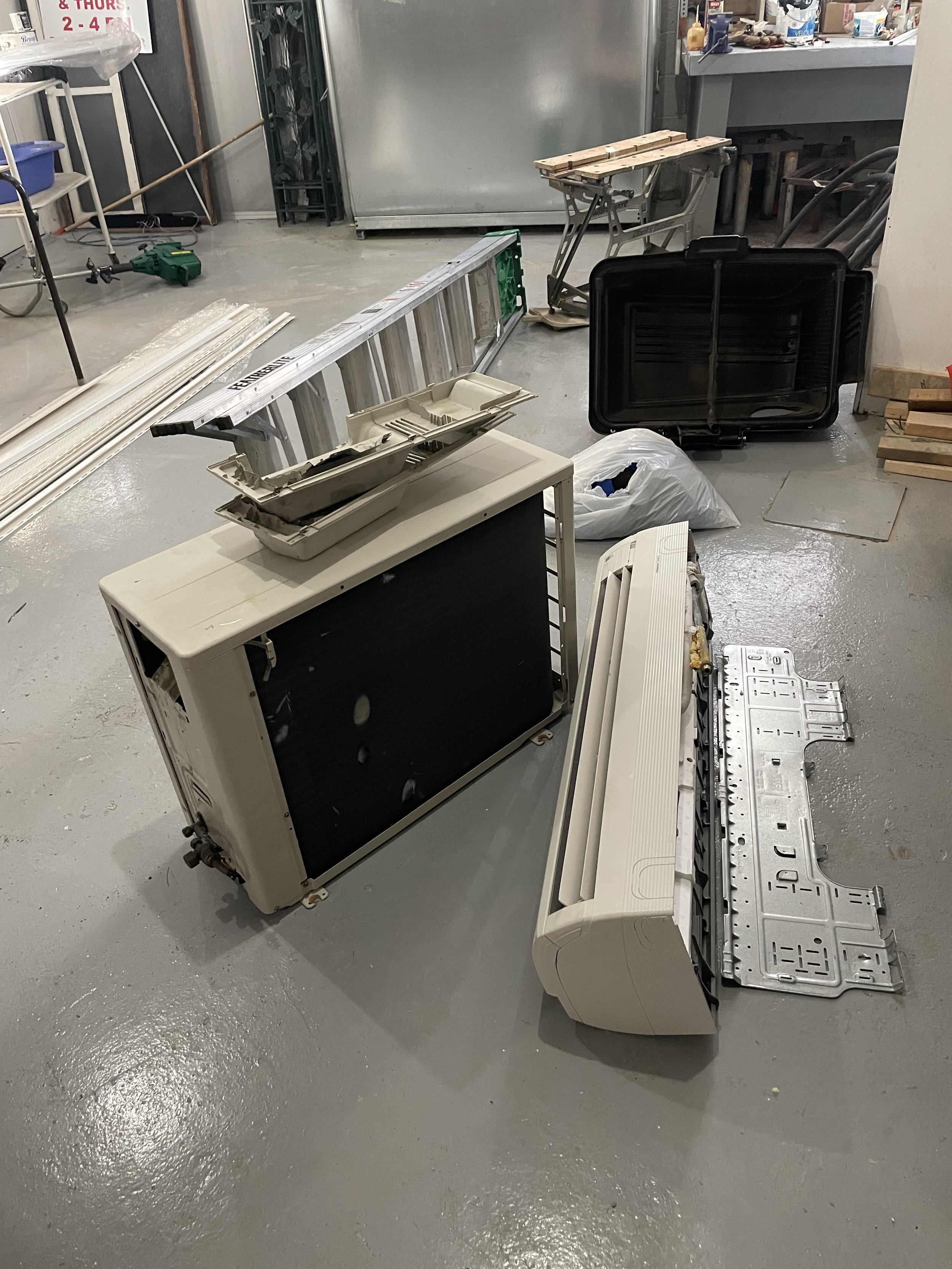
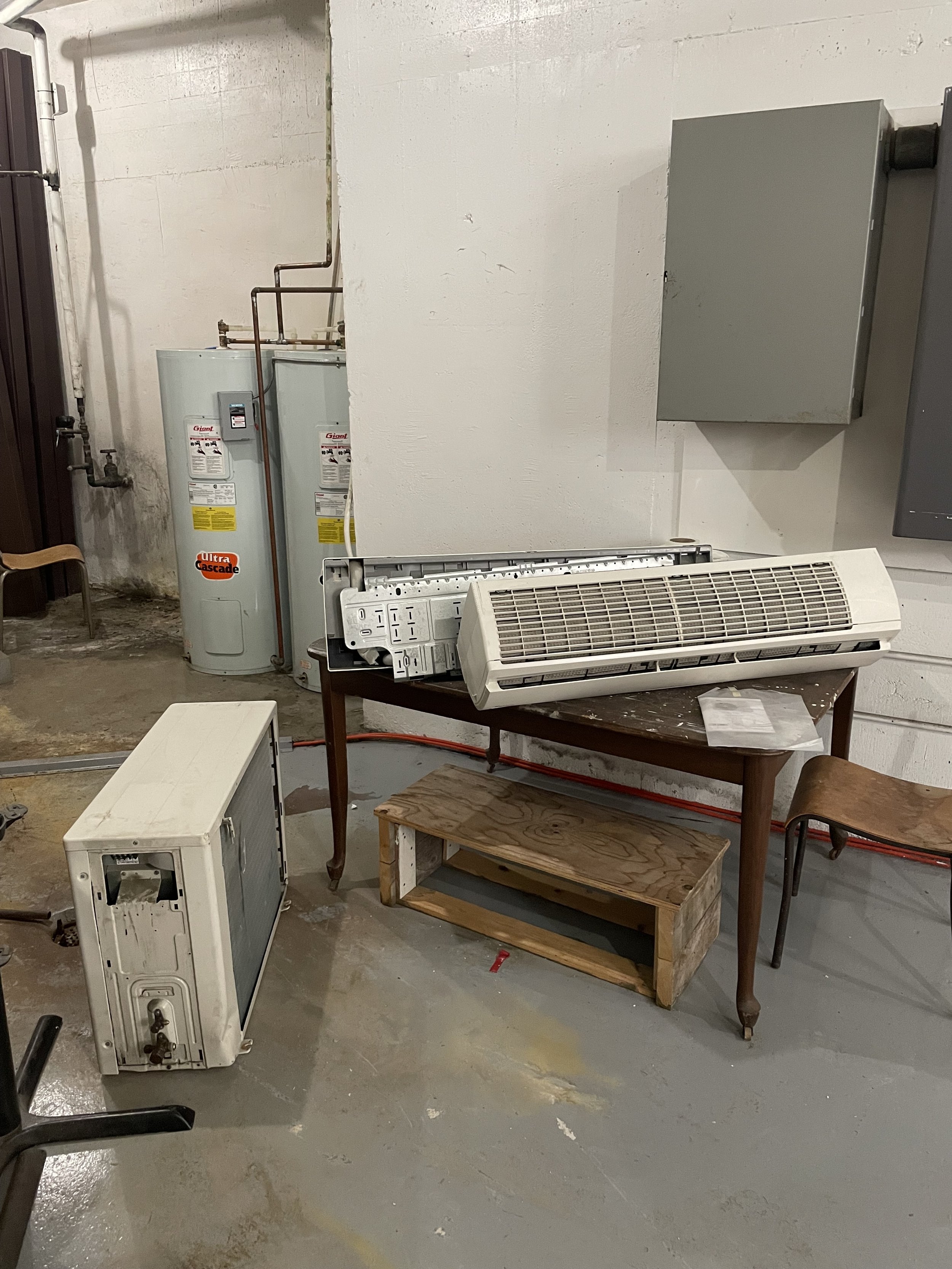
The church directed all of the funds received from the Faithful Footprints program to upgrade the heating system in the Church Centre. The improvements included removing the existing oil furnace, oil tank, and radiators throughout the building. Although some mini-split units were already in place, several rooms and areas remained underheated. The church replaced three older mini-splits in the auditorium, originally installed in 2013, and installed new units in two rooms with rental potential, two offices on the main floor, and one in the foyer.
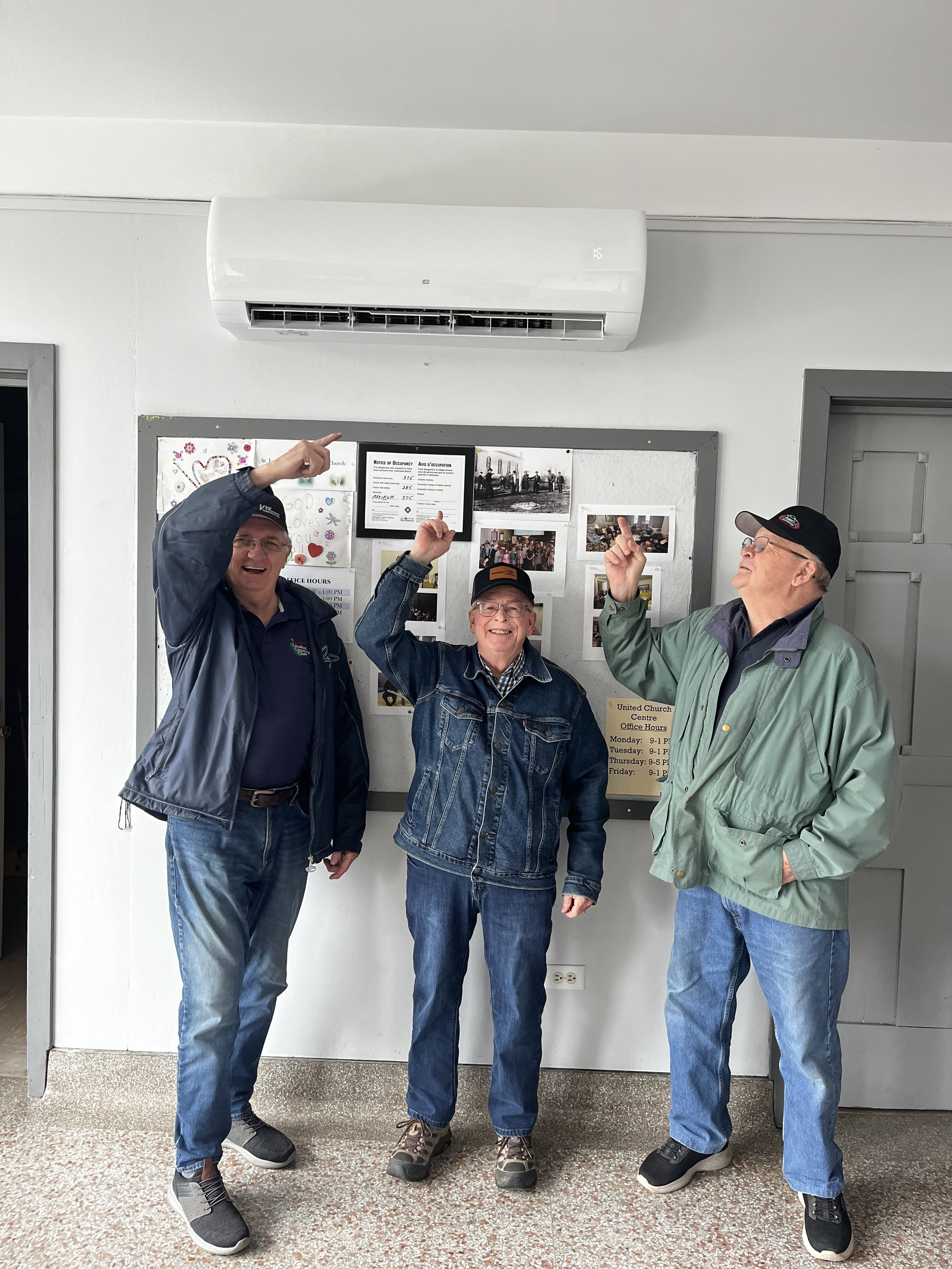
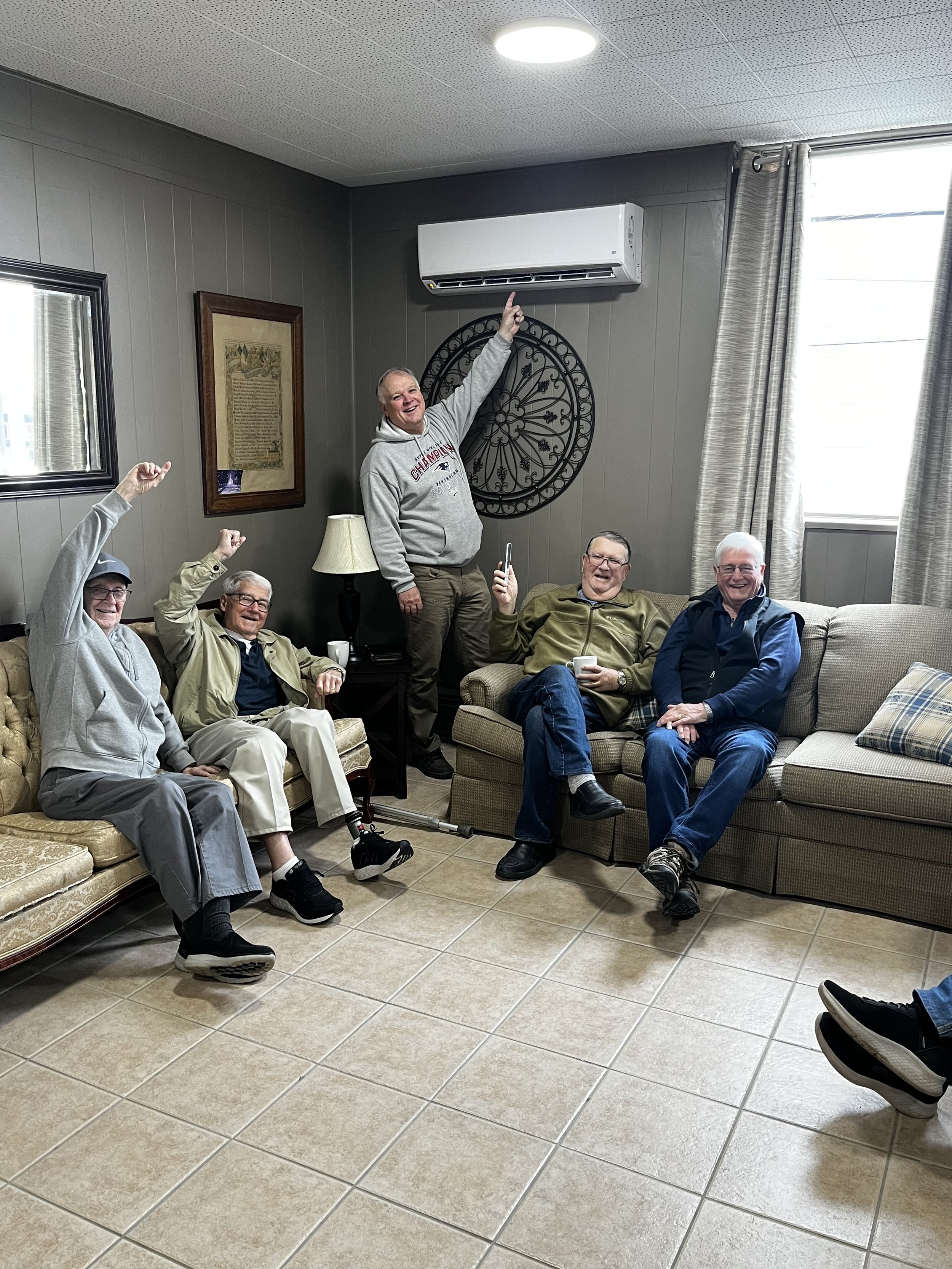

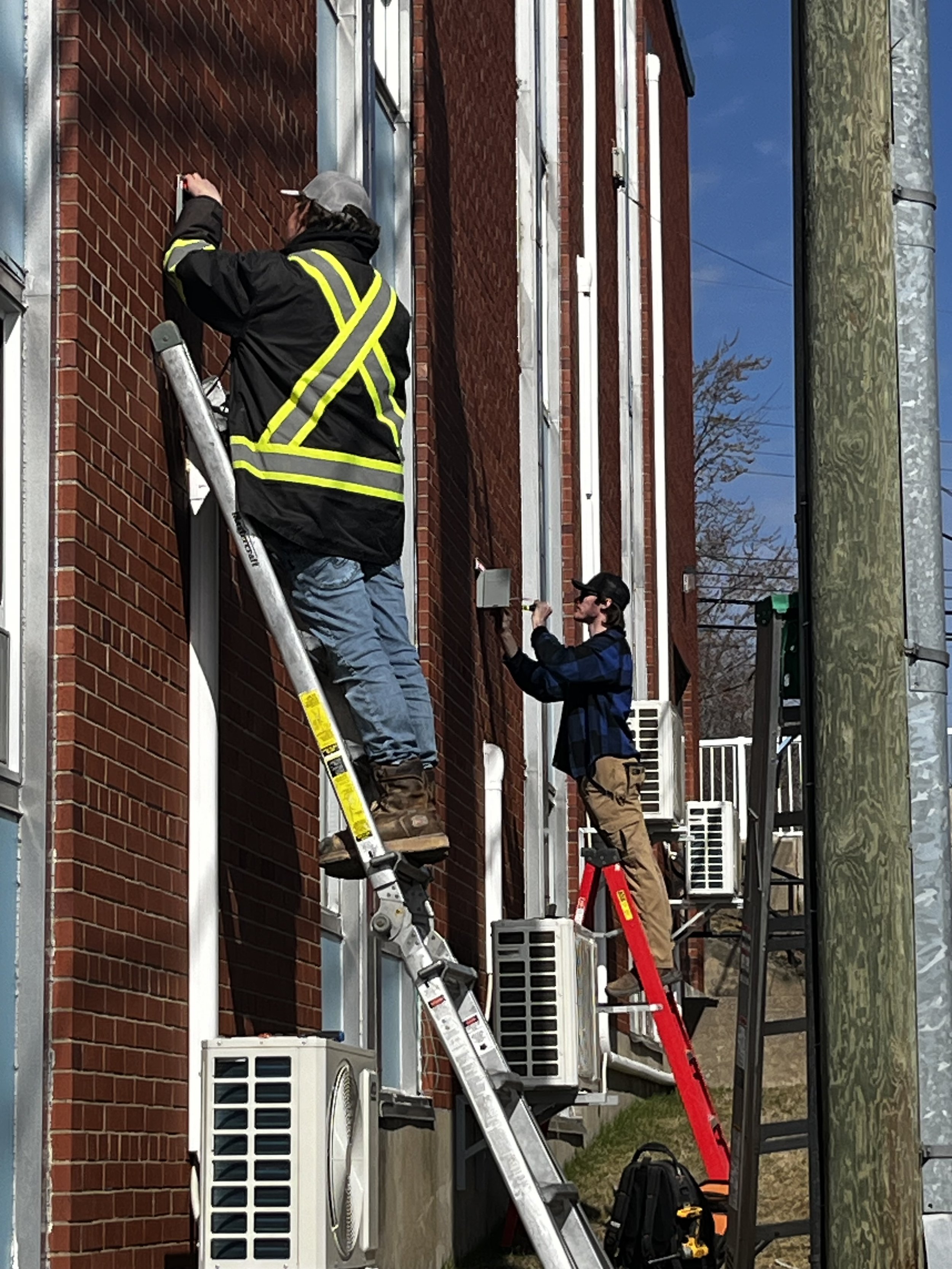
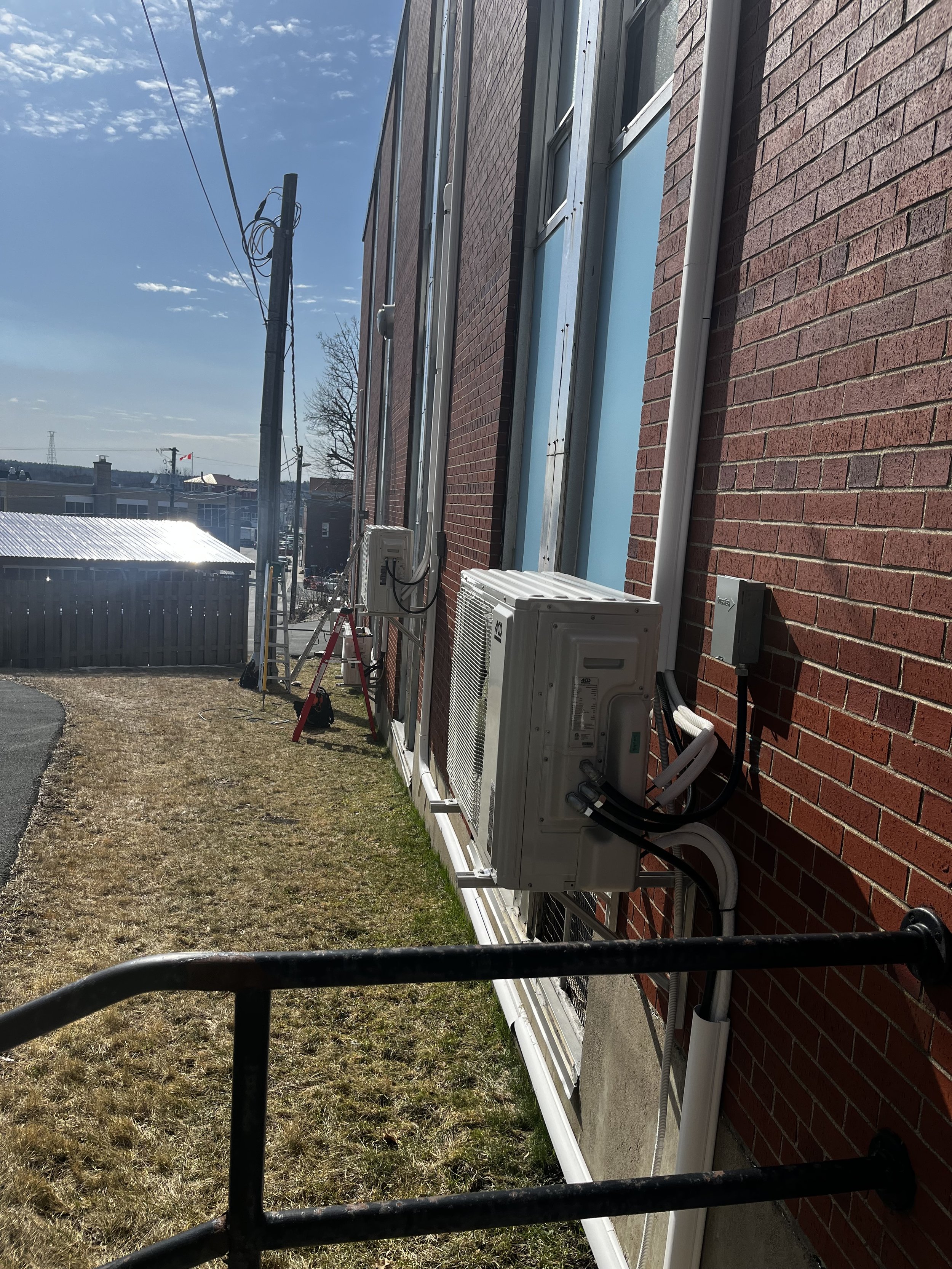
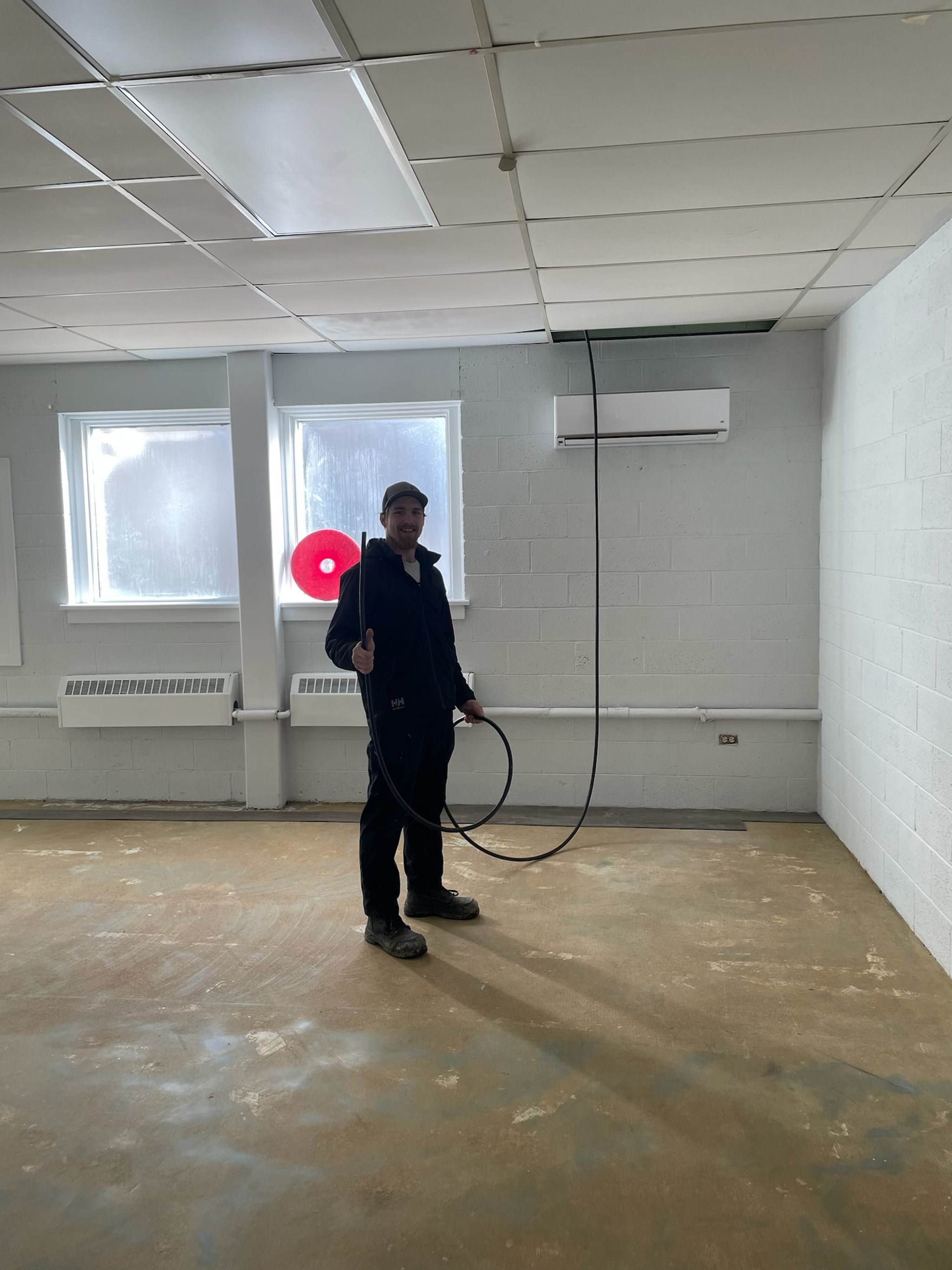
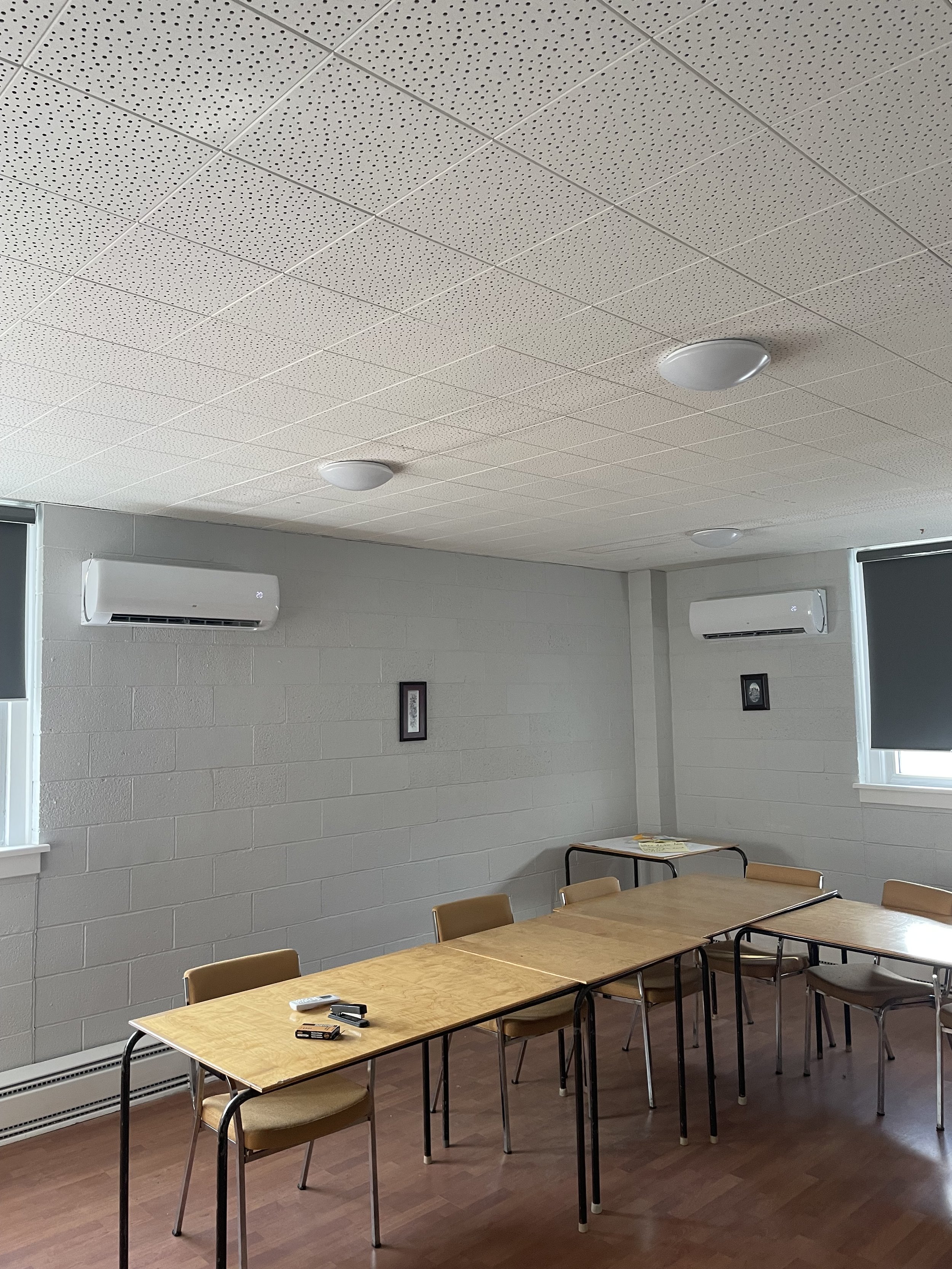
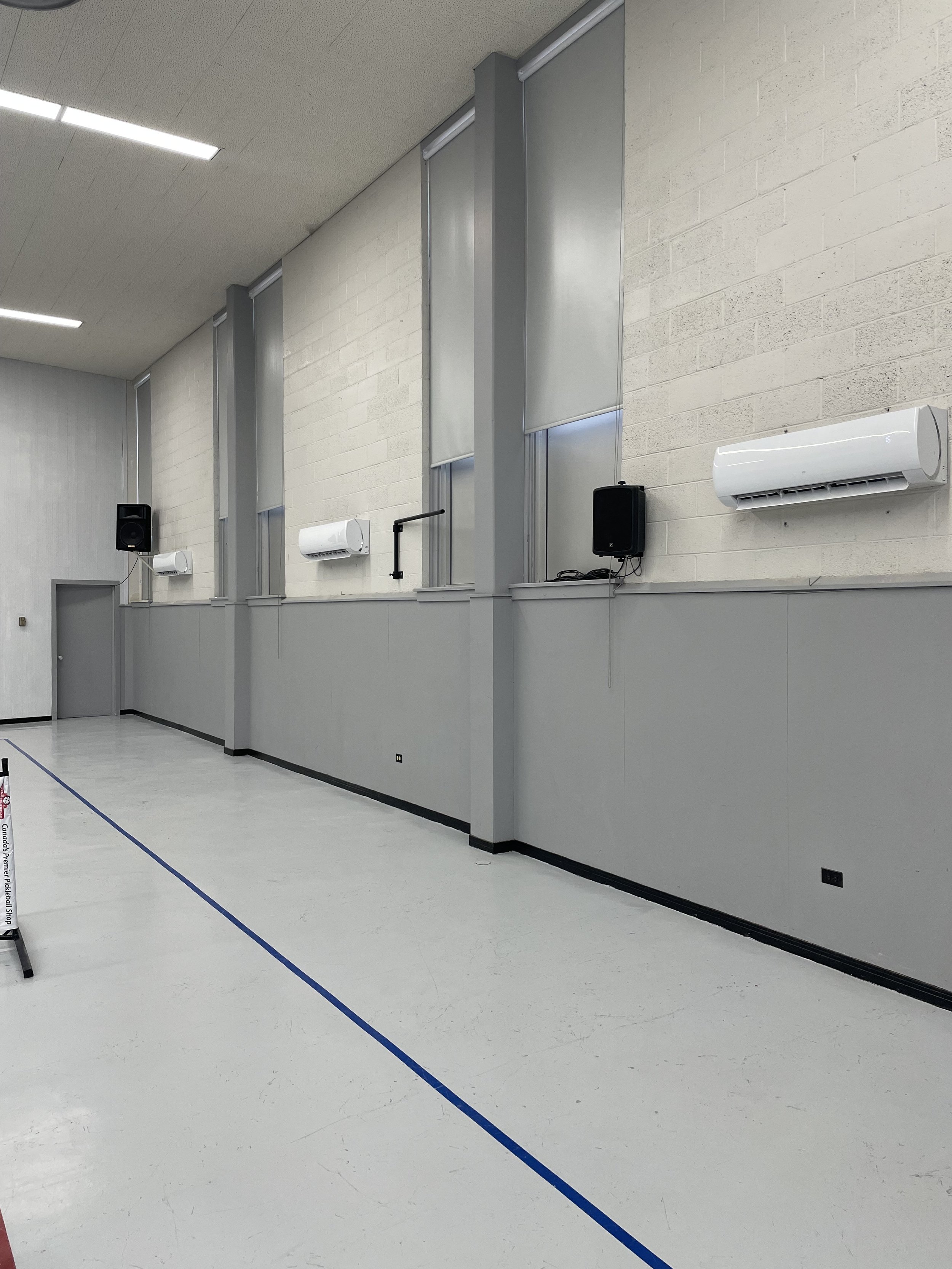
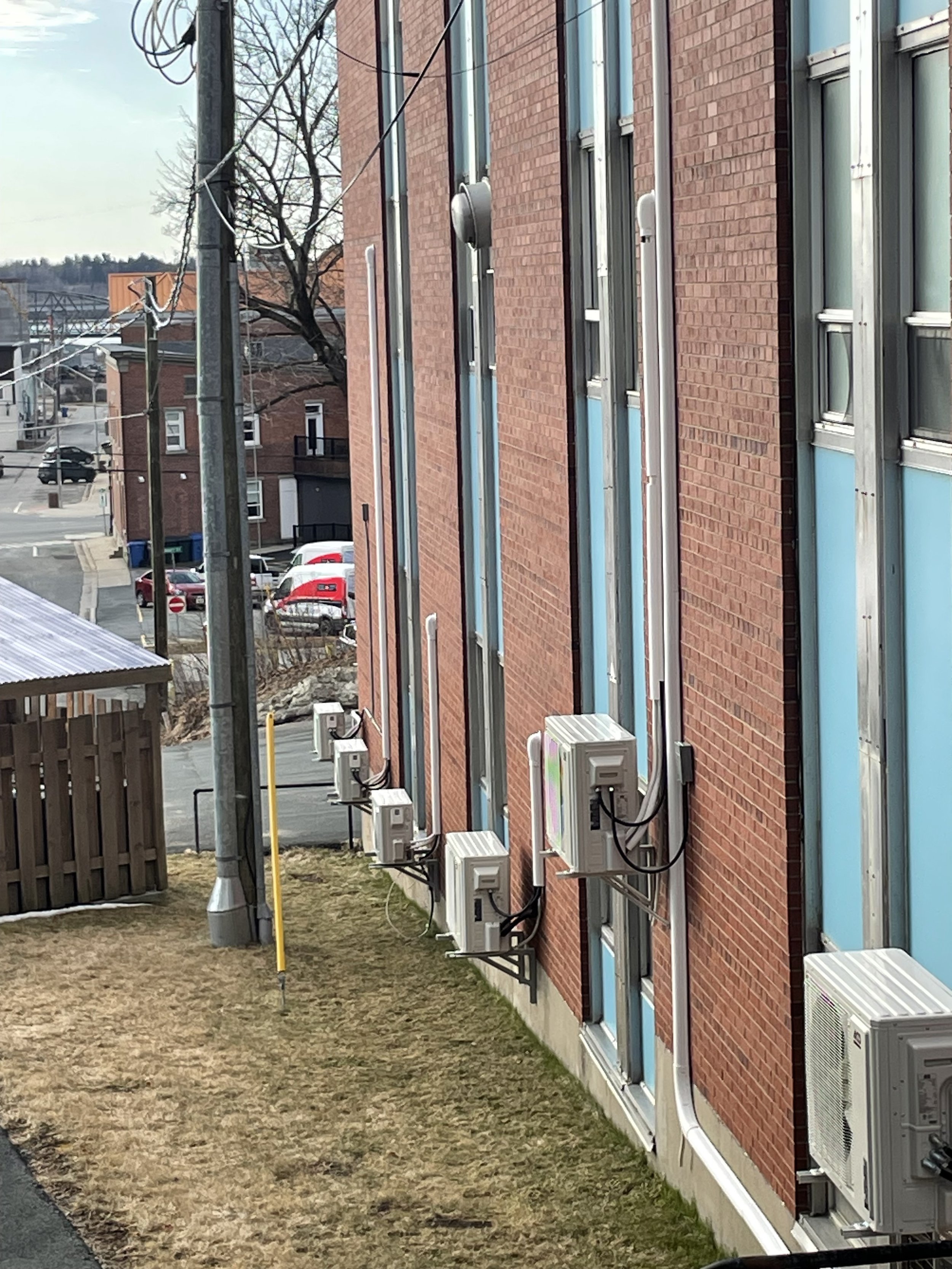
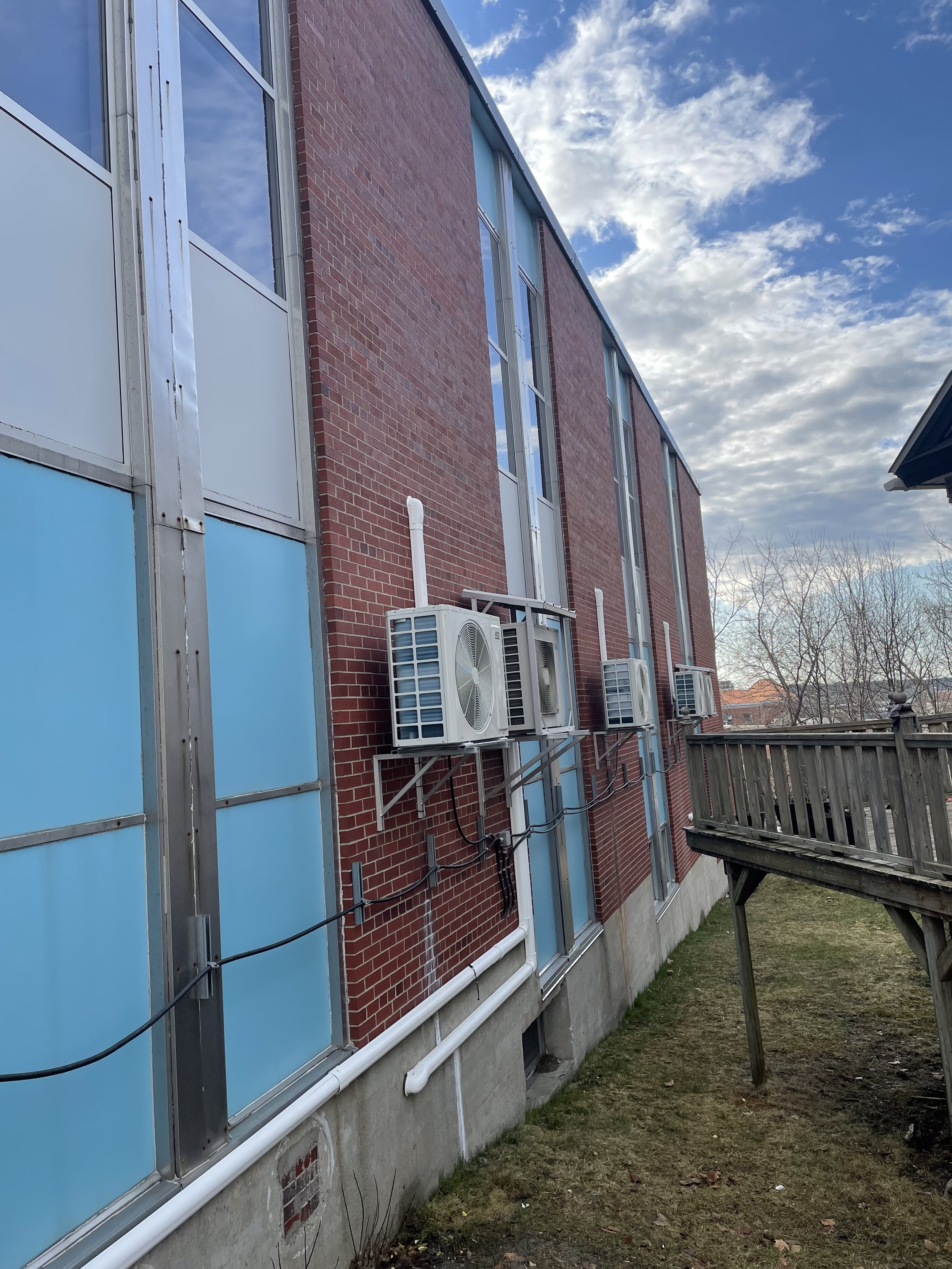
“Installing the heat pumps in our Centre would increase our rental possibilities and allow us to rent a couple of our rooms, bringing in more income. We often have large gatherings that include the congregation and visitors and the planned upgrades would help to provide a more comfortable meeting space.” states Shaddick
Continuing work throughout the Centre
While the heating system upgrade marked a major step forward, St. James & St. John United Church recognizes that further improvements can still be made to enhance the overall efficiency, accessibility, and usability of the Church Centre. Future projects for the Centre include upgrading a basement bathroom, replacing the roof, and installing new, energy-efficient windows throughout the building. Plans are also underway to relocate the minister’s and church administrator’s offices from the second floor to the main level, making them more accessible to aging members and those with mobility challenges. Beyond the Church Centre, the church building itself is in need of exterior painting, with interior updates to follow. These ongoing efforts reflect the congregation’s commitment to maintaining a welcoming, functional, and sustainable space for both its members and the broader community.
Testimonial
“Through the generous support of the Faithful Footprints grant and guidance from the program staff, we were able to install seven new mini splits throughout our Church Centre. These units are not only keeping us nice and warm in the cold months and cool in hotter weather, but also enabling our faith community to lower our carbon footprint. Because of this upgrade we will also have better control of heat in individual rooms throughout our large building compared to our previous central heating system. We will lower our monthly costs and energy consumption, making it all around, more efficient and certainly more appealing to entice new renters.” — Kimberley Shaddick, Office Administrator at St. James & St. John United Church

Welcoming more: Trinity United enhances space for tenant and community use
More people in the building means higher expectations for comfort, rising energy demands, and growing costs, especially in older buildings. At Trinity United Church in Grimsby, Ontario, this reality came to a head and, in response, upgraded its building to ensure their space could remain both welcoming and sustainable.
As community needs shift, many churches are finding new life by opening their doors to a wider range of users, from partner congregations to local organizations and event groups. More people in the building mean higher expectations for comfort, rising energy demands, and growing costs, especially in older buildings. At Trinity United Church in Grimsby, Ontario, this reality came to a head in 2023. In response, the church upgraded its building to ensure its space could remain both welcoming and sustainable.
“Like many small-town churches these days, ours is an important community resource. We’re an old congregation in an old building, and we recognize the need to make that space both comfortable and useful,” states Ken Pettigrew, Board Member at Trinity United Church, Grimsby, Ontario
Over the years, Trinity United has made steady improvements to its facilities with a focus on sustainability and energy efficiency. Upgrades include energy-efficient lighting, windows, and doors, as well as regular caulking and sealing to prevent heat loss. Trees were planted on the property to provide natural shade and reduce cooling needs, and solar panels were installed on three roofs, which feed into the local grid and generate income for the church.
Meeting the needs of members, tenants, and the local community
In late 2023, two significant events occurred at Trinity United that brought attention back to the comfort and energy efficiency of its buildings.
Trinity United’s long-time neighbors and the founders of the congregation, St. John’s Presbyterian, sold their building and joined as tenants, coming full circle by worshipping once again in the space they had built in 1853. Their return raised concerns about the heating, and perhaps more importantly, the cooling of Memory Hall, the original 1889 structure, which would now serve both as their new worship space and as Trinity’s primary community hall.
At the same time, Trinity’s Board had been struggling with the already rising energy costs. Despite past upgrades, including energy-efficient windows and doors, maintaining comfort and controlling costs remained an ongoing challenge.
“Our experience of heating a virtually empty building during the COVID-19 years brought the matter to a head. An energy audit not only confirmed how much our costs were rising, but also revealed the full extent of our growing carbon footprint – Our heating issue had become not simply a financial burden but also and perhaps more importantly, an ecological and theological one.” shares Pettigrew

A solution for increased building usage
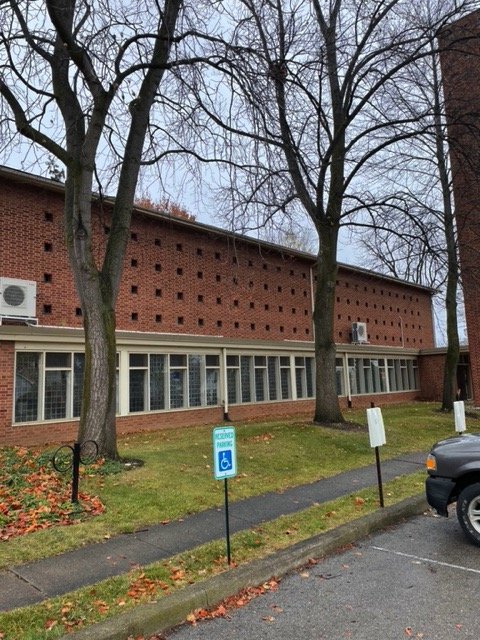
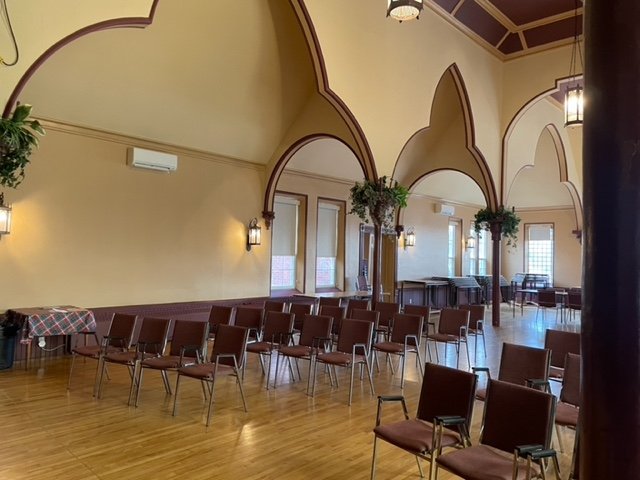
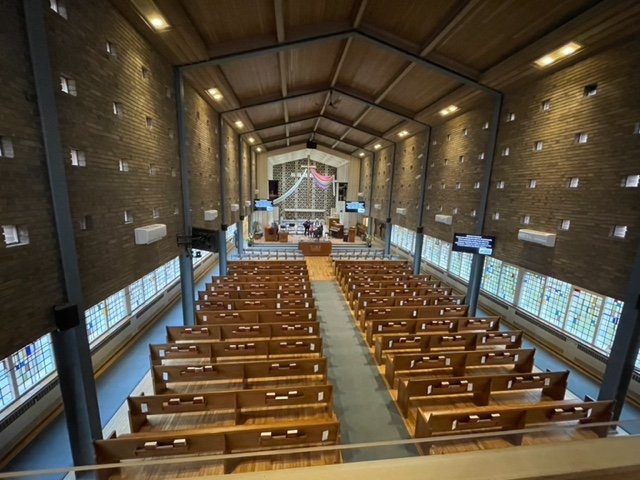
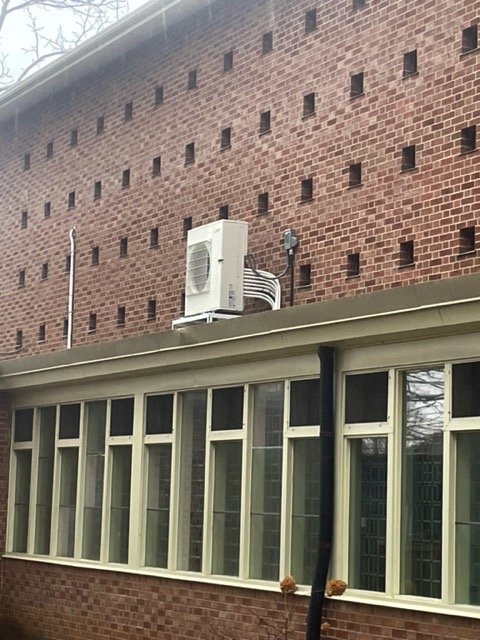
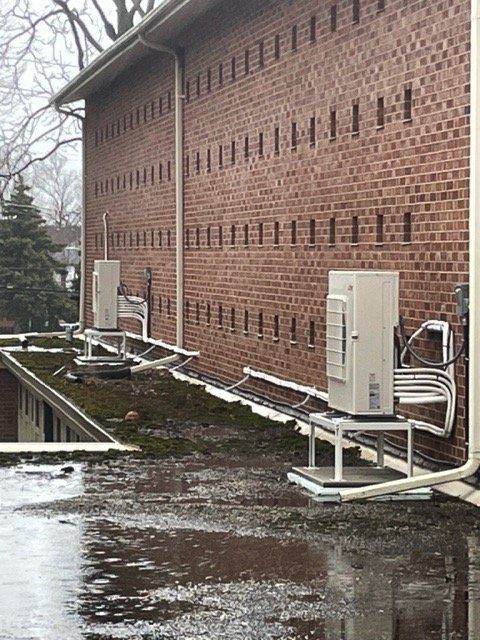
As Trinity United Church explored various options, heat pumps began to make sense—their heating and cooling capacity, combined with their efficiency and their potential to reduce reliance on natural gas, made them a great alternative. While not eliminating the need for natural gas, the heat pumps offered the opportunity to drastically reduce gas consumption in the church’s two largest spaces: its Memory Hall, the original sanctuary now serving as the main meeting place, and the newer 1958 sanctuary.
“We had several significant tenants who were asking for air conditioning, and we had always resisted due to cost and impact. Heat pumps offered us a way to reduce our carbon usage while improving the comfort of our facilities,” states Pettigrew
The project was made possible by a generous donation from the church’s new neighbors, St. John’s Presbyterian, who donated a significant sum toward the project. Combined with a major grant from the Faithful Footprints program, this support allowed the Trustees to cover the remaining costs and proceed with the installation of 16 mini-split heat pumps in the two key spaces.
“The impact was immediate—even with our natural gas boilers turned down to ‘barely on,’ the comfort levels in our rooms noticeably improved, and folks would actively comment on it. We fully expect that the installation of these heat pumps will not only enhance the usefulness of our facilities to the community but also serve as a model of energy efficiency and carbon reduction for the town. We are hoping that they will also increase the attractiveness of our facilities for community activities and potential rentals, which will in turn allow us to continue as a faith community and a community asset.” reflects Pettigrew
Faithful Footprints Program
The United Church of Canada’s Faithful Footprints program offers inspiration, tools, and grants to help its faith communities reduce their carbon footprint. With the Church’s commitment to reducing its greenhouse gasses (GHG) emissions by 80% by 2030, this one-of-a-kind program offers up to $30,000 in grants towards energy conservation and renewable energy projects (conditions apply).
Faith & the Common Good is the delivery partner for the Faithful Footprints program. To date, we have engaged over 500 congregations, camps, and buildings across the country. Your participation in the program puts your faith into action and helps the Church reach its target.

Envisioning the future: Camp Kee-Mo-Kee’s seeks guidance towards sustainability
Responding to growing concerns about global warming, Camp Kee-Mo-Kee has made sustainability a strategic priority and has set out ambitious goals as part of its vision for the future.
Nestled within an environmentally protected Carolinian Forest and bordered by Komoka Creek, Camp Kee-Mo-Kee in Komoka, Ontario, has integrated environmental stewardship as a core value. Guided by its tradition of holding nature sacred, the camp fosters a deep respect for the environment among campers and visitors. In recent years, this commitment has extended beyond programming to facility management, guiding efforts to enhance sustainability, upgrade infrastructure, and reduce the camp’s environmental footprint.
Camp Kee-Mo-Kee spans over 2,100 square meters across 13 buildings, including 8 cabins, a craft lodge, a dining hall, and an outdoor chapel. Within the past decade, the camp has integrated environmental stewardship into its facility management practices. From 2018 to 2021, Camp Kee-Mo-Kee's Board of Directors led the Revitalize Kee-Mo-Kee Campaign, funding key capital improvements. Upgrades included new windows, lighting, and automatic doors in the Craft Lodge and Dining Hall, a new utility building with showers and water treatment, and improved ventilation across all buildings.
Making sustainability a priority in how they operate
Responding to growing concerns about global warming, Camp Kee-Mo-Kee has made sustainability a strategic priority and has set out ambitious goals as part of its vision for the future. The camp’s Strategic Plan prioritizes becoming both a Sustainable and a Four-Season Organization. Over the next decade, the camp aspires to operate year-round by upgrading infrastructure and implementing environmentally controlled buildings. As part of this plan, the camp aims to reduce greenhouse gas emissions by at least 80% within five years. Currently, the camp relies on propane as its primary operational energy source for water heating and cooking. The transition plans include implementing a solar thermal hot water preheat system for domestic use that will also provide supplemental space heating during the winter.
Navigating barriers to sustainability
Due to its environmental designation and remote location, Camp Kee-Mo-Kee encounters unique challenges when it comes to becoming a year-round-facility and implementing green building upgrades. As an environmentally protected area, any facility changes must comply with strict guidelines, which limit expansion and significant structural modifications. Additionally, its remote location—over 500 meters from municipal infrastructure in a wooded area — adds additional barriers to implementing upgrades. With a six-month operational season, the camp also remains closed and unheated during its off-season, experiencing extreme temperature fluctuations – requiring durable equipment capable of withstanding long periods of inactivity and extreme weather conditions. Recognizing the challenges, the board remained committed to making impactful changes to help achieve its strategic goal.
“This plan obliges us to continue to grow the organization in a responsible manner - fiscally, environmentally, socially and with accountability. The board was certain a significant difference could be achieved by converting decommissioned equipment to more energy efficient appliances and phasing out the use of propane fuel.”
Seeking guidance and support
Given its unique situation, Camp Kee-Mo-Kee sought guidance from local subject-matter experts and community organizations to identify opportunities for minimizing the environmental footprint of its facilities and making informed, eco-conscious purchasing decisions.
In 2022, the camp conducted a comprehensive energy audit using the Faith & the Common Good’s DIY Guide, consulted industry professionals on energy use and optimization, and hired an engineer to assess and review a proposal to convert their propane water heating to electric as well as provide recommendations for electrical upgrades to support future infrastructure improvements.
The review provided a general assessment of the Camp’s propane-fired domestic hot water services throughout the property. The assessment provided potential revisions to the domestic hot water system to reduce carbon emissions and provided a general assessment of the Camp’s electrical service and its expected capacity as it relates to future projects.
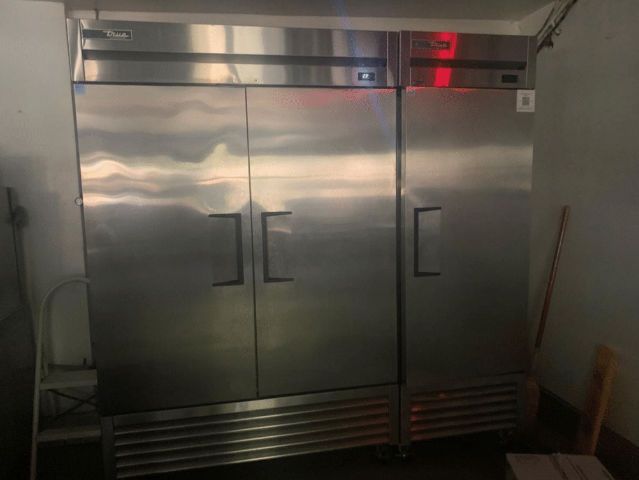
In March 2023, leveraging budgeted capital, funds from the Revitalize Kee-Mo-Kee Campaign, and support from the Faithful Footprints grant program, Camp Kee-Mo-Kee proceeded with recommendations and implemented key infrastructure upgrades. The camp replaced its aging commercial refrigerator and freezer with ENERGY STAR-rated appliances and transitioned from propane-fueled water heating in the Craft Lodge and two other buildings to smaller, ENERGY STAR-rated hybrid heat-pump electric water heaters.



Author: Aleyxa Gates - Julien

Staying on Course: Stamford Lane United Prioritizes Sustainability with Boiler Replacement Project
Stamford Lane United Church (Niagara Falls) has made it a priority to ensure its longevity and sustainability of its church, and are committed to maintaining its building for the future.
Stamford Lane United Church (Niagara Falls) understands the importance of sustainability within its walls, recognizing that its building is much more than just a physical space. As a central hub for worship, learning, fellowship, and community outreach, the church has made it a priority to ensure its longevity and sustainability.
Congregants at Stamford Lane United are committed to maintaining its building for the future. The church has built up a talented Property Committee with experienced leadership skills, as well as a Trustee Committee that oversees and guides their planning and asset management to ensure the long term health and sustainability of the church and community of faith.
Committed to creating a more eco-friendly and welcoming environment, the church has taken several steps to improve and maintain the integrity and condition of its building, focusing on operational cost-effectiveness and energy conservation. Efforts include upgrading to ENERGY STAR-rated windows, commercial freezer, and dishwasher, installing LED lighting, weatherproofing doors, and replacing the roof and stone masonry, among other improvements.
“The planned sustainability of our building is a continuing high priority for our faith community as the church is a center and a hub for our worship experience, learning and delivery, fellowship, mission and outreach and serving as a space for many and various groups and services in the City – It is of the utmost importance that we remain on course to ensure the building has a long term integrity as it serves so many purposes our congregation and community depends upon.” shares Alastair Davis, Chair Boiler Fundraising Committee, Stamford Lane United Church, Niagara Falls, ON
An impeding boiler
Requiring extensive maintenance each year, Stamford Lane United’s 32-year-old boiler had reached the point where it was impeding on the larger sustainability goals of the church. With a sound and functioning heating system otherwise, the aging boiler caused a significance drain on finances, and was a major contributor to the church’s carbon emissions. When staff at Stamford Lane United were informed that the boiler was nearing the end of its lifespan, the time had come for a more sustainable solution.
“Replacing our boiler would positively impact our community of faith, demonstrating that we are keeping our commitment, and provide security in knowing a major operational challenge has been met and resolved” stated Davis
To carry out the replacement, Stamford Land United created a Boiler Fundraising Committee which was responsible for raising supporting funds to replace the boiler. This committee discovered The United Church of Canada’s Faithful Footprints program and immediately prepared a grant application with the enthusiastic support of their council, trustees, committees and congregation.
“We announced the Boiler fundraising plan and the approved $20,000 grant from Faithful Footprints. Everyone was surprised and motivated to learn about the major grant. They responded quickly and generously as the funding goal was achieved.” reflects Davis

Stamford Lane United allocated all funds toward the project. The church was able to upgrade its boiler with a IBC 500,000 BTU high efficiency commercial condensing boiler and a potable water boiler; integrate existing controls to new boilers with zones, and set up 7-day programmable energy management systems to both its sanctuary and gymnasium.
A year after the replacement of their boiler, Stamford Lane United reduced its weather normalized source by 30%, total GHG emissions by 42%, total GHG emission intensity by 42.4%, electricity usage by 23.5%, natural gas usage by 42.8%, and energy costs by 6.5%.
The boiler replacement not only supported Stamford Land United’s operational sustainability but also secured its continued role as a hub for connection, support, and service for members and the surrounding community.
“The Faithful Footprints grant enabled us to rapidly replace an inefficient and expensive to operate boiler – We are secure knowing we will continue a space for worship and pastoral care gatherings, kids' events, humanitarian aid initiatives, bargain boutique, alcoholics anonymous meetings, UNIFOR events, transitions programs, mission and service projects, yoga sessions, adult and junior choirs, dance lessons, and many other community activities” shares Davis.
Faithful Footprints Program
The United Church of Canada’s Faithful Footprints program offers inspiration, tools, and grants to help its faith communities reduce their carbon footprint. With the Church’s commitment to reducing its greenhouse gasses (GHG) emissions by 80% by 2030, this one-of-a-kind program offers up to $30,000 in grants towards energy conservation and renewable energy projects (conditions apply).
Faith & the Common Good is the delivery partner for the Faithful Footprints program. To date, we have engaged over 500 congregations, camps, and buildings across the country. Your participation in the program puts your faith into action and helps the Church reach its target.

Move to Action: Siloam United’s Commitment to Reducing Carbon Emissions by 30%
Siloam United Church (London, ON) is stepping up as a local leader, with a goal to cut its operational carbon emissions by 15% annually over the next two years, for a total reduction of 30% by 2026.
Siloam United Church in London, Ontario, is stepping up as a local leader, with a goal to cut its operational carbon emissions by 15% annually over the next two years, for a total reduction of 30% by 2026. Aligned with The United Church of Canada’s ‘Deepen Integrity: Living Climate Commitment’, Siloam has set this target only after a few years of dedicated environmental and climate efforts within their church community.
Their journey began in early 2020 when a church member with expertise in environmental issues co-led a book study with the minister on You Can Save the Earth: A Handbook for Environmental Awareness, Conservation, Sustainability. This initiative inspired a series of seventeen “Greener Home” articles published by the church between June and September that year. Later, in the fall, the congregation took part in a tour of a church member’s LEED-certified home.
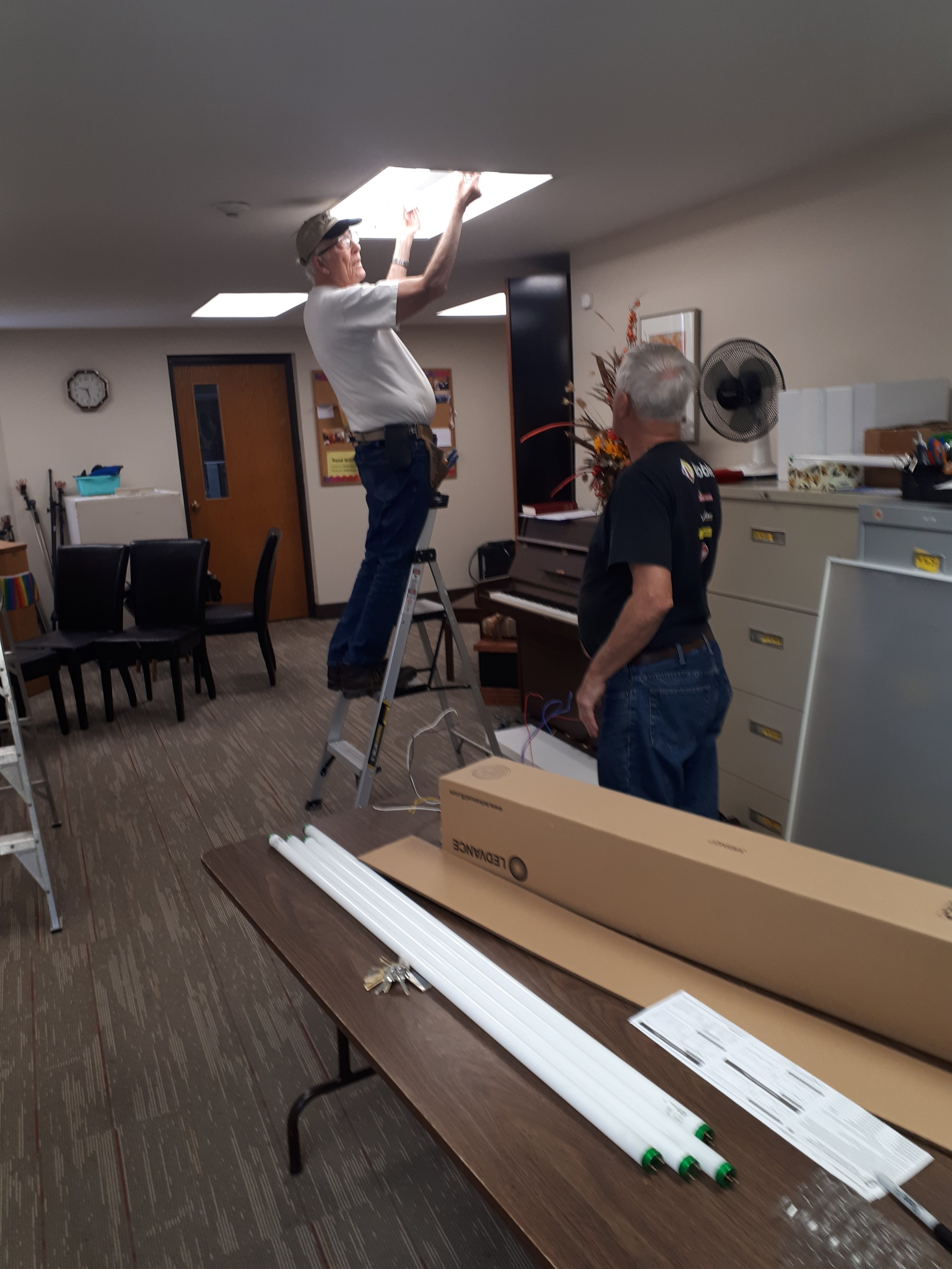
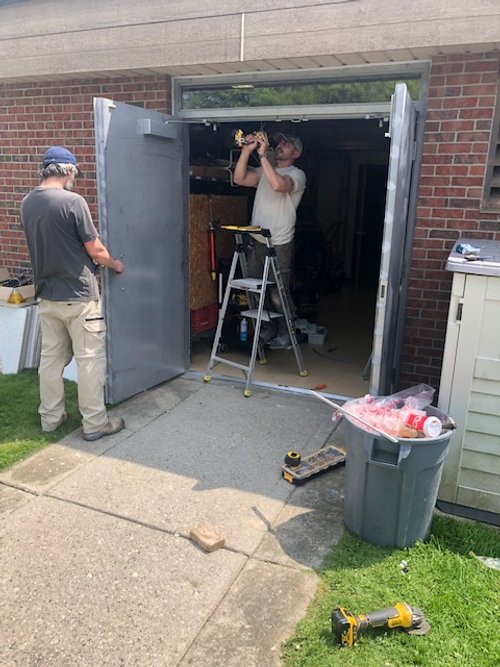
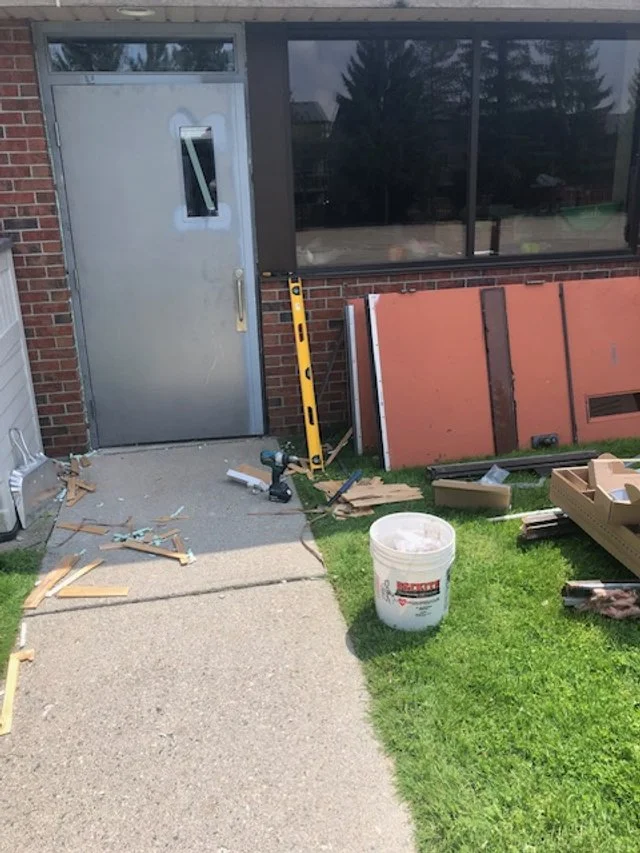
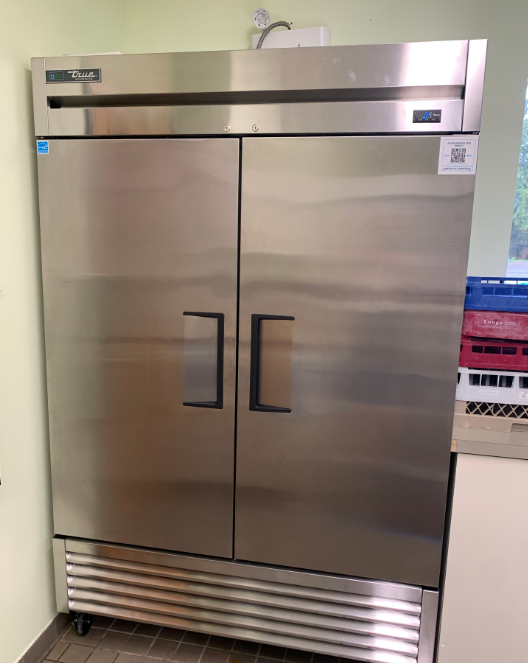
These activities raised awareness and enthusiasm within the congregation, and laid a strong foundation for Siloam United’s next phase. In August 2023, the minister announced that the church was ready to take action, with plans to replace an outdated refrigerator with an ENERGY STAR model, install three new energy-efficient doors, and replace 350 fluorescent tube lights with LEDs throughout the building.
“We had already laid the groundwork and created momentum and commitment both through our book study and sermon series. Our community is deeply committed to reducing our carbon footprint. We were ready and motivated to take tangible action” says Dave Dunham
These planned projects would build on the church’s previous efficiency improvements, of upgrading the central heating and air conditioning system to a staged air compressor system and converting half of the HVAC units to heat pumps. These additional upgrades would support the church’s goal of cutting its operational carbon emissions by 15% for the upcoming calendar year.
The Reduce Our Carbon Footprint Campaign (RCFC)
Siloam Unite, driven by its ambitious carbon reduction target, was ready to take action with significant building upgrades. The church council had already passed a motion to allow the trustees to match funds from the Faithful Footprints grant, unanimously approving a $14,000 contribution toward the project. However, even with combined funds, there were still concerns about whether they would have enough resources to complete all the planned upgrades.
To cover remaining costs, Siloam United ran the Reduce Our Carbon Footprint Campaign (RCFC) to fund their greening projects. This five-week campaign, leading up to Earth Day 2024, invited community members to financially support the church in achieving its carbon reduction goal for the year.
“We believed that engaging our congregation in this campaign would engage and excite our members and show how we could take action on environmental issues right here in our own building” shares Dave Dunham
The campaign received support from across the community. Members created promotional materials, including a video, posters, and social media posts, to increase awareness and engagement. The campaign was able to raise an additional 5,000 dollars for the project.
“Every dollar raised was invested into helping us complete the energy-efficiency renovations and upgrades – the campaign’s success is largely because the work was supported by The Faithful Footprints program which raised enthusiasm.” says Catherine Clover
To their surprise, Siloam United was able to complete their three initial projects under budget, allowing them to allocate the extra funds toward replacing three windows that had lost their energy seals. This additional upgrade brings them even closer to reaching their carbon reduction target.



Future Building Upgrades
Siloam United’s 30-year-old building is on a continued path towards achieving a 30% reduction in carbon emissions by 2026. Committed to operating as sustainably and efficiently as possible, the church has set plans to upgrade its infrastructure and implement additional energy conservation projects.
“Our Faithful Footprints-funded projects created awareness that our community of faith could have a positive impact in the reduction of our carbon footprint.” says Catherine Glover
Future plans include:
Installing louvered blinds on the skylights to reduce heat and sun entering the sanctuary,
Replacing six windows and installing light-reflective film on west and south-facing windows,
Replacing the remaining six individual heating units with heat exchange systems,
Integrating a Nest thermostat system for digital monitoring and control,
Replacing five additional windows,
Installing wiring and converting switches in interior bathrooms and hallways to motion-sensor switches.
Faithful Footprints Program
The United Church of Canada’s Faithful Footprints program offers inspiration, tools, and grants to help its faith communities reduce their carbon footprint. With the Church’s commitment to reducing its greenhouse gasses (GHG) emissions by 80% by 2030, this one-of-a-kind program offers up to $30,000 in grants towards energy conservation and renewable energy projects (conditions apply).
Faith & the Common Good is the delivery partner for the Faithful Footprints program. To date, we have engaged over 500 congregations, camps, and buildings across the country. Your participation in the program puts your faith into action and helps the Church reach its target.

A Long-Anticipated Upgrade: Salisbury United Replaces over 100 Lights
Some renovation projects are talked about long before they happen. Salisbury United finally executes a long-anticipated upgrade of over 100 lights throughout its entire building.
Some renovation projects are talked about long before they happen. They might not be fully planned out, but there's a shared understanding among the church community and staff that these building updates are needed and will eventually get done. When the time finally comes and resources are available to address these projects, it’s an exciting time for the church.
Salisbury United Church located in Sherwood Park, Alberta experienced this feeling when they executed a long-anticipated upgrade of over 100 lights throughout its entire building.
Bringing the Project to Light
Caring for their building and ensuring its functionality is a commitment of Salisbury United. They describe their building as a key ministry tool for the congregation, serving the Salisbury United community as well as several other community groups and a growing Filipino church.
The idea to completely replace the lighting inside the building’s 1950s and 1980s sections had been on the church’s radar for a while. The project included replacing over 100 fluorescent and incandescent lights in its Sanctuary, office, program and daycare areas with LEDs and replacing two parking lot street lamps.
“We share our church with a Filipino congregation, house numerous community groups, offer a home to a Daycare with almost 100 children attending and provide cost-effective support to those community groups which have returned to use our facility, including Brownies and Karate, both of which support children, youth and families – This project was an investment in the continued life of those groups as well as in our ability to house the congregation of Salisbury United Church,” says Brian McCarthy, Property Chair, Salisbury United
When the time came around, Salisbury United faced little hesitation in finally undertaking this project, given the age of their fixtures and the need to enhance the building's sustainability. The Board was onboard and at a congregational meeting to approve their 2023 budget, the congregation was informed of the project's necessity and expressed their support.
Prepared and Ready
Knowing that new ministry and building updates like this would eventually be needed, Salisbury United set up the Cornerstone Fund years ago. This fund, built from memorials and other donations, was put aside specifically for new ministry work and property projects. Because of this planning, the Cornerstone Fund had just enough money to cover the remaining costs of the project after receiving support from the Faithful Footprints program and Government of Alberta equipment rebates. As a result, the church didn’t need to do any additional fundraising. This preparedness was helpful as the church had seen a drop-off in financial participation by supporters who were occasional or annual attenders as well as losing renters after the pandemic.
Before starting the project, Salisbury United anticipated a few challenges. They knew they could not handle any physical or technical aspects, so they wanted a turnkey solution from a contractor. With several renovations over the years, they were aware that their electrical drawings were outdated and connected with a contractor experienced in working with older church buildings.
The church also had to consider its Daycare program, which operates five days a week from 6 AM to 5 PM in the basement, and the after-school care program on the main floor. They needed a contractor who could work around these schedules, including off-hours if necessary.
One unexpected issue was that the main contractor couldn't replace the yard lights due to not having a picker truck. With the lights out and parents needing to navigate a dark and busy parking lot for pick-up and drop-off, Salisbury United brought on another contractor to handle the repair and include it in the overall lighting upgrade project.

A Brighter Space and Reduced Electricity Use
Salisbury United Church successfully completed the LED lighting upgrade turning their sanctuary into a brighter, more welcoming space. The new lights are significantly brighter and offer adjustable intensity and wavelength for various activities and events. Areas that were previously in shadow, such as the chancel, communion table, and pulpit, are now well-lit and easily visible from all angles.
"Before the upgrades, users of these spaces never realized just how dull the old lights were," says McCarthy.
In addition to aesthetics, the upgrade is three times more efficient than the previous lighting system, saving the church 26,685 kWh of electricity annually—equivalent to a cost savings of approximately $5,500 per year. This improved efficiency reduces the demand for energy generation and significantly cuts down on maintenance costs. Church staff no longer have to replace failed tubes and ballasts monthly, eliminating waste streams containing harmful substances like mercury and PCBs.
Additionally, the installation of new yard lights has improved the illumination of the parking lot, improving safety and security, especially during Alberta's long, dark winters.
A year after the project was completed, Salisbury United Church achieved a remarkable 40.1% reduction in electricity usage.

Future Plans
Looking ahead, there are other projects that Salisbury United will be considering which include insulating the sanctuary roof or upgrading the two double-door entrances, which are currently single-pane glass. These updates have been on the church’s radar, and once the timing and resources align, the community will work towards making these improvements to their building.
Faithful Footprints Program
The United Church of Canada’s Faithful Footprints program offers inspiration, tools, and grants to help its faith communities reduce their carbon footprint. With the Church’s commitment to reducing its greenhouse gasses (GHG) emissions by 80% by 2030, this one-of-a-kind program offers up to $30,000 in grants towards energy conservation and renewable energy projects (conditions apply).
Faith & the Common Good is the delivery partner for the Faithful Footprints program. To date, we have engaged over 500 congregations, camps, and buildings across the country. Your participation in the program puts your faith into action and helps the Church reach its target.

Five Oaks Centre Invests over 700K to Rejuvenate its Property and Buildings
Over the last decade, Five Oaks Centre (Paris, ON) has made significant upgrades to improve the energy efficiency and sustainability of its facilities. To further investment into its property, the Centre adopted a business model in 2016, introducing a commitment to develop a 5-year property rejuvenation plan.
Five Oaks Centre, located in Paris, Ontario, is a unique intercultural and interfaith centre offering a safe space for educational and spiritual programs and retreats. From one-off workshops to week-long residential experiences, Five Oaks provides a place where individuals and communities can explore their lives and the world in light of faith and values, discovering their calling to participate in Spirit’s healing work in creation.

Situated on 116 acres at the meeting point of the Grand River and Whitemans Creek, among old-growth Carolinian Forest, Five Oaks features 13 buildings that support its work, house guests, and provide spaces for programming, dining, accommodation, and recreation. In line with its core value of environmental stewardship, Five Oaks Centre has prioritized the care of both its land and buildings essential to its mission. This commitment has included ongoing investments to ensure the best possible facilities for its staff and guests, while also fostering sustainable practices that benefit both the community and the Earth.
“Our buildings are more than just structures; they are the foundation of our mission and the spaces where transformation and positive change occur. Each addition and renovation reflects our growth and our commitment to providing a nurturing environment for all who come to Five Oaks” says Kailey Stewart, Communications and Social Media Administrator , Five Oaks Centre “Whether it’s the tranquility of our Simply Be retreats with creative practices and nature connection, the transformative journey of our Seeking Transformation programs exploring biases and perspectives, the custom group retreats designed for team-building, or our engaging outdoor education and camp programs promoting biodiversity and inclusion, our facilities support every aspect of what we do.”

Caring for the Land through its Facilities
Over the last decade, Five Oaks has made significant upgrades to improve the energy efficiency and sustainability of its facilities. Nine windows have been upgraded, and all light fixtures and bulbs have been replaced with LED units. The Centre has also installed seven dusk-to-dawn lights in the parking lot and around its pool area, and old toilets have been replaced with low flush units. During the renovation of its Upper Room part of its main facility, insulation was added to both the walls and the ceiling – which previously had an R-value of 4, with the exterior walls lacking any insulation. In 2016, the furnace in its House on the Hill was also replaced.
“Our planned improvements would further reduce our environmental footprint but also reflect our dedication to creating a comfortable and welcoming environment for our guests. While these choices would be more expensive, requiring additional fundraising efforts, we firmly believe that investing in our property is the right path forward for the future of Centre.” shares Mary Palka, Donor Development, Grants and Gifts Coordinator,Five Oaks Retreat Centre.

Five Oaks Property 5-Year Rejuvenation Plan: Investing in Key Spaces on the Property
To further invest in its property, the Centre adopted a business model in 2016 that included developing a 5-year property rejuvenation plan. Incorporated into the Centre’s Strategic Plan, under the key objective ‘revilitize key spaces’, the rejuvenation plan laid out an extensive retrofit of the Five Oaks property buildings and surrounding areas, with special attention to ensuring environmentally responsible decisions.
Five Oaks started with its building’s Upper Room in 2018. In 2019, they renovated its New Hall, installed an elevator, refurbished its Model Suite, and replaced its Hermitage building roof. The A Wing of its main building were updated during 2019 and 2020, while its New Hall radiator covers and windows were updated in 2020. The carpets in its House on the Hill were replaced in 2021, and its washrooms in the Chalet and Lower Campus, as well as its kitchen were renovated the same year. The furnace in its House on the Hill was changed to an air-source heat pump system in 2022, followed by the conversion of its Peace House and Friendship House from an oil system to air-source heat pumps in 2023.
Faithful Footprints Helps Fund Rejuvenation Plan
To support the Centre’s rejuvenation efforts, The United Church of Canada’s Faithful Footprints program provided $30,000 to help fund the replacement of the 39 windows in several key buildings on the Five Oaks property, including its Peace House, House on the Hill, Friendship House, its main offices, bookstore, prayer room, art room and guest bedrooms.
“This project is a crucial element of our broader rejuvenation plan for our 71-year-old retreat centre. By upgrading our facilities with these new windows, we are not only enhancing the immediate environment but also ensuring that Five Oaks continues to be a vibrant and welcoming space for future generations. Our goal is to preserve and improve our centre so that it remains a place of inspiration, reflection, and community for many years to come.” says Stewart


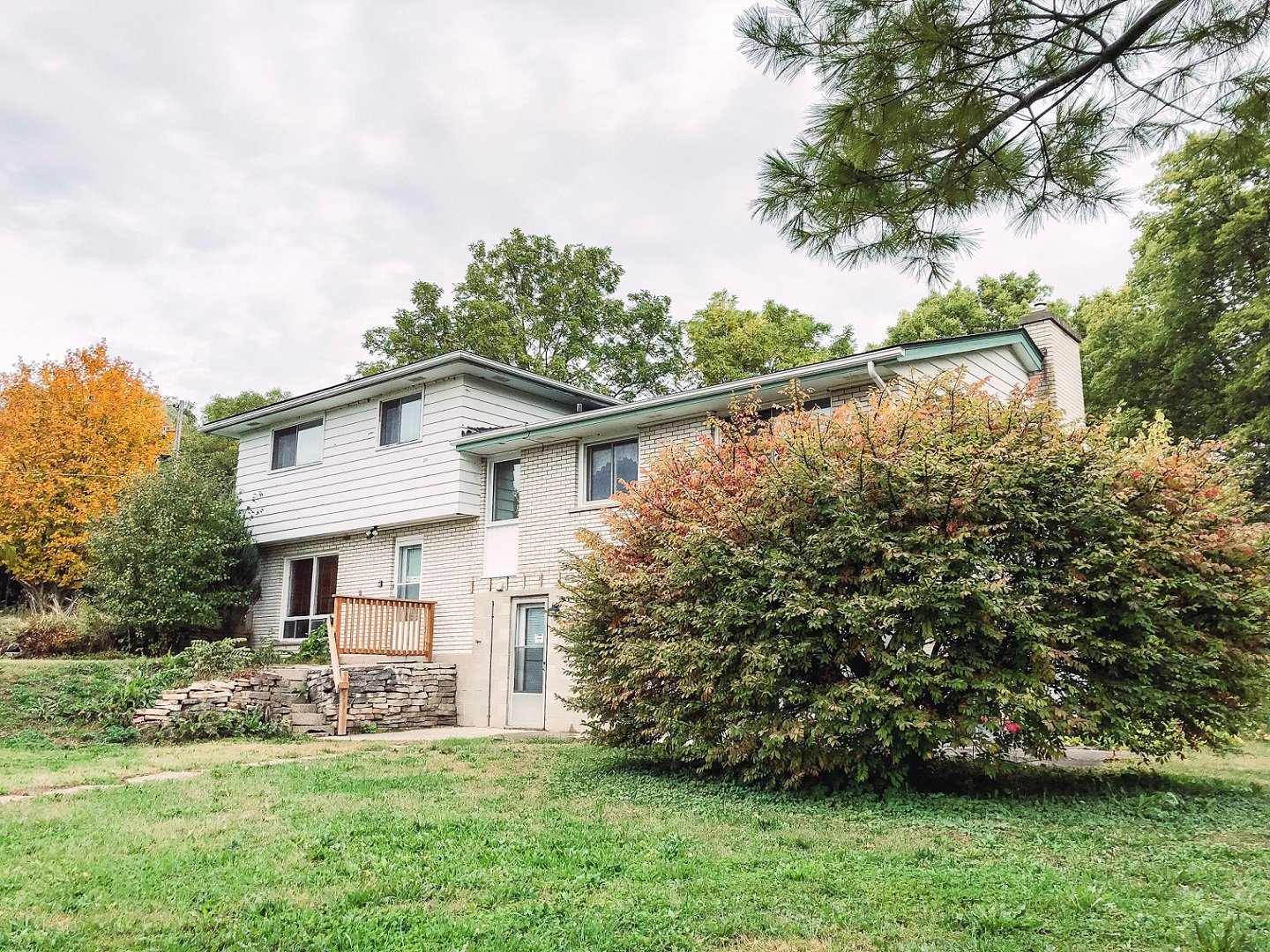


The new windows dramatically improved the energy efficiency of the buildings, providing better insulation and reducing heating and cooling costs. The upgraded windows also offered additional benefits including improved lighting and aesthetics.
“The results had exceeded our expectations.” says Palka“The windows have also enhanced the aesthetic appeal of our facilities, giving them a fresh, modern look while maintaining the charm and character of our historic property. The improved natural lighting in the prayer and art rooms has been particularly impactful. These spaces are now even more inviting, providing a warm, bright, and welcoming environment for reflection, creativity, and community activities. The main offices and bookstore also benefit from the increased natural light, creating a more pleasant and productive workspace for our staff and visitors.”
In the last year of the five-year plan, the Centre invested $339,000 dollars of capital investment into their property. Upgrades included:
An investment of $166,000 to complete a renovation of its dining hall, including upgrades to its industrial kitchen. This project was partially funded through the Ontario Trillium Foundation.
An investment of $13,000 to apply fresh paint, new carpet, flooring and new shower liners in its House-on-the-Hill.
An investment of $100,000 to both its outdoor washrooms and Chalet washrooms received upgrades funded partly by the News Horizons for Seniors Grant.
An investment of $8,000 for upgrades to its walking path, including a new set of stairs down to its lower campus. TD friends of the Environment Grant funded this project.


Continuing Property and Building Upgrades
The commitment to rejuvenate its property extended beyond the initial scope of the five-year plan. With ongoing investments, the Centre remains dedicated to sustainability, energy efficiency, and enhancing the overall experience for guests and staff.
“We continue to upgrade the spaces with the environment and our guests in mind,” said Mallory Biggs, General Manager, Five Oaks Centre “Beyond the original five-year plan, our focus is on ensuring the safety and longevity of our property and buildings. These upgrades are essential to building a safe and lasting space that aligns with our values of sustainability and excellence.”

In 2022, the Centre put in $343,000 of capital investment into its building which involved:
An investment of $115,000 to install a two-story deck behind the main building to increase and offer three-season seating off our dining room, and offer an outdoor gathering space off the Upper Room. This project was funded by the Hamilton,Halton Brant Regional Tourism Authority, through Federal Development Canada.
An investment of $26,000 to replace 18 windows, partially funded by a Greening Sacred Spaces Grant.
An investment of $16,500 to undergo a complete retrofit of the New Hall Washroom, which is now fully accessible, and partially funded by a New Horizons for Seniors Grant.
An investment of $94,000 to replace the roof on the main building, partially funded by our Raise the Roof Walkathon.
In 2023, the Five Oaks expanded its capital investments into its building which included:
Installing air-source heat pumps in its Peace and Friendship Houses, as well as its office, bookstore, and Upperroom in its main building. This HVAC upgrade significantly reduced heating fuel consumption while adding air-conditioning, enhancing the year-round accessibility and comfort of these spaces.
Refreshing the B and C wings of its main building with new paint and LED lighting.
Starting renovations in its Chalet's dining room.
Enhancing 60ft of the property’s boardwalks with a Brant Community Foundation grant.


Future projects
Five Oaks has ambitious plans to continue upgrading its property and buildings. Future projects will further enhance sustainability and energy efficiency, ensuring the best facilities for staff and guests. These ongoing improvements include:
Master Site Plan: Mapping out the property and its capacities.
HVAC Upgrades: Future upgrades to the rest of the main building.
Bedrooms and Windows: Comprehensive upgrades to all bedrooms and windows in the main building.
3-Season Pavilion: A future goal to develop a versatile pavilion for extended seasonal use.
Road Upgrades: Enhancements to the roadways on the property.
Shop Upgrade: Future enhancements to the shop, extending beyond the original five-year plan.
Main Building Energy Transition: Moving the main building off oil, a step beyond the five-year plan.
The United Church of Canada (UCCan) is a vision partner of the Five Oaks Centre. Vision partners share actively in the governance, programs, funding, and maintenance of the Centre. UCCan specifically offers access to funds for programming that supports the mission of the denomination and has legal oversight of the Centre.
Faithful Footprints Program
The United Church of Canada’s Faithful Footprints program offers inspiration, tools, and grants to help its faith communities reduce their carbon footprint. With the Church’s commitment to reducing its greenhouse gasses (GHG) emissions by 80% by 2030, this one-of-a-kind program offers up to $30,000 in grants towards energy conservation and renewable energy projects (conditions apply).
Faith & the Common Good is the delivery partner for the Faithful Footprints program. To date, we have engaged over 500 congregations, camps, and buildings across the country. Your participation in the program puts your faith into action and helps the Church reach its target.

More than Swapping Out Boilers: Fifth Avenue Memorial's Heating System Upgrade
In 2019, Fifth Avenue Memorial faced another critical project when its heating system unexpectedly failed. The scope of the replacement became larger than just simply swapping out its boiler and included a complete overhaul of its existing heating system.
Fifth Avenue Memorial United Church in Medicine Hat, Alberta has consistently demonstrated a willingness to step up and support important building projects in times of necessity. Historically, congregants have banded together to gather tens of thousands of dollars in a relatively short timespan. This collective effort has helped address projects such as the replacement of the church’s original roof, the repair and tuning of its pipe organ, and the restoration of its stained glass windows.
In 2019, the 1923-built church faced another critical project when its heating system unexpectedly failed.

Fifth Avenue Memorial United’s custodian’s dismay as she examines the damage to their failed steam boiler.
It all had to go
When the damage of their steam boiler system was assessed, it became evident that obtaining replacement parts would take between 8 to 10 months, and they would come at a steep price. It was revealed that even after repairs, ongoing maintenance would be necessary annually or biannually for the foreseeable future. Fifth Avenue Memorial United faced a daunting reality. The scope of the replacement became larger than just simply swapping out its boiler.
“It all had to go – The only realistic option was a total replacement. The old steam pipes were developing more pinhole leaks, the pipes were getting clogged up with corrosion and deposits, and the steam traps were, as often as not, corroded open, corroded shut, or corroded partially open.” explained Geoff Coley, Board Chair, Fifth Avenue Memorial United Church.
As a complete overhaul, Fifth Avenue Memorial United decided to replace its old, failed single steam boiler with a new hydronic heating system, with a set of three new and smaller, high-efficiency hot water boilers. This project would also involve all of the existing steam piping, steam traps, valves, and fittings being removed and replaced as needed along with removing the radiators in its basement.
“While the bigger than expected project came at an increased cost, the result is a system which is far more energy efficient than a simple boiler swap. Having three smaller boilers instead of just one gives us a safety net. If one boiler completely and suddenly fails, we will not be left without heat in the dead of winter while repairs are done.” noted Coley.
Delay in acquiring equipment & prolonged building shutdown
Upon receiving project funding approval of $30,000 from Faithful Footprints to help offset the total cost of nearly $200,000, Fifth Avenue Memorial United began their project immediately — amidst the challenging time of COVID-19.
The global supply chain disruptions led to delays in acquiring equipment, leaving parts of the building unheated throughout the winter months.
“We had a good part of one winter where we had exactly zero gas heat in the building - the old boiler had gaping holes in it and the replacement boilers had not yet arrived.”
Innovative solutions were implemented, including the relocation of activities to warmer spaces and the use of winter coats and electric heaters.
“The unfortunate timing of the heating system failure during the COVID-19 pandemic forced prolonged building shutdowns. This resulted in us having to work very hard to re-engage people to return to full attendance, full participation, and full giving. Fortunately we have a core of very faithful and dedicated people of all ages who are fully committed to seeing us rebuild and continue our mission.” shared Coley.
A Transformation in Heating Efficiency
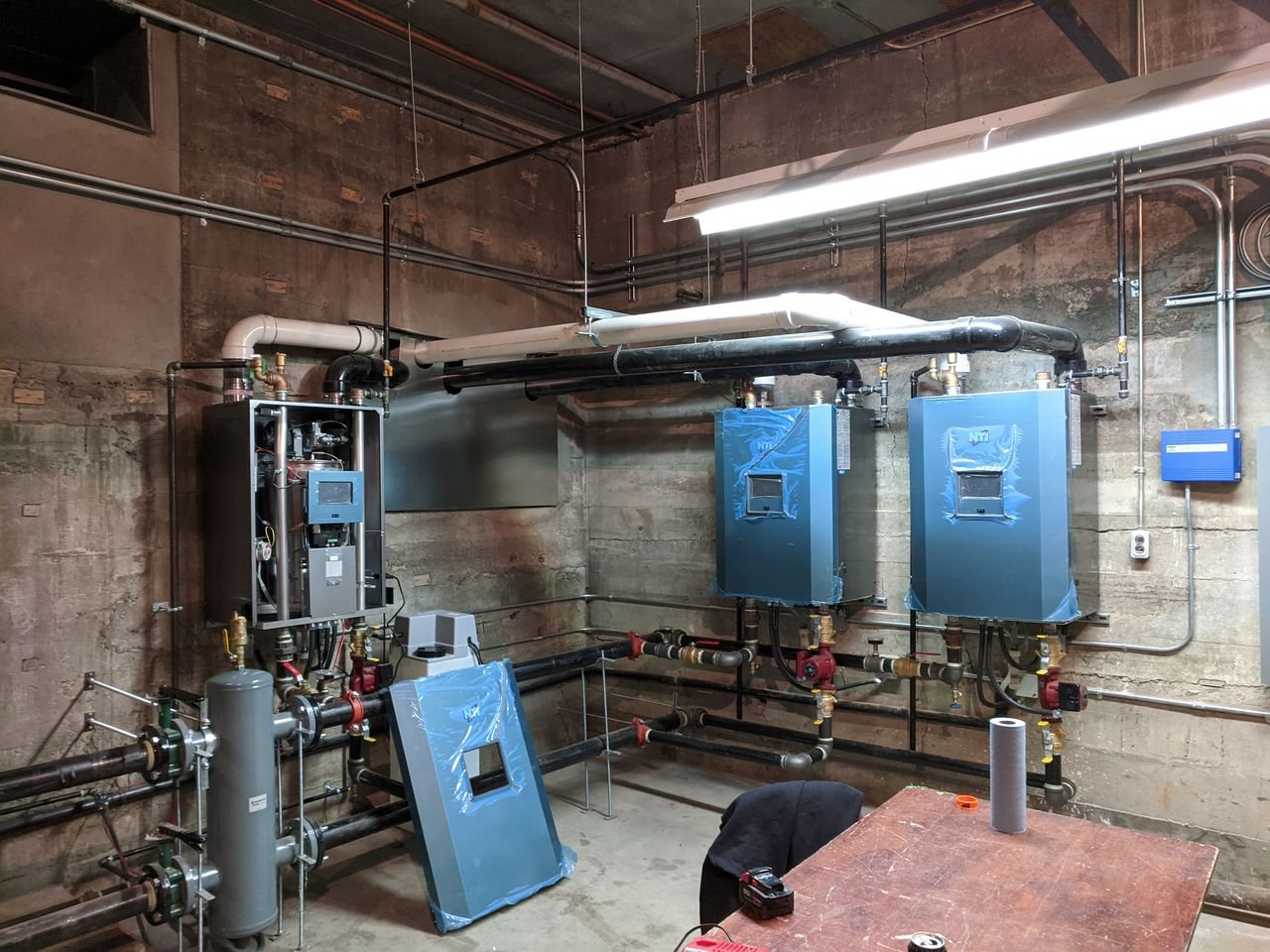
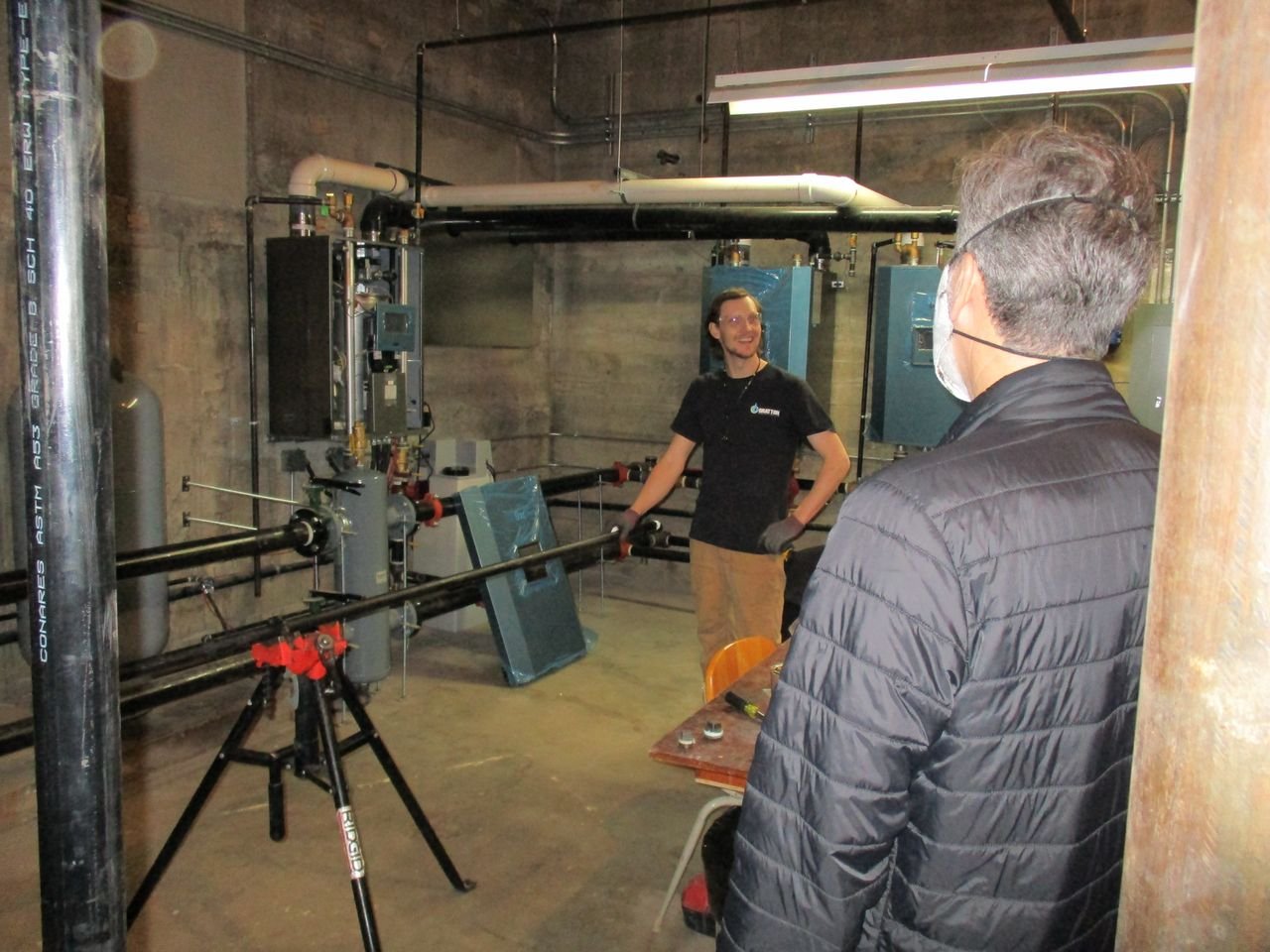
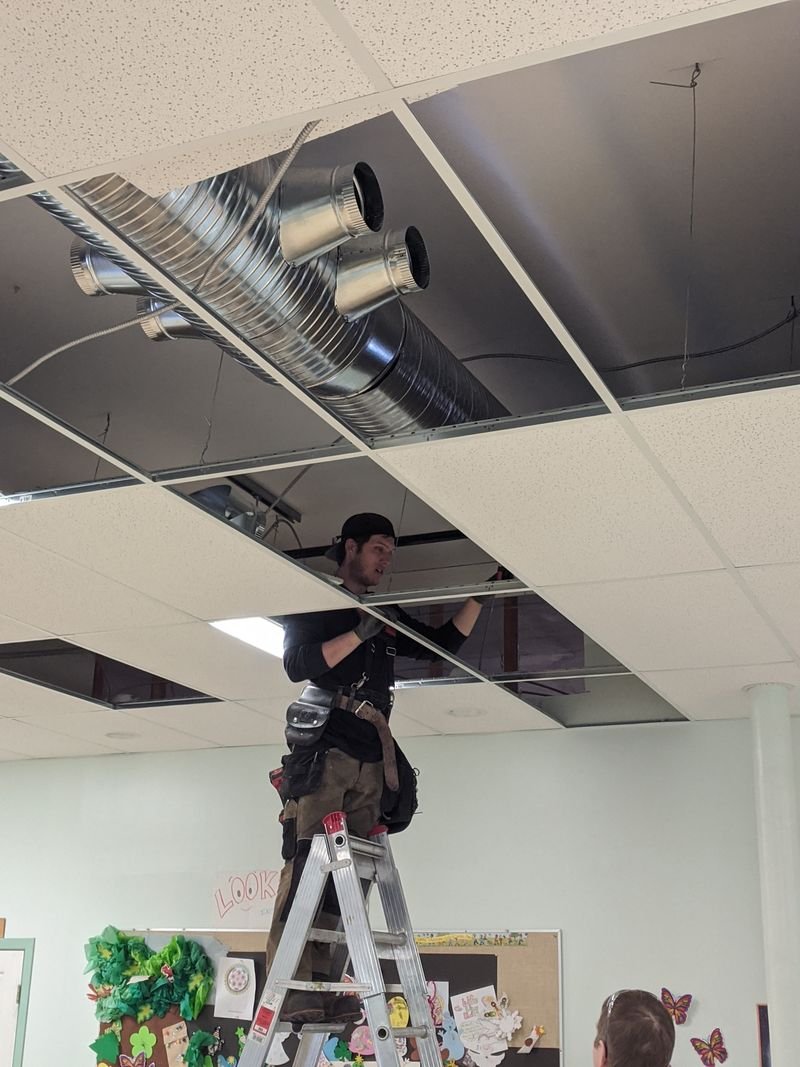
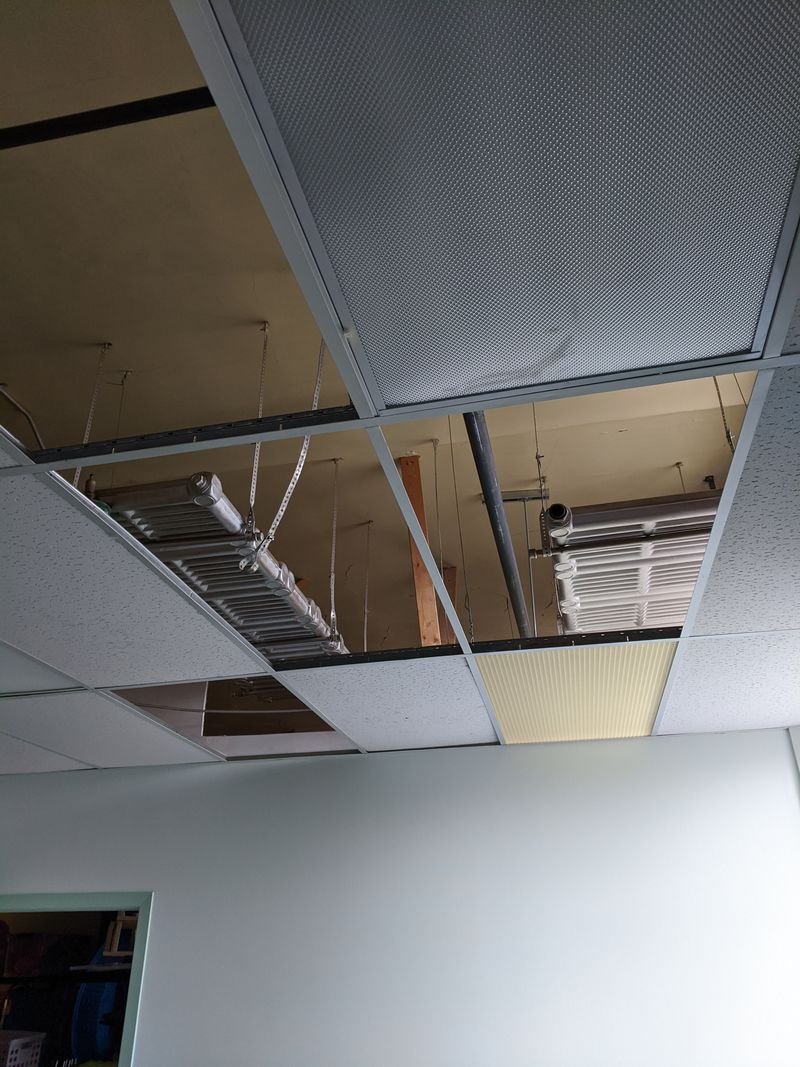
Following renovations, the sanctuary retained its familiar appearance while a significant upgrade to a new, highly efficient hydronic heating system silently improved the comfort and sustainability of Fifth Avenue Memorial United.
With a thermal efficiency rating of 94.5%, significantly higher than the old steam boiler's 79.9%, energy consumption has markedly decreased. The installation of brand-new, smooth bore pipes ensures optimal fluid conveyance, minimizing leaks and maximizing efficiency. Notably, the exhaust vents have undergone a drastic reduction in size, with each of the three new water boilers having a 4-inch vent compared to the previous 20-inch diameter vent. The switch results in a total vent area that is less than 15% of the size of the old exhaust, significantly reducing heat loss.
One year post-renovation, Fifth Avenue Memorial United achieved impressive environmental gains, including a 50.9% reduction in natural gas usage, a 46.3% decrease in total greenhouse gas emissions, and a 21.4% reduction in electricity consumption.
However, Fifth Avenue Memorial United’s heating system upgrade goes further than just environmental and climate impact reductions.
“Instead of using the money to pay utility bills; the savings from our new heating system will allow us to continue our support to the downtown community, social justice, and other areas of ministry and outreach. For example, being able to continue to offer space year-round for community events such as choir concerts, one of which has already been booked after a long drought caused by COVID-19 and a broken boiler. ” shared Coley
“Events such as these will give us the opportunity to showcase, not a new furnace, but a renovation that is reducing our carbon footprint. Each of these events will effectively be celebrations, and opportunities to share our story — that we not only have a warm sanctuary, but we have it in a way that is environmentally friendly and is going to cost us less in utility bills. It will shine a light on the various community and social programs that we can continue to support as a vital, involved, downtown church.”
Work Ahead
The larger boiler replacement project at Fifth Avenue Memorial United remains ongoing. Approximately $14,000 is yet to be covered for remaining tasks and unanticipated expenses encountered along the way. In the near future, the church plans to install a new forced air system on the basement level, hot water tanks that use heat from the boiler system, and programmable thermostats.
The new system will also provide improved zone-by-zone temperature control with programmable temperature setbacks. The newly installed system will eliminate the single-point-of-failure boiler with a modular system with backup capacity in case of a boiler failure. The new equipment is computer-controlled and can automatically troubleshoot any sudden issues remotely. This reduces the number of onsite service calls.
Looking ahead, the church is committed to further modernizing various systems through its building. This includes continuing its transition to energy-efficient light bulbs and electrical fixtures and exploring the possibility of solar panels on a section of its roof to help reduce its carbon footprint.
Faithful Footprints Program
The United Church of Canada’s Faithful Footprints program offers inspiration, tools, and grants to help its faith communities reduce their carbon footprint. With the Church’s commitment to reducing its greenhouse gasses (GHG) emissions by 80% by 2030, this one-of-a-kind program offers up to $30,000 in grants towards energy conservation and renewable energy projects (conditions apply).
Faith & the Common Good is the delivery partner for the Faithful Footprints program. To date, we have engaged over 400 congregations, camps, and buildings across the country. Your participation in the program puts your faith into action and helps the Church reach its target.
Aleyxa Gates Julien is the PR/Communications Coordinator for Faithful Footprints and can be reached at agatesjulien@faithcommongood.org.

In the Nick of time: Glenwood United's Timely Rescue by Faithful Footprints
In 2023, United Churches encountered an unexpected challenge when their boilers broke down, resulting in an urgent need to replace them. Glenwood United Church sources out Faithful Footprints funding to replace its boilers rapidly approaching the end of their 25-year lifespan.

Boilers play a vital role in churches by providing essential heating during services, gatherings, and events, ensuring the comfort and well-being of worshippers, especially in colder climates or during winter months. In 2023, several United Churches encountered boilers that broke down unexpectedly. During times of urgent building repairs, grants like Faithful Footprints make a significant difference by alleviating anxiety about funding necessary upgrades and renovations, ensuring that churches can continue to serve their communities effectively.
Nearing the end
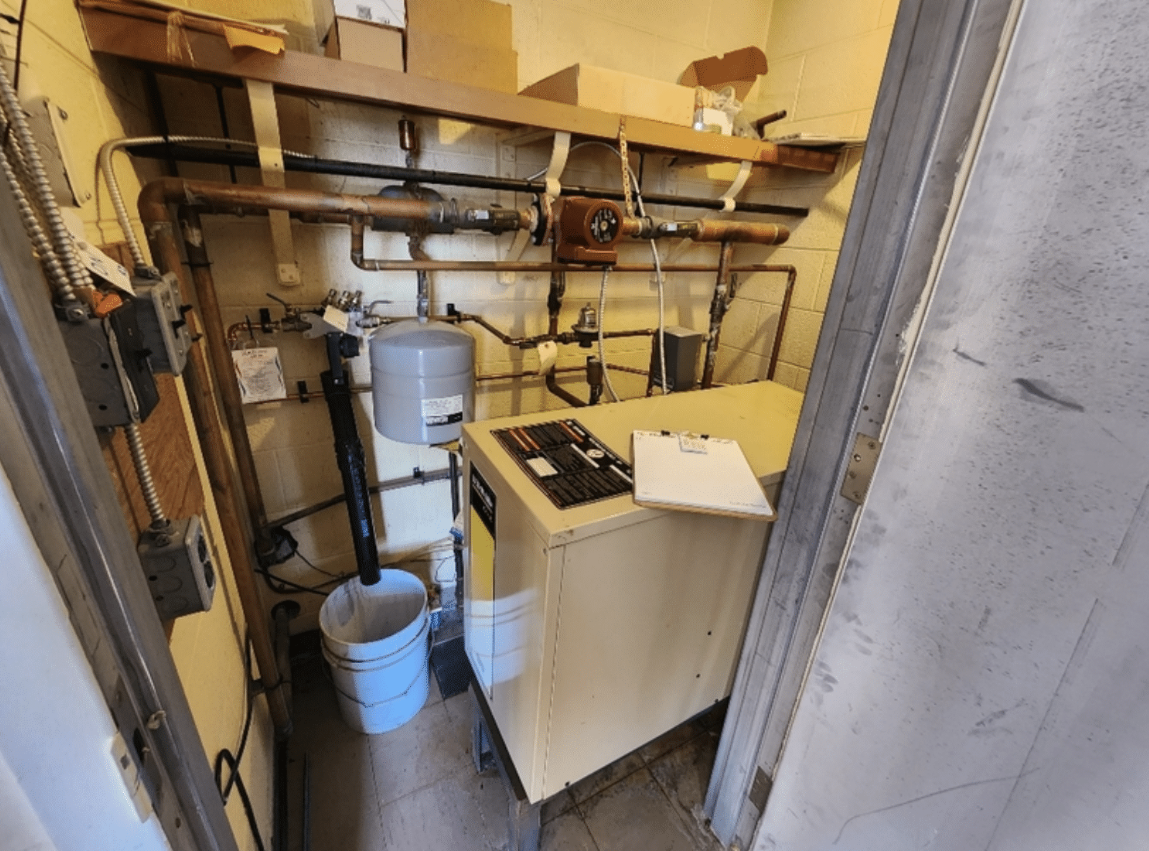
Despite having undergone repairs to their existing boilers in 2022, Glenwood United Church in Windsor, ON, faced the harsh reality when they were informed that their units were rapidly approaching the end of their 25-year lifespan, with spare parts becoming increasingly scarce. Operating at a mere 68%-72% efficiency, the two boilers servicing the sanctuary demanded attention. Despite ongoing fundraising efforts over the past three years and a current special appeal for the boilers, the sudden urgency to replace the boilers created a sense of urgency. In response, the church sought to secure sufficient funds to cover the project's cost post-installation.
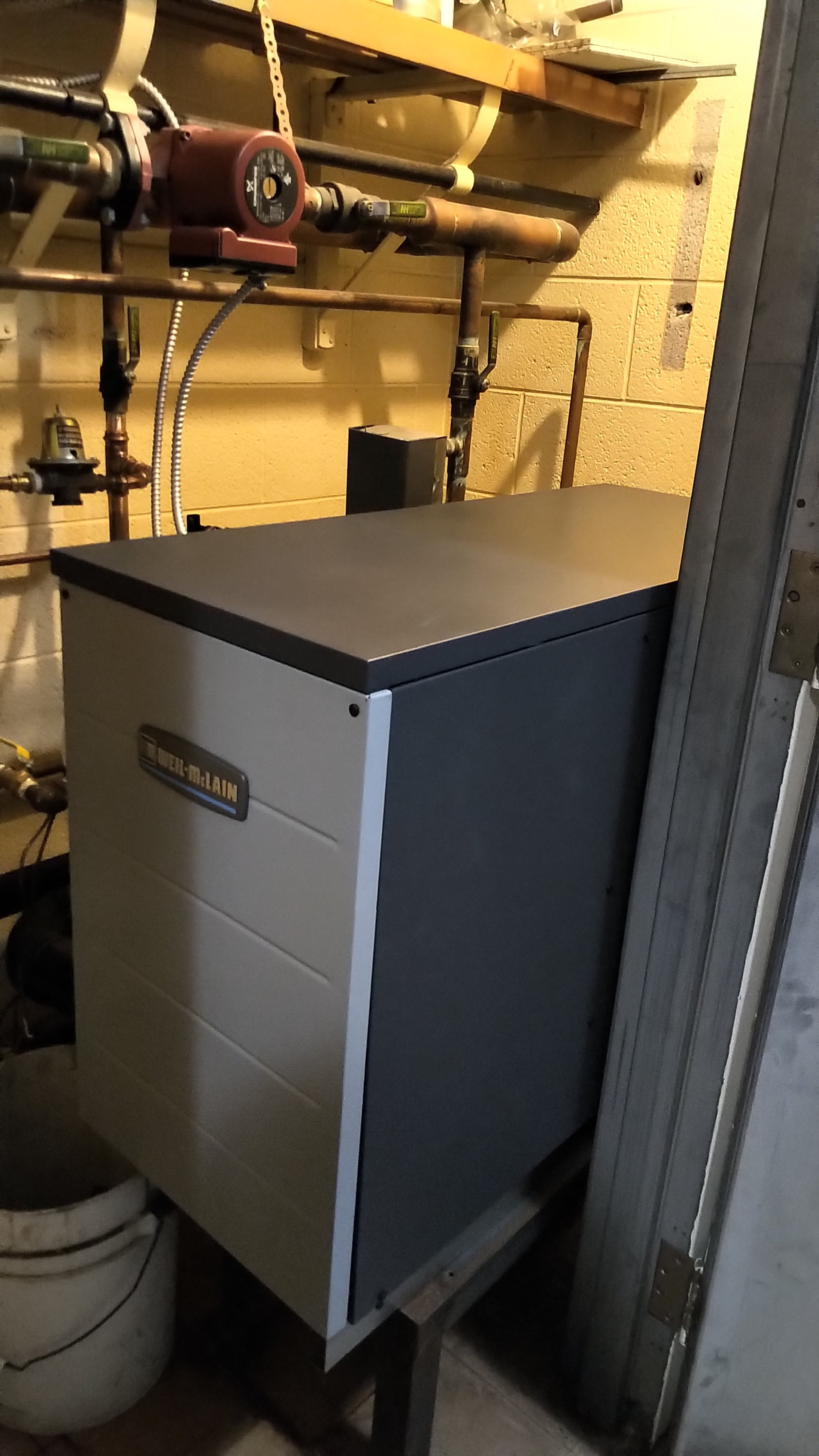
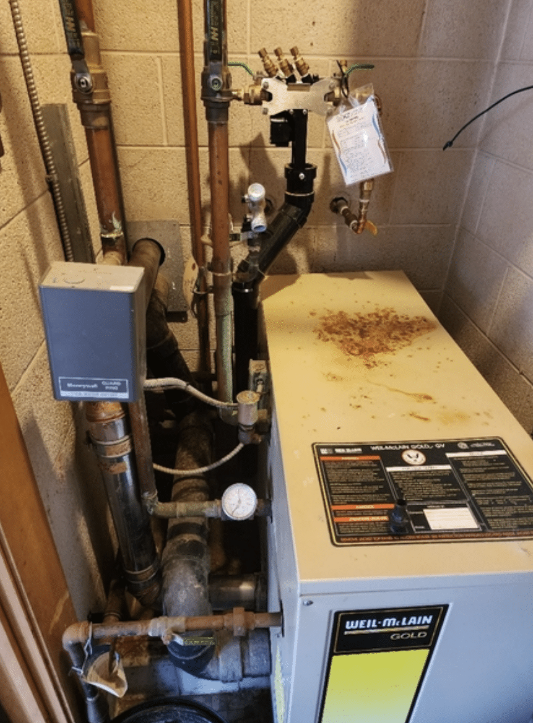
Recognizing the need for repair, Rev. Catherine Collins Barker introduced the Faithful Footprints program to the property committee, which voted to pursue funding for the boiler replacement. This financial support would help fund the installation of high-mid efficiency (91%) gas-powered hot water boilers with a life expectancy of 20-30 years, ensuring continued comfort and functionality for the congregation while also reducing environmental impact.
“By replacing the boiler in the summer, we would minimize the impact of a possible failure during the critical heating months for the congregants.” Rev. Dr. Catherine Collins-Barker.
Quick Turnaround
With the clock ticking, the community at Glenwood United sprang into action to prepare for the boiler replacement. While the application was sent off, the community at Glenwood United made every effort to prepare for the replacement.
Congregants working on the project obtained multiple quotes from reputable contractors and diligently reviewed equipment bids to ensure that fair pricing was received for products that would have a long operating life. Despite challenges, including unexpected costs and revised timelines, the community remained resilient.
“We contacted three plumbing companies for quotes, and because of lower costs and prior experience, we opted for RFG plumbing. On July 5th, 2023, RFG replaced our gas water heater with an electric one; which was one of the items in the grant application. At about that time, RFG estimated that delivery of the boilers would take 6 to 10 weeks. Shortly after, they came back with a revised estimate of 2 weeks” Bob Pickle, Property Chair at Glenwood United, “We told them that we would not have the money that soon. They advised that if we could pay another $7000, they would install one boiler and we could have the second one installed whenever we had the money. This was paid and one boiler was installed in July. It was hoped that the balance required for the second boiler could be raised before the fall heating season began.”
A Timely Rescue
In the nick of time, just in time before the fall, Glenwood United received the much-needed Faithful Footprints grant. The church had the contractor immediately install the second boiler, securing the church's heating system for the upcoming seasons.
Faithful Footprints Program
The United Church of Canada’s Faithful Footprints program offers inspiration, tools, and grants to help its faith communities reduce their carbon footprint. With the Church’s commitment to reducing its greenhouse gasses (GHG) emissions by 80% by 2030, this one-of-a-kind program offers up to $30,000 in grants towards energy conservation and renewable energy projects (conditions apply).
Faith & the Common Good is the delivery partner for the Faithful Footprints program. To date, we have engaged over 400 congregations, camps, and buildings across the country. Your participation in the program puts your faith into action and helps the Church reach its target.

Coming Together to Combat Climate Change: The Unified Mission of Deer Park United and Calvin Presbyterian
With a shared ecumenical ministry spanning 13 years, Deer Park United Church and Calvin Presbyterian Church in Toronto, Ontario, serve as a compelling example of the impact that a united mission can have in the realm of climate action.
Ecumenical ministries are collaborative initiatives that aim to foster greater unity and cooperation among different Christian denominations. Bringing together church communities, ecumenical ministries helps combine resources, knowledge, and efforts to address common challenges — promoting a sense of solidarity and shared purpose among Christian believers.
By uniting their efforts, these ecumenical partnerships hold the potential to be formidable allies in the ongoing battle against climate change — raising awareness, advocating for sustainable policies, and inspiring eco-friendly practices within their congregations.

Uniting Congregations for a Common Cause: Green Team Formation
With a shared ecumenical ministry spanning 13 years, Deer Park United Church and Calvin Presbyterian Church in Toronto, Ontario, serve as a compelling example of the impact that a united mission can have in the realm of climate action.
Inspired by an enlightening Lenten environmental education series and Earth Day event, the ecumenical ministry established its Green Team in 2019, comprising dedicated members from both Deer Park United and Calvin Presbyterian congregations. With support from the ministry, the Green Team has planned Earth Day celebrations that combine festivity with climate education and has hosted impactful webinars on a range of environmental topics through the North Toronto Cluster of Churches group and Faithful Green Actions Team. Beyond this, they have delved into comprehensive environmental research, examining the consequences of climate change and global mitigation efforts aimed at combatting the anticipated rise in global temperatures. Their commitment extends to the regular publication of their findings in informative articles in their church bulletin and longer, in-depth pieces for their quarterly newsletter — covering a wide spectrum of themes, from practical eco-friendly tips for individuals to inspiring narratives of environmental efforts across the globe.
“We feel that it is urgent for us to do what we can to ameliorate the effects of climate change – The purpose of the articles is to let Deer Park and Calvin Presbyterian congregants know that their efforts are magnified by the efforts of others.” shares Martha Charney, Board Chair of Deer Park United Church.
Beyond their climate change research, the Green team embarked on an exploration of strategies to minimize energy consumption and enhance sustainability within their shared church space. Their examination of the building's infrastructure and potential upgrades served a dual purpose – not only to inspire environmental stewardship among their congregation but also to set an environmentally responsible and energy-efficient precedent for their place of worship.
Following thorough research, which considered potential target areas like lighting, insulation, and appliances, the Green team determined that replacing the aging boiler system was the most impactful and immediate solution for reducing the building's environmental footprint. The building's existing heating system, comprising steam radiators and two unreliable boilers, had posed challenges for several years. Embracing a more energy-efficient and eco-friendly heating system, would help cut carbon emissions and lower their building energy consumption.
This project would expand on the previous greening efforts around their building, including posting signs in communal areas reminding occupants to turn off lights when not in use, upgrading lighting in their sanctuary to LEDs, installing programmable thermostats in the sanctuary and administrative areas, and replacing broken window panes.

A Joint Effort: Enhancing Sustainability within Their Shared Space
The retrofit project, focused on the replacement of their boiler, was overseen by the Property Committee and supported by the Green Team. Though the 1926 Greco-Roman style building is owned by Calvin Presbyterian, the responsibility for its maintenance is jointly shared by both congregations.
In anticipation of the financial requirements for their portion of the renovation expenses, Deer Park United took the proactive step of establishing a Building Fund in 2021. Recognized as eligible for Faithful Footprints funding, Deer Park United also submitted a Faithful Footprints grant application in 2023 to aid in supporting the project.
The church had also initiated appeals to its congregants and adherents for special donations towards replacing their boiler. Before the project had officially begun, Deer Park's congregants and adherents demonstrated their commitment to the cause by generously donating over $13,000 to the church's Building Fund, with additional contributions flowing in after a dedicated appeal during their annual meeting.
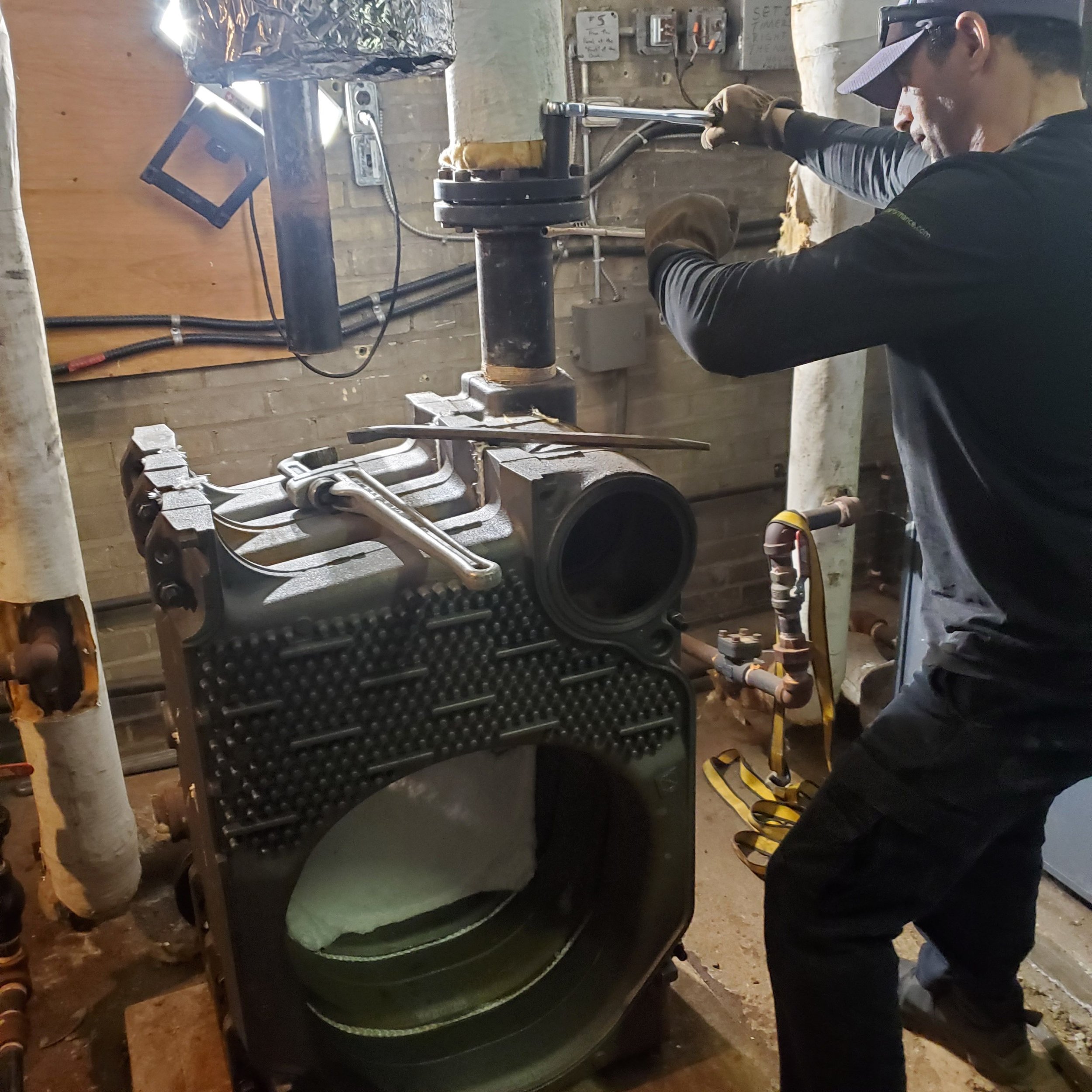
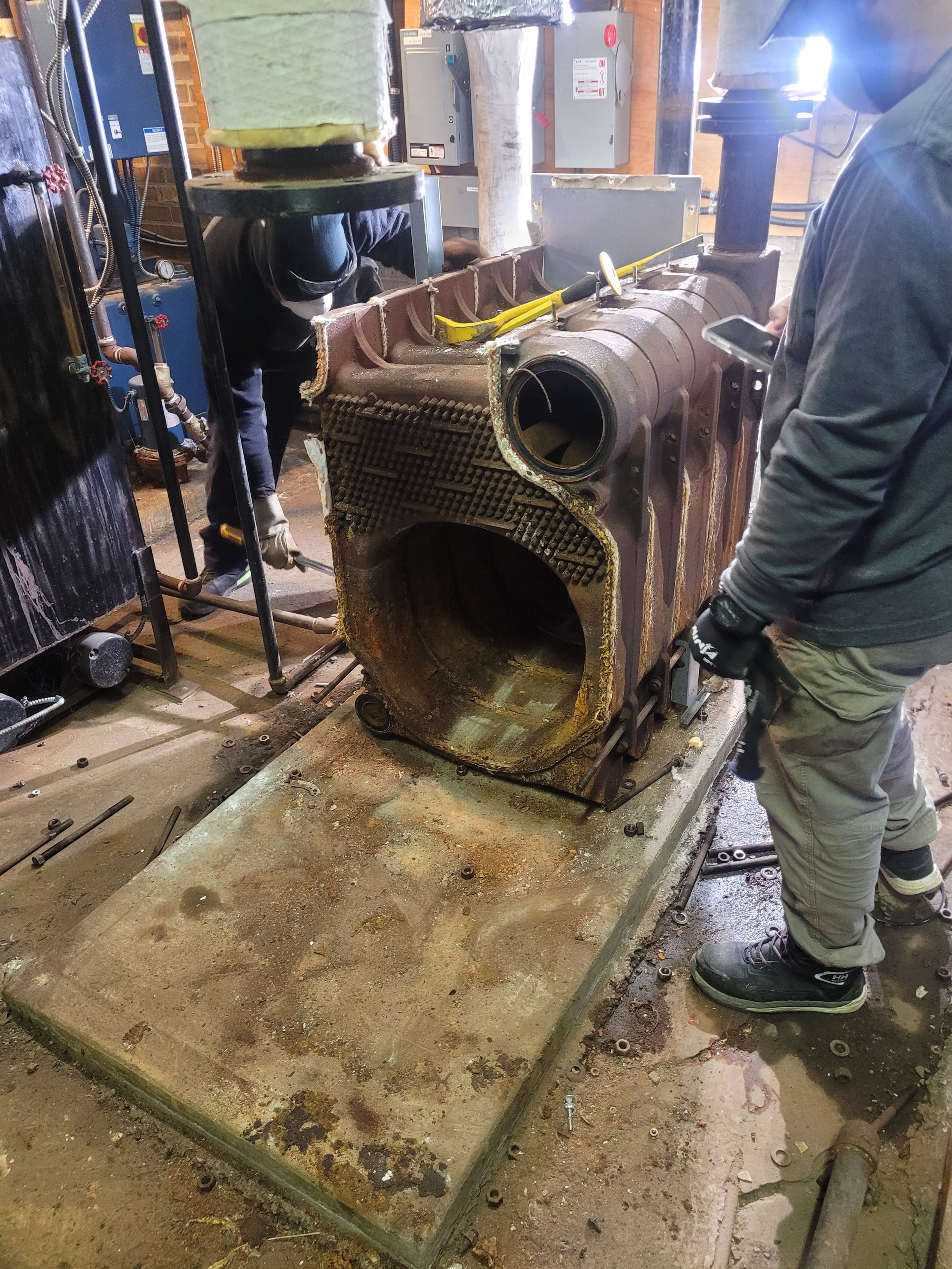
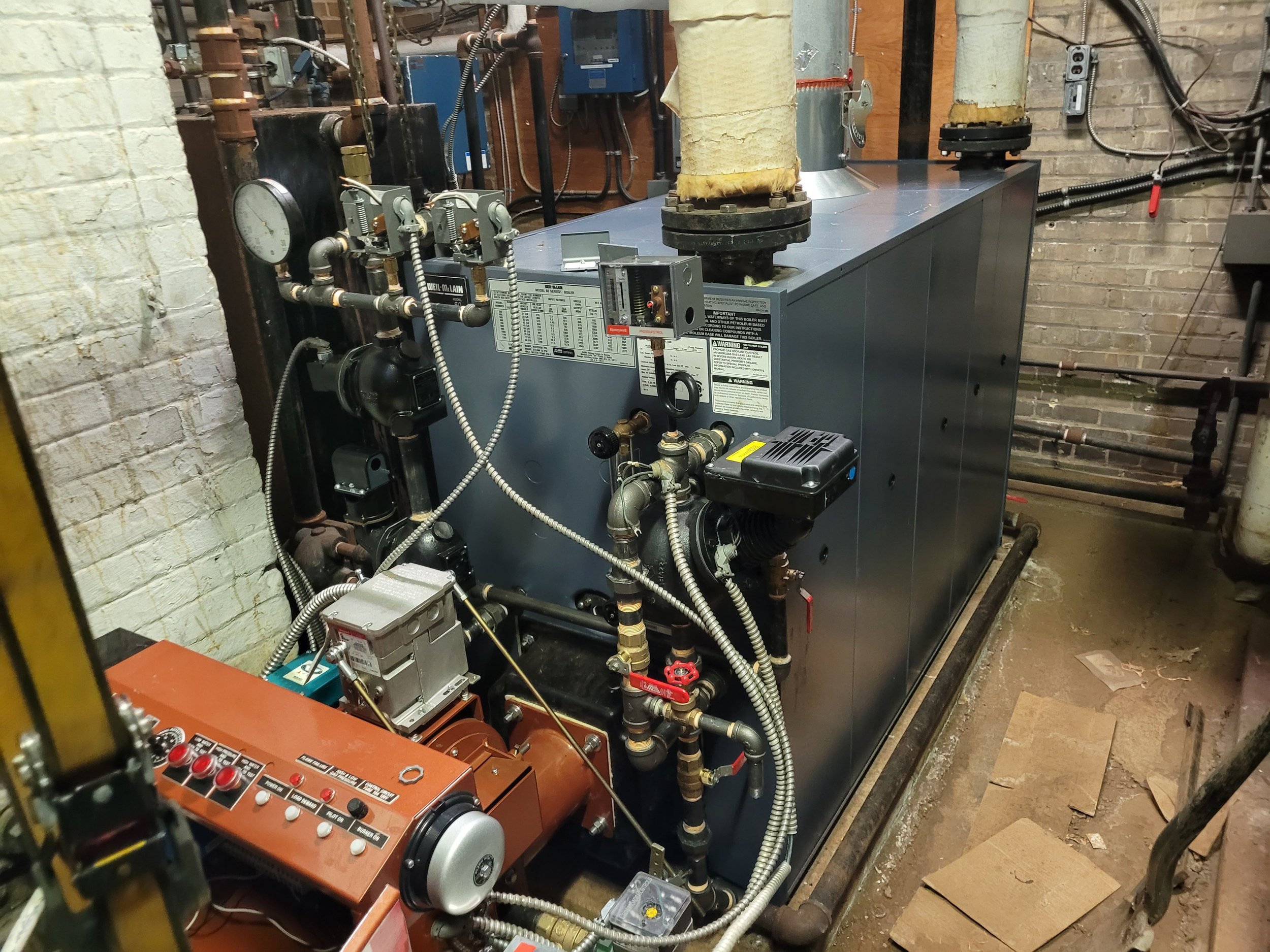
“Our newly installed boiler should be much more reliable and efficient — it will produce more steady heat, make less noise, and reduce costs on our Enbridge bills.” explains Martha Charney “These positive effects will not only impact our congregations and staff, but also the other people who use our building, such as AA, and the Toronto Children’s Chorus, who rent space from Calvin.”
Both, Deer Park United and Calvin Presbyterian have future plans to continue enhancing the operational sustainability of their shared space. The next steps include the installation of LED lights in their office and meeting areas, an upgrade to the HVAC system in the windowless and poorly ventilated lower hall, and potential insulation and replacement of windows in areas of around the building.
Are you part of an ecumenical ministry with a United Church of Canada community of faith? You might be eligible to apply for Faithful Footprints funding to support energy conservation and decarbonization building retrofits projects.
Faithful Footprints Program
The United Church of Canada’s Faithful Footprints program offers inspiration, tools, and grants to help its faith communities reduce their carbon footprint. With the Church’s commitment to reducing its greenhouse gasses (GHG) emissions by 80% by 2030, this one-of-a-kind program offers up to $30,000 in grants towards energy conservation and renewable energy projects (conditions apply).
Faith & the Common Good is the delivery partner for the Faithful Footprints program. To date, we have engaged over 400 congregations, camps, and buildings across the country. Your participation in the program puts your faith into action and helps the Church reach its target.
Aleyxa Gates Julien is the PR/Communications Coordinator for Faithful Footprints and can be reached at agatesjulien@faithcommongood.org.

Ready for More: Runnymede United Retrofits for Greater Energy Savings
With more than a decade of experience working on energy conservation projects, Runnymede United Church retrofits for greater energy savings, replacing ceiling fans and installing heat pumps.
Deciding the scale and size of your building renovation projects can be complicated. Even with a handful of experiences with minor fixes and small repairs around your building, larger renovation projects can extend beyond the comfort zone of your community of faith.
With minor energy conservation projects, communities of faith focus on low-hanging fruit. These types of building modifications are low-cost, easy to implement, and offer good value for the money and effort invested. Examples include sealing with caulking or spray foam and upgrading lighting. Though these projects can improve energy conservation, larger-scale projects have the ability to provide a greater return on investment and result in greater energy-saving and carbon-reduction outcomes.
By building up confidence, knowledge, and project management skills – many communities of faith start off small and gradually make their way to larger-scale energy-efficiency and decarbonization building renovation projects.
Building up the Momentum
For Runnymede United Church, in Toronto, Ontario, building greening efforts date back over a decade. Since completing a Green Audit by Faith & the Common Good, in 2011, Runnymede United has engaged in a variety of energy conservation projects.
In 2012, they replaced old T12 4-foot fluorescent bulbs with more efficient T8 bulbs and ballasts, and later with LED T8 bulbs throughout the church. They also replaced outside flood lights with LED flood lights and halogen PAR 38 flood light bulbs and incandescent bulbs with LEDs in their sanctuary.
In 2016, they replaced their atmospheric-fired gas domestic hot water heater with an insulated, power-vented, high-efficiency, gas hot water heater.
From 2016 to 2017, they replaced three simple mechanical thermostats with three programmable Ecobee thermostats. The new thermostats conducted temperature setbacks at night and when the rooms were not in use.
And in 2017, they installed diverters on the wall outlets of their gym heating system, improving air circulation throughout the space – improving comfort, and reducing the accumulation of hot air at the ceiling level. Later that year, the church also added two inches of foam insulation to the gym roof.
Ready for More
Runnymede United was well-equipped. They have an active Property Committee that has engaged in various small-scale energy conservation projects for many years and support from their congregation – including PropCom, a group of property volunteers that meet weekly to work on repair, maintenance, and improvement projects. The church was ready to see greater energy saving.
The church started off with a list of four potential projects and realized they couldn't do all of them. After discussing the potential projects with contractors, experts, their PropCom group, and the finance and property committee, they narrowed their scope to two projects likely to have the most significant impact. These two projects were projected to have the greatest cost-benefit ratio – in terms of cost per dollar saved in operational cost, and per tonne of GHG reduced.
Ceiling Fans
The first project replaced four ineffective and noisy ceiling fans in the sanctuary with four 8-foot modern energy-efficiency fans. The new fans will contribute to reduced energy loss in the church’s large 40-foot high ceiling and 7,000 sq ft space, throughout the entire year. In the colder months, the fans will enable the church to reduce the accumulation of warm air on the ceiling level, significantly reducing heat loss from the uninsulated ceiling. In the warmer months, the fans will improve air circulation at the floor level, improving congregational comfort, with only a small fraction of the energy usage that would otherwise be required for air conditioning.
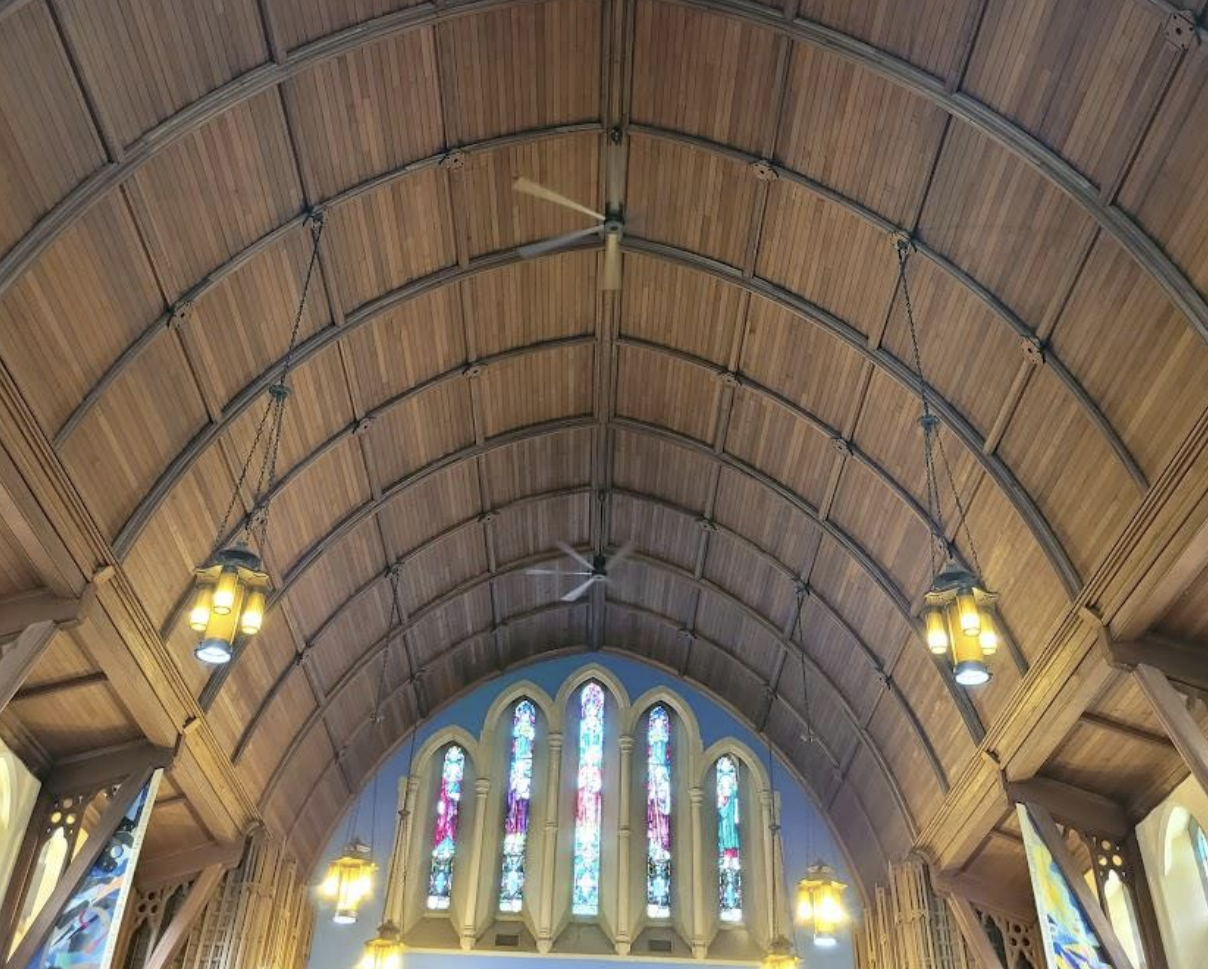
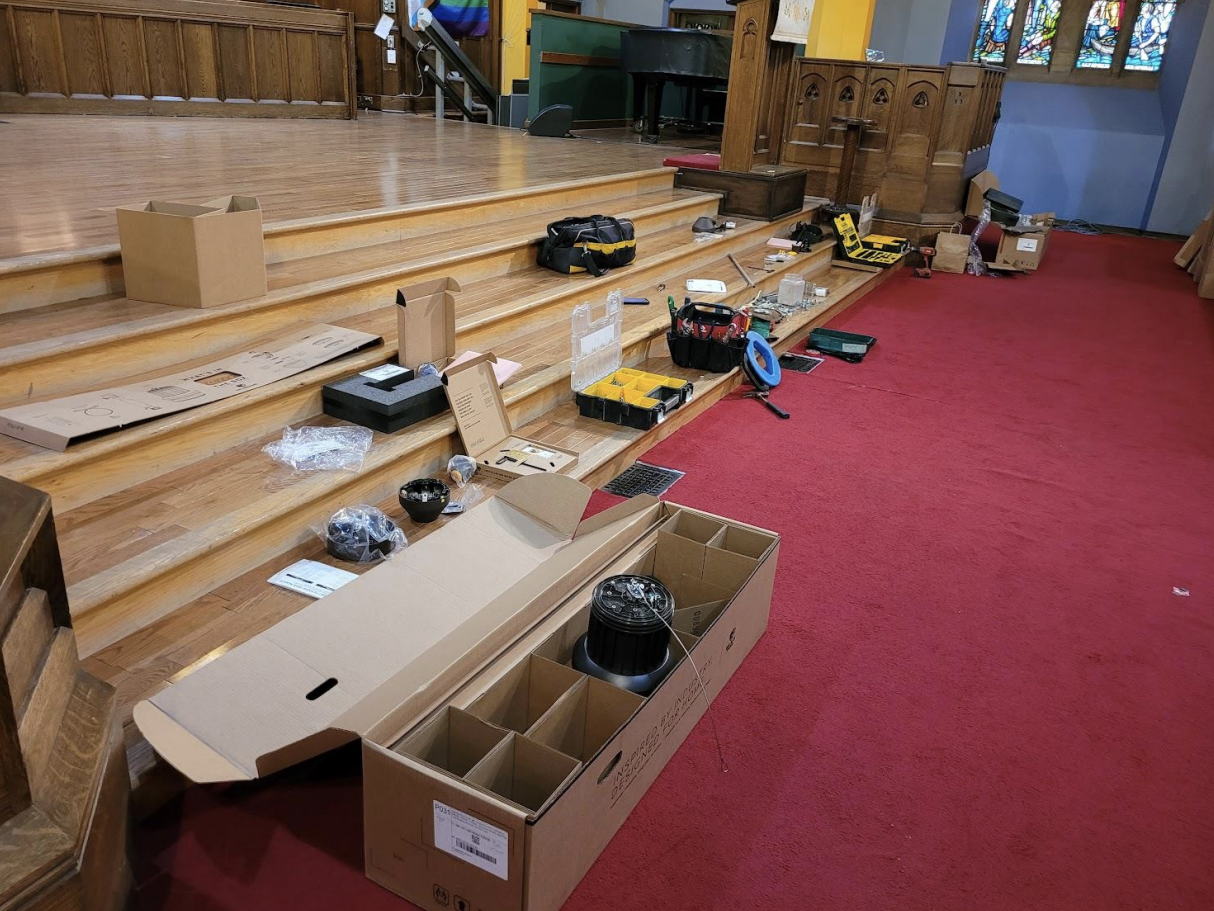
Heat pumps
The second project replaced the church’s gas-fired steam heating system with heat pumps in the Memorial Hall in their sanctuary. The church installed two 36,000 BTU Mitsubishi split units.
“Compared to our previous gas-fired steam heating system, we hope the efficiency of the heat pumps will reduce our overall energy consumption and our GHG emissions,” states Don Dewees, Chair of Finance and Property Committees at Runnymede United Church.
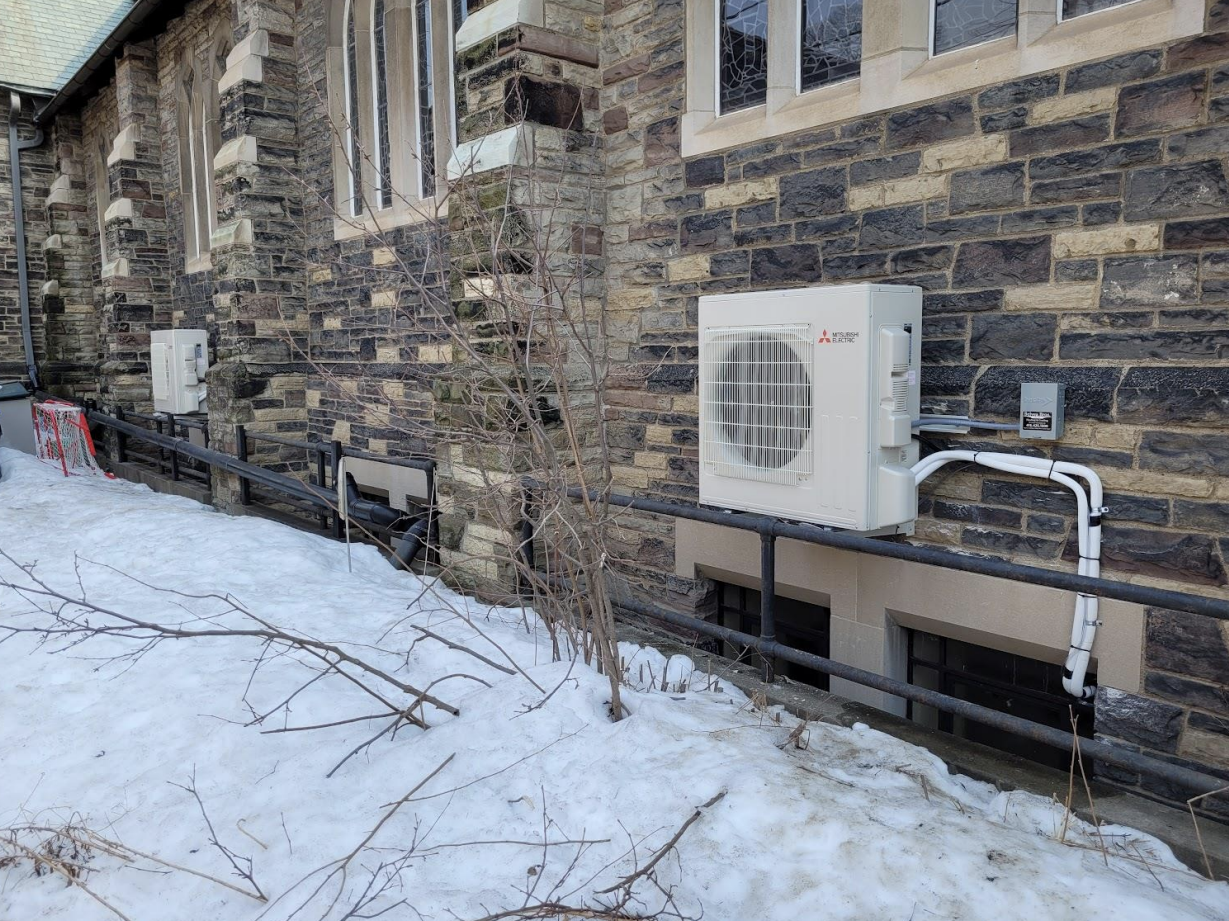
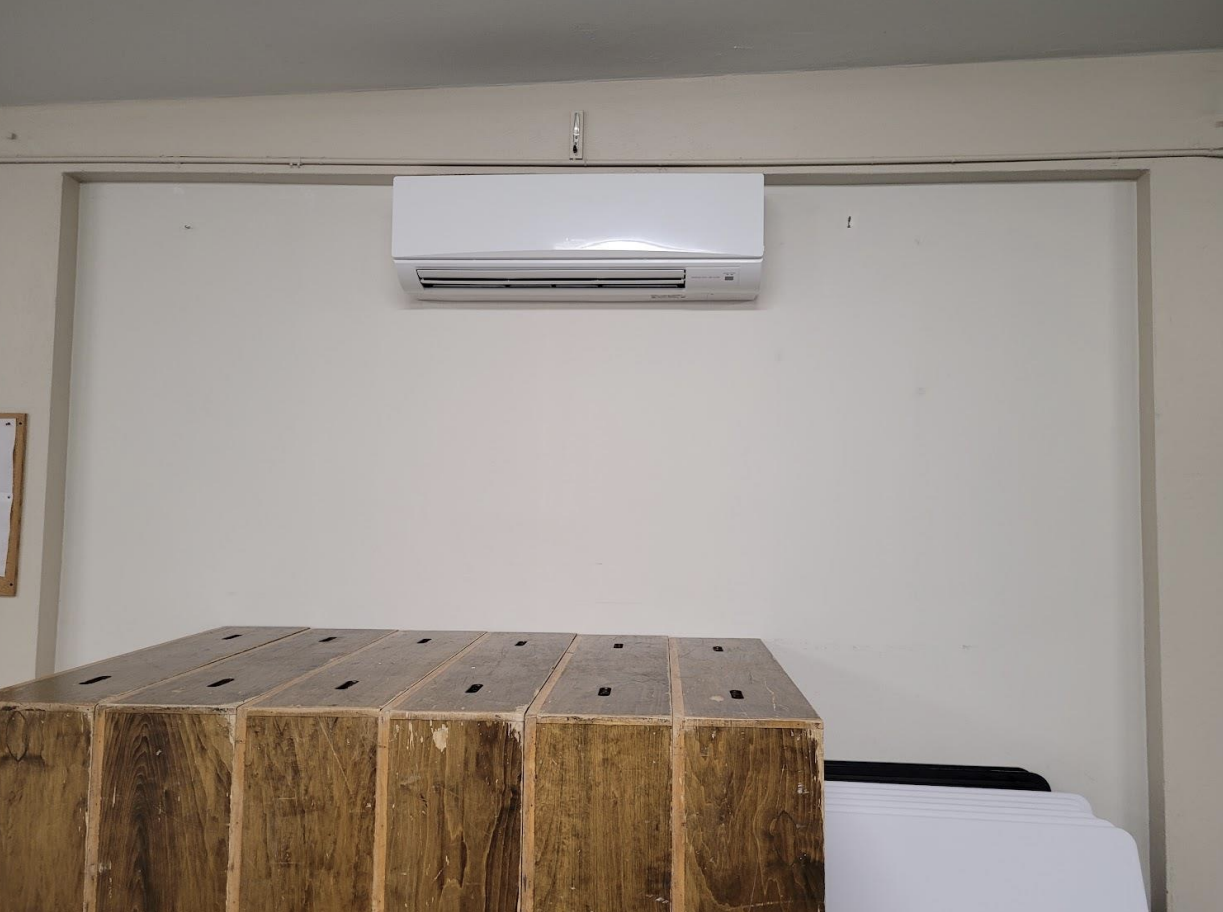
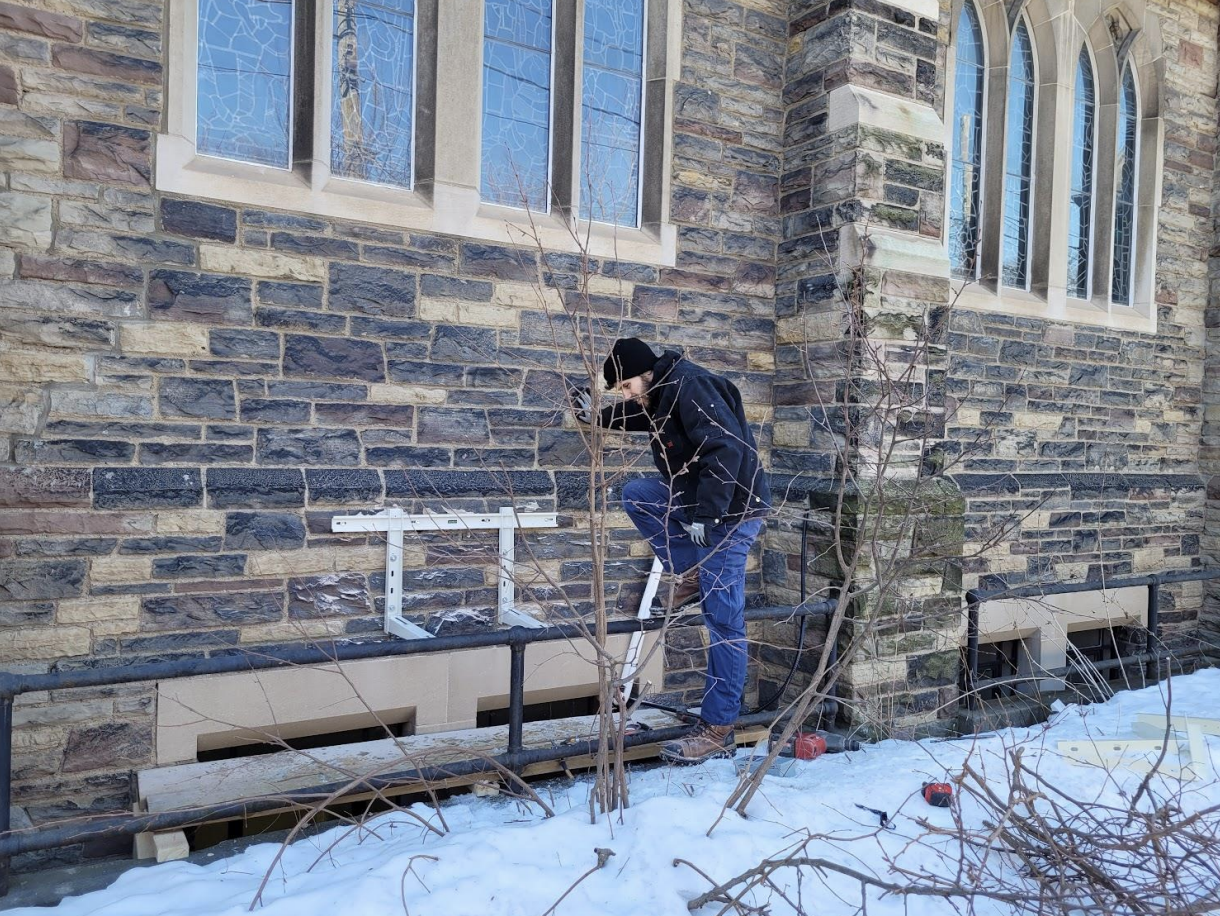
In addition to providing heat in the winter and cooling in the summer, as well as decarbonizing part of the church’s building operations, the newly installed heat pumps also improved the building’s heating and cooling control.
The previous system that was servicing the Memorial Hall was on the same steam valve as other parts of the building. Through the project, Runnymede United decoupled temperature control in the Hall from the radiators – allowing the church to control heating and cooling ventilation in different parts of the building separately and more precisely.
“We have one boiler that heats all of our space: the sanctuary, Memorial Hall, gym, offices, Sunday School rooms, meeting rooms – everything. Now that the heat pumps are installed, the radiators in Memorial Hall are turned off. The only heat in that room will come from the heat pumps. This will displace whatever steam heat that room has been using.” shares Dewees.
One project at a time
Runnymede United is an example of a community faith that has continued to green their building, one project at a time.
Dewees advises “If your planned projects are not time-constrained or dependent on one another, it's helpful to spread them apart and not do them at the same time”.
“Take a hard look at your building, do some research, and try to identify practical projects to take on and when you can afford to do them. Look for past experiences from communities of faith. Faithful Footprints is a great source to start.” shares Dewees. “Our practical experience from our previous projects helped us understand the magnitude of energy savings that potential projects might have. Our earlier interest and experience in energy conservation were really helpful in providing a good database. We have records of our hydro and gas meters going back 20-25 years. The reports provide a solid base for comparison. We can look at our consumption before the projects and afterward. Because we know more about our previous year's energy consumption, it’s easier to assess the magnitude of the savings that we should expect”.
“The heat pump project is a test force – we have air conditioning with heat pumps and several other heat pumps in other areas in the building. This is the first time we have installed them with the expressed goal of displacing gas in the winter. This coming winter we will find out if the heat pumps provide sufficient heat during the colder months. If the Memorial Hall heat pumps perform well, we will consider additional heat pump installations and further reductions in our greenhouse gas emissions.” adds Dewees.
Are you interested in taking your greening to the next level?
The more you can learn about your building, the more you can save energy, minimize maintenance costs, and maximize the usage of your building. Build up your confidence, knowledge, and project management skills to support your energy conservation and decarbonization retrofit projects. Book a Green Audit and explore the following Faith & the Common Good downloadable resources to learn what more you can do.
Energy Star® Action Workbook for Congregations
Faithful Footprints Program
The United Church of Canada’s Faithful Footprints program offers inspiration, tools, and grants to help its faith communities reduce their carbon footprint. With the Church’s commitment to reducing its greenhouse gasses (GHG) emissions by 80% by 2030, this one-of-a-kind program offers up to $30,000 in grants towards energy conservation and renewable energy projects (conditions apply).
Faith & the Common Good is the delivery partner for the Faithful Footprints program. To date, we have engaged over 400 congregations, camps, and buildings across the country. Your participation in the program puts your faith into action and helps the Church reach its target.
Aleyxa Gates Julien is the PR/Communications Coordinator for Faithful Footprints and can be reached at agatesjulien@faithcommongood.org.

Turn on the Lights Campaign: St. Paul’s United Fundraiser
Many renovation projects depend on outsourced grants and funding opportunities to complete, but raising the necessary funds can be challenging. However, St. Paul’s United Church in Oakville, Ontario, was confident that their congregants could rise to the challenge and come up with a significant sum of money for the lighting retrofit they were planning.

St. Paul’s United Let There Be Light -
Turn on the Lights Campaign Tracker
Many renovation projects depend on outsourced grants and funding opportunities to complete, but raising the necessary funds can be challenging. However, St. Paul’s United Church in Oakville, Ontario, was confident that their congregants could rise to the challenge and come up with a significant sum of money for the lighting retrofit they were planning.
The church wanted a suitable longer-term solution to reduce the total energy used. After completing a Green Audit through Faith & the Common Good, the project team at St. Paul’s United decided they would tackle a major light retrofit throughout their entire building. Since the building was in relatively good shape, they were advised that the quickest energy-saving opportunity was to switch to LED lights.
With the help of a Faithful Footprints grant, St. Paul’s United expanded its bulb replacement to include replacing 84 bulbs and fluorescent tubes in their gymnasium, 21 light fixtures in one of their halls, and 23 small dome lights in their sanctuary and narthex, which were mini fluorescent bulbs.
Sorting Out Costs and Raising Funds
The Faithful Footprints grant covers two-thirds of a project’s costs, up to a maximum of $20,000 for energy efficiency-focused projects and an additional $10,000 if you are decarbonizing. To qualify, participating communities of faith must have matching funds that equate to one-third of total project costs and any funds required above the maximum Faithful Footprints grant amount.
Since the project scope focused on the efficiency of energy usage, St. Paul’s United qualified to receive up to $20,000. With the total cost of St. Paul’s project estimated to be around $23,000, the Faithful Footprints grant covered approximately $15,000. After receiving conditional approval for the Faithful Footprints grant, St. Paul’s United had to come up with around $5,000 to undergo the planned lighting renovations.
In addition to the church’s building maintenance fund, St. Paul’s United launched a campaign to raise funds to cover the rest of the costs for their lighting upgrade. The Turn on the Light Campaign laid out exactly where the money was going and the timeline of the retrofit.
The project team shared their plans with the congregation members, explaining how they would start with the balcony lights and slowly move towards the lights in the sanctuary.
Getting support for a cause can be that much easier when people understand the direct impact their donations will make. Harold Devenne, team lead, points to several reasons why their approach proved successful.
“Because we don’t have a lot of extra cash, the best way to raise funds is to give our congregation a specific project to fund. I find that if there’s a project, show them pictures of it, tell them what it is, tell them what it costs, and let them find a way in. As long as they can see and understand it, the money comes in fairly quickly.”
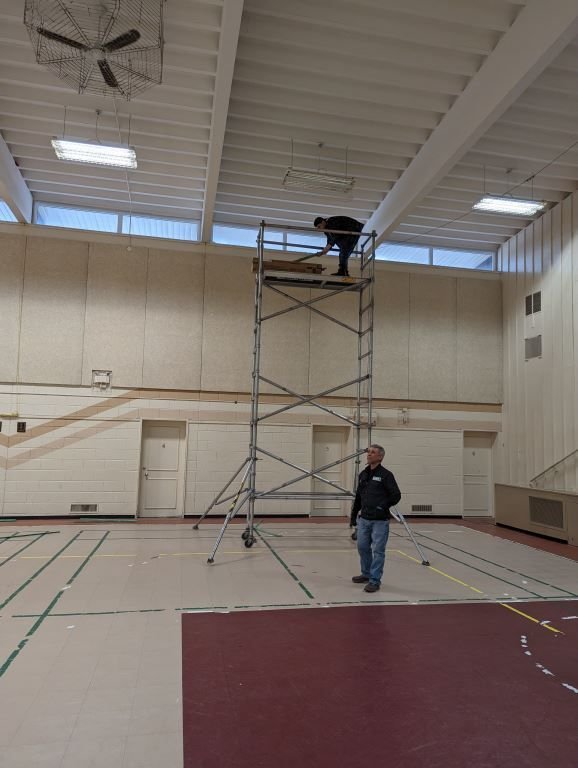
Replacing lights in the gymnasium at St. Paul’s United
While encouraging congregants to donate with an envelope titled “‘Let There Be Light,” the project team provided the opportunity for congregants to support particular areas of the lighting retrofit by categorizing the renovation into three levels of lights:
Pendant light - $272/per light
Dome light - $36/per light
Hall bulb - $57/per light
“It's a way to make them feel like they can contribute to any level, and understand what they are spending the money for,” Devenne says.
Within just four weeks, St. Paul’s United had enough funds raised from the congregation to cover their share of the total project costs.
“I was pretty confident that they were going to come up with the amount for the lights. I was surprised when we exceeded our goal and had enough to use for other building upgrades,” Devenne reflects.
Turning on the Lights
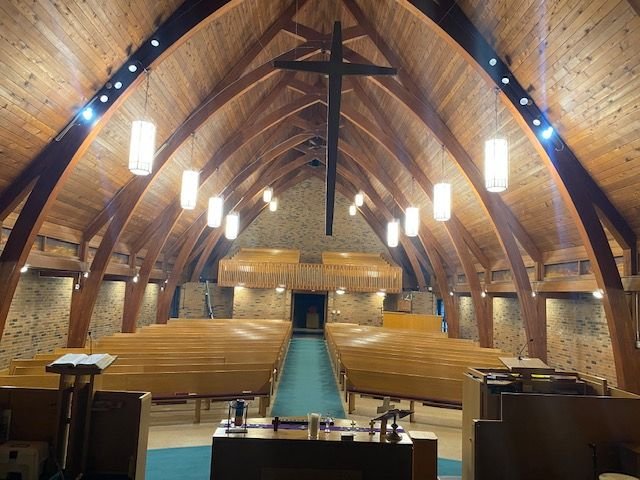
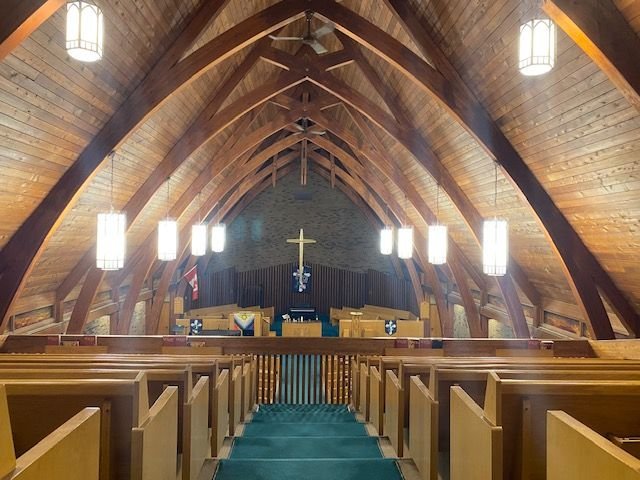
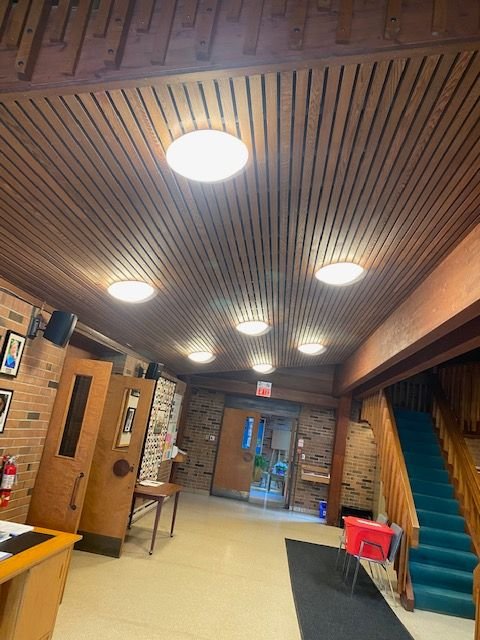
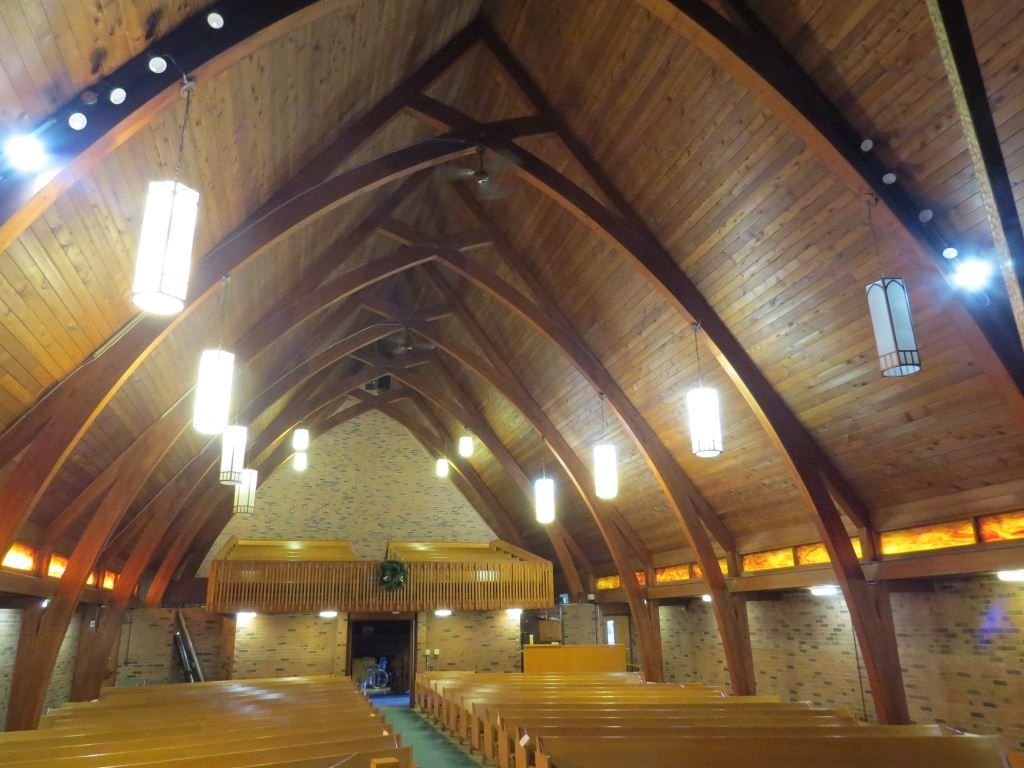
Since completing the renovations, St. Paul’s United has already seen a drastic difference in the quality of lighting.
“The LED bulbs add a little sparkle to the ceiling as well as more light than before while not being harsh,” Harold reports. “The new dome lights down the aisles and in the narthex produce more light than the old ones and look much better.”
With the recent upgrade, St. Paul's United looks forward to lowering its electricity bills. The church says they will continue seeking opportunities to reduce their energy consumption wherever possible.
Stay in the loop about St. Paul's Retrofit Project
Stay updated about St. Paul’s reductions in emissions, electricity usage, fossil fuel use, energy costs, and energy use intensity. Sign up for the Faithful Footprints Monthly Newsletter.
Faithful Footprints Program
The United Church of Canada’s Faithful Footprints program offers inspiration, tools, and grants to help its faith communities reduce their carbon footprint. With the Church’s commitment to reducing its greenhouse gasses (GHG) emissions by 80% by 2030, this one of a kind program offers up to $30,000 in grants towards energy conservation and renewable energy projects (conditions apply).
Faith & the Common Good is the delivery partner for the Faithful Footprints program. To date, we have engaged over 300 congregations, camps, and buildings across the country. Your participation in the program puts your faith into action and helps the Church reach its target.
Aleyxa Gates Julien is the PR/Communications Coordinator for Faithful Footprints and can be reached at agatesjulien@faithcommongood.org.

Camp Fircom: The Off-Grid Effect
A mere 20 minutes from mainland Vancouver, Camp Fircom is a far cry from hectic city life. Located across the Howe Sound on Gambier Island, and accessible only by water taxi, the remote United Church camp has offered a “place of rest and healing” for 100 years.
A mere 20 minutes from mainland Vancouver, Camp Fircom is a far cry from hectic city life. Located across the Howe Sound on Gambier Island, and accessible only by water taxi, the remote United Church camp has offered a “place of rest and healing” for 100 years.
Ron Injates, who currently sits on the camp’s board of directors and property committee, sets the scene:
“It's such a unique location and experience being on the island. The kids who come here, they get on a boat and that's exciting from the second they leave the dock. We're not too far from town, but sort of in the middle of nowhere and totally off the grid at the same time.”

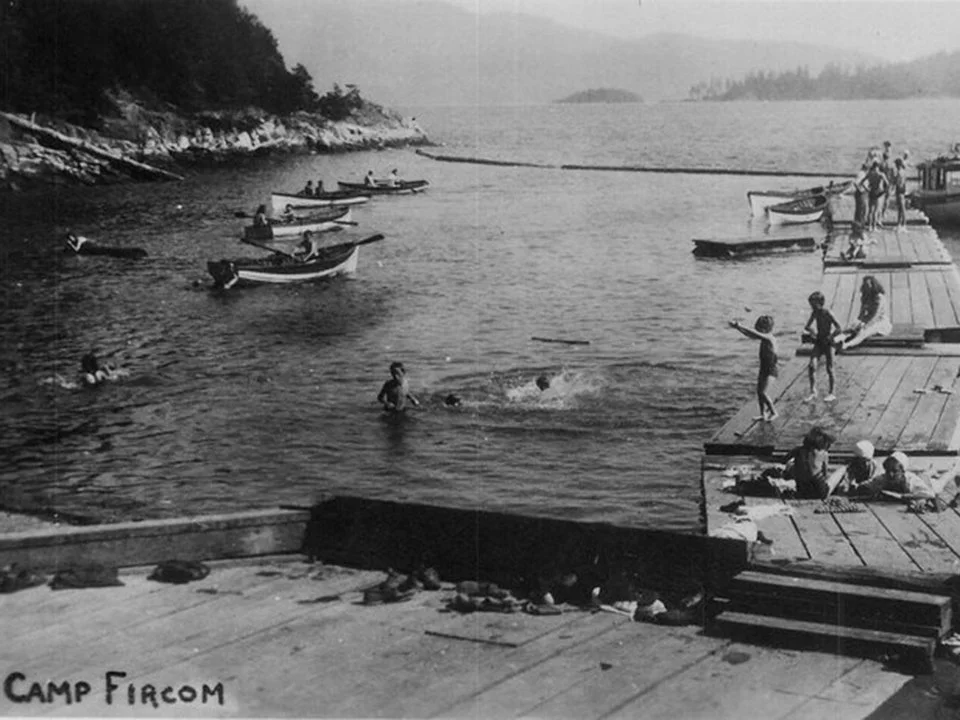
Since 1923, the site has supplied its own clean drinking water, sanitation, heat and energy. As Ron says, “Everything that a municipality would provide for you is basically what we have to provide for you.”
Unsurprisingly, “it's super expensive and super complicated,” because not only are they on the hook for all those services, but the fact that water is the only way to the camp brings a whole new level of complexity.
“That's what I tell kids who are here. Everything you see here came on a boat at one point, every little screw, every nut, every window,” Ron says.
And over the last century, little by little, barge trip by barge trip, Camp Fircom has been working to curate a site that celebrates and lives in harmony with the natural world.
In 2005, the camp closed to undergo major renovations that encompassed burying utilities, putting in a new sewage treatment plant, renovating old accommodations, and building new cabins and halls. The “rudimentary” power and energy provisions also got an upgrade, so when the doors reopened in 2011, the camp was offering 24-hour electricity for the first time. The commitment to the off-grid experience, however, meant that heat and electricity was still coming from propane and diesel generators.
Recognizing the unsustainability of their latest energy solutions, camp problem-solvers like Ron looked to the natural abundance of the sun and water to find alternative onsite power sources. Most recently, in November 2022, the camp installed a unique 16kW solar system on the roof of their south-facing, felicitously unobstructed archery shelter.
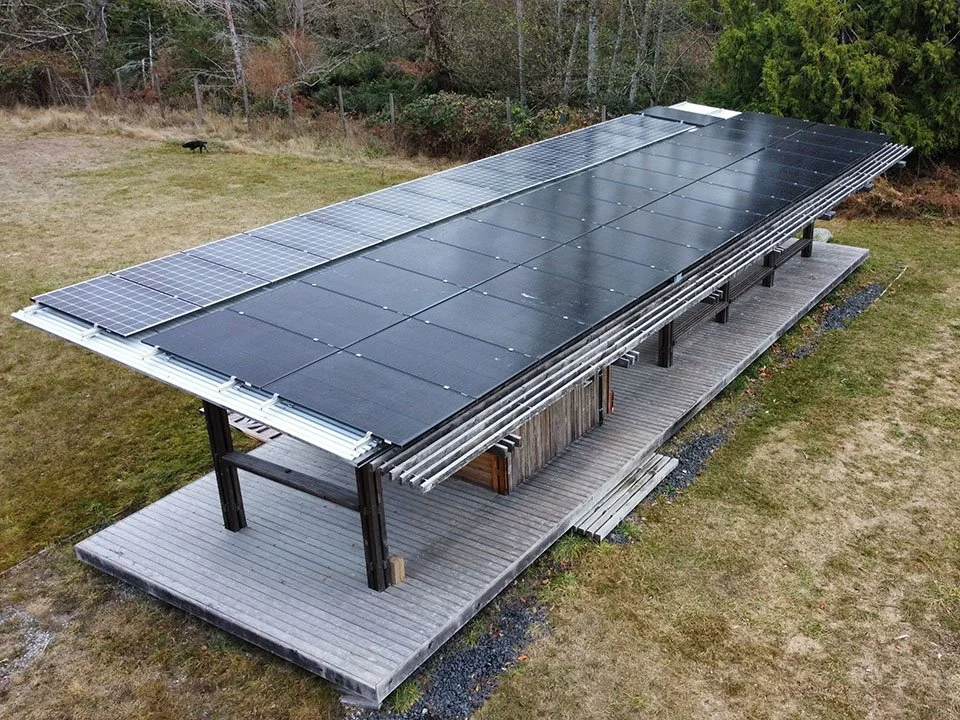

The project was a long time coming, as the process kicked off back in 2018, but the solar installation finally materialized courtesy of countless volunteer hours, barge trip donations, and grants from the United Church’s Faithful Footprints program and Vancity’s Envirofund. The original plan for the funding was to “harness the power of Fircom Creek,” which flows through the camp, via micro-hydro generation. But thick, vexing layers of bureaucratic red tape and the advent of COVID-19 pumped the brakes on the project, compelling the team to course correct and turn their focus to solar.
Reflecting on the lengthy, at times arduous journey and sweet victory of finally having the solar panels up, Ron says, laughing, “Sometimes I just go there and look at them.”
His heart is still set on getting a micro-hydro project up and running someday soon though, especially since, “It's the perfect complement to the solar we have here.”
“The creek is running all the time, so that would add up at night. It would run all winter and then, in the summertime, the creek dries up, actually, so then the solar would take over.”
Sharing the camp’s goal of being 90% renewably powered by 2030, Ron says, “In my perfect Camp-Fircom dream world, there'd be solar panels on all kinds of buildings around here and we'd have more power than we need — and no diesel bills!”


At Camp Fircom, responsible energy consumption and sustainability are central principles, palpable through the thoughtful design of their energy systems and conservation education, zero-waste compost and recycling practices, and organic farm (with chickens and everything!) supplying their kitchen 30 metres away.
“When you're talking to kids about conservation, or having a lighter footprint, or something like that, I think it's pretty difficult to do when you're in the city,” Ron says. “But when people come here, it’s obvious that you have an impact on things.”
“Even with something as mundane as the convenient flush of a toilet, I can walk them up and show them where the water comes from, where the water goes, what a well pump has to do to fill the toilet again, that kind of thing,” he continues, “So I think that has more of an impact than just droning on and only explaining things to kids, or adults really. It’s immediately apparent when you come here that everything you do has a consequence.”
And whether you’re a camper or staff member, volunteer or off-season visitor, all are invited to contemplate questions like,“How lightly can we tread upon the earth? How does the earth respond when we care for it and cultivate it thoughtfully?”

All photos courtesy of Camp Fircom.
Faithful Footprints Program
The United Church of Canada (UCCan) Faithful Footprints program offers inspiration, tools, and grants to help its faith communities reduce their carbon footprint. With the Church’s commitment to reducing its greenhouse gas (GHG) emissions by 80% by 2030, this one-of-a-kind program offers up to $30,000 in grants towards energy conservation and renewable energy projects (conditions apply).
Faith & the Common Good is the delivery partner for the UCCans Faithful Footprints program. To date, we have engaged over 300 congregations, camps, and buildings across the country. Your participation in the program puts your faith into action and helps the Church reach its target.
Cari Kilmartin is the Western Regional Coordinator for Faithful Footprints and can be reached by phone 780-216-1867 or email cari@newo.energy

Finding Funding: Middlewood United works to remain of service to its community
Across regions, many faith communities are unable to meet annual fees and maintenance costs and are struggling to keep up with the operational needs of their buildings. As a solution, a number of United Church properties are retrofitting their buildings with the goal of reducing their energy bills. They are creating rental opportunities by renovating old and unused spaces within their buildings.
Across regions, many faith communities are unable to meet annual fees and maintenance costs and are struggling to keep up with the operational needs of their buildings. As a solution, a number of United Church properties are retrofitting their buildings with the goal of reducing their energy bills. They are creating rental opportunities by renovating old and unused spaces within their buildings.
But all this involves upfront costs; community donations and ministry savings are not always enough to single-handedly pay for building renovations. Accessing funding is one of the key determinants as to whether faith communities have the ability to carry out their projects or not; often it’s the sole reason why properties don’t end up following through with their retrofit plans. Grants, rebates, and other financial incentives can help support congregations to complete these otherwise non-attainable renovations.
Seeking Funding: Middlewood United’s Retrofit Project
“It is our hope that by doing this project, we can reduce costs and lessen the financial burden on our members.”
- Philip Pulsifer, Treasurer of Middlewood United Church
As a small rural congregation trying to maintain its long-standing place within the community, Middlewood United Church, located in Middlewood, Nova Scotia, was one of the many faith communities in need of financial support to complete a building renovation and alleviate the economic burden on congregational members.
The church first began thinking about retrofitting its building in December 2019, when Rev. Vivan Moories, their minister at the time, brought the Faithful Footprints program to the attention of the congregation. Members at Middlewood United work very hard to offer fellowship and fundraise each year to help keep the ministry afloat and donate to the church’s building fund. Upon hearing about the 2-1 funding option the program offered, enthusiasm began to build among the church members, with particular support from the Trustee Chair.
An energy audit was done and the Trustee Chair gathered quotes from several contractors for insulating the congregation’s schoolhouse, replacing windows, installing a heat pump, and upgrading the electrical system.
Unfortunately, when the project proposal was shared with the congregation for approval, it was denied; the building’s roof (in need of replacing) was the priority concern, and funding for the overall costs of the potential projects was still to be obtained. Discouraged, the retrofit plans came to a halt.
Property Treasurer, Philip Pulsifer, refused to give up on the retrofit project, knowing that it would lead to long-lasting environmental and economical benefits for the church. He began brainstorming potential solutions that would bring his congregation aboard, investigating and seeking out financial support for the proposed projects and scraped up funds to replace the roof. A significant donation was made by a congregational member towards the roof, and funding for the retrofit project was secured from Lunenburg Municipal District in Lunenburg County, The United Church of Canada Innovation Fund, and Hunter United Church Building Fund, as matching funds in support of a Faithful Footprints grant.
With Philip’s determination, Middlewood United was able to redo their roof as well as proceed with the retrofit plan to insulate the schoolhouse and replace windows.


Searching For Funding: We’re Here to Help
Finding available grants, incentives, rebates, and programs is a time-consuming task, as Middlewood United Church can attest, but we are here to help! The Faithful Footprints program aims to make it easier for your faith community to learn more about potential regional opportunities to assist with your retrofit project. Our Regional Support Pages are categorized by Western Canada, Prairies Canada, and Atlantic Canada. Explore your region and discover eligible provincial and municipal incentive programs, and find matching funds to support your Faithful Footprints application.
Connect with Faithful Footprints Regional Support Centre Coordinators to determine which government incentives might be applicable to your project, and for assistance selecting suitable energy auditors, energy professionals, and contractor recommendations for your retrofit.
Faithful Footprints Program
The United Church of Canada (UCCan) Faithful Footprints program offers inspiration, tools, and grants to help its faith communities reduce their carbon footprint. With the Church’s commitment to reducing its greenhouse gas (GHG) emissions by 80% by 2030, this one-of-a-kind program offers up to $30,000 in grants towards energy conservation and renewable energy projects (conditions apply).
Faith & the Common Good is the delivery partner for the UCCans Faithful Footprints program. To date, we have engaged over 300 congregations, camps, and buildings across the country. Your participation in the program puts your faith into action and helps the Church reach its target.
Aleyxa Gates Julien is the PR/Communications Coordinator for Faithful Footprints and can be reached at agatesjulien@faithcommongood.org

Inspired by Respect for Creation: Old Barns United has gone Net Zero with Zero Dollars
Like many churches across Canada, regular attendance is not what it used to be. In rural communities especially, an aging population and a global pandemic have also kept people away. Old Barns United in Lower Truro, Nova Scotia is no exception, averaging about thirty people every Sunday, according to Bob Francis, a member of the Board of Stewards and Trustees.
Like many churches across Canada, regular attendance is not what it used to be. In rural communities especially, an aging population and a global pandemic have also kept people away. Old Barns United in Lower Truro, Nova Scotia is no exception, averaging about thirty people every Sunday, according to Bob Francis, a member of the Board of Stewards and Trustees.
An affirming church with a progressive congregation, Old Barns is over a hundred years old, and while the congregation has grown smaller, it is still a strong, active and engaged community.
Before the pandemic, the church was a place not only of worship, but also of deep conversation. People were affected not only by the goings on in the local community, but also by what they witnessed via the news. “There were a lot of stories on environment,” says Francis, who led a recent initiative to green the old church building. “The stories were about the gravity of the crisis of climate change, with an occasionalgood news story of people doing something about it.”

Woodlawn United Church (Dartmouth, NS) solar panels
One such good-news story came their way in the form of Phillip Kennedy, a new minister previously serving at Woodlawn United in Dartmouth. Woodlawn United had installed solar panels to reduce its greenhouse gas emissions and save money. Kennedy’s experience got people talking about doing the same at Old Barns.
“But COVID put the screws to all that,” Francis says. “At least, temporarily.”
Back into action in 2022
At the start of 2022, the board took up the conversation again, and Bob was willing to do the legwork and take action. He was an Atlantic regional manager before he retired and had no particular technical expertise, but he knew how to get things done.
The working group put together a wish list that included solar panels, heat pumps, changing the fluorescent light tubing to LED, and updating their older electric baseboard heaters, which took a long time to heat up and wasted quite a bit of energy in the process.
“It ended up being a major project,” Francis says.
He learned about the Faithful Footprints program and filled out an application. It was approved within two days. He found matching funding to cover the heat pumps and solar from Efficiency Nova Scotia’s Business Savings and Rebates program, which includes faith institutions. He also found an electrician willing to install the heaters on his own time, after hours.

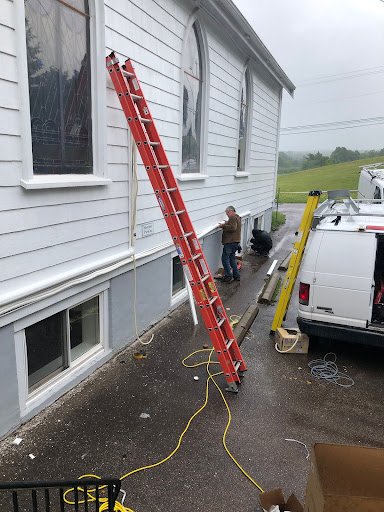

Since the project started in April, 2022, “We’re already seeing reduction in energy use,” Francis says. “In fact, we’ve produced 1,100kWh since October 20th. That’s pretty darn good considering the weather we’ve had. Today we produced 1.4 kWh of power, and we haven’t even seen the sun yet.”
Come the summer, Old Barns United won’t have any power bills at all. Already, they’ve turned their furnace off.


Follow the Money
It may come as a surprise to know that Francis says the easiest part of the project was finding the money. With a grant from the Hunter Fund, for United Churches in Nova Scotia, Old Barns United will have covered 100 % of the costs—that's about $61,000 total. “It won’t cost us a penny.”
It’s also remarkable that all this was accomplished in only a few months. The church board developed a plan, which was approved unanimously by the congregation in May. “It’s not hard to get unanimous approval when it’s not going to cost you anything,” Francis says.
The feedback has been unanimously positive too. “At a recent event everyone talked about how they never felt more comfortable in the building, ” Francis says. “We haven’t really broadly promoted it yet—we plan to do so when it gets warmer, but for now we’re letting other churches know about it.”. The congregation invites everyone to come visit.
It’s an impressive conversion in such a short time, one that significantly reduces Old Barns’ greenhouse gas emissions, saves them money, and creates a more comfortable space for the community. And to top it all off, the church is living the message in its Creed: “Living with Respect in Creation.”
Faithful Footprints Program
The United Church of Canada (UCCan) Faithful Footprints program offers inspiration, tools, and grants to help its faith-communities reduce their carbon footprint. With the Church’s commitment to reducing its greenhouse gases (GHG) emissions by 80% by 2030, this one of a kind program offers up to $30,000 in grants towards energy conservation and renewable energy projects (conditions apply).
Faith & the Common Good is the delivery partner for UCCans Faithful Footprints program. To date, we have engaged over 300 congregations, camps, and buildings across the country. Your participation in the program puts your faith into action and helps the Church reach its target.
Chris Benjamin is the Atlantic Regional Support Coordinator for the Faithful Footprints program and can be reached at chris.benjamin@ecologyaction.ca.