
Finding the right heating system for Arden United
Upgrading a faith building to a low-carbon heating system is more than just swapping out old equipment. It requires careful planning, informed decision-making, and a willingness to learn how new technology fits a building’s unique layout and patterns of use. In 2023, Arden United Church in Arden, Ontario, began this process by exploring options that balanced upfront costs, heating performance, and the everyday realities of their building. What started as a replacement project became an opportunity to reduce carbon emissions, lower energy costs, and build confidence in operating a modern, sustainable heating system.
Over the past 15–20 years, Arden United had undertaken numerous energy conservation and greening projects, using church members hands-on experience in building renovation, construction, and energy efficiency. For this more technical project, the church was fortunate to have Bill Wong, a volunteer on the Stewards Committee, bring over 25 years of professional experience designing and implementing renewable and low-carbon energy systems in Canada, including heat pumps. Bill became the project lead for the heating system upgrade, overseeing contractors, coordinating the installation, and managing the commissioning of the new system.
Finding a heating system that works best
With strong support by the entire congregation, Bill and the Stewards Committee spent early 2024 carefully evaluating different heat pump configurations. The church weighed performance against cost, recognizing that every choice came with trade-offs. A cold-climate heat pump capable of operating down to –30°C offered the greatest coverage but required a significantly higher upfront investment. A standard system operating to –20°C, supported by electric resistance heating during the rare coldest days, became a more practical and cost-effective option, one that would still meet comfort needs while keeping the project affordable.
As part of this decision-making process, the church also took a closer look at how the building is actually used. The social room frequently hosts meetings and community events when the sanctuary itself does not need heating. Rather than warming the entire building unnecessarily, Arden United decided to include a smaller, wall-mounted heat pump dedicated to the social room. This zoned approach allowed the church to heat only the spaces in use, improving efficiency and making the system better suited to daily activities.
After careful system sizing and cost analysis, Arden United finalized a configuration that reflected their building’s needs: a 5-ton central air source heat pump to replace the aging oil furnace, paired with a 3-ton ductless wall-mounted unit for the social and meeting room. Along the way, the church encountered some challenges, including sourcing the less common 5-ton unit, which required a brand switch to stay within budget, and early communication issues between the outdoor unit and controller. Despite these hurdles, installation was successfully completed in October 2024.
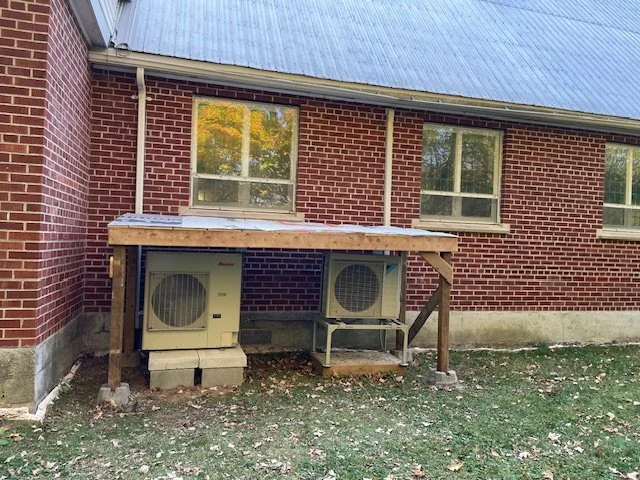
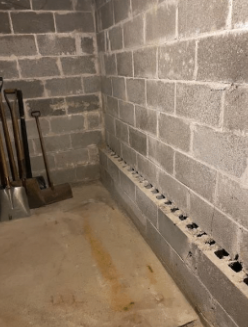
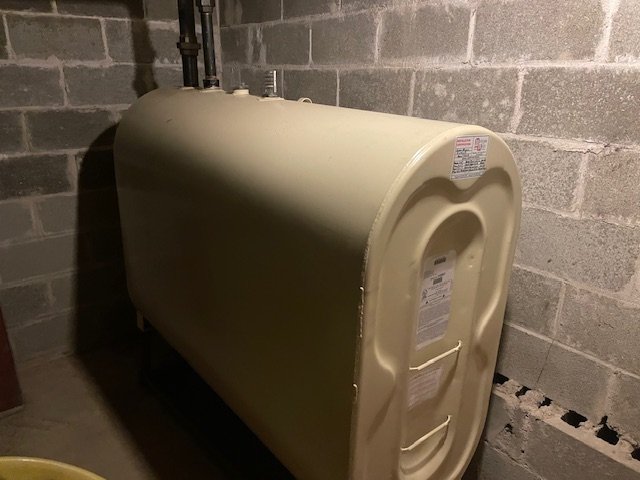
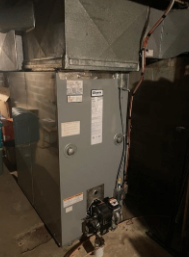
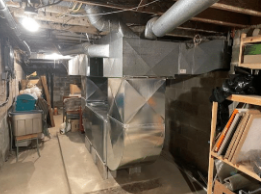
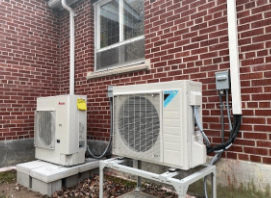
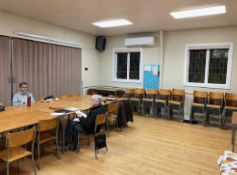
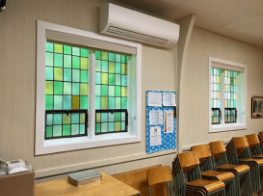
A year following their projects, Arden United was able to reduce its source energy use intensity by 6.1%, total GHG emissions by 88.1%, and energy costs by 7.1%.
Getting to know the new system
Once the system was in place, the learning continued. As the congregation settled into using the new heat pumps, members focused on understanding how to operate the system efficiently and make the most of its features. The Stewards Committee received training to manage both systems, monitor energy use, and experiment with scheduling and comfort setpoints. Comparing utility costs with previous years has become part of an ongoing effort to refine how the system is used and to share insights with the wider congregation.
The church also hosted educational seminars and tours for members and the wider Arden community. These gatherings highlighted both the benefits of heat pump technology and the practical lessons learned through the project. One year after completion, Arden United shared the system’s impact on emissions reduction and operating cost savings with the congregation and other stakeholders.
“While we can’t reverse the climate emergency by our action alone, nor fix the entire problem of global warming, we can at least do our bit to be better stewards of what we can control.” says Bill Wong, Chair of the Stewards Committee and project lead
Although Arden United is a relatively small church, the community sees this project as a journey rather than an endpoint. Looking ahead, they hope to continue their greening efforts through future projects such as replacing old appliances with Energy Star models, upgrading the hot water system to a tankless electric heater, renovating stained-glass windows, and eventually greening the manse, which is still heated by oil.
Faithful Footprints Program
The United Church of Canada’s Faithful Footprints program offers inspiration, tools, and grants to help its faith communities reduce their carbon footprint. With the Church’s commitment to reducing its greenhouse gasses (GHG) emissions by 80% by 2030, this one-of-a-kind program offers up to $30,000 in grants towards energy conservation and renewable energy projects (conditions apply).
Faith & the Common Good is the delivery partner for the Faithful Footprints program. To date, we have engaged over 500 congregations, camps, and buildings across the country. Your participation in the program puts your faith into action and helps the Church reach its target.