
BLOGS
Churches across the country are stepping up. Read their stories and access other climate and energy resources here.

Hope United Church upgrades from 1926 steam boiler to energy-efficient heat pumps
Hope United Church in Alvinston, ON took many steps to reduce energy use. However, aging infrastructure led them to finally replace their 1926 steam boiler with a new heat pump system.
Hope United Church located in Alvinston, Ontario has long been mindful of its energy use and heating costs. The congregation has taken intentional steps to reduce consumption including lowering the heat when the building is not in use, encouraging small groups to meet in members’ homes, and even having the minister and secretary work from home offices to avoid heating the entire building.
However, despite these thoughtful efforts, the aging infrastructure of the building made energy efficiency increasingly difficult. The steam boiler hadn’t had a major repair since 1985, and the original steam pipes, dating back to a 1926 addition were beginning to fail. New leaks occurred each year at great expense to repair. It became clear to the congregation that it was time to replace the outdated system.
Addressing a long standing issue
Recognizing the need to move away from its aging gas-powered boiler and steam heating system, Hope United began exploring more efficient and sustainable options. To assess the possibilities, they invited four heating contractors to provide quotes and recommendations for various replacement alternatives.
None of the contractors recommended a steam heat replacement. A key reason was the shortage of certified professionals in the area qualified to service steam heating. Instead, the church was presented with several alternative options, including a hot water piping system, a forced air furnace with new ductwork, and an electric heat pump system, each offering varying levels of efficiency, cost, and complexity.
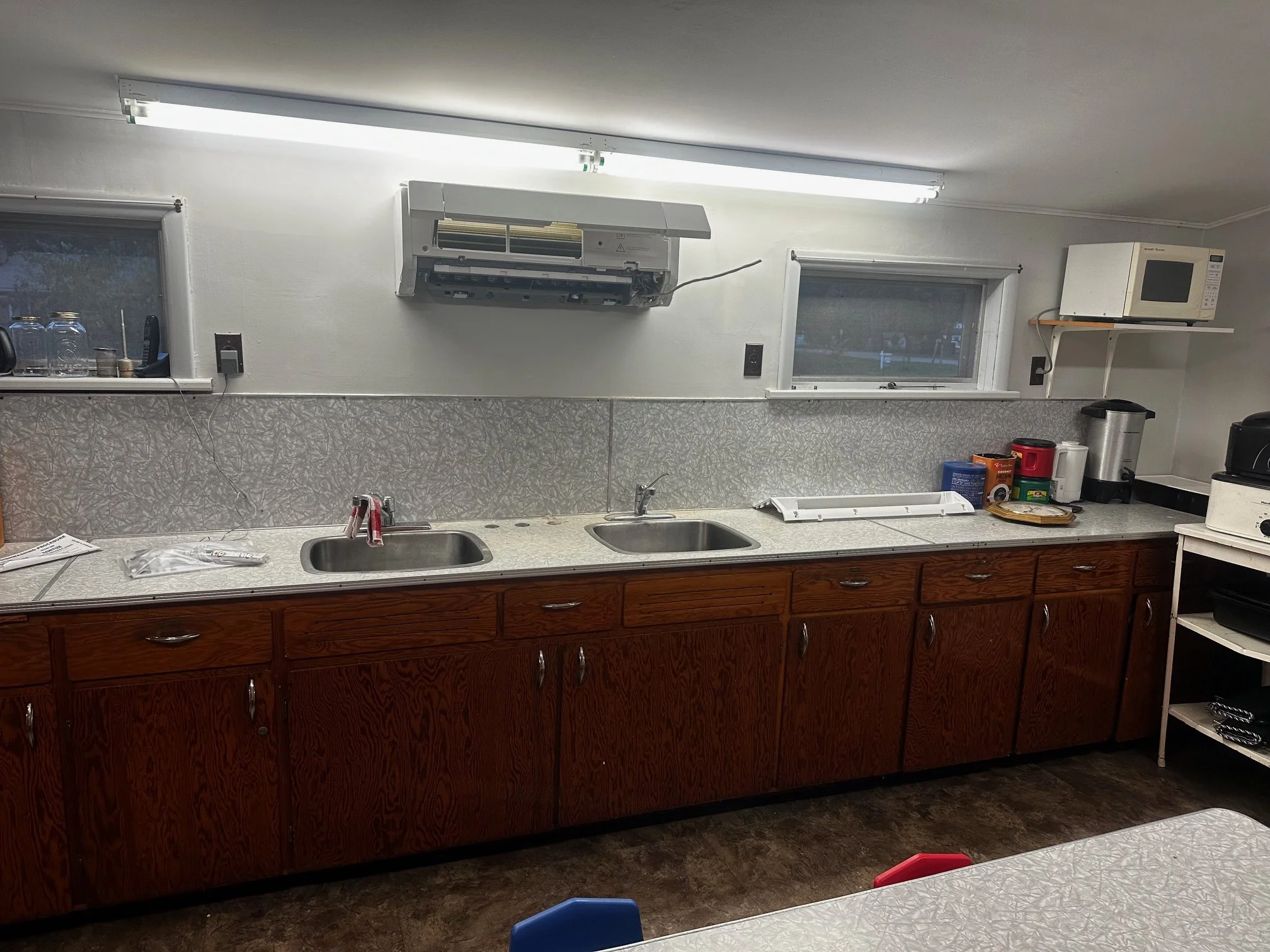
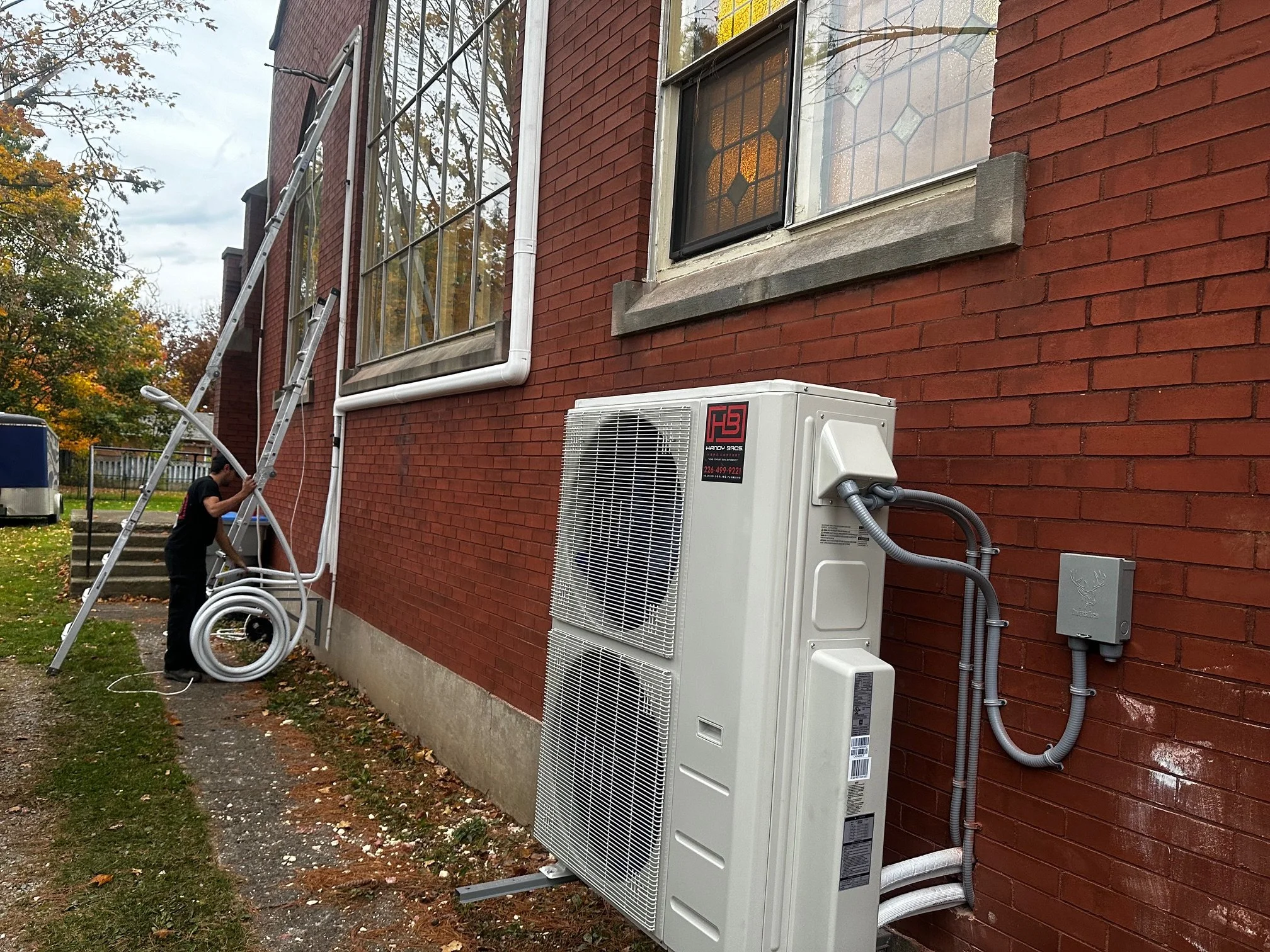
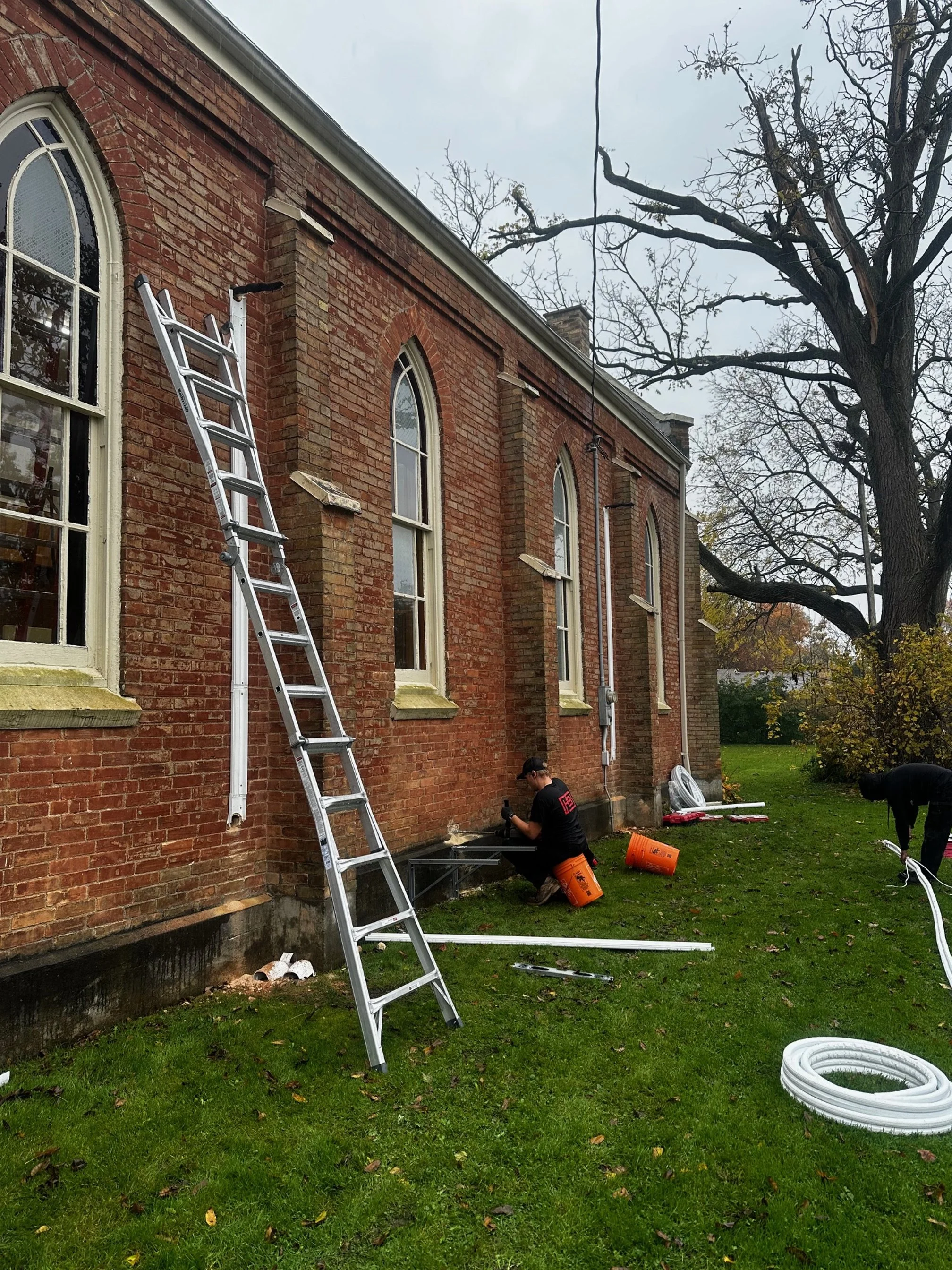
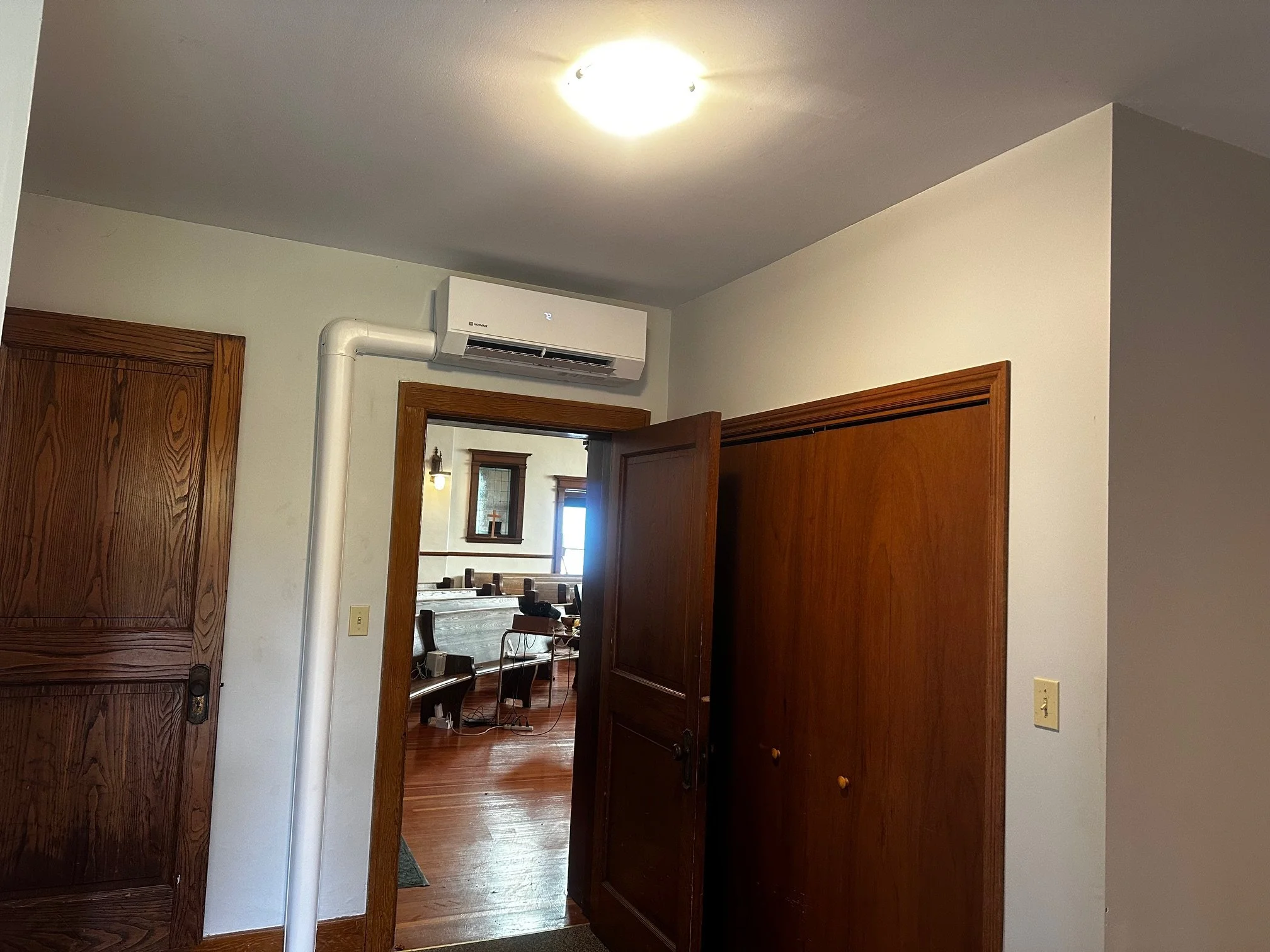
The church selected an electric heat pump system with five independent heating zones throughout the building, recognizing it as the most modern and energy-efficient replacement out of the suggestions.
“While the quotes for each option were somewhat competitive, we had decided that a heat pump solution would be the best choice so that we can move away from fossil fuels. With nine indoor heat pumps installed we would also be able to heat the church in zones and only heat the rooms that are being used by the congregation”





Funding the heating replacement
To fund the replacement of its outdated heating system, Hope United Church relied on both external grants and the generosity of its congregation. The church received a quote from Handy Bros Home Comfort to fully heat and air condition the building using an electric heat pump system at a total cost of $57,880.86.
Hope United received a $30,000 Faithful Footprints grant to support the project. To help cover the remaining project costs, the church has launched a special furnace fund donation appeal, mailing over 100 letters to members and adherents. Many in the Hope United community had come on board to support the much-needed heating upgrade following an announcement from the pulpit. A generous offer has also been made by a congregation member to provide a short-term loan to help manage any temporary cash flow as fundraising efforts continue.
“Although our congregation is small, we were confident that we would be able to raise the additional funds required to pay for the switch to green energy through a fund raising campaign within our congregation and the community”
Testimonial
“We are delighted to have worked with Faithful Footprints to replace our steam boiler system with a completely new heat pump system. After accumulating some memorial donations that were earmarked for building improvements, in January 2023, our congregation requested that the Official Board look for energy saving improvements to the church. Initially the focus was to look at increasing the insulation in the building. While looking for financial assistance, we came across the Faithful Footprints grant program and it changed our perspective. With a grant available through the United Church of Canada program, we were able to install heat pumps.”

Welcoming more: Trinity United enhances space for tenant and community use
More people in the building means higher expectations for comfort, rising energy demands, and growing costs, especially in older buildings. At Trinity United Church in Grimsby, Ontario, this reality came to a head and, in response, upgraded its building to ensure their space could remain both welcoming and sustainable.
As community needs shift, many churches are finding new life by opening their doors to a wider range of users, from partner congregations to local organizations and event groups. More people in the building mean higher expectations for comfort, rising energy demands, and growing costs, especially in older buildings. At Trinity United Church in Grimsby, Ontario, this reality came to a head in 2023. In response, the church upgraded its building to ensure its space could remain both welcoming and sustainable.
“Like many small-town churches these days, ours is an important community resource. We’re an old congregation in an old building, and we recognize the need to make that space both comfortable and useful,” states Ken Pettigrew, Board Member at Trinity United Church, Grimsby, Ontario
Over the years, Trinity United has made steady improvements to its facilities with a focus on sustainability and energy efficiency. Upgrades include energy-efficient lighting, windows, and doors, as well as regular caulking and sealing to prevent heat loss. Trees were planted on the property to provide natural shade and reduce cooling needs, and solar panels were installed on three roofs, which feed into the local grid and generate income for the church.
Meeting the needs of members, tenants, and the local community
In late 2023, two significant events occurred at Trinity United that brought attention back to the comfort and energy efficiency of its buildings.
Trinity United’s long-time neighbors and the founders of the congregation, St. John’s Presbyterian, sold their building and joined as tenants, coming full circle by worshipping once again in the space they had built in 1853. Their return raised concerns about the heating, and perhaps more importantly, the cooling of Memory Hall, the original 1889 structure, which would now serve both as their new worship space and as Trinity’s primary community hall.
At the same time, Trinity’s Board had been struggling with the already rising energy costs. Despite past upgrades, including energy-efficient windows and doors, maintaining comfort and controlling costs remained an ongoing challenge.
“Our experience of heating a virtually empty building during the COVID-19 years brought the matter to a head. An energy audit not only confirmed how much our costs were rising, but also revealed the full extent of our growing carbon footprint – Our heating issue had become not simply a financial burden but also and perhaps more importantly, an ecological and theological one.” shares Pettigrew

A solution for increased building usage
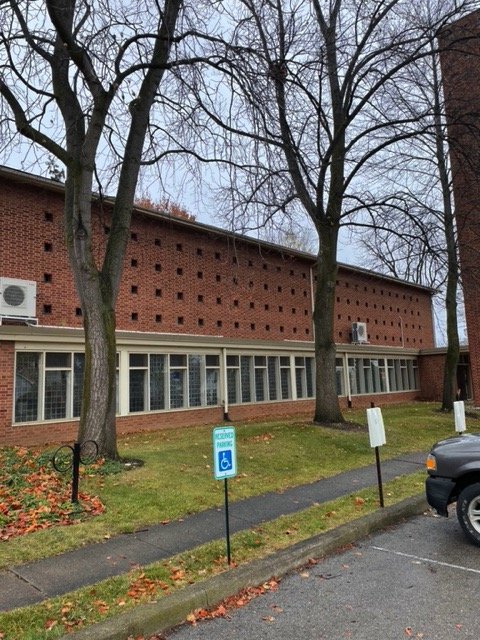
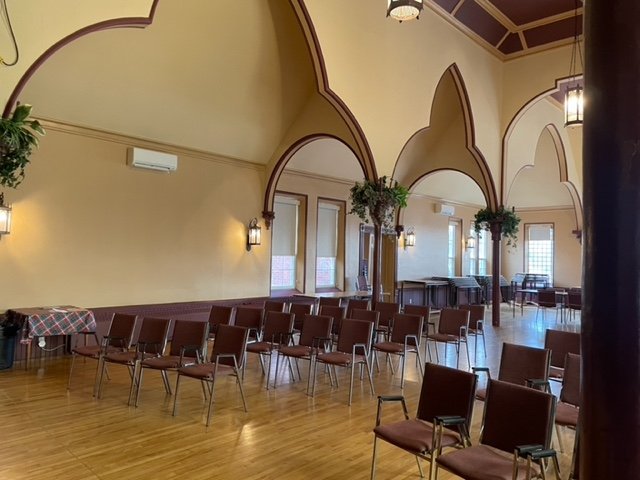
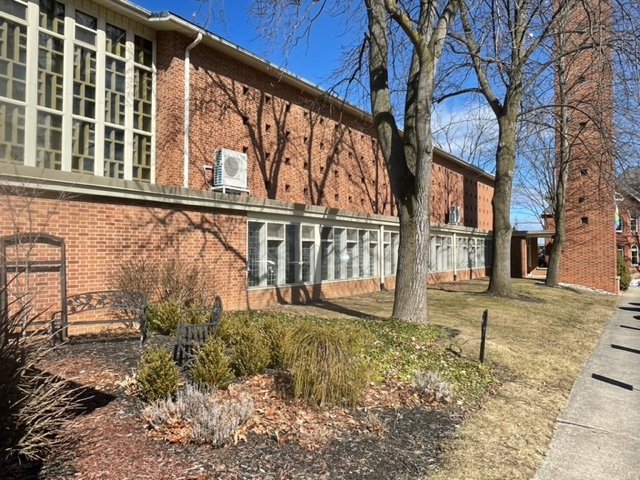
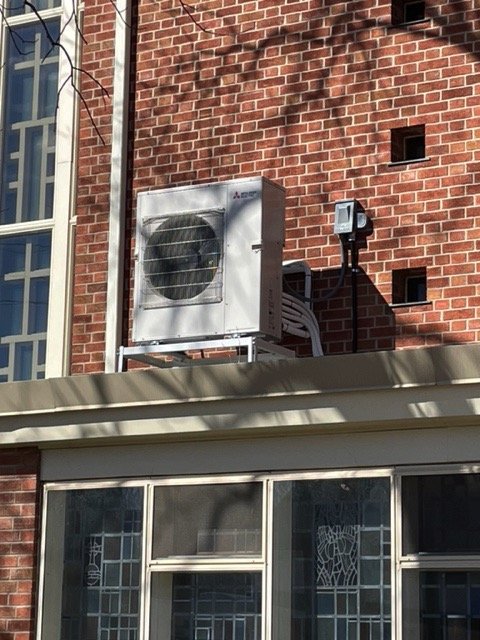
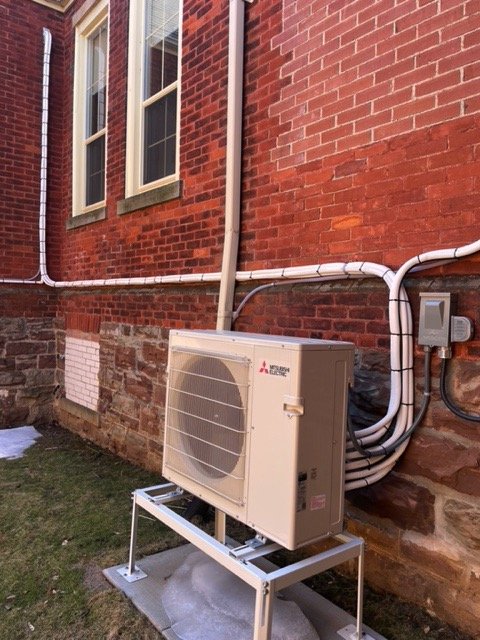
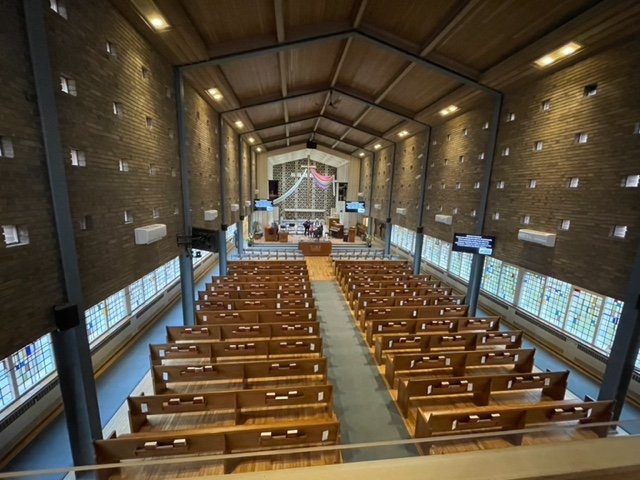
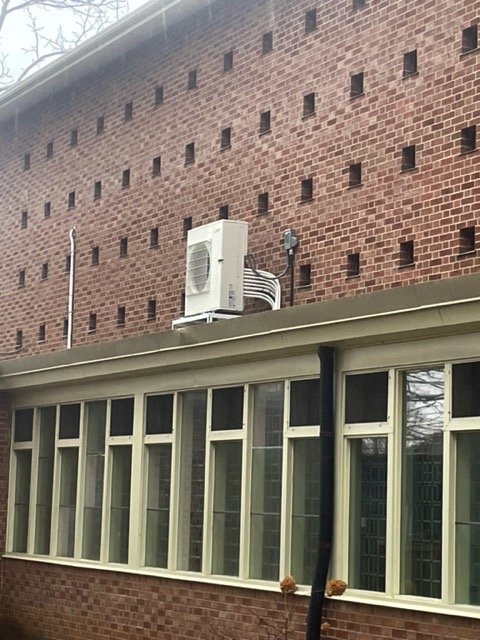
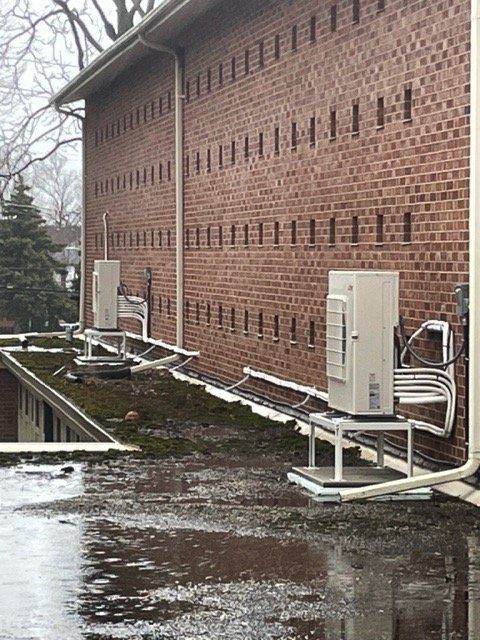
As Trinity United Church explored various options, heat pumps began to make sense—their heating and cooling capacity, combined with their efficiency and their potential to reduce reliance on natural gas, made them a great alternative. While not eliminating the need for natural gas, the heat pumps offered the opportunity to drastically reduce gas consumption in the church’s two largest spaces: its Memory Hall, the original sanctuary now serving as the main meeting place, and the newer 1958 sanctuary.
“We had several significant tenants who were asking for air conditioning, and we had always resisted due to cost and impact. Heat pumps offered us a way to reduce our carbon usage while improving the comfort of our facilities,” states Pettigrew
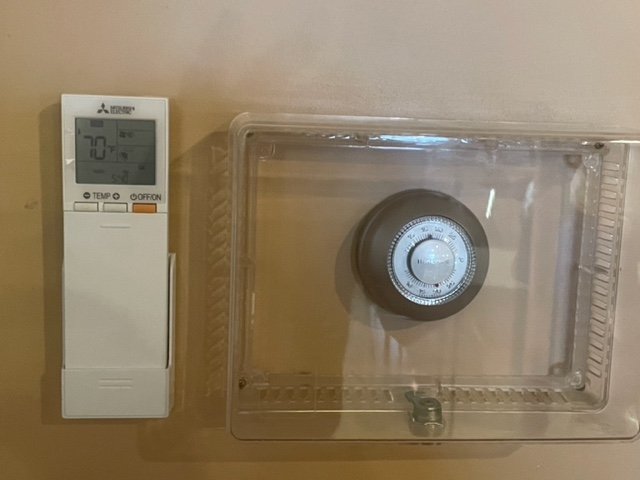
The project was made possible by a generous donation from the church’s new neighbors, St. John’s Presbyterian, who donated a significant sum toward the project. Combined with a major grant from the Faithful Footprints program, this support allowed the Trustees to cover the remaining costs and proceed with the installation of 16 mini-split heat pumps in the two key spaces.
“The impact was immediate—even with our natural gas boilers turned down to ‘barely on,’ the comfort levels in our rooms noticeably improved, and folks would actively comment on it. We fully expect that the installation of these heat pumps will not only enhance the usefulness of our facilities to the community but also serve as a model of energy efficiency and carbon reduction for the town. We are hoping that they will also increase the attractiveness of our facilities for community activities and potential rentals, which will in turn allow us to continue as a faith community and a community asset.” reflects Pettigrew
Faithful Footprints Program
The United Church of Canada’s Faithful Footprints program offers inspiration, tools, and grants to help its faith communities reduce their carbon footprint. With the Church’s commitment to reducing its greenhouse gasses (GHG) emissions by 80% by 2030, this one-of-a-kind program offers up to $30,000 in grants towards energy conservation and renewable energy projects (conditions apply).
Faith & the Common Good is the delivery partner for the Faithful Footprints program. To date, we have engaged over 500 congregations, camps, and buildings across the country. Your participation in the program puts your faith into action and helps the Church reach its target.

Staying on Course: Stamford Lane United Prioritizes Sustainability with Boiler Replacement Project
Stamford Lane United Church (Niagara Falls) has made it a priority to ensure its longevity and sustainability of its church, and are committed to maintaining its building for the future.
Stamford Lane United Church (Niagara Falls) understands the importance of sustainability within its walls, recognizing that its building is much more than just a physical space. As a central hub for worship, learning, fellowship, and community outreach, the church has made it a priority to ensure its longevity and sustainability.
Congregants at Stamford Lane United are committed to maintaining its building for the future. The church has built up a talented Property Committee with experienced leadership skills, as well as a Trustee Committee that oversees and guides their planning and asset management to ensure the long term health and sustainability of the church and community of faith.
Committed to creating a more eco-friendly and welcoming environment, the church has taken several steps to improve and maintain the integrity and condition of its building, focusing on operational cost-effectiveness and energy conservation. Efforts include upgrading to ENERGY STAR-rated windows, commercial freezer, and dishwasher, installing LED lighting, weatherproofing doors, and replacing the roof and stone masonry, among other improvements.
“The planned sustainability of our building is a continuing high priority for our faith community as the church is a center and a hub for our worship experience, learning and delivery, fellowship, mission and outreach and serving as a space for many and various groups and services in the City – It is of the utmost importance that we remain on course to ensure the building has a long term integrity as it serves so many purposes our congregation and community depends upon.” shares Alastair Davis, Chair Boiler Fundraising Committee, Stamford Lane United Church, Niagara Falls, ON
An impeding boiler
Requiring extensive maintenance each year, Stamford Lane United’s 32-year-old boiler had reached the point where it was impeding on the larger sustainability goals of the church. With a sound and functioning heating system otherwise, the aging boiler caused a significance drain on finances, and was a major contributor to the church’s carbon emissions. When staff at Stamford Lane United were informed that the boiler was nearing the end of its lifespan, the time had come for a more sustainable solution.
“Replacing our boiler would positively impact our community of faith, demonstrating that we are keeping our commitment, and provide security in knowing a major operational challenge has been met and resolved” stated Davis
To carry out the replacement, Stamford Land United created a Boiler Fundraising Committee which was responsible for raising supporting funds to replace the boiler. This committee discovered The United Church of Canada’s Faithful Footprints program and immediately prepared a grant application with the enthusiastic support of their council, trustees, committees and congregation.
“We announced the Boiler fundraising plan and the approved $20,000 grant from Faithful Footprints. Everyone was surprised and motivated to learn about the major grant. They responded quickly and generously as the funding goal was achieved.” reflects Davis

Stamford Lane United allocated all funds toward the project. The church was able to upgrade its boiler with a IBC 500,000 BTU high efficiency commercial condensing boiler and a potable water boiler; integrate existing controls to new boilers with zones, and set up 7-day programmable energy management systems to both its sanctuary and gymnasium.
A year after the replacement of their boiler, Stamford Lane United reduced its weather normalized source by 30%, total GHG emissions by 42%, total GHG emission intensity by 42.4%, electricity usage by 23.5%, natural gas usage by 42.8%, and energy costs by 6.5%.
The boiler replacement not only supported Stamford Land United’s operational sustainability but also secured its continued role as a hub for connection, support, and service for members and the surrounding community.
“The Faithful Footprints grant enabled us to rapidly replace an inefficient and expensive to operate boiler – We are secure knowing we will continue a space for worship and pastoral care gatherings, kids' events, humanitarian aid initiatives, bargain boutique, alcoholics anonymous meetings, UNIFOR events, transitions programs, mission and service projects, yoga sessions, adult and junior choirs, dance lessons, and many other community activities” shares Davis.
Faithful Footprints Program
The United Church of Canada’s Faithful Footprints program offers inspiration, tools, and grants to help its faith communities reduce their carbon footprint. With the Church’s commitment to reducing its greenhouse gasses (GHG) emissions by 80% by 2030, this one-of-a-kind program offers up to $30,000 in grants towards energy conservation and renewable energy projects (conditions apply).
Faith & the Common Good is the delivery partner for the Faithful Footprints program. To date, we have engaged over 500 congregations, camps, and buildings across the country. Your participation in the program puts your faith into action and helps the Church reach its target.

Five Oaks Centre Invests over 700K to Rejuvenate its Property and Buildings
Over the last decade, Five Oaks Centre (Paris, ON) has made significant upgrades to improve the energy efficiency and sustainability of its facilities. To further investment into its property, the Centre adopted a business model in 2016, introducing a commitment to develop a 5-year property rejuvenation plan.
Five Oaks Centre, located in Paris, Ontario, is a unique intercultural and interfaith centre offering a safe space for educational and spiritual programs and retreats. From one-off workshops to week-long residential experiences, Five Oaks provides a place where individuals and communities can explore their lives and the world in light of faith and values, discovering their calling to participate in Spirit’s healing work in creation.

Situated on 116 acres at the meeting point of the Grand River and Whitemans Creek, among old-growth Carolinian Forest, Five Oaks features 13 buildings that support its work, house guests, and provide spaces for programming, dining, accommodation, and recreation. In line with its core value of environmental stewardship, Five Oaks Centre has prioritized the care of both its land and buildings essential to its mission. This commitment has included ongoing investments to ensure the best possible facilities for its staff and guests, while also fostering sustainable practices that benefit both the community and the Earth.
“Our buildings are more than just structures; they are the foundation of our mission and the spaces where transformation and positive change occur. Each addition and renovation reflects our growth and our commitment to providing a nurturing environment for all who come to Five Oaks” says Kailey Stewart, Communications and Social Media Administrator , Five Oaks Centre “Whether it’s the tranquility of our Simply Be retreats with creative practices and nature connection, the transformative journey of our Seeking Transformation programs exploring biases and perspectives, the custom group retreats designed for team-building, or our engaging outdoor education and camp programs promoting biodiversity and inclusion, our facilities support every aspect of what we do.”

Caring for the Land through its Facilities
Over the last decade, Five Oaks has made significant upgrades to improve the energy efficiency and sustainability of its facilities. Nine windows have been upgraded, and all light fixtures and bulbs have been replaced with LED units. The Centre has also installed seven dusk-to-dawn lights in the parking lot and around its pool area, and old toilets have been replaced with low flush units. During the renovation of its Upper Room part of its main facility, insulation was added to both the walls and the ceiling – which previously had an R-value of 4, with the exterior walls lacking any insulation. In 2016, the furnace in its House on the Hill was also replaced.
“Our planned improvements would further reduce our environmental footprint but also reflect our dedication to creating a comfortable and welcoming environment for our guests. While these choices would be more expensive, requiring additional fundraising efforts, we firmly believe that investing in our property is the right path forward for the future of Centre.” shares Mary Palka, Donor Development, Grants and Gifts Coordinator,Five Oaks Retreat Centre.

Five Oaks Property 5-Year Rejuvenation Plan: Investing in Key Spaces on the Property
To further invest in its property, the Centre adopted a business model in 2016 that included developing a 5-year property rejuvenation plan. Incorporated into the Centre’s Strategic Plan, under the key objective ‘revilitize key spaces’, the rejuvenation plan laid out an extensive retrofit of the Five Oaks property buildings and surrounding areas, with special attention to ensuring environmentally responsible decisions.
Five Oaks started with its building’s Upper Room in 2018. In 2019, they renovated its New Hall, installed an elevator, refurbished its Model Suite, and replaced its Hermitage building roof. The A Wing of its main building were updated during 2019 and 2020, while its New Hall radiator covers and windows were updated in 2020. The carpets in its House on the Hill were replaced in 2021, and its washrooms in the Chalet and Lower Campus, as well as its kitchen were renovated the same year. The furnace in its House on the Hill was changed to an air-source heat pump system in 2022, followed by the conversion of its Peace House and Friendship House from an oil system to air-source heat pumps in 2023.
Faithful Footprints Helps Fund Rejuvenation Plan
To support the Centre’s rejuvenation efforts, The United Church of Canada’s Faithful Footprints program provided $30,000 to help fund the replacement of the 39 windows in several key buildings on the Five Oaks property, including its Peace House, House on the Hill, Friendship House, its main offices, bookstore, prayer room, art room and guest bedrooms.
“This project is a crucial element of our broader rejuvenation plan for our 71-year-old retreat centre. By upgrading our facilities with these new windows, we are not only enhancing the immediate environment but also ensuring that Five Oaks continues to be a vibrant and welcoming space for future generations. Our goal is to preserve and improve our centre so that it remains a place of inspiration, reflection, and community for many years to come.” says Stewart


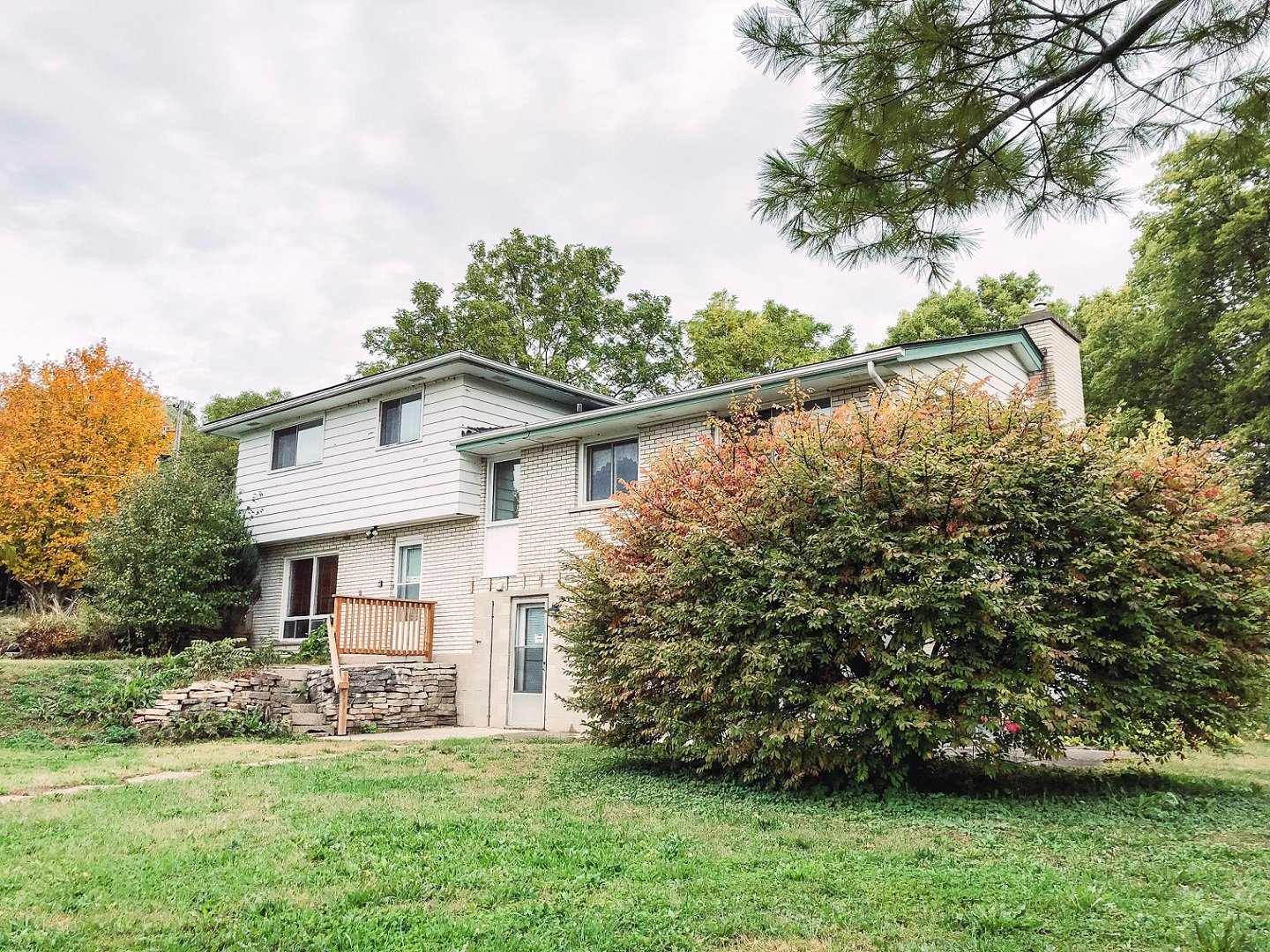


The new windows dramatically improved the energy efficiency of the buildings, providing better insulation and reducing heating and cooling costs. The upgraded windows also offered additional benefits including improved lighting and aesthetics.
“The results had exceeded our expectations.” says Palka“The windows have also enhanced the aesthetic appeal of our facilities, giving them a fresh, modern look while maintaining the charm and character of our historic property. The improved natural lighting in the prayer and art rooms has been particularly impactful. These spaces are now even more inviting, providing a warm, bright, and welcoming environment for reflection, creativity, and community activities. The main offices and bookstore also benefit from the increased natural light, creating a more pleasant and productive workspace for our staff and visitors.”
In the last year of the five-year plan, the Centre invested $339,000 dollars of capital investment into their property. Upgrades included:
An investment of $166,000 to complete a renovation of its dining hall, including upgrades to its industrial kitchen. This project was partially funded through the Ontario Trillium Foundation.
An investment of $13,000 to apply fresh paint, new carpet, flooring and new shower liners in its House-on-the-Hill.
An investment of $100,000 to both its outdoor washrooms and Chalet washrooms received upgrades funded partly by the News Horizons for Seniors Grant.
An investment of $8,000 for upgrades to its walking path, including a new set of stairs down to its lower campus. TD friends of the Environment Grant funded this project.


Continuing Property and Building Upgrades
The commitment to rejuvenate its property extended beyond the initial scope of the five-year plan. With ongoing investments, the Centre remains dedicated to sustainability, energy efficiency, and enhancing the overall experience for guests and staff.
“We continue to upgrade the spaces with the environment and our guests in mind,” said Mallory Biggs, General Manager, Five Oaks Centre “Beyond the original five-year plan, our focus is on ensuring the safety and longevity of our property and buildings. These upgrades are essential to building a safe and lasting space that aligns with our values of sustainability and excellence.”

In 2022, the Centre put in $343,000 of capital investment into its building which involved:
An investment of $115,000 to install a two-story deck behind the main building to increase and offer three-season seating off our dining room, and offer an outdoor gathering space off the Upper Room. This project was funded by the Hamilton,Halton Brant Regional Tourism Authority, through Federal Development Canada.
An investment of $26,000 to replace 18 windows, partially funded by a Greening Sacred Spaces Grant.
An investment of $16,500 to undergo a complete retrofit of the New Hall Washroom, which is now fully accessible, and partially funded by a New Horizons for Seniors Grant.
An investment of $94,000 to replace the roof on the main building, partially funded by our Raise the Roof Walkathon.
In 2023, the Five Oaks expanded its capital investments into its building which included:
Installing air-source heat pumps in its Peace and Friendship Houses, as well as its office, bookstore, and Upperroom in its main building. This HVAC upgrade significantly reduced heating fuel consumption while adding air-conditioning, enhancing the year-round accessibility and comfort of these spaces.
Refreshing the B and C wings of its main building with new paint and LED lighting.
Starting renovations in its Chalet's dining room.
Enhancing 60ft of the property’s boardwalks with a Brant Community Foundation grant.


Future projects
Five Oaks has ambitious plans to continue upgrading its property and buildings. Future projects will further enhance sustainability and energy efficiency, ensuring the best facilities for staff and guests. These ongoing improvements include:
Master Site Plan: Mapping out the property and its capacities.
HVAC Upgrades: Future upgrades to the rest of the main building.
Bedrooms and Windows: Comprehensive upgrades to all bedrooms and windows in the main building.
3-Season Pavilion: A future goal to develop a versatile pavilion for extended seasonal use.
Road Upgrades: Enhancements to the roadways on the property.
Shop Upgrade: Future enhancements to the shop, extending beyond the original five-year plan.
Main Building Energy Transition: Moving the main building off oil, a step beyond the five-year plan.
The United Church of Canada (UCCan) is a vision partner of the Five Oaks Centre. Vision partners share actively in the governance, programs, funding, and maintenance of the Centre. UCCan specifically offers access to funds for programming that supports the mission of the denomination and has legal oversight of the Centre.
Faithful Footprints Program
The United Church of Canada’s Faithful Footprints program offers inspiration, tools, and grants to help its faith communities reduce their carbon footprint. With the Church’s commitment to reducing its greenhouse gasses (GHG) emissions by 80% by 2030, this one-of-a-kind program offers up to $30,000 in grants towards energy conservation and renewable energy projects (conditions apply).
Faith & the Common Good is the delivery partner for the Faithful Footprints program. To date, we have engaged over 500 congregations, camps, and buildings across the country. Your participation in the program puts your faith into action and helps the Church reach its target.

In the Nick of time: Glenwood United's Timely Rescue by Faithful Footprints
In 2023, United Churches encountered an unexpected challenge when their boilers broke down, resulting in an urgent need to replace them. Glenwood United Church sources out Faithful Footprints funding to replace its boilers rapidly approaching the end of their 25-year lifespan.

Boilers play a vital role in churches by providing essential heating during services, gatherings, and events, ensuring the comfort and well-being of worshippers, especially in colder climates or during winter months. In 2023, several United Churches encountered boilers that broke down unexpectedly. During times of urgent building repairs, grants like Faithful Footprints make a significant difference by alleviating anxiety about funding necessary upgrades and renovations, ensuring that churches can continue to serve their communities effectively.
Nearing the end
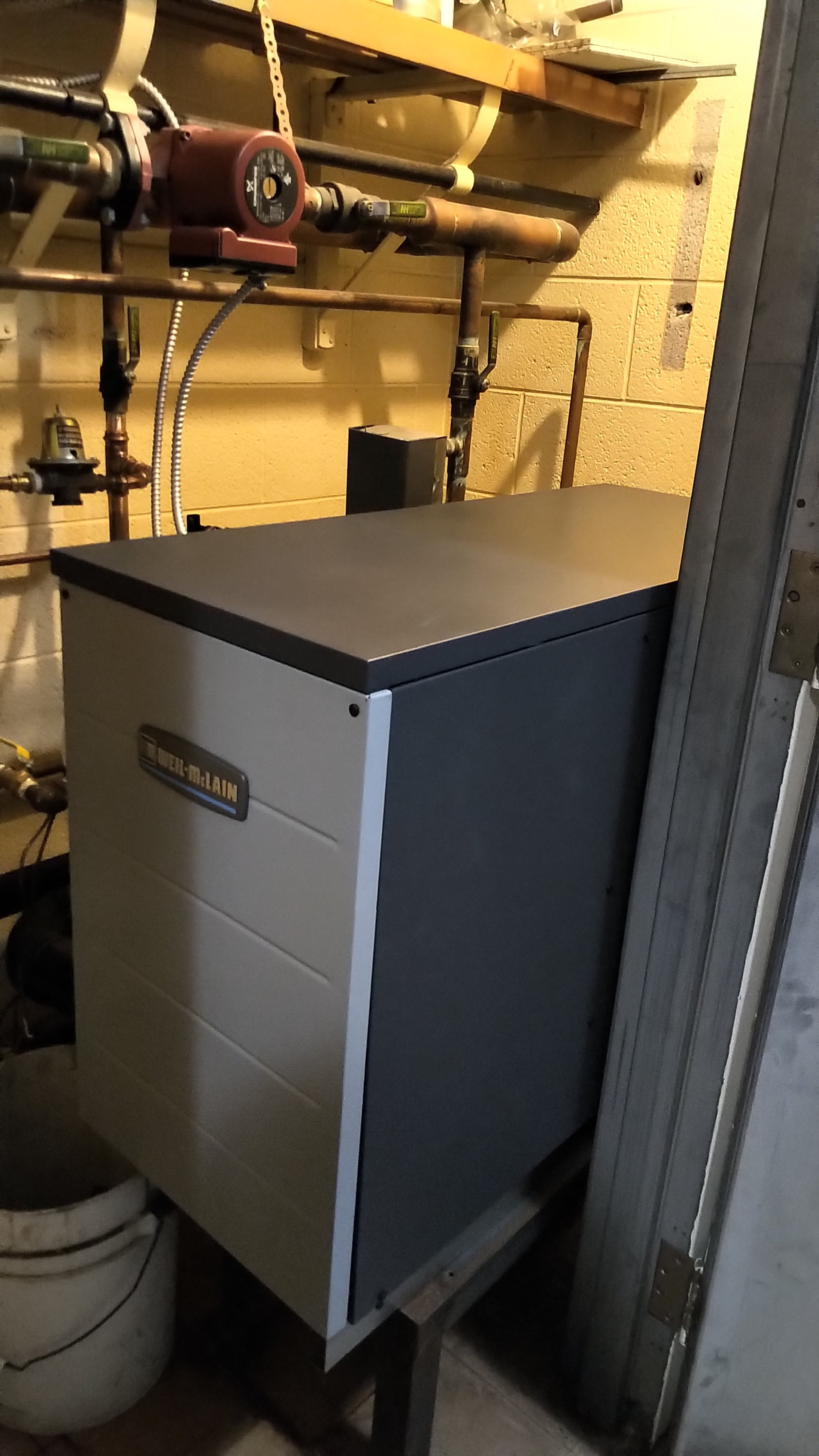
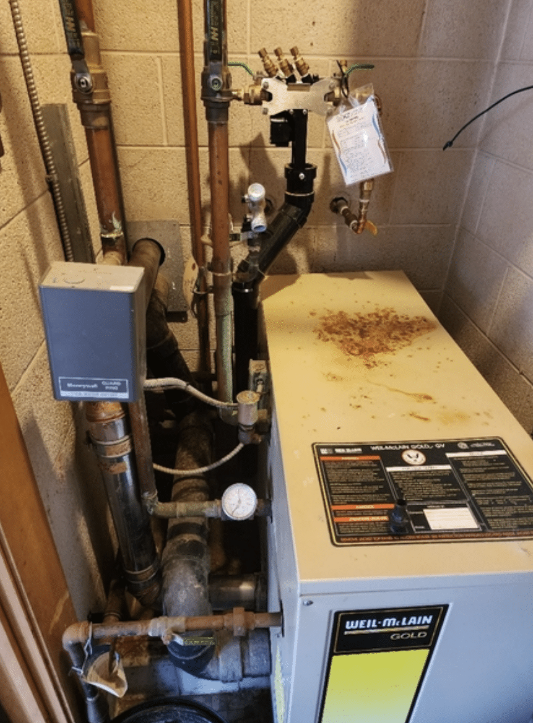
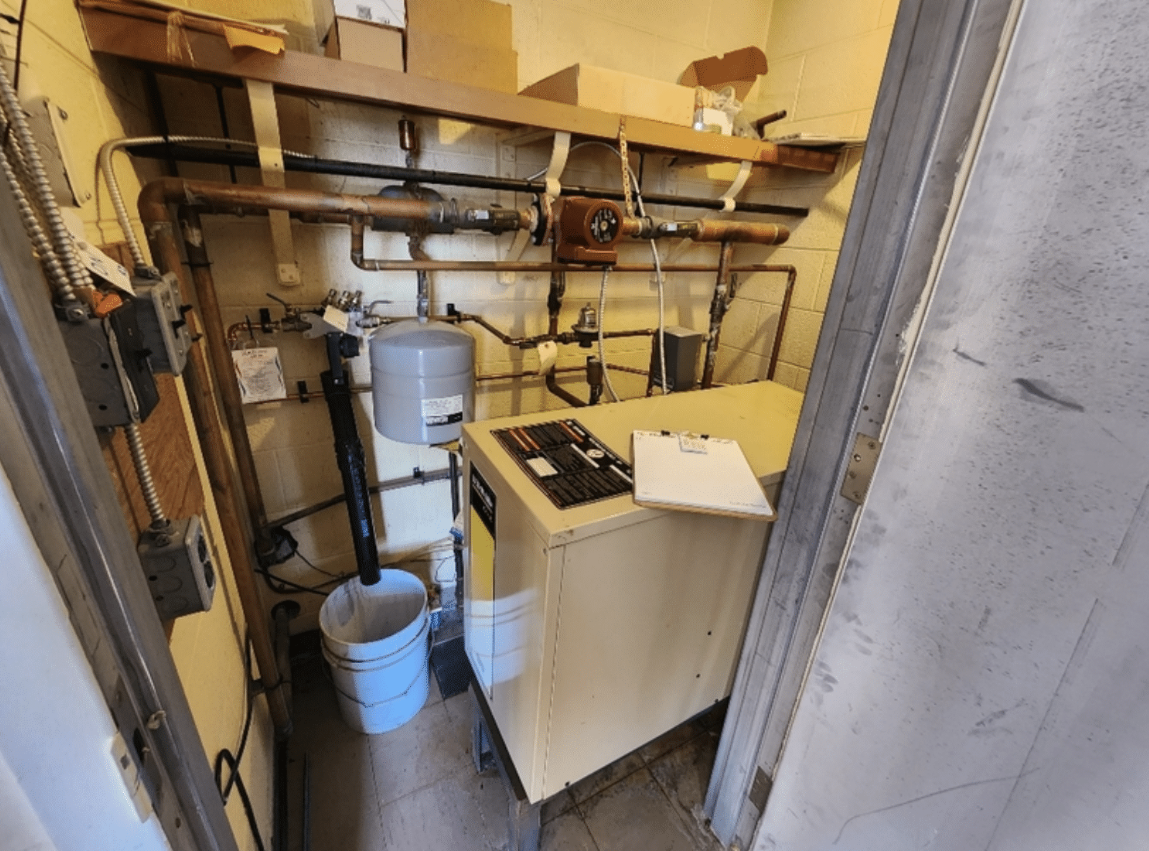
Despite having undergone repairs to their existing boilers in 2022, Glenwood United Church in Windsor, ON, faced the harsh reality when they were informed that their units were rapidly approaching the end of their 25-year lifespan, with spare parts becoming increasingly scarce. Operating at a mere 68%-72% efficiency, the two boilers servicing the sanctuary demanded attention. Despite ongoing fundraising efforts over the past three years and a current special appeal for the boilers, the sudden urgency to replace the boilers created a sense of urgency. In response, the church sought to secure sufficient funds to cover the project's cost post-installation.
Recognizing the need for repair, Rev. Catherine Collins Barker introduced the Faithful Footprints program to the property committee, which voted to pursue funding for the boiler replacement. This financial support would help fund the installation of high-mid efficiency (91%) gas-powered hot water boilers with a life expectancy of 20-30 years, ensuring continued comfort and functionality for the congregation while also reducing environmental impact.
“By replacing the boiler in the summer, we would minimize the impact of a possible failure during the critical heating months for the congregants.” Rev. Dr. Catherine Collins-Barker.
Quick Turnaround
With the clock ticking, the community at Glenwood United sprang into action to prepare for the boiler replacement. While the application was sent off, the community at Glenwood United made every effort to prepare for the replacement.
Congregants working on the project obtained multiple quotes from reputable contractors and diligently reviewed equipment bids to ensure that fair pricing was received for products that would have a long operating life. Despite challenges, including unexpected costs and revised timelines, the community remained resilient.
“We contacted three plumbing companies for quotes, and because of lower costs and prior experience, we opted for RFG plumbing. On July 5th, 2023, RFG replaced our gas water heater with an electric one; which was one of the items in the grant application. At about that time, RFG estimated that delivery of the boilers would take 6 to 10 weeks. Shortly after, they came back with a revised estimate of 2 weeks” Bob Pickle, Property Chair at Glenwood United, “We told them that we would not have the money that soon. They advised that if we could pay another $7000, they would install one boiler and we could have the second one installed whenever we had the money. This was paid and one boiler was installed in July. It was hoped that the balance required for the second boiler could be raised before the fall heating season began.”
A Timely Rescue
In the nick of time, just in time before the fall, Glenwood United received the much-needed Faithful Footprints grant. The church had the contractor immediately install the second boiler, securing the church's heating system for the upcoming seasons.
Faithful Footprints Program
The United Church of Canada’s Faithful Footprints program offers inspiration, tools, and grants to help its faith communities reduce their carbon footprint. With the Church’s commitment to reducing its greenhouse gasses (GHG) emissions by 80% by 2030, this one-of-a-kind program offers up to $30,000 in grants towards energy conservation and renewable energy projects (conditions apply).
Faith & the Common Good is the delivery partner for the Faithful Footprints program. To date, we have engaged over 400 congregations, camps, and buildings across the country. Your participation in the program puts your faith into action and helps the Church reach its target.

Coming Together to Combat Climate Change: The Unified Mission of Deer Park United and Calvin Presbyterian
With a shared ecumenical ministry spanning 13 years, Deer Park United Church and Calvin Presbyterian Church in Toronto, Ontario, serve as a compelling example of the impact that a united mission can have in the realm of climate action.
Ecumenical ministries are collaborative initiatives that aim to foster greater unity and cooperation among different Christian denominations. Bringing together church communities, ecumenical ministries helps combine resources, knowledge, and efforts to address common challenges — promoting a sense of solidarity and shared purpose among Christian believers.
By uniting their efforts, these ecumenical partnerships hold the potential to be formidable allies in the ongoing battle against climate change — raising awareness, advocating for sustainable policies, and inspiring eco-friendly practices within their congregations.

Uniting Congregations for a Common Cause: Green Team Formation
With a shared ecumenical ministry spanning 13 years, Deer Park United Church and Calvin Presbyterian Church in Toronto, Ontario, serve as a compelling example of the impact that a united mission can have in the realm of climate action.
Inspired by an enlightening Lenten environmental education series and Earth Day event, the ecumenical ministry established its Green Team in 2019, comprising dedicated members from both Deer Park United and Calvin Presbyterian congregations. With support from the ministry, the Green Team has planned Earth Day celebrations that combine festivity with climate education and has hosted impactful webinars on a range of environmental topics through the North Toronto Cluster of Churches group and Faithful Green Actions Team. Beyond this, they have delved into comprehensive environmental research, examining the consequences of climate change and global mitigation efforts aimed at combatting the anticipated rise in global temperatures. Their commitment extends to the regular publication of their findings in informative articles in their church bulletin and longer, in-depth pieces for their quarterly newsletter — covering a wide spectrum of themes, from practical eco-friendly tips for individuals to inspiring narratives of environmental efforts across the globe.
“We feel that it is urgent for us to do what we can to ameliorate the effects of climate change – The purpose of the articles is to let Deer Park and Calvin Presbyterian congregants know that their efforts are magnified by the efforts of others.” shares Martha Charney, Board Chair of Deer Park United Church.
Beyond their climate change research, the Green team embarked on an exploration of strategies to minimize energy consumption and enhance sustainability within their shared church space. Their examination of the building's infrastructure and potential upgrades served a dual purpose – not only to inspire environmental stewardship among their congregation but also to set an environmentally responsible and energy-efficient precedent for their place of worship.
Following thorough research, which considered potential target areas like lighting, insulation, and appliances, the Green team determined that replacing the aging boiler system was the most impactful and immediate solution for reducing the building's environmental footprint. The building's existing heating system, comprising steam radiators and two unreliable boilers, had posed challenges for several years. Embracing a more energy-efficient and eco-friendly heating system, would help cut carbon emissions and lower their building energy consumption.
This project would expand on the previous greening efforts around their building, including posting signs in communal areas reminding occupants to turn off lights when not in use, upgrading lighting in their sanctuary to LEDs, installing programmable thermostats in the sanctuary and administrative areas, and replacing broken window panes.

A Joint Effort: Enhancing Sustainability within Their Shared Space
The retrofit project, focused on the replacement of their boiler, was overseen by the Property Committee and supported by the Green Team. Though the 1926 Greco-Roman style building is owned by Calvin Presbyterian, the responsibility for its maintenance is jointly shared by both congregations.
In anticipation of the financial requirements for their portion of the renovation expenses, Deer Park United took the proactive step of establishing a Building Fund in 2021. Recognized as eligible for Faithful Footprints funding, Deer Park United also submitted a Faithful Footprints grant application in 2023 to aid in supporting the project.
The church had also initiated appeals to its congregants and adherents for special donations towards replacing their boiler. Before the project had officially begun, Deer Park's congregants and adherents demonstrated their commitment to the cause by generously donating over $13,000 to the church's Building Fund, with additional contributions flowing in after a dedicated appeal during their annual meeting.
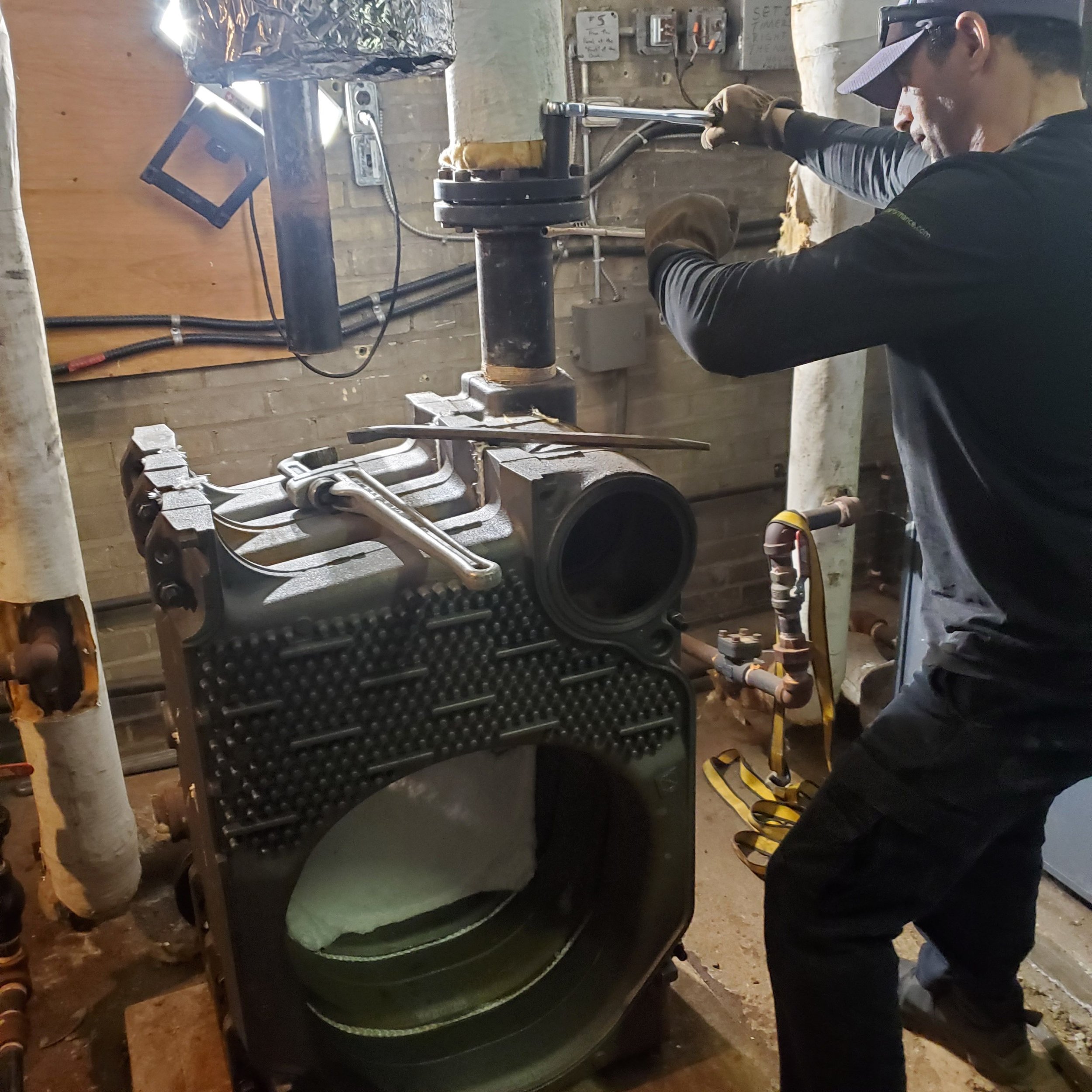
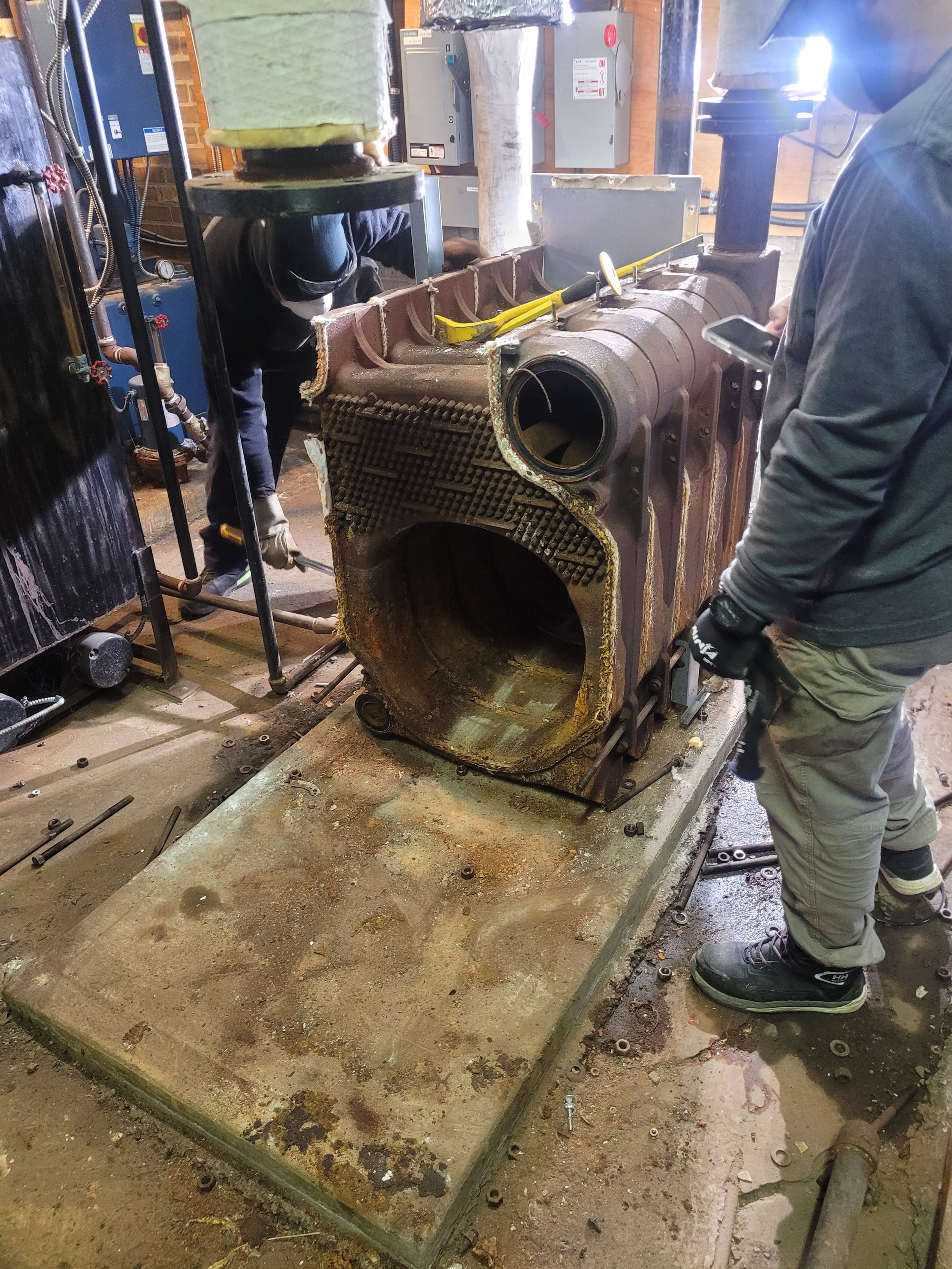
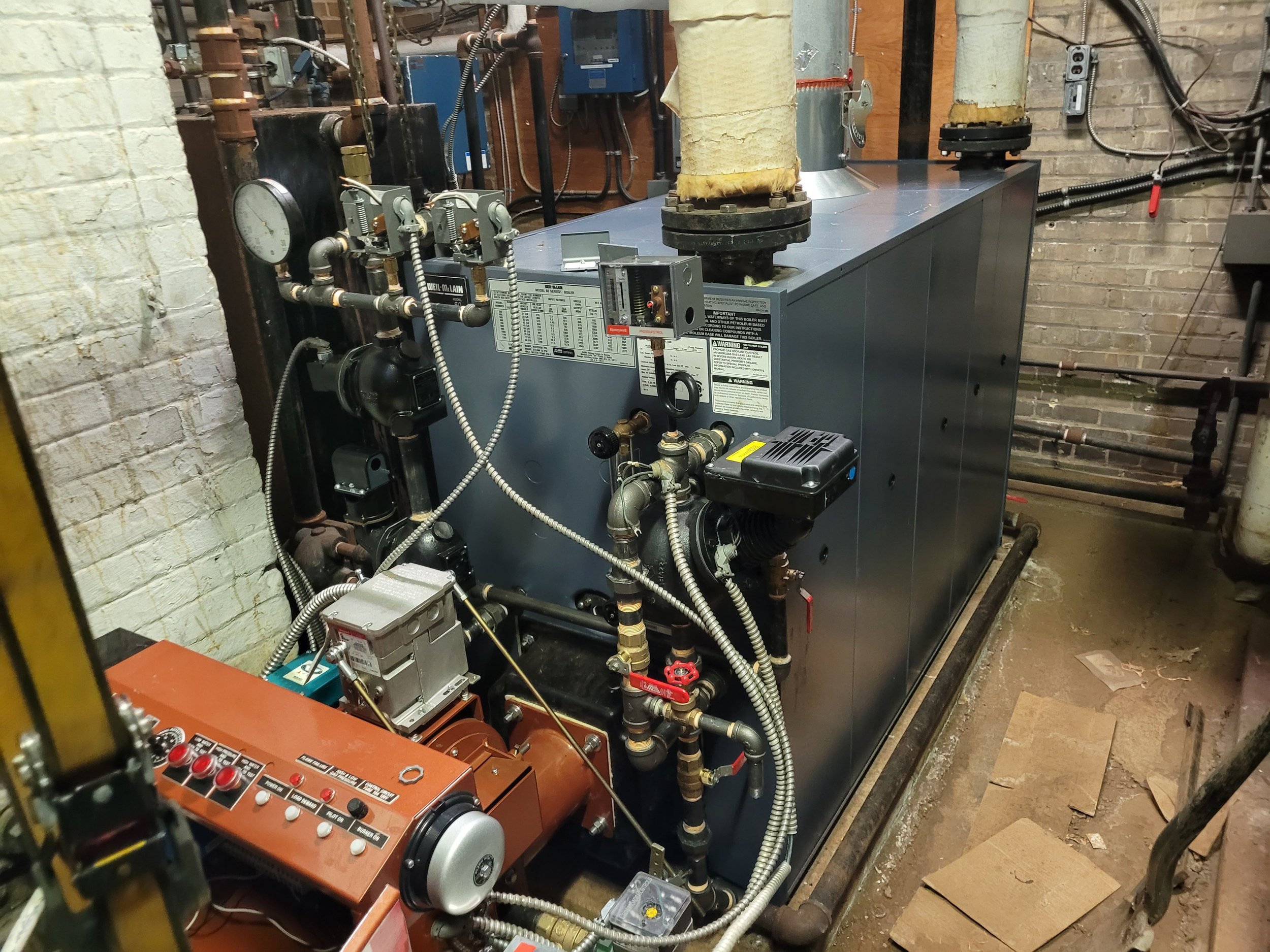
“Our newly installed boiler should be much more reliable and efficient — it will produce more steady heat, make less noise, and reduce costs on our Enbridge bills.” explains Martha Charney “These positive effects will not only impact our congregations and staff, but also the other people who use our building, such as AA, and the Toronto Children’s Chorus, who rent space from Calvin.”
Both, Deer Park United and Calvin Presbyterian have future plans to continue enhancing the operational sustainability of their shared space. The next steps include the installation of LED lights in their office and meeting areas, an upgrade to the HVAC system in the windowless and poorly ventilated lower hall, and potential insulation and replacement of windows in areas of around the building.
Are you part of an ecumenical ministry with a United Church of Canada community of faith? You might be eligible to apply for Faithful Footprints funding to support energy conservation and decarbonization building retrofits projects.
Faithful Footprints Program
The United Church of Canada’s Faithful Footprints program offers inspiration, tools, and grants to help its faith communities reduce their carbon footprint. With the Church’s commitment to reducing its greenhouse gasses (GHG) emissions by 80% by 2030, this one-of-a-kind program offers up to $30,000 in grants towards energy conservation and renewable energy projects (conditions apply).
Faith & the Common Good is the delivery partner for the Faithful Footprints program. To date, we have engaged over 400 congregations, camps, and buildings across the country. Your participation in the program puts your faith into action and helps the Church reach its target.
Aleyxa Gates Julien is the PR/Communications Coordinator for Faithful Footprints and can be reached at agatesjulien@faithcommongood.org.

Ready for More: Runnymede United Retrofits for Greater Energy Savings
With more than a decade of experience working on energy conservation projects, Runnymede United Church retrofits for greater energy savings, replacing ceiling fans and installing heat pumps.
Deciding the scale and size of your building renovation projects can be complicated. Even with a handful of experiences with minor fixes and small repairs around your building, larger renovation projects can extend beyond the comfort zone of your community of faith.
With minor energy conservation projects, communities of faith focus on low-hanging fruit. These types of building modifications are low-cost, easy to implement, and offer good value for the money and effort invested. Examples include sealing with caulking or spray foam and upgrading lighting. Though these projects can improve energy conservation, larger-scale projects have the ability to provide a greater return on investment and result in greater energy-saving and carbon-reduction outcomes.
By building up confidence, knowledge, and project management skills – many communities of faith start off small and gradually make their way to larger-scale energy-efficiency and decarbonization building renovation projects.
Building up the Momentum
For Runnymede United Church, in Toronto, Ontario, building greening efforts date back over a decade. Since completing a Green Audit by Faith & the Common Good, in 2011, Runnymede United has engaged in a variety of energy conservation projects.
In 2012, they replaced old T12 4-foot fluorescent bulbs with more efficient T8 bulbs and ballasts, and later with LED T8 bulbs throughout the church. They also replaced outside flood lights with LED flood lights and halogen PAR 38 flood light bulbs and incandescent bulbs with LEDs in their sanctuary.
In 2016, they replaced their atmospheric-fired gas domestic hot water heater with an insulated, power-vented, high-efficiency, gas hot water heater.
From 2016 to 2017, they replaced three simple mechanical thermostats with three programmable Ecobee thermostats. The new thermostats conducted temperature setbacks at night and when the rooms were not in use.
And in 2017, they installed diverters on the wall outlets of their gym heating system, improving air circulation throughout the space – improving comfort, and reducing the accumulation of hot air at the ceiling level. Later that year, the church also added two inches of foam insulation to the gym roof.
Ready for More
Runnymede United was well-equipped. They have an active Property Committee that has engaged in various small-scale energy conservation projects for many years and support from their congregation – including PropCom, a group of property volunteers that meet weekly to work on repair, maintenance, and improvement projects. The church was ready to see greater energy saving.
The church started off with a list of four potential projects and realized they couldn't do all of them. After discussing the potential projects with contractors, experts, their PropCom group, and the finance and property committee, they narrowed their scope to two projects likely to have the most significant impact. These two projects were projected to have the greatest cost-benefit ratio – in terms of cost per dollar saved in operational cost, and per tonne of GHG reduced.
Ceiling Fans
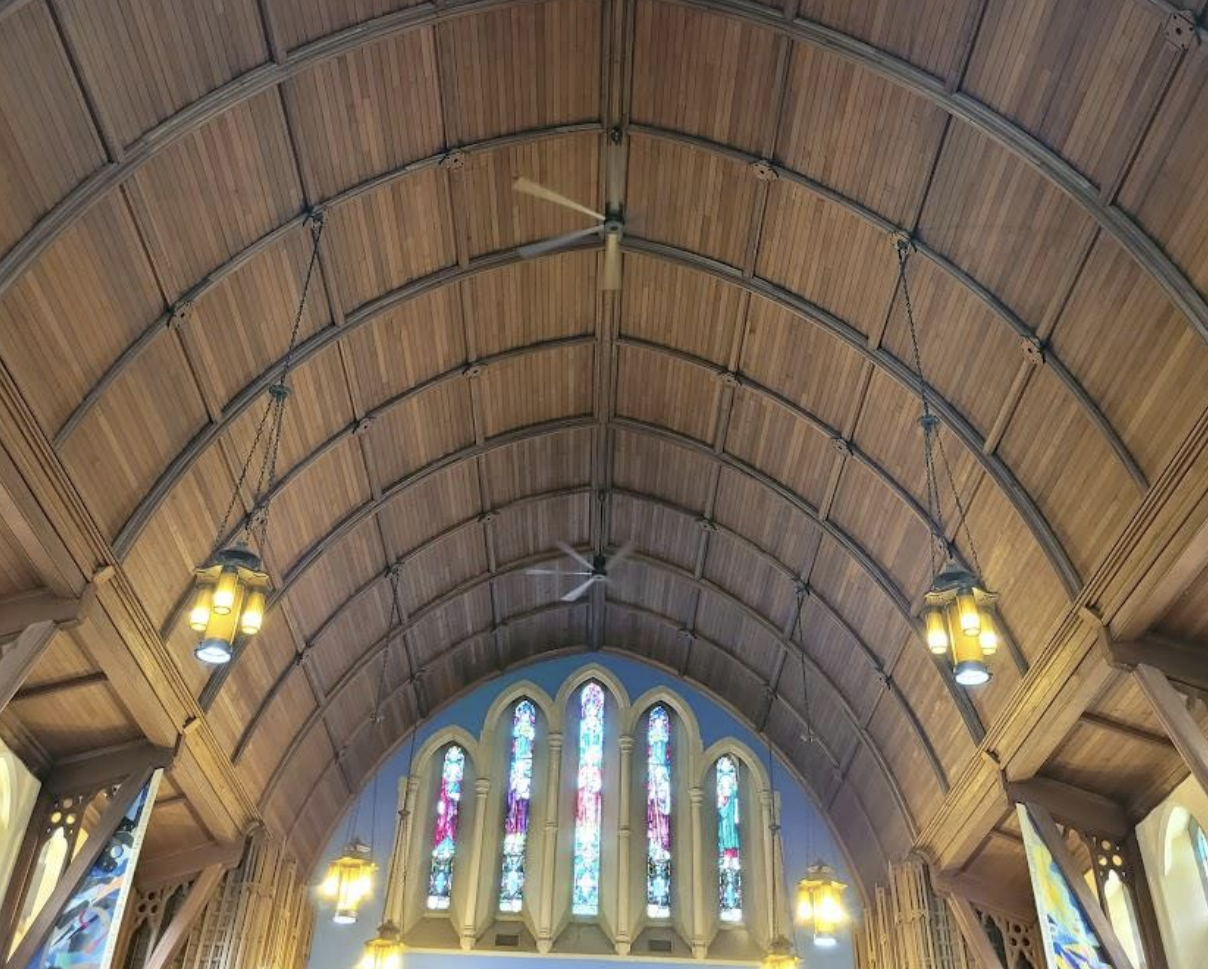
The first project replaced four ineffective and noisy ceiling fans in the sanctuary with four 8-foot modern energy-efficiency fans. The new fans will contribute to reduced energy loss in the church’s large 40-foot high ceiling and 7,000 sq ft space, throughout the entire year. In the colder months, the fans will enable the church to reduce the accumulation of warm air on the ceiling level, significantly reducing heat loss from the uninsulated ceiling. In the warmer months, the fans will improve air circulation at the floor level, improving congregational comfort, with only a small fraction of the energy usage that would otherwise be required for air conditioning.
Heat pumps
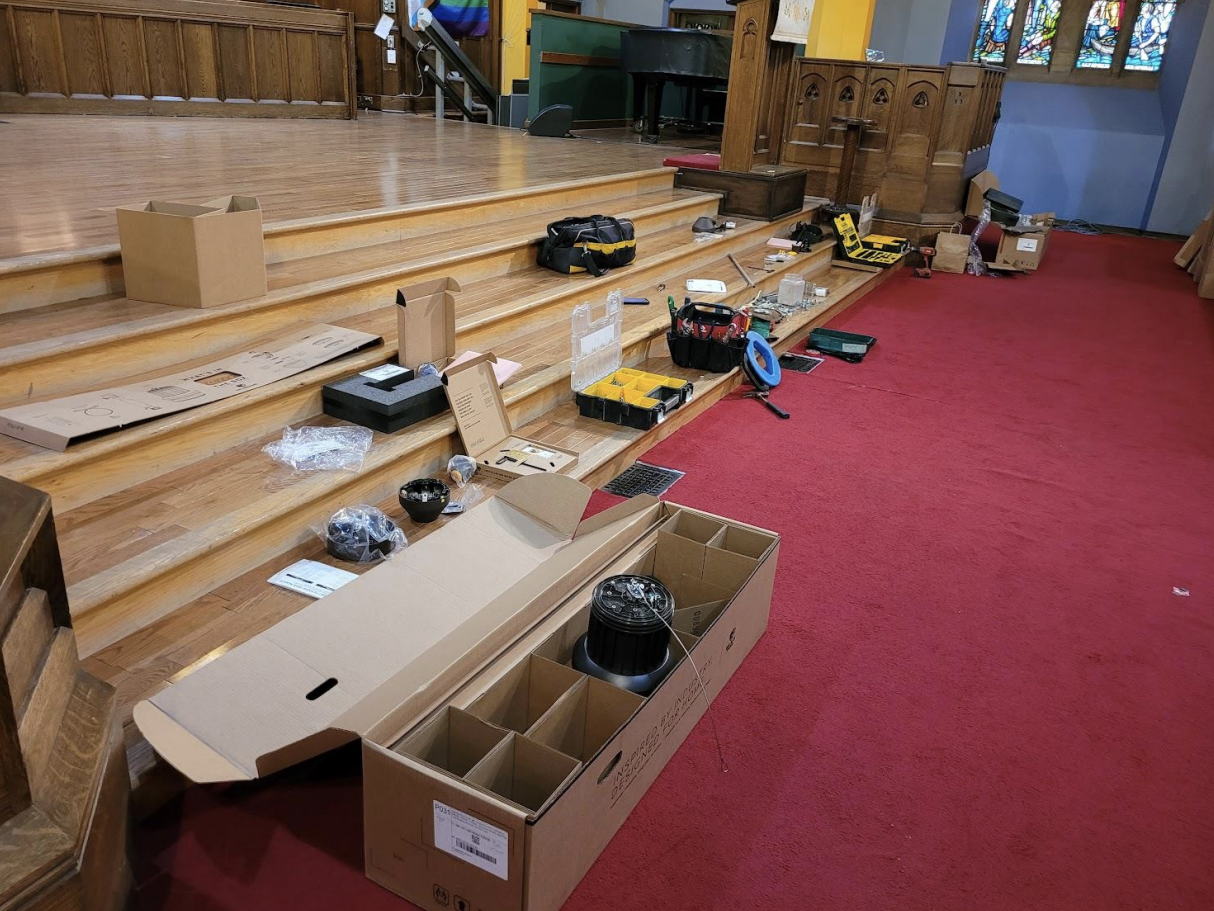
The second project replaced the church’s gas-fired steam heating system with heat pumps in the Memorial Hall in their sanctuary. The church installed two 36,000 BTU Mitsubishi split units.
“Compared to our previous gas-fired steam heating system, we hope the efficiency of the heat pumps will reduce our overall energy consumption and our GHG emissions,” states Don Dewees, Chair of Finance and Property Committees at Runnymede United Church.
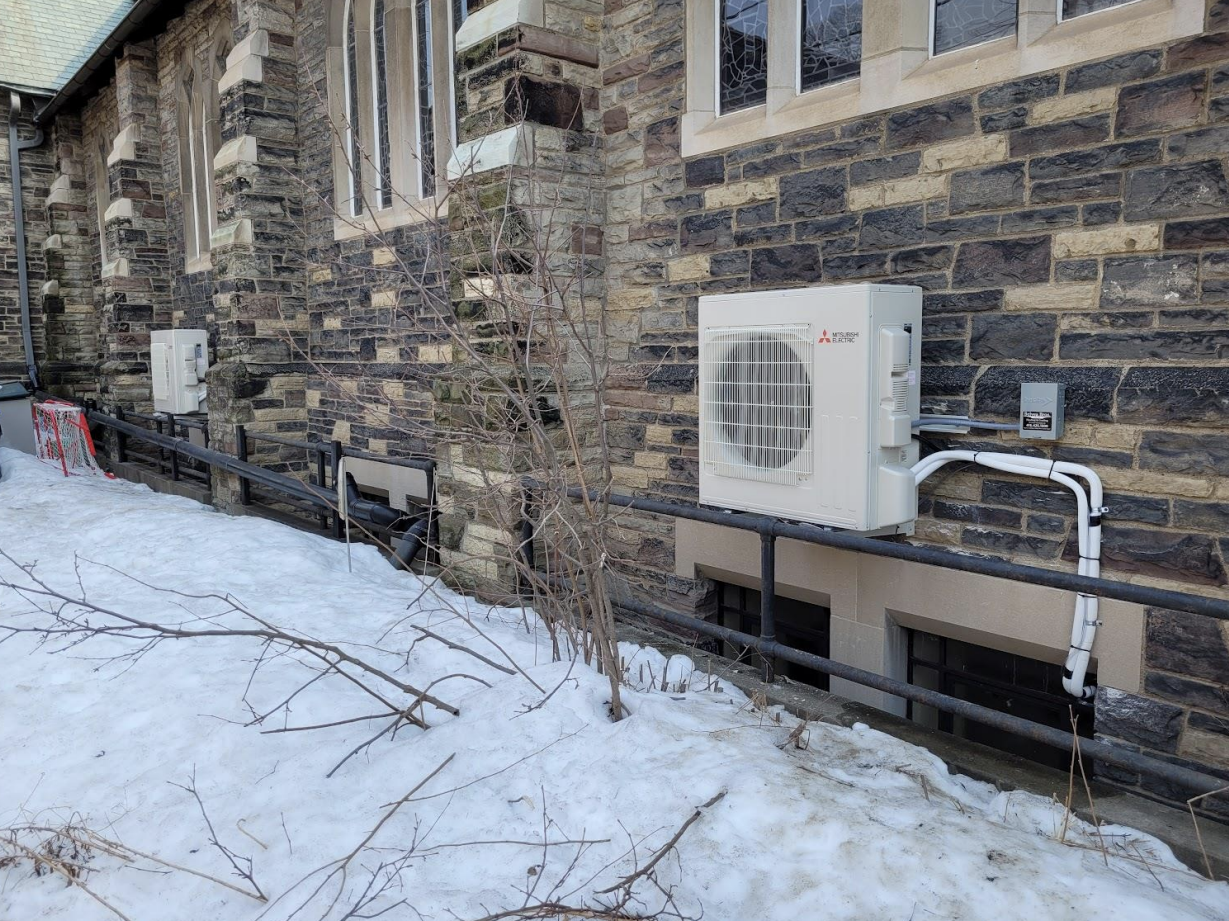
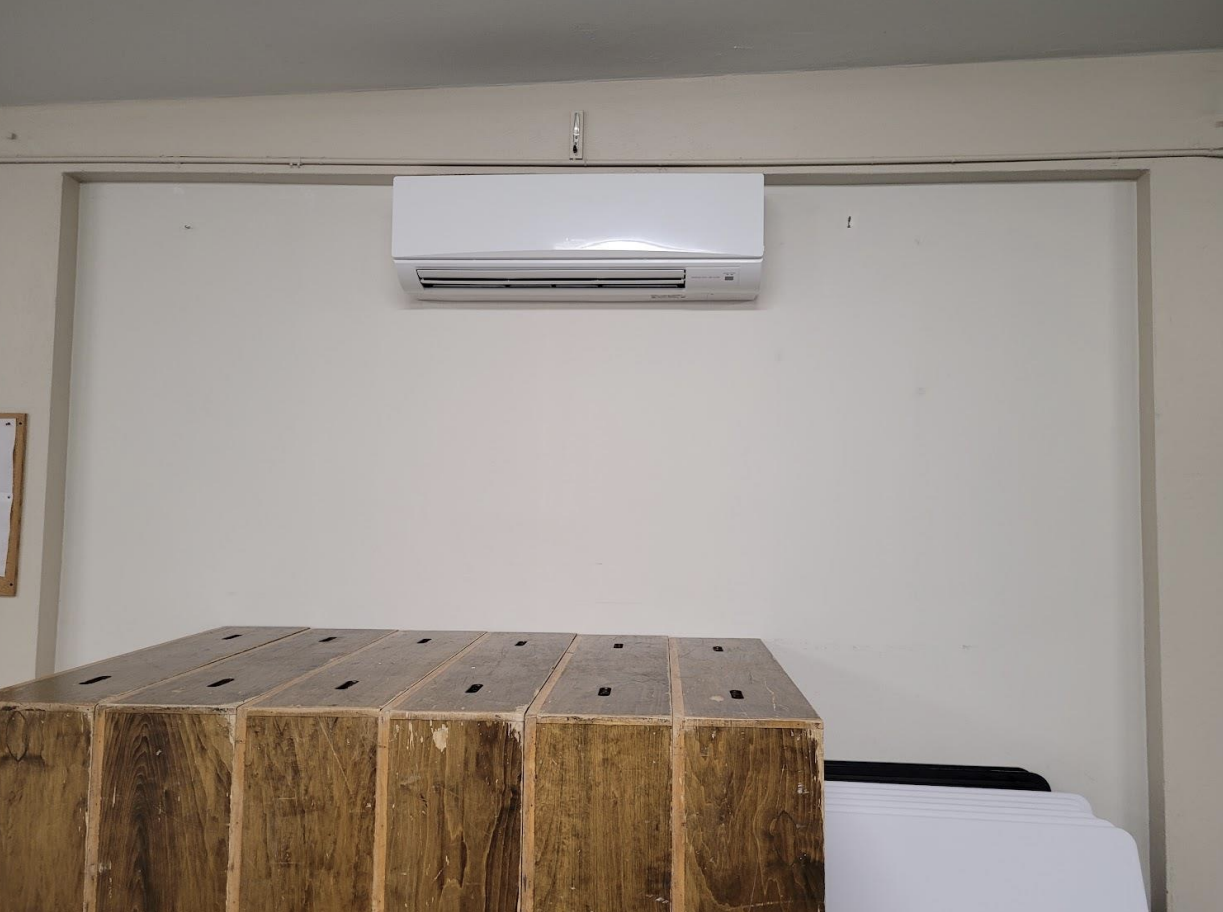
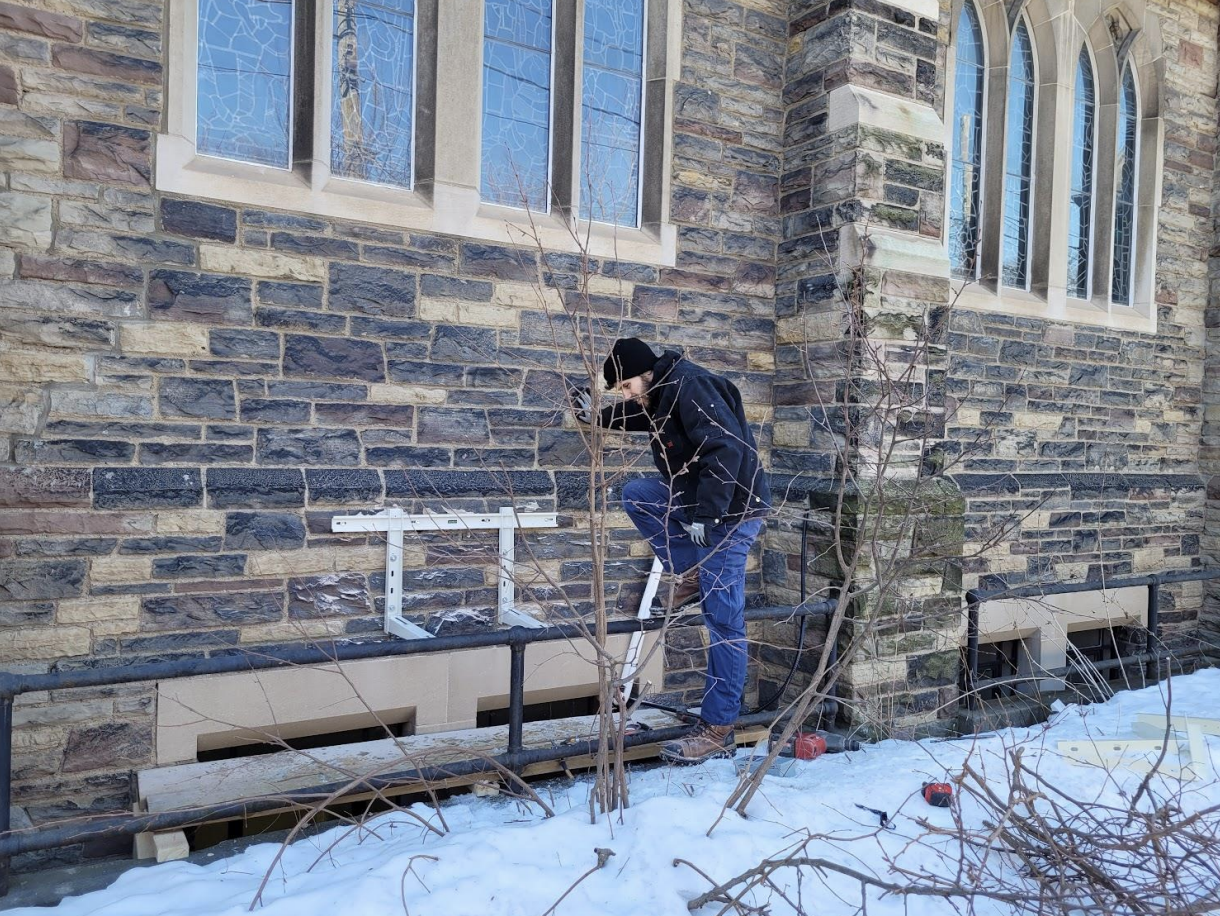
In addition to providing heat in the winter and cooling in the summer, as well as decarbonizing part of the church’s building operations, the newly installed heat pumps also improved the building’s heating and cooling control.
The previous system that was servicing the Memorial Hall was on the same steam valve as other parts of the building. Through the project, Runnymede United decoupled temperature control in the Hall from the radiators – allowing the church to control heating and cooling ventilation in different parts of the building separately and more precisely.
“We have one boiler that heats all of our space: the sanctuary, Memorial Hall, gym, offices, Sunday School rooms, meeting rooms – everything. Now that the heat pumps are installed, the radiators in Memorial Hall are turned off. The only heat in that room will come from the heat pumps. This will displace whatever steam heat that room has been using.” shares Dewees.
One project at a time
Runnymede United is an example of a community faith that has continued to green their building, one project at a time.
Dewees advises “If your planned projects are not time-constrained or dependent on one another, it's helpful to spread them apart and not do them at the same time”.
“Take a hard look at your building, do some research, and try to identify practical projects to take on and when you can afford to do them. Look for past experiences from communities of faith. Faithful Footprints is a great source to start.” shares Dewees. “Our practical experience from our previous projects helped us understand the magnitude of energy savings that potential projects might have. Our earlier interest and experience in energy conservation were really helpful in providing a good database. We have records of our hydro and gas meters going back 20-25 years. The reports provide a solid base for comparison. We can look at our consumption before the projects and afterward. Because we know more about our previous year's energy consumption, it’s easier to assess the magnitude of the savings that we should expect”.
“The heat pump project is a test force – we have air conditioning with heat pumps and several other heat pumps in other areas in the building. This is the first time we have installed them with the expressed goal of displacing gas in the winter. This coming winter we will find out if the heat pumps provide sufficient heat during the colder months. If the Memorial Hall heat pumps perform well, we will consider additional heat pump installations and further reductions in our greenhouse gas emissions.” adds Dewees.
Are you interested in taking your greening to the next level?
The more you can learn about your building, the more you can save energy, minimize maintenance costs, and maximize the usage of your building. Build up your confidence, knowledge, and project management skills to support your energy conservation and decarbonization retrofit projects. Book a Green Audit and explore the following Faith & the Common Good downloadable resources to learn what more you can do.
Energy Star® Action Workbook for Congregations
Faithful Footprints Program
The United Church of Canada’s Faithful Footprints program offers inspiration, tools, and grants to help its faith communities reduce their carbon footprint. With the Church’s commitment to reducing its greenhouse gasses (GHG) emissions by 80% by 2030, this one-of-a-kind program offers up to $30,000 in grants towards energy conservation and renewable energy projects (conditions apply).
Faith & the Common Good is the delivery partner for the Faithful Footprints program. To date, we have engaged over 400 congregations, camps, and buildings across the country. Your participation in the program puts your faith into action and helps the Church reach its target.
Aleyxa Gates Julien is the PR/Communications Coordinator for Faithful Footprints and can be reached at agatesjulien@faithcommongood.org.

Turn on the Lights Campaign: St. Paul’s United Fundraiser
Many renovation projects depend on outsourced grants and funding opportunities to complete, but raising the necessary funds can be challenging. However, St. Paul’s United Church in Oakville, Ontario, was confident that their congregants could rise to the challenge and come up with a significant sum of money for the lighting retrofit they were planning.

St. Paul’s United Let There Be Light -
Turn on the Lights Campaign Tracker
Many renovation projects depend on outsourced grants and funding opportunities to complete, but raising the necessary funds can be challenging. However, St. Paul’s United Church in Oakville, Ontario, was confident that their congregants could rise to the challenge and come up with a significant sum of money for the lighting retrofit they were planning.
The church wanted a suitable longer-term solution to reduce the total energy used. After completing a Green Audit through Faith & the Common Good, the project team at St. Paul’s United decided they would tackle a major light retrofit throughout their entire building. Since the building was in relatively good shape, they were advised that the quickest energy-saving opportunity was to switch to LED lights.
With the help of a Faithful Footprints grant, St. Paul’s United expanded its bulb replacement to include replacing 84 bulbs and fluorescent tubes in their gymnasium, 21 light fixtures in one of their halls, and 23 small dome lights in their sanctuary and narthex, which were mini fluorescent bulbs.
Sorting Out Costs and Raising Funds
The Faithful Footprints grant covers two-thirds of a project’s costs, up to a maximum of $20,000 for energy efficiency-focused projects and an additional $10,000 if you are decarbonizing. To qualify, participating communities of faith must have matching funds that equate to one-third of total project costs and any funds required above the maximum Faithful Footprints grant amount.
Since the project scope focused on the efficiency of energy usage, St. Paul’s United qualified to receive up to $20,000. With the total cost of St. Paul’s project estimated to be around $23,000, the Faithful Footprints grant covered approximately $15,000. After receiving conditional approval for the Faithful Footprints grant, St. Paul’s United had to come up with around $5,000 to undergo the planned lighting renovations.
In addition to the church’s building maintenance fund, St. Paul’s United launched a campaign to raise funds to cover the rest of the costs for their lighting upgrade. The Turn on the Light Campaign laid out exactly where the money was going and the timeline of the retrofit.
The project team shared their plans with the congregation members, explaining how they would start with the balcony lights and slowly move towards the lights in the sanctuary.
Getting support for a cause can be that much easier when people understand the direct impact their donations will make. Harold Devenne, team lead, points to several reasons why their approach proved successful.
“Because we don’t have a lot of extra cash, the best way to raise funds is to give our congregation a specific project to fund. I find that if there’s a project, show them pictures of it, tell them what it is, tell them what it costs, and let them find a way in. As long as they can see and understand it, the money comes in fairly quickly.”
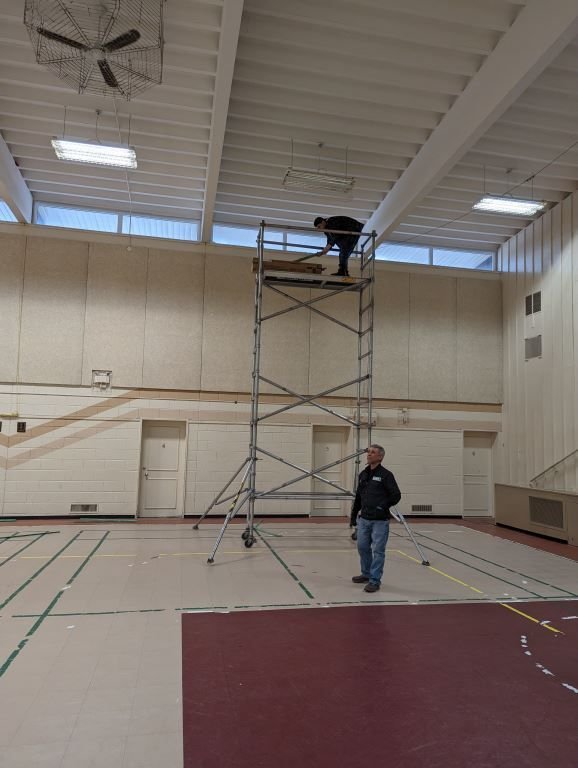
Replacing lights in the gymnasium at St. Paul’s United
While encouraging congregants to donate with an envelope titled “‘Let There Be Light,” the project team provided the opportunity for congregants to support particular areas of the lighting retrofit by categorizing the renovation into three levels of lights:
Pendant light - $272/per light
Dome light - $36/per light
Hall bulb - $57/per light
“It's a way to make them feel like they can contribute to any level, and understand what they are spending the money for,” Devenne says.
Within just four weeks, St. Paul’s United had enough funds raised from the congregation to cover their share of the total project costs.
“I was pretty confident that they were going to come up with the amount for the lights. I was surprised when we exceeded our goal and had enough to use for other building upgrades,” Devenne reflects.
Turning on the Lights
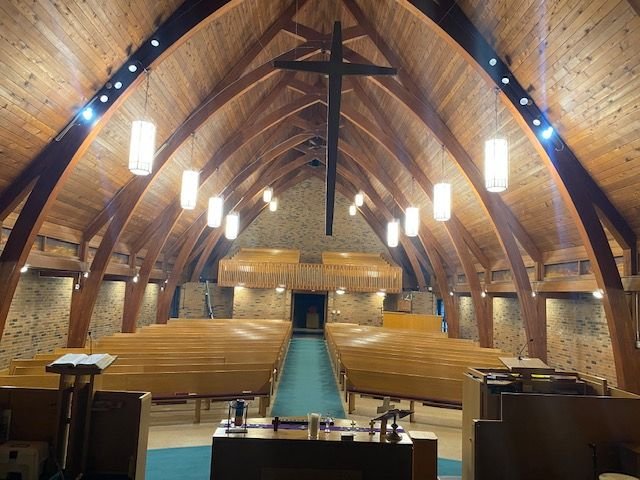
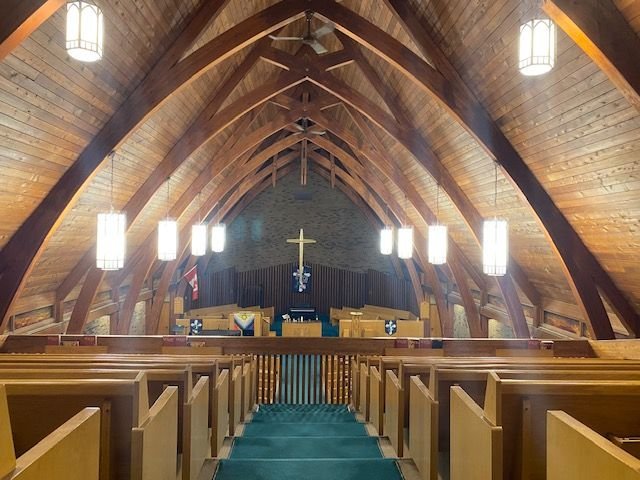
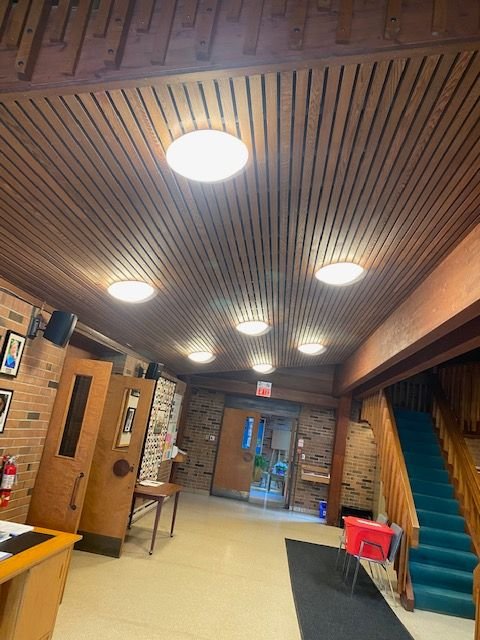
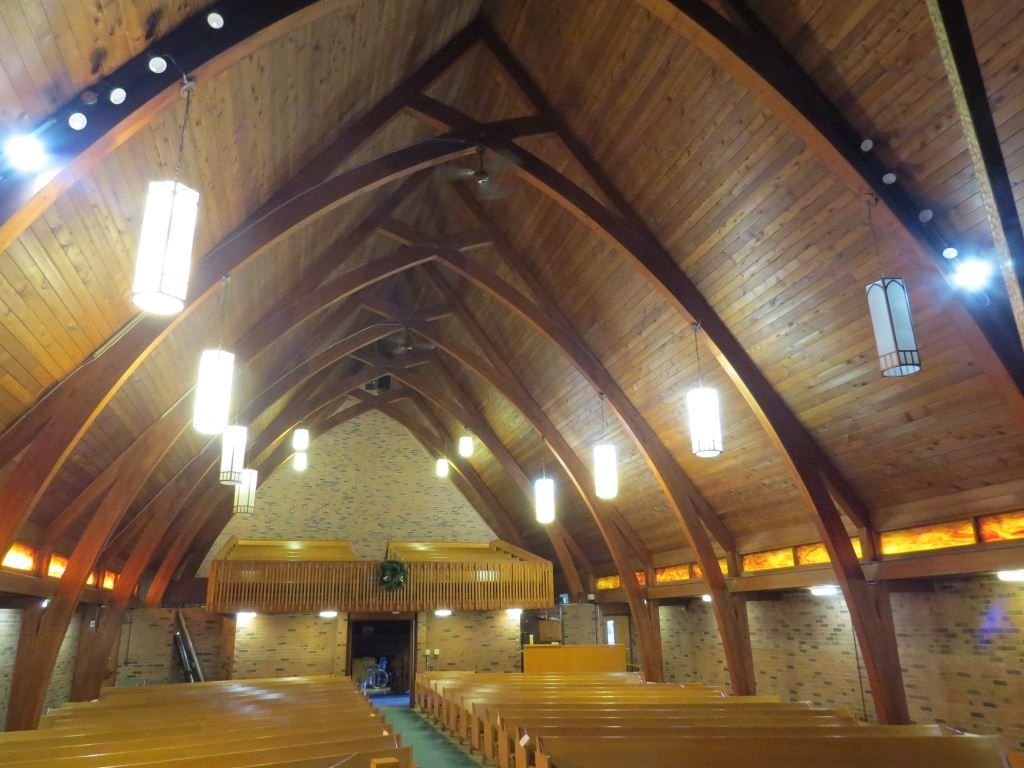
Since completing the renovations, St. Paul’s United has already seen a drastic difference in the quality of lighting.
“The LED bulbs add a little sparkle to the ceiling as well as more light than before while not being harsh,” Harold reports. “The new dome lights down the aisles and in the narthex produce more light than the old ones and look much better.”
With the recent upgrade, St. Paul's United looks forward to lowering its electricity bills. The church says they will continue seeking opportunities to reduce their energy consumption wherever possible.
Stay in the loop about St. Paul's Retrofit Project
Stay updated about St. Paul’s reductions in emissions, electricity usage, fossil fuel use, energy costs, and energy use intensity. Sign up for the Faithful Footprints Monthly Newsletter.
Faithful Footprints Program
The United Church of Canada’s Faithful Footprints program offers inspiration, tools, and grants to help its faith communities reduce their carbon footprint. With the Church’s commitment to reducing its greenhouse gasses (GHG) emissions by 80% by 2030, this one of a kind program offers up to $30,000 in grants towards energy conservation and renewable energy projects (conditions apply).
Faith & the Common Good is the delivery partner for the Faithful Footprints program. To date, we have engaged over 300 congregations, camps, and buildings across the country. Your participation in the program puts your faith into action and helps the Church reach its target.
Aleyxa Gates Julien is the PR/Communications Coordinator for Faithful Footprints and can be reached at agatesjulien@faithcommongood.org.

Greening Small with St. John's United
Over more than a decade, this small, thoughtful congregation in Northern Ontario has made some surprising headway in reducing their carbon footprint.
Thanks to Rev David Giuliano for sharing this story about greening at St. John's United in Marathon, Ontario.
It’s been more evolution than revolution. As with most change in small communities of faith, greening at St. John’s, in Marathon, Ontario, has come about organically. There was no master plan, no environmental concerns committee but over more than a decade a small, thoughtful congregation has made some surprising headway in reducing their carbon footprint.
Some were baby steps. Early on Styrofoam coffee cups were replaced with ceramic mugs. Growing awareness of the human and environmental costs of the coffee in those mugs led to serving and selling fair trade coffee.
On a larger scale, in 2010, St. John’s installed the first solar array in town. The manse was sold. Most congregations invest the money realized from the sale of manses in GICs and use interest earned to pay a housing allowance. St. John’s persuaded their presbytery to instead allow them to invest in green energy and took advantage of the province’s Micro-FIT program.
Those solar panels stand witness beside the cross. They have so far resulted in about a 50 tonne carbon offset (equivalent to planting 5 acres of forest or powering 5 stadiums for a day) and paid the minister’s housing allowance. At the same time congregational members, inspired by the church, installed solar arrays on their homes. Since then the municipality and other residents have followed suit.


Ongoing maintenance shaped by environmental awareness resulted in changes. When the incandescent light bulbs in the sanctuary needed changing, low energy CFC bulbs were used. Now the shift is to LEDs is underway.
Windows and siding needed replacing. An additional layer of insulation was added first. On the south side, the coloured glass was replaced with clear high-efficiency windows to capture more of the natural heat of the sun. The number of windows on the north side of the building was reduced by half.
One environmental update was in response to disaster. The outdoor oil tank that fueled the old boiler system in the church basement leaked contaminating the soil. An $80,000 cleanup and ongoing ground water monitoring was paid for by the insurance company. A new, double lined oil tank was installed. Within two years it leaked too.
The congregation decided to get out of oil all together. However, given geographic location, natural gas is not available and hydro costs are so high that the building would have to be sold to pay its electricity bill. Geothermal options were entering the market and also far beyond the financial means of the small community of faith. A propane-fueled, high efficiency boiler system, with computerized zone and timing management, replaced the old furnace.

The core ministry of St. John’s is “radical and intentional hospitality”. That commitment to hospitality includes maximizing the use of the building and property. A community garden run by the local food bank occupies the front lawn. When finances forced the Anglicans and Baptists close their buildings, St. John’s welcomed them into theirs. Now, three denominations worship in the building every Sunday. Coffee times sometimes overlap.
During the week A.A., N.A., yoga, meditation and craft groups meet. Opening space for birthday parties, anniversaries, baby showers, a monthly community potluck and other gatherings are a regular part of the congregation’s ministry to the community. American Scouting groups, choirs, traveling United Church youth groups and walkers and riders crossing the country raising awareness about all manner of causes, often bed down for a night or two in the hall downstairs.
There are no rental fees. The congregation asks only for cleanup and a donation if possible. Paradoxically, “rental” revenues have increased. More importantly there is deepened understanding of hospitality and awareness that the difference between the energy and environmental costs of an empty building and a full building, are marginal.
St. John’s is small in membersip and financial resources. They are rich with creativity. They pay attention to their impact on the planet. A gradual evolution has reduced their carbon footprint and expanded their practice of greening their community of faith.

Mount Bruno United Takes on the Green Challenge
Mount Bruno United Church, in Saint-Bruno-de-Montarville, QC, has taken on the green challenge by taking a look at how they use energy in their building.
Mount Bruno United Church, in Saint-Bruno-de-Montarville, QC has taken on the green challenge by taking a look at how they use energy in their building. Temperature control sensors have been installed inside and reflector screens behind all the radiators are used to make sure that as little heat as possible is being lost during the winter.
Very aware that churches can often use a great deal of paper during the everyday life of a congregation, Mount Bruno makes sure that unused bulletins don’t go to waste, by reusing them for various other services during the year. Finally, as well as running their own recycling program Mount Bruno is also reaching out to the community by organizing a twice-a-year large-scale recycling event for people in the surrounding area.
They are a member of the Green Churches network.

The Newest Oldest Church You've Ever Seen - Laidlaw Memorial United
“We know we are doing things that outlive us, and that is what brings life to the world, and that is what brings life to the church.”
““We know we are doing things that outlive us, and that is what brings life to the world, and that is what brings life to the church””
Laidlaw Memorial United Church is a beautiful old building built in 1912. The community boasts 140 members and an average Sunday worship attendance of approx. 80 people.
In 2008, Laidlaw Memorial United Church was a community faced with a dwindling membership, continuous budget deficits and a facility requiring multiple retrofits including a failed roof. Slowly, bit by bit, the community tackled their budget deficit by making small energy and money saving measures in just about every aspect of their facility. From installing a 7-day electronic set back thermostat, turning off the pilot lights when not in use, turning off the water heater in the summer to moving the heat ducts from the ceiling to the floor, setting up a convection current and making the gym warmer and using less fuel. In the process, they realized that they were going green. When it came time to deal with the cost of a replacement roof, it was proposed that the Church investigate the possibility of installing solar panels through the microFIT program in order to help pay for it. As they say, the rest is history as a mortgage loan was taken out to help pay for the new steel roof and the solar installation. On June 4, 2010, the project went live.
Remarkably, there have been no issues. Since an inspection after the first year after installation, where no trouble was found, the panels and equipment have functioned perfectly, and within parameters.

"The panels have been remarkable in starting conversations about being greener in practical ways. The congregation has always and unanimously welcomed the panels. The businesses on the street who buy 'bullfrog' green power, like pointing down the street to where it comes from. Younger people are attracted to our church, in part, because there is a practical expression of care for creation, and the good of generations to come. We have entertained the media, a youtube video and a local cable spot, as well as a spot for 100 Huntly street's "Good News" program. There is credibility to our calling for care for creation, and we have continued to upgrade lighting, windows, and energy efficiency. The solar project was, for us, a public statement of our values, and our ongoing commitment to God's creation."
This and more from Laidlaw United Church on their website: www.laidlawchurch.ca/about