
BLOGS
Churches across the country are stepping up. Read their stories and access other climate and energy resources here.

Eco-Momentum: Transcona Memorial United continues its green building renovations with $480k Canadian Government Support
After completing a retrofit project supported by a Faithful Footprints grant, Transcona Memorial United is continuing its greening efforts with $480,000 of federal funding for an ambitious energy efficiency and decarbonization upgrade.
When it comes to making buildings more eco-friendly, financial support and monetary resources can make a big difference in carrying out long lists of project ideas. Monetary support from government and private groups and organizations gives communities of faith a much-needed boost to make important changes to ensure the longevity of their building and community. Together, these funding opportunities help communities take on small to large building renovation projects, breathing new life into the structures that serve both spiritual and communal purposes.
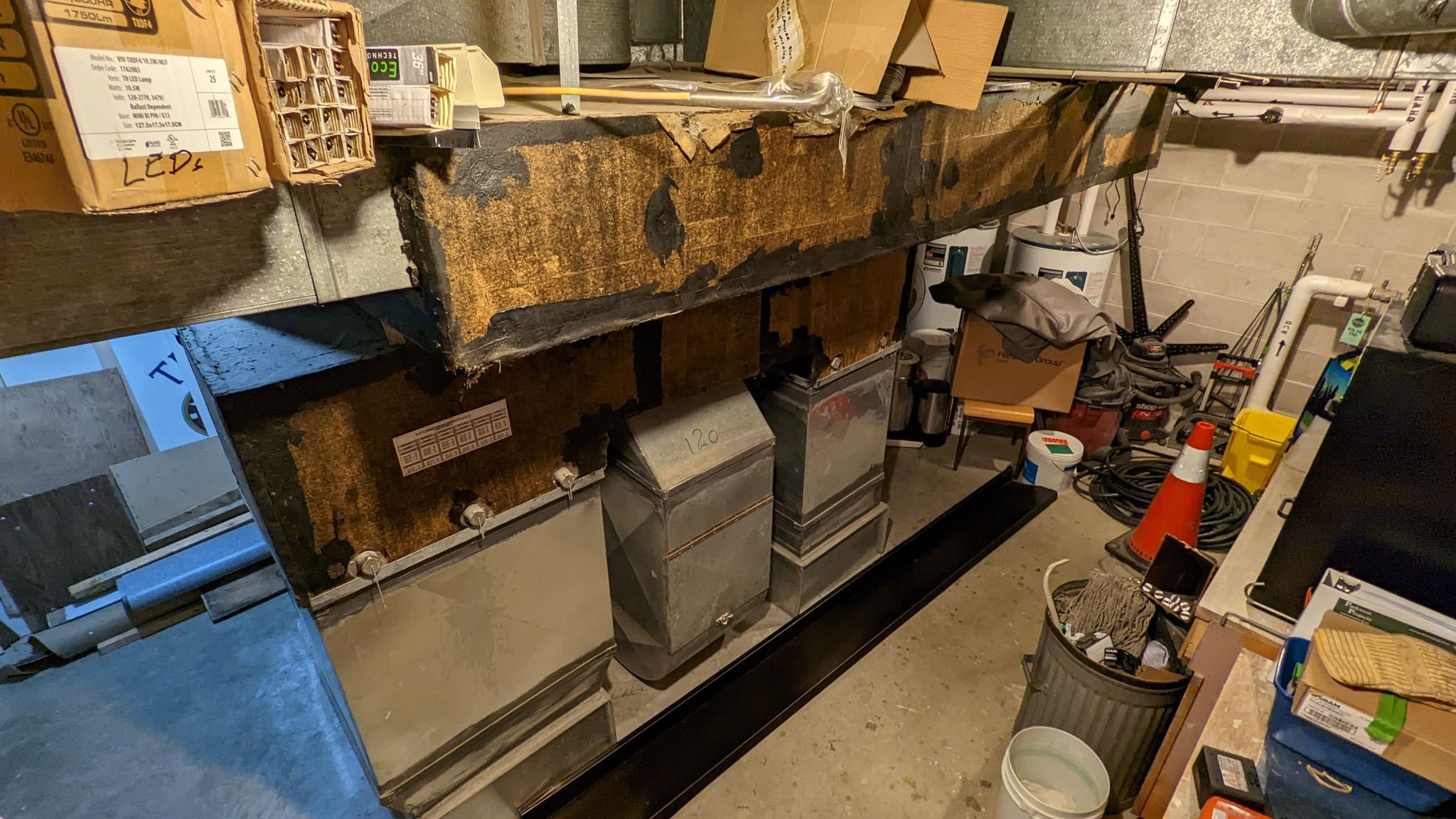
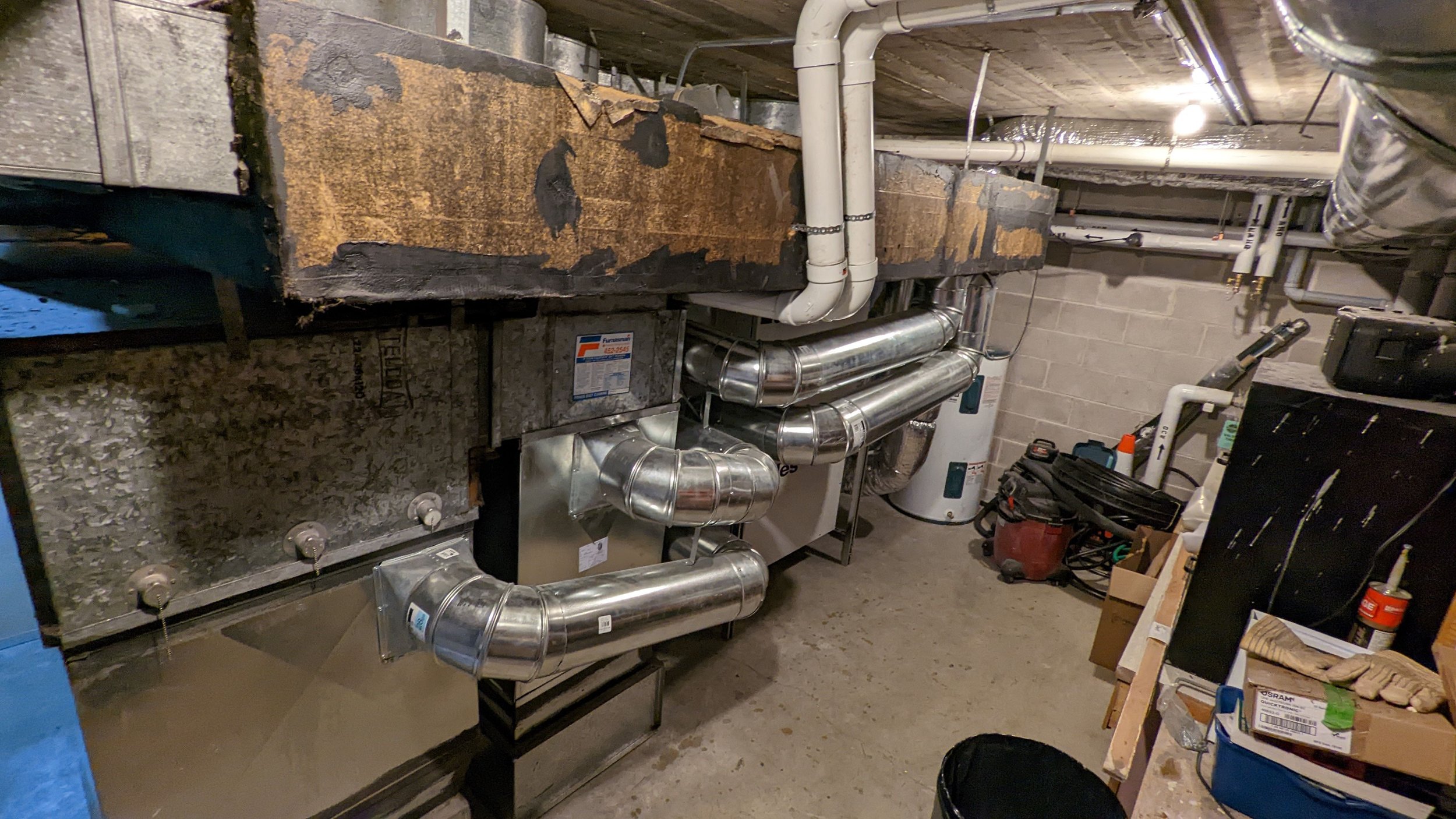
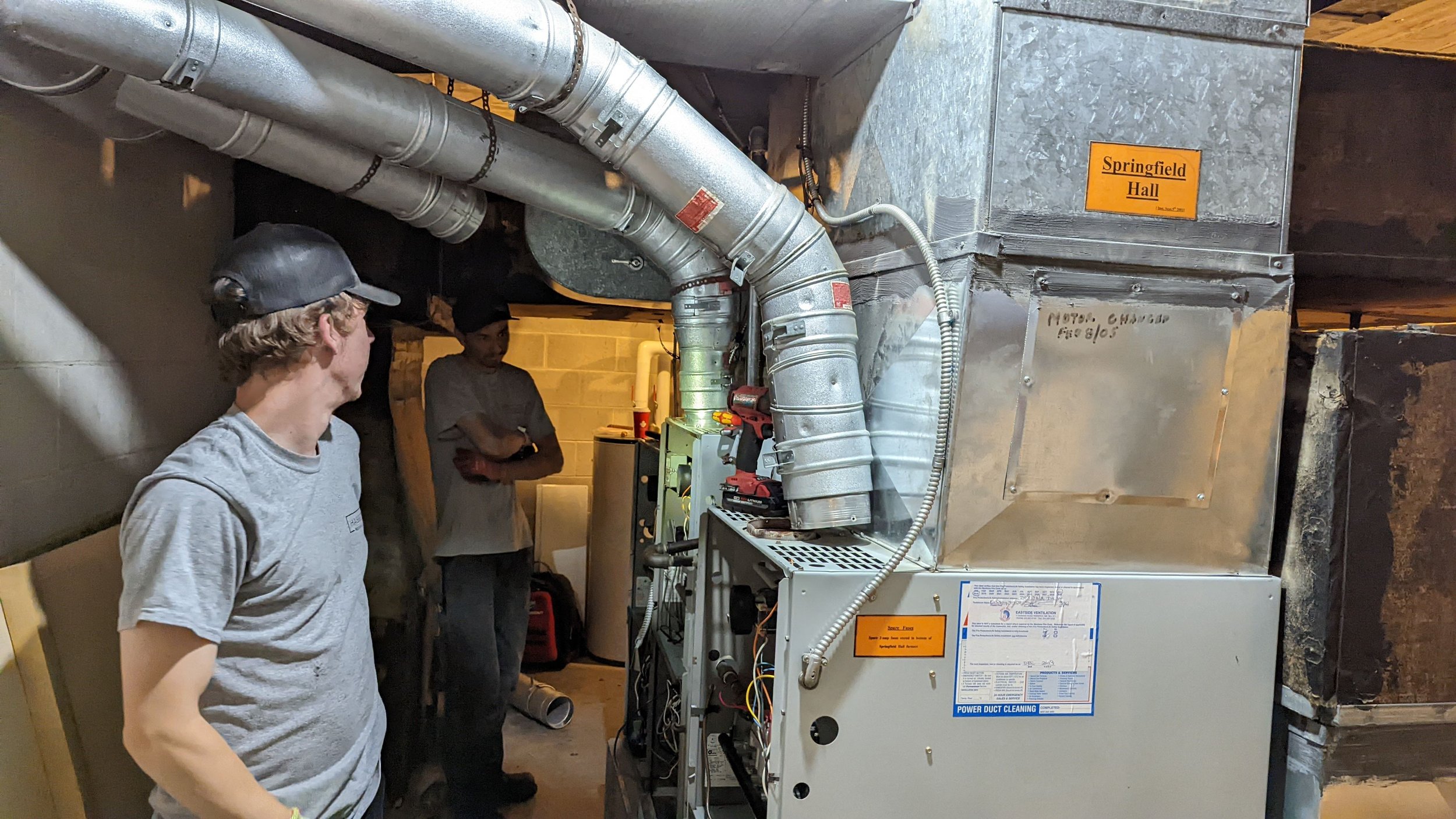
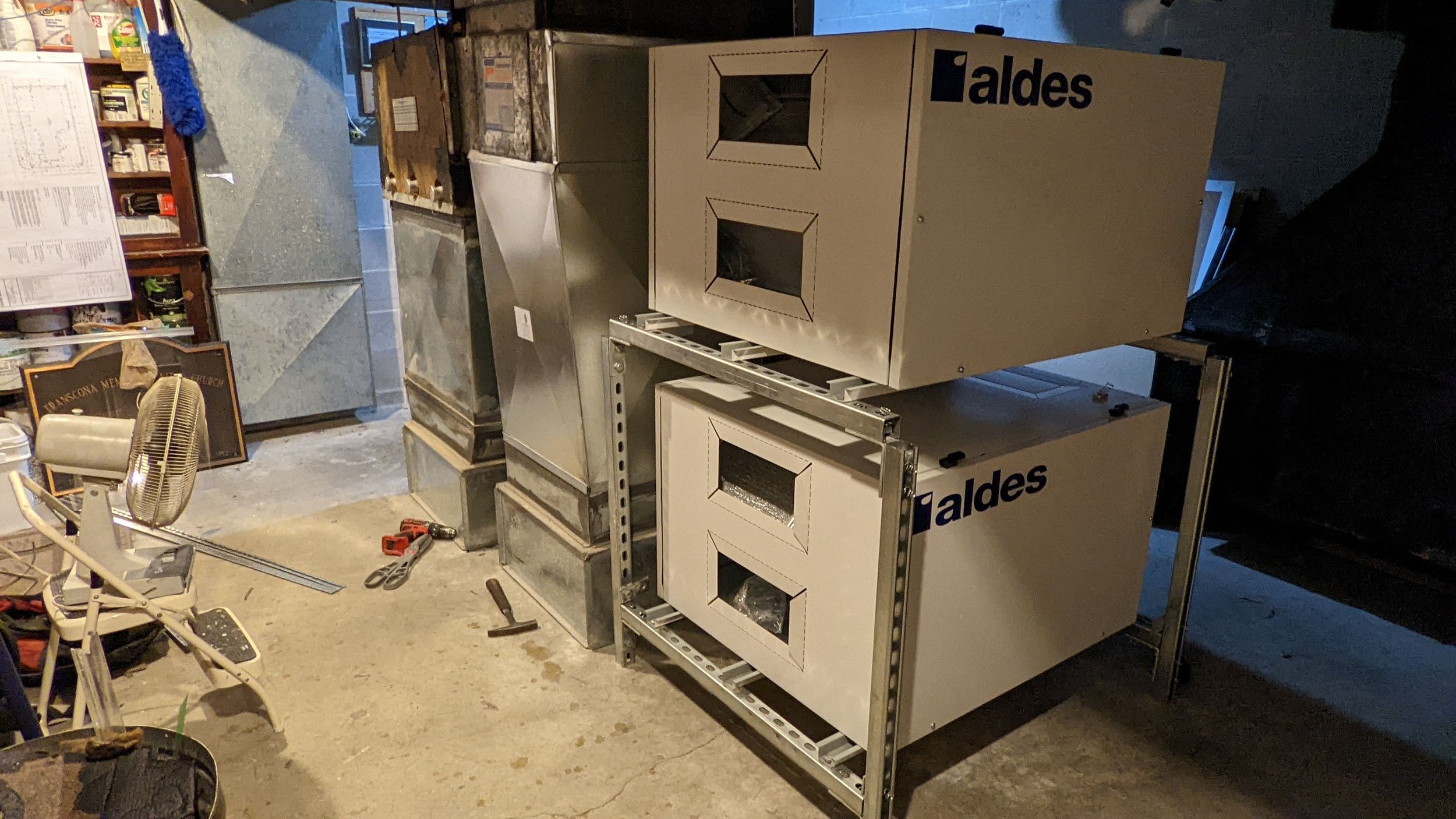
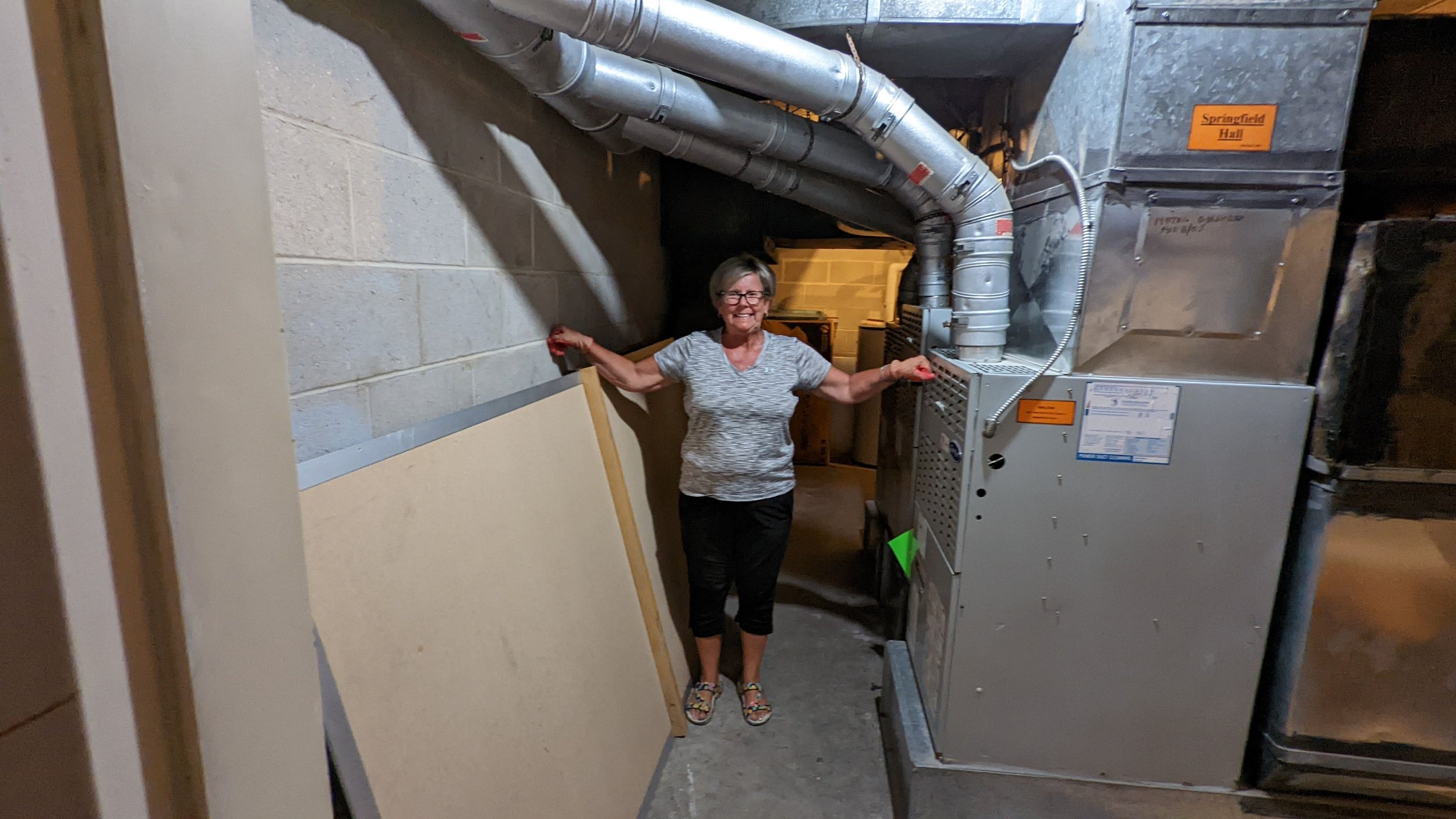
Some communities are lucky to have multiple opportunities to get funding for projects. Take Transcona Memorial United Church in Winnipeg, Manitoba, for example, who have been taking on transformative projects to green their building. In 2022, Transcona United received $30,000 in funding from a United Church of Canada Faithful Footprints grant to replace gas furnaces, transition from three to two, and install heat recovery ventilators. A year after completion, these projects helped Transcona Memorial United reduce its weather-normalized source EUI by 6.2%, GHG emissions by 12.3%, natural gas usage by 12.2%, and electricity usage by 5.5%.
Transcona Memorial United didn't stop there.
Funding for more green upgrades
Building on the momentum, the church will continue its journey towards a greener future. Seizing the opportunity to gain additional funding and fueling their mission to make their building more energy efficient and less dependent on fossil fuels, Transcona Memorial United is about to witness a remarkable transformation thanks to a significant federal investment. On June 20, 2023, the Honourable Dominic LeBlanc, Minister of Intergovernmental Affairs, Infrastructure and Communities, joined by local officials and community leaders, unveiled plans for an investment exceeding $480,000 supporting an ambitious energy efficiency upgrade at Transcona Memorial United Church.
The project is an extensive building renovation to further reduce the church's environmental footprint. Among the planned improvements are enhanced insulation, the replacement of gas furnaces with energy-efficient air-source heat pumps, and a lighting overhaul. Furthermore, a solar panel array will be installed to reduce electricity costs while contributing to a cleaner energy mix. The Heating, Ventilation, and Air Conditioning (HVAC) system will also receive an upgrade to enhance air quality and maintain a comfortable temperature. These upgrades are expected to result in an estimated 81.4% reduction in energy consumption and a 33.20-tonne annual decrease in greenhouse gas emissions.
This transformative project will be made possible by a federal investment of $484,151 through the Green and Inclusive Community Buildings (GICB) program, with an additional $50,000 contributed by the City of Winnipeg.
The GICB program is dedicated to enhancing the places where Canadians work, learn, play, live, and gather by reducing pollution, improving affordability, and creating employment opportunities. Through green upgrades to existing community buildings and new builds in underserved areas, the program ensures that community facilities are inclusive, accessible, and built to last while helping Canada work towards its net-zero emissions target by 2050. The GICB program aligns with Canada's Strengthened Climate Plan: a Healthy Environment and a Healthy Economy, focusing on reducing greenhouse gas emissions, increasing energy efficiency, and enhancing resilience to climate change. Over five years, it will allocate $1.5 billion toward green and accessible retrofits, repairs, and upgrades.
An investment good for the environment and community
This project is set to make a substantial impact on both the environment and the community. By investing in this infrastructure, the Government of Canada aims to stimulate economic growth, bolster community resilience, and enhance the lives of Canadians. Minister LeBlanc expressed his pride in supporting Transcona's efforts to build a more inclusive and stronger Winnipeg. This project transcends religious affiliations, fostering a sense of unity and well-being among the community.
Transcona Memorial United’s community gathering space is an accessible and safe facility that serves as a central hub for a wide range of community programs, catering to both seniors and youth. Among the programs that call this space home are the Transcona Seniors Pickleball Club, Transcona Girl Guides, the Alzheimer Society, and numerous others.
Russ Wyatt, City Councillor for Transcona Ward, acknowledged Transcona Memorial United Church's role as a community leader. Beyond religious activities, the church supports various non-religious groups such as the Transcona Council for Seniors, Transcona Food Bank, and youth organizations like the Cubs, Scouts, and Guides. The renovation project will undoubtedly enhance the well-being of countless residents in the Transcona community.
Breanna Drennan-Bilyk, Council Chair of Transcona Memorial United Church, expressed her delight at the positive impact this project would have on the community. She emphasized the importance of collaborative efforts in making a meaningful difference.
Stephen McKendry-Smith, Environmental Coordinator at Transcona Memorial United Church, highlighted the organization's long-standing commitment to assisting those in need within the community. The increased efficiencies resulting from this project will enable the church to extend its legacy of service while simultaneously reducing its carbon footprint. This is a vital step towards responsible stewardship of the Earth.
Rev. Carol Fletcher, Team Minister at Transcona Memorial United Church, expressed gratitude for the unwavering support from both the government and the community. This project, she noted, exemplifies the incredible outcomes that can be achieved when people unite for a common purpose.
As Transcona Memorial United progresses with additional upgrades, they set a bright example of the possibilities of what can happen when the deep commitment to greening and sustainability initiative converges with not only congregational or regional backing but also governmental support.
Keep an eye on their website for updates on the project.
Faithful Footprints Program
The United Church of Canada’s Faithful Footprints program offers inspiration, tools, and grants to help its faith communities reduce their carbon footprint. With the Church’s commitment to reducing its greenhouse gasses (GHG) emissions by 80% by 2030, this one-of-a-kind program offers up to $30,000 in grants towards energy conservation and renewable energy projects (conditions apply).
Faith & the Common Good is the delivery partner for the Faithful Footprints program. To date, we have engaged over 400 congregations, camps, and buildings across the country. Your participation in the program puts your faith into action and helps the Church reach its target.
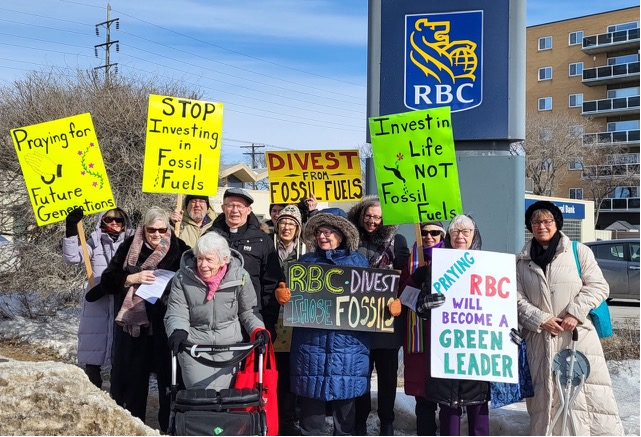
Advocating for Fossil Fuel Divestment: Prairie to Pine Regional Council Holds Financial Institutions Accountable
The United Church of Canada’s Prairie to Pine Regional Council is leading the way in advocating for climate justice. On June 3, 2023, Prairie to Pine Regional Council passed Faith Communities to Divest from Fossil Fuels, a proposal to further the region’s efforts in advocating for divestment.
Image credit: Courtesy of Lynda Trono
Fossil fuel divestment advocates for ending the expansion of new coal, oil, and gas production, phasing out existing production of these fossil fuels, and accelerating the transition to alternative renewable energy. There is immense power in placing public pressure on the companies that actively support the extraction and production of fossil fuels, which can effectively advance this transition. This includes supporting tar sands, mountaintop removal, fracking, deepwater drilling, liquefied, natural gas, and coal mining. Millions of climate activists are provoking change by challenging actors such as financial institutions to divest from non-renewable energy sources and invest alternatively in transforming the energy sector to a renewable energy supply.
Religious institutions and communities of faith across the globe have been critical leaders in calling on governments and large corporations to divest fossil fuels. Faith-based gatherings such as GreenFaith‘s No Faith in Fossil Fuels: A Climate Finance Summit have brought together faith members across the globe to learn about how banks and asset managers continue to invest in fossil fuel industries and discuss how to hold these financial institutions accountable. Efforts like these equip and motivate faith leaders and communities of faith to take the bold steps necessary to effect real change.
The United Church of Canada's Commitment to Divestment
The United Church of Canada is committed to ensuring a deeper alignment of its investments with its values – and has made strides toward fossil fuel divestment. Strong votes at key shareholder proposals are helping advance better environmental, social, and sustainability governance and improvements to corporate practices. The church continues to sign on to various high-profile investor statements. For example, in 2021, The United Church of Canada joined 36 institutional investors, managing $5.5 trillion in assets, signing on to a new Canadian Investor Statement on Climate Change as a member of the Responsible Investment Association, pledging to manage assets in promoting the transition to a low carbon economy. The church also joined the Powering Past Coal Alliance (PPCA), a coalition of national and subnational governments, businesses, and organizations working to advance the transition from unabated coal power generation to clean energy.
Prairie to Pine Regional Council Takes Action in Winnipeg
Communities of faith and faith-based organizations are taking their own steps and advocating for others to end financial investment in fossil fuels. Spanning across Manitoba, Saskatchewan, and northwestern Ontario, The United Church of Canada’s Prairie to Pine Regional Council is leading the way in advocating for climate justice. They have been raising their spirited voices and calling for serious divestment in the fossil fuel industry by protesting against companies that invest in harmful oil and gas extraction.
[Image credit: Courtesy of Lynda Trono
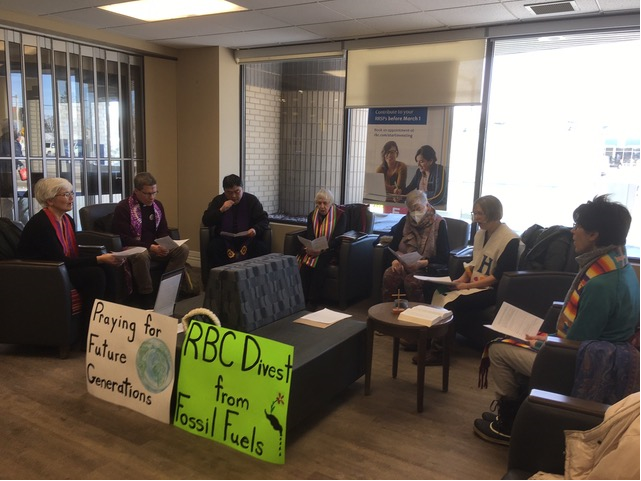
Since Ash Wednesday, several church leaders have gathered to pray weekly inside different branches of the Royal Bank of Canada (RBC) in Winnipeg.
Lynda Trono, retired United Church minister and one of the lead organizers, explains in a Winnipeg Free Press article, Praying in public for environmental justice, “We pray out of fear for future generations in this time of climate change. We fear that the banks who fund fossil fuel expansion will treat our current climate crisis in a ‘business-as-usual’ fashion and continue to invest in fossil fuel infrastructure. We pray with a sense of urgency for things to turn around.”
New Regional Policy Calling for Climate Change Divestment
On June 3, 2023, Prairie to Pine Regional Council passed Faith Communities to Divest from Fossil Fuels, a proposal brought to the region by Rev. Lynda Trono, Rev. Jeri Bjornson, and Diane Dwarka. The proposal’s objective is to further the region’s efforts in advocating for divestment and keeping financial institutions accountable.
The proposal highlights The 44th General Council’s commitment to intensify its historic commitment to climate justice through stronger denominational advocacy and investor action — a commitment which is reinforced by The United Church’s strategic plan. Shedding light on the pressing reality of climate change, the proposal states that “the current climate catastrophe calls us to build on the work that we have already undertaken and more intentionally engage all levels of our church”.
Through the agreement, Prairie to Pine Regional Council will:
Instruct the Regional Council Executive to review the Regional Council’s investment policies, investments, and the practices of its financial institutions, using the United Church in Canada’s “Responsible Investing Guiding Principles”, with a particular focus on climate justice and encouraging the transition from a carbon economy toward becoming leaders in a green economy.
Create an educational process to assist communities of faith and other ministries, their membership, and supporters to:
Communicate with their financial institutions with regard to any policies and practices that fall short of a transition to a green economy, particularly continuing investments in fossil fuel expansion projects.
Consider other actions such as switching to a more climate-conscious institution, divesting from less ethical investments, and transferring investments to ethical funds.
Support and promote a network within the Regional Council to assist its membership in living out the above commitments, and to study Committed to Climate Action: The 2021-2022 Sustainability Report | The United Church of Canada (united-church.ca) and study and act on recommendations found in the 44th General Council proposal GS08 Climate Justice Commitment.
Excitement and urgency surround the fossil fuel divestment advocacy commitment taken on by Prairie to Pine Regional Council. Encouraging others on a local and regional level to participate in similar climate work can strengthen the collective pressure to advocate to put an end to fossil fuels investment.
To read the entire policy, click here
Get Involved
To learn more and get involved in Praying in Public for Environmental Justice at Royal Bank of Canada branches, in Winnipeg, email lyndatrono@gmail.com.
Faithful Footprints Program
The United Church of Canada’s Faithful Footprints program offers inspiration, tools, and grants to help its faith communities reduce their carbon footprint. With the Church’s commitment to reducing its greenhouse gasses (GHG) emissions by 80% by 2030, this one-of-a-kind program offers up to $30,000 in grants towards energy conservation and renewable energy projects (conditions apply).
Faith & the Common Good is the delivery partner for the Faithful Footprints program. To date, we have engaged over 400 congregations, camps, and buildings across the country. Your participation in the program puts your faith into action and helps the Church reach its target.
Aleyxa Gates Julien is the PR/Communications Coordinator for Faithful Footprints and can be reached at agatesjulien@faithcommongood.org.

Crescent Fort Rouge United Church takes steps toward climate action with Faithful Footprints
In 2018, Crescent Fort Rouge United Church participated in a National Trust and Faith & The Common Good seminar in our building and benefitted from an energy audit. We discovered the possibility of a Faithful Footprints grant for energy upgrades which aligned perfectly with planning and built on our activities to date.

Across the country, United Churches are doing their part to address the climate crisis by getting their houses in order and reducing their own carbon emissions. Through a partnership with Faith & the Common Good, the United Church of Canada is offering grants and support for churches to measure their energy use and reduce their climate pollution, in ways that save money and strengthen congregational renewal. The initiative, called Faithful Footprints is about living climate commitments, for future generations, and for all of creation. To inspire your congregation to get involved, we have stories lined up from three participating congregations from across the country. Crescent Fort Rouge United Church, in Winnipeg, Manitoba is the first.
As well, stay tuned for a full feature of Faithful Footprints in the February 2020 edition of the United Church of Canada’s Mandate Magazine.
In 2018, Crescent Fort Rouge United Church participated in a National Trust and Faith & The Common Good seminar in our building and benefitted from an energy audit. We discovered the possibility of a Faithful Footprints grant for energy upgrades which aligned perfectly with planning and built on our activities to date.
As with many churches, CFRUC has considered its future. In 2012, CFRUC explored possible building development with EDGE National. In 2015, we began a further clarification of values by turning to community consultation to mine the wisdom of the congregation and external partners. Our thinking was that we needed to build on our strengths – who we are and our success to date which includes the asset that the building provides to external partners, especially to the arts. A key question at every turn is “What is God calling us to do?” Thus, in 2017, the congregation of CFRUC approved outreach missions in three areas: 1. Children, Youth, and Families 2. Seniors 3. Hospitality to the Arts. We live out our ministry in these multiple ways.
CFRUC sees the arts as transformative, revealing of truth and new ways of seeing feeding spirit, and a means of serving others outside our walls. Opening our doors to the arts and using art in our programming with children and seniors helps us to live out our values of inclusion and engagement with the community.
CFRUC boasts a large, acoustically acclaimed sanctuary that seats over 700, a fellowship hall, a second-floor hall with a stage and small kitchen area, several small meeting rooms, a basement child care facility with large gymnasium and outdoor play area. CFRUC seeks to become a multi-use community facility offering hospitality and care to our missional areas with energy and reciprocal benefits between the arts initiatives and the programming for children, youth and seniors.
CFRUC continues to explore change and ways to sustain and increase operational funding. At the same time, we are not currently financially threatened and can continue should we not be able to create any substantive additional change. The congregation at CFRUC has always been steadfast and peaceful about the way forward. They do not wish to trade their values for economic decisions that are presented to them because of their prime real estate in Winnipeg. They are not willing to incur debt to keep the doors open. They are willing to increase their effort to better serve their mission and vision.
CFRUC has the asset of skilled, experienced and energized volunteer congregation members added to by engaged and committed external partner networks and expertise. We have been blessed by a property management team that are skilled and dedicated and who have kept our building in good shape on top of its sound foundation and has made small and steady progress in energy improvements.
Faithful Footprints offered us an opportunity aligned with our values and we are grateful! It allows us to participate as a partner in addressing climate change while adding funding to our own monetary and in-kind contributions. We are replacing two fridges, a freezer and a dishwasher with energy-efficient appliances which will impact the electricity bill. We are also replacing dated and inefficient light bulbs and fixtures, also reducing the bill. We are replacing the baseboard heaters in our Fellowship Hall on the main floor with infrared heating panels, and replacing caulking and seals on the windows, thus also reducing the electricity bill and potentially the natural gas bill. These efforts, along with our commitments to recycling, composting and buying locally, demonstrate our dedication to climate justice.
Written by: Sandi Howell, sandihowell@shaw.ca

Compost and Community Building - Crescent Fort Rouge United
Little did we know how successful our program would be! We feel great to be providing this community compost opportunity and are already considering how we will respond to a need for even more compost capacity.
Expanding the compost footprint at Winnipeg's Crescent Fort Rouge United
“I am a member of the Green Team at Crescent Fort Rouge United Church. I am also a big fan of two-bin compost systems – where compost is added to one bin while the other is left to mature.
In 2010 we installed a four foot by four foot bin (made from old fence pieces from a neighbour who was building a new fence and discarding the old one) with a division down the centre, thinking a two foot by four foot area would be sufficient for the amount of compost we would collect.
Little did we know how successful our program would be! Just two years later we doubled the size of our compost operation. More recently we added commercial compost bins to give the area a neater appearance. The contents of these smaller bins are transferred to the larger compartments.


We harvest our mature compost each fall (the compost is used in the church’s adjacent Memory Garden) and every year we are producing more compost. This is thanks to the dedication of church members who live in apartments and bring their compost on a weekly basis.
We have also noticed folks in the community who do not attend the church bringing in their compost. We feel great to be providing this community compost opportunity and are already considering how we will respond to a need for even more compost capacity. Check out an excerpt from the Church Newsletter. (pictures here)
NOTE: At this point, Faithful Footprint grants are limited to building and energy efficiency projects, and are not available for waste-reduction efforts such as this. But these projects are great, and should be celebrated. Way to go Crescent Fort Rouge!