
BLOGS
Churches across the country are stepping up. Read their stories and access other climate and energy resources here.
Whitehorse United’s comprehensive energy study leads to biggest upgrade yet
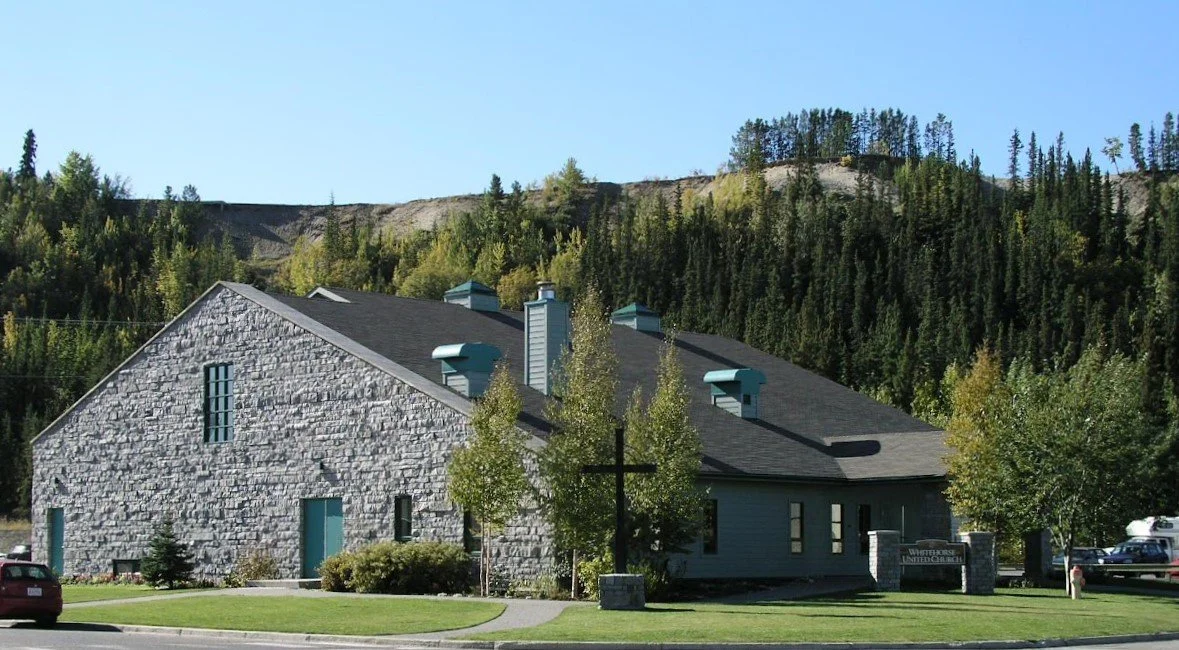
Conducting a comprehensive energy study can reveal new opportunities and strategies to improve building efficiency. An assessment at Whitehorse United Church in Whitehorse, Yukon led to the church’s largest energy project to date, a full HVAC upgrade incorporating air source heat pump technology.
Energy upgrades and building projects can significantly reduce energy consumption and carbon emissions, but sometimes the most innovative approaches aren’t obvious. Conducting a comprehensive energy study and building assessment can reveal new opportunities and strategies to improve efficiency that may not have been previously considered. At Whitehorse United Church in Whitehorse, Yukon, this approach led directly to the congregation’s largest energy project to date, a full HVAC upgrade incorporating air source heat pump (ASHP) technology.
Rebuilt in 1993–1994 after a devastating fire, its building was constructed to above-code efficiency standards, including R28 walls, temperature-controlled cycling block heater outlets, and T8 fluorescent lighting. For the past decade or so, the congregation has continued to undergo a handful of energy saving upgrades to lower both consumption and operating costs, as well as intentional routine maintenance and repairs.
Projects have included:
2012 – Installed LED sanctuary lighting.
2015 – Renovated the kitchen with LED lighting and Energy Star–rated appliances.
2016 – Commissioned a study from a local engineering firm to explore alternatives to the oil heating system, identifying HVAC upgrades that could reduce oil use.
2017 – Further studied non-fossil fuel heating options before replacing the underground oil tank with an above-ground storage system.
2018 – During a roof replacement, upgraded insulation from R40 to R68.
2018–present – Tested and adopted various LED lighting alternatives throughout the building.
Identifying new opportunities through a comprehensive study
Whitehorse United Church’s commitment to sustainability ultimately led to one of its largest renovation projects to date after a comprehensive energy assessment. Between 2019 and 2021, the church commissioned a detailed engineering study to develop a plan, outlining which projects could be managed by in-house volunteers and which exceeded the congregation’s capacity, requiring advanced engineering, outside expertise, and additional funding.
The study identified the integration of air source heat pump (ASHP) technology as a new opportunity to further reduce the church’s fossil fuel consumption. Implementing HVAC upgrades with ASHPs represented the largest and final step in the comprehensive energy upgrade plan.


Beyond past improvements
While the church had invested years of effort and resources, much of the cost for this HVAC upgrade was not accounted for in the original project budget. Smaller-scale improvements and upgrades were largely funded and completed in-house. These included ventilation adjustments, the conversion of T8 fluorescent lighting to ballast-free LED tubes, and other modest measures. The church allocated over $26,000 from Special Gift Funds (bequests) to in-house improvements and the detailed engineering work needed for the HVAC upgrades. Additional funds were also raised internally by the congregation to support these efforts. Despite these contributions, Whitehorse United required external support to carry the full HVAC upgrade through to completion
Making the final step possible
For the HVAC upgrade, the church sought external support. Whitehorse United Church established a strong relationship with the Yukon Government’s Energy Solutions Centre (ESC), which offered up to 40% capital cost rebates for qualifying energy efficiency measures. Working closely with the ESC team, the church secured available rebate funding and maximized its eligibility. In addition, the church submitted a $75,000 funding application to the Yukon Government’s Community Development Fund to help cover project costs, benefiting from its status as a facility regularly used by local community and charitable groups. Grant funding through Faithful Footprints further supported the HVAC work, covering the replacement of analog system controls with a modern automated system, insulation of cold air ducts, installation of insulated airflow control dampers, and the addition of two cold-climate air source heat pumps, one in the sanctuary and one in the church hall in the basement.
Faithful Footprints Program
The United Church of Canada’s Faithful Footprints program offers inspiration, tools, and grants to help its faith communities reduce their carbon footprint. With the Church’s commitment to reducing its greenhouse gasses (GHG) emissions by 80% by 2030, this one-of-a-kind program offers up to $30,000 in grants towards energy conservation and renewable energy projects (conditions apply).
Faith & the Common Good is the delivery partner for the Faithful Footprints program. To date, we have engaged over 500 congregations, camps, and buildings across the country. Your participation in the program puts your faith into action and helps the Church reach its target.

Camp Fircom: The Off-Grid Effect
A mere 20 minutes from mainland Vancouver, Camp Fircom is a far cry from hectic city life. Located across the Howe Sound on Gambier Island, and accessible only by water taxi, the remote United Church camp has offered a “place of rest and healing” for 100 years.
A mere 20 minutes from mainland Vancouver, Camp Fircom is a far cry from hectic city life. Located across the Howe Sound on Gambier Island, and accessible only by water taxi, the remote United Church camp has offered a “place of rest and healing” for 100 years.
Ron Injates, who currently sits on the camp’s board of directors and property committee, sets the scene:
“It's such a unique location and experience being on the island. The kids who come here, they get on a boat and that's exciting from the second they leave the dock. We're not too far from town, but sort of in the middle of nowhere and totally off the grid at the same time.”
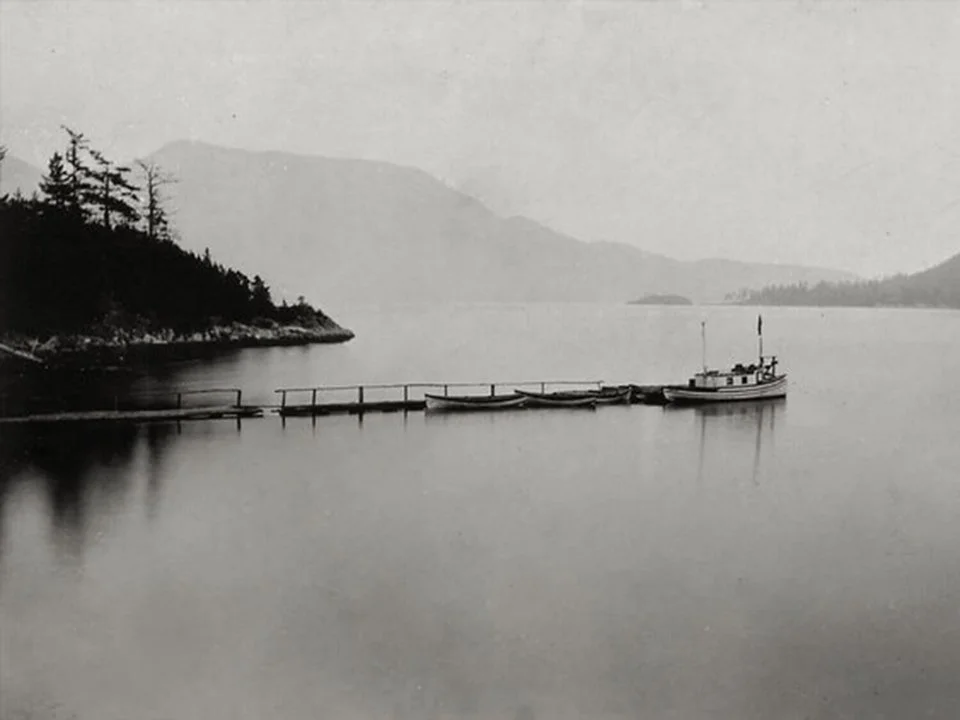
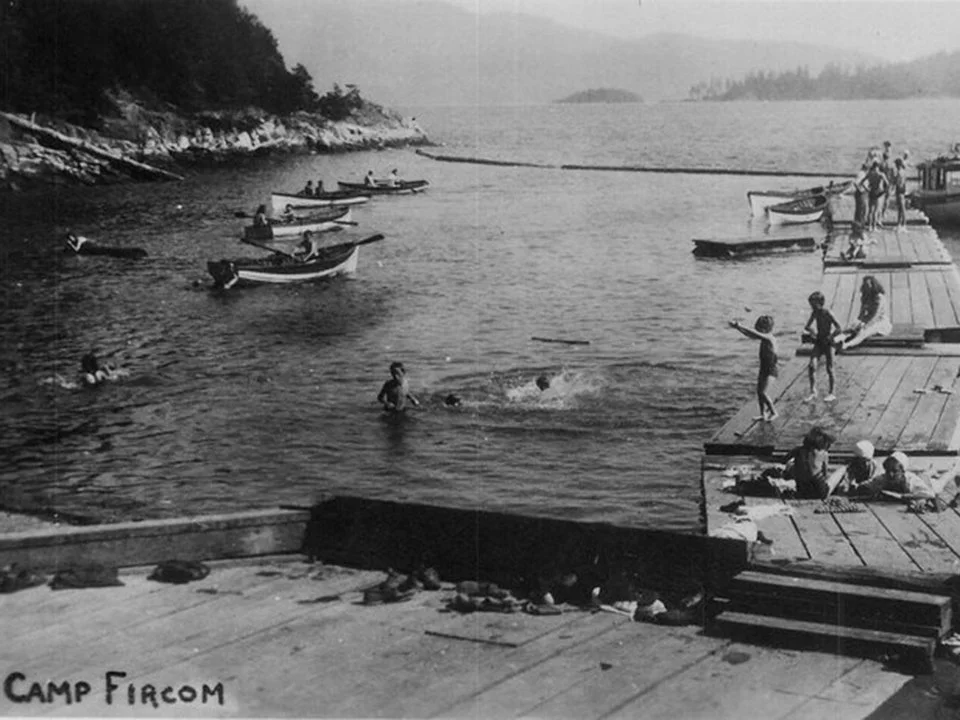
Since 1923, the site has supplied its own clean drinking water, sanitation, heat and energy. As Ron says, “Everything that a municipality would provide for you is basically what we have to provide for you.”
Unsurprisingly, “it's super expensive and super complicated,” because not only are they on the hook for all those services, but the fact that water is the only way to the camp brings a whole new level of complexity.
“That's what I tell kids who are here. Everything you see here came on a boat at one point, every little screw, every nut, every window,” Ron says.
And over the last century, little by little, barge trip by barge trip, Camp Fircom has been working to curate a site that celebrates and lives in harmony with the natural world.
In 2005, the camp closed to undergo major renovations that encompassed burying utilities, putting in a new sewage treatment plant, renovating old accommodations, and building new cabins and halls. The “rudimentary” power and energy provisions also got an upgrade, so when the doors reopened in 2011, the camp was offering 24-hour electricity for the first time. The commitment to the off-grid experience, however, meant that heat and electricity was still coming from propane and diesel generators.
Recognizing the unsustainability of their latest energy solutions, camp problem-solvers like Ron looked to the natural abundance of the sun and water to find alternative onsite power sources. Most recently, in November 2022, the camp installed a unique 16kW solar system on the roof of their south-facing, felicitously unobstructed archery shelter.
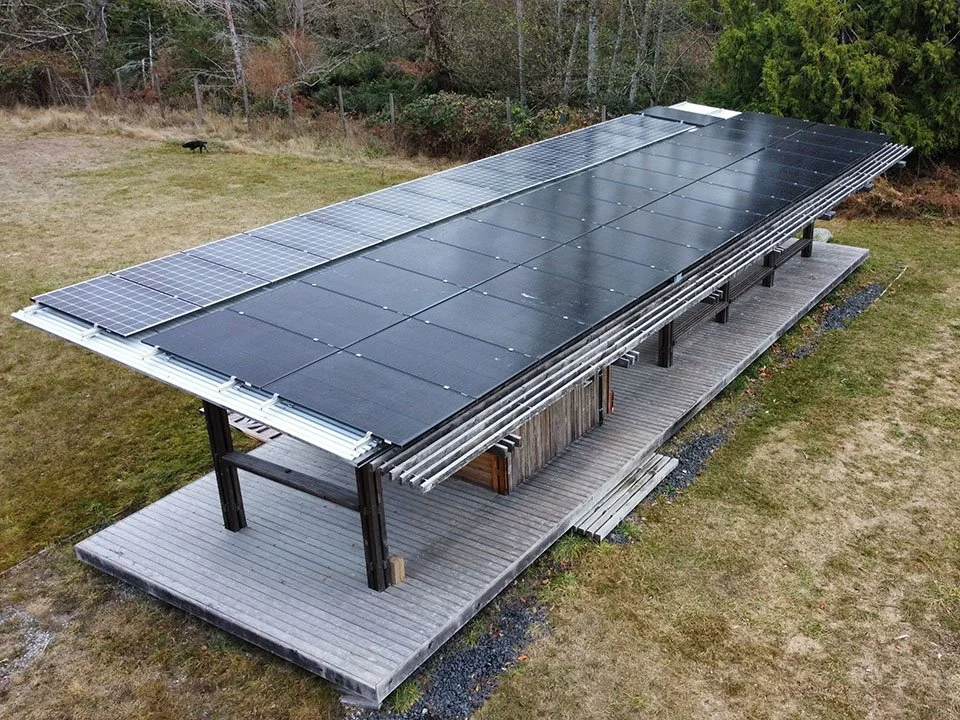

The project was a long time coming, as the process kicked off back in 2018, but the solar installation finally materialized courtesy of countless volunteer hours, barge trip donations, and grants from the United Church’s Faithful Footprints program and Vancity’s Envirofund. The original plan for the funding was to “harness the power of Fircom Creek,” which flows through the camp, via micro-hydro generation. But thick, vexing layers of bureaucratic red tape and the advent of COVID-19 pumped the brakes on the project, compelling the team to course correct and turn their focus to solar.
Reflecting on the lengthy, at times arduous journey and sweet victory of finally having the solar panels up, Ron says, laughing, “Sometimes I just go there and look at them.”
His heart is still set on getting a micro-hydro project up and running someday soon though, especially since, “It's the perfect complement to the solar we have here.”
“The creek is running all the time, so that would add up at night. It would run all winter and then, in the summertime, the creek dries up, actually, so then the solar would take over.”
Sharing the camp’s goal of being 90% renewably powered by 2030, Ron says, “In my perfect Camp-Fircom dream world, there'd be solar panels on all kinds of buildings around here and we'd have more power than we need — and no diesel bills!”
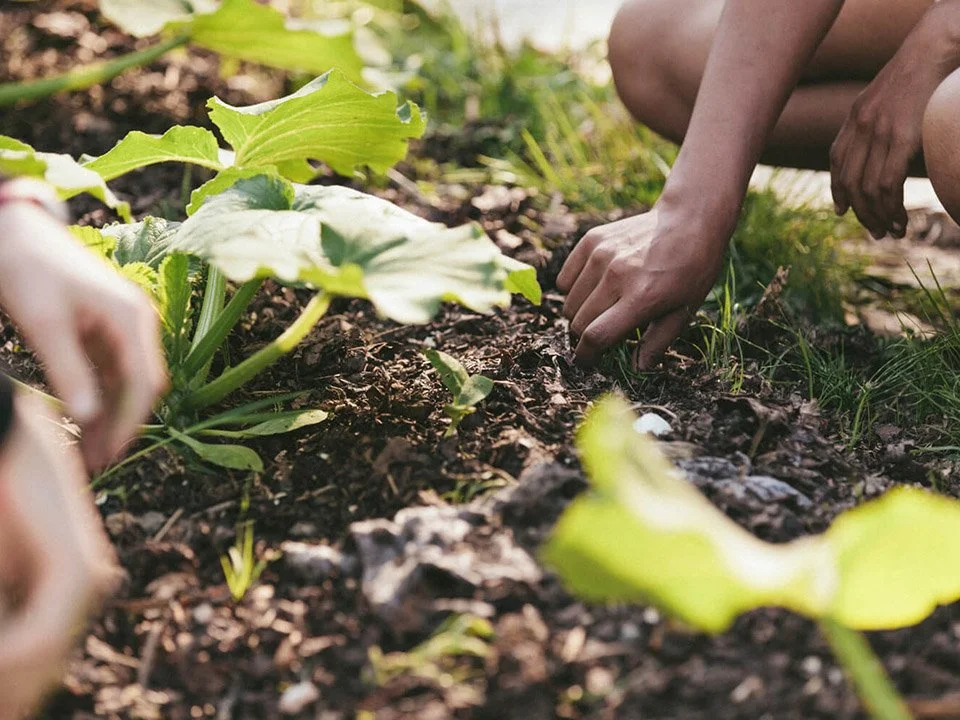

At Camp Fircom, responsible energy consumption and sustainability are central principles, palpable through the thoughtful design of their energy systems and conservation education, zero-waste compost and recycling practices, and organic farm (with chickens and everything!) supplying their kitchen 30 metres away.
“When you're talking to kids about conservation, or having a lighter footprint, or something like that, I think it's pretty difficult to do when you're in the city,” Ron says. “But when people come here, it’s obvious that you have an impact on things.”
“Even with something as mundane as the convenient flush of a toilet, I can walk them up and show them where the water comes from, where the water goes, what a well pump has to do to fill the toilet again, that kind of thing,” he continues, “So I think that has more of an impact than just droning on and only explaining things to kids, or adults really. It’s immediately apparent when you come here that everything you do has a consequence.”
And whether you’re a camper or staff member, volunteer or off-season visitor, all are invited to contemplate questions like,“How lightly can we tread upon the earth? How does the earth respond when we care for it and cultivate it thoughtfully?”

All photos courtesy of Camp Fircom.
Faithful Footprints Program
The United Church of Canada (UCCan) Faithful Footprints program offers inspiration, tools, and grants to help its faith communities reduce their carbon footprint. With the Church’s commitment to reducing its greenhouse gas (GHG) emissions by 80% by 2030, this one-of-a-kind program offers up to $30,000 in grants towards energy conservation and renewable energy projects (conditions apply).
Faith & the Common Good is the delivery partner for the UCCans Faithful Footprints program. To date, we have engaged over 300 congregations, camps, and buildings across the country. Your participation in the program puts your faith into action and helps the Church reach its target.
Cari Kilmartin is the Western Regional Coordinator for Faithful Footprints and can be reached by phone 780-216-1867 or email cari@newo.energy