
BLOGS
Churches across the country are stepping up. Read their stories and access other climate and energy resources here.

First United reduces heat loss with targeted building upgrades
First United Church in Vermilion, Alberta decided to take a closer look into their ongoing heating issues to better understand what practical improvements could make their buildings.
Heat loss is one of the most costly and least visible challenges facing church buildings. Drafts, aging equipment, and inefficient systems drive up energy bills month after month. For many communities of faith, the issue isn’t a lack of care, it's knowing where to start.
In the fall of 2023, First United Church in Vermilion, Alberta decided to take a closer look into their ongoing heating issues. The church recognized that proactive steps were needed to better understand what practical improvements could make their buildings.
“The Church Board knew that there were some areas, such as the windows, that needed some attention, and were worried that the furnaces were getting older and what would we do if one cratered in the middle of a cold snap.” says Rex Cunningham of First United Church.
After reaching out to the Faithful Footprints Program, First United received a formal energy audit that was completed by the program’s Western Support Centre, Newo Global Energy. The audit confirmed what the church had suspected, significant heat loss, inefficient energy use, and concerns about aging furnace systems, while also highlighting additional areas for improvement.
Identifying areas to improve heat loss
The audit pinpointed exactly where heat was escaping and where energy use was highest. Consisting of two connected spaces, the Sanctuary and Office (Building A) and the Hall and Kitchen (Building B), the audit highlighted several high-impact opportunities to significantly reduce ongoing heat loss for each building. The church approached improvements strategically, addressing each recommendation based on urgency, impact, and long-term energy savings:
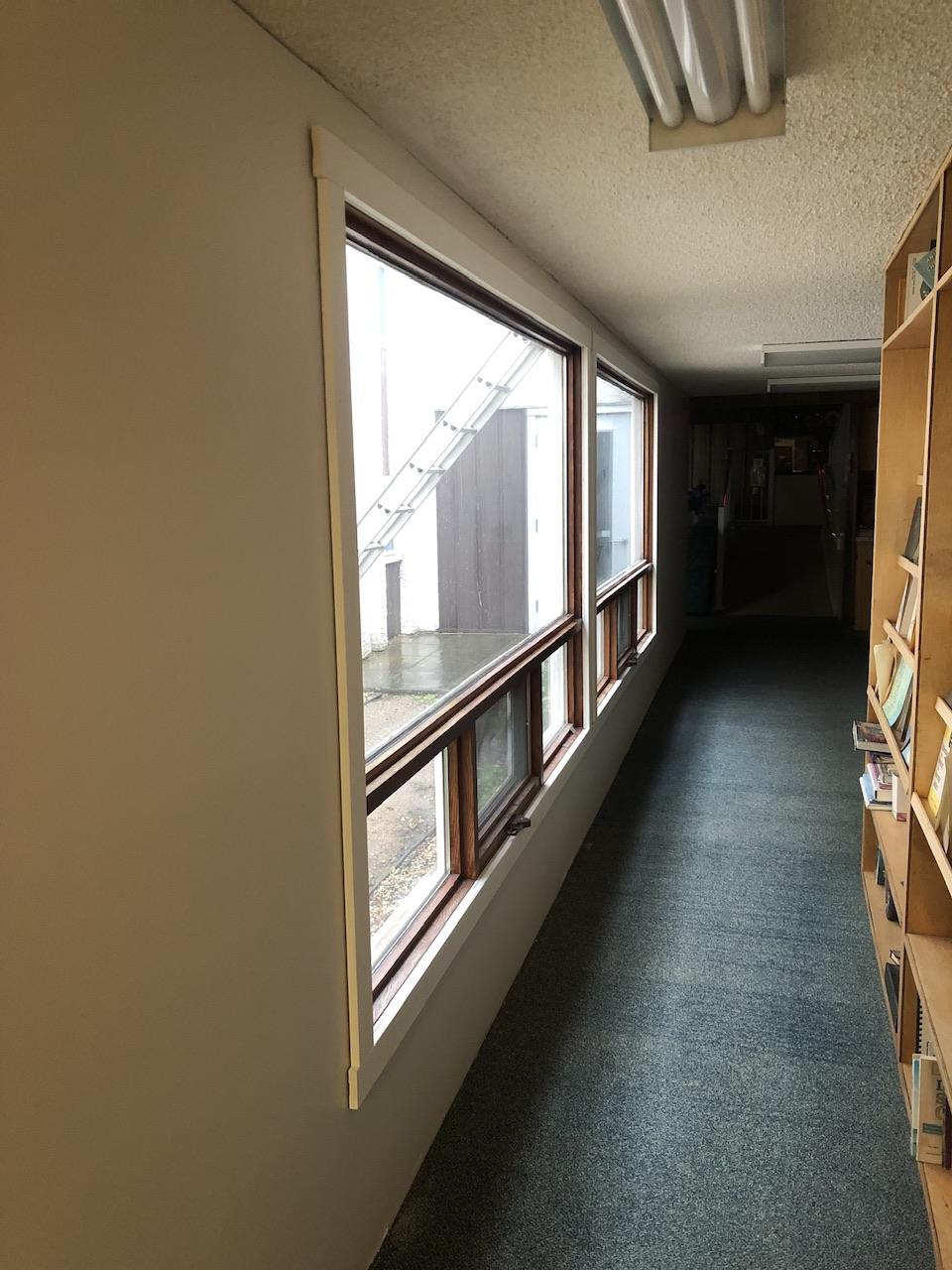
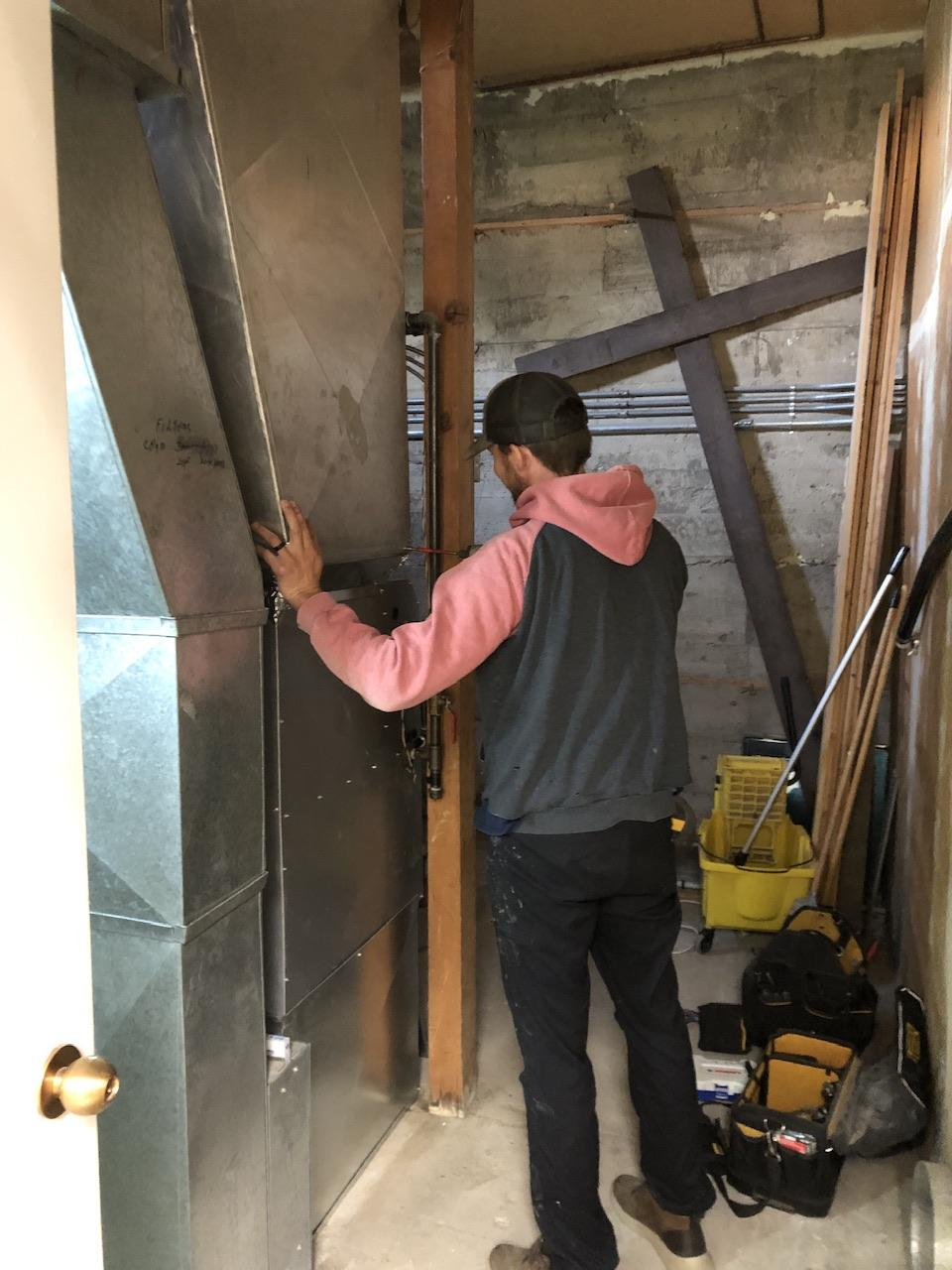
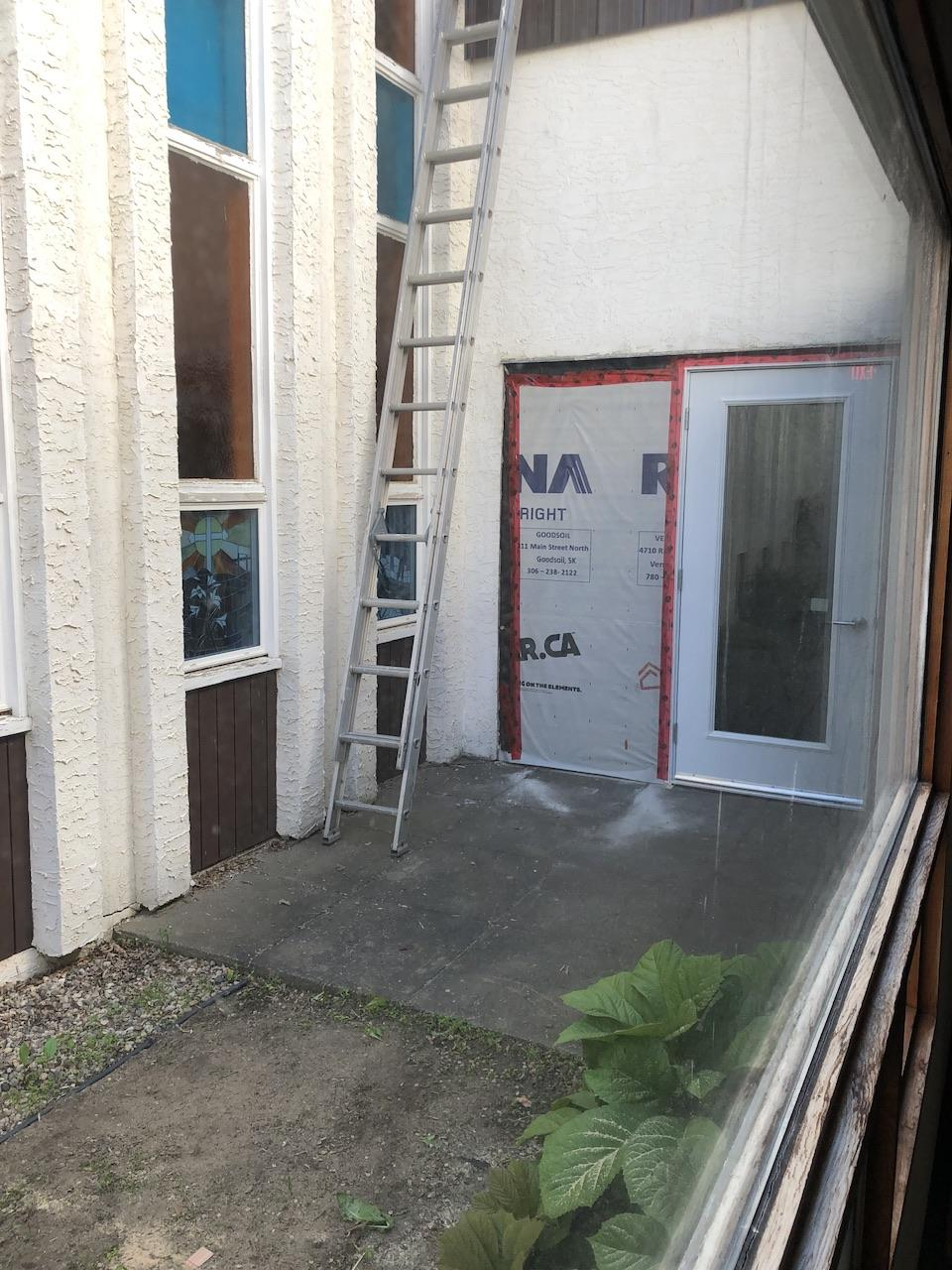
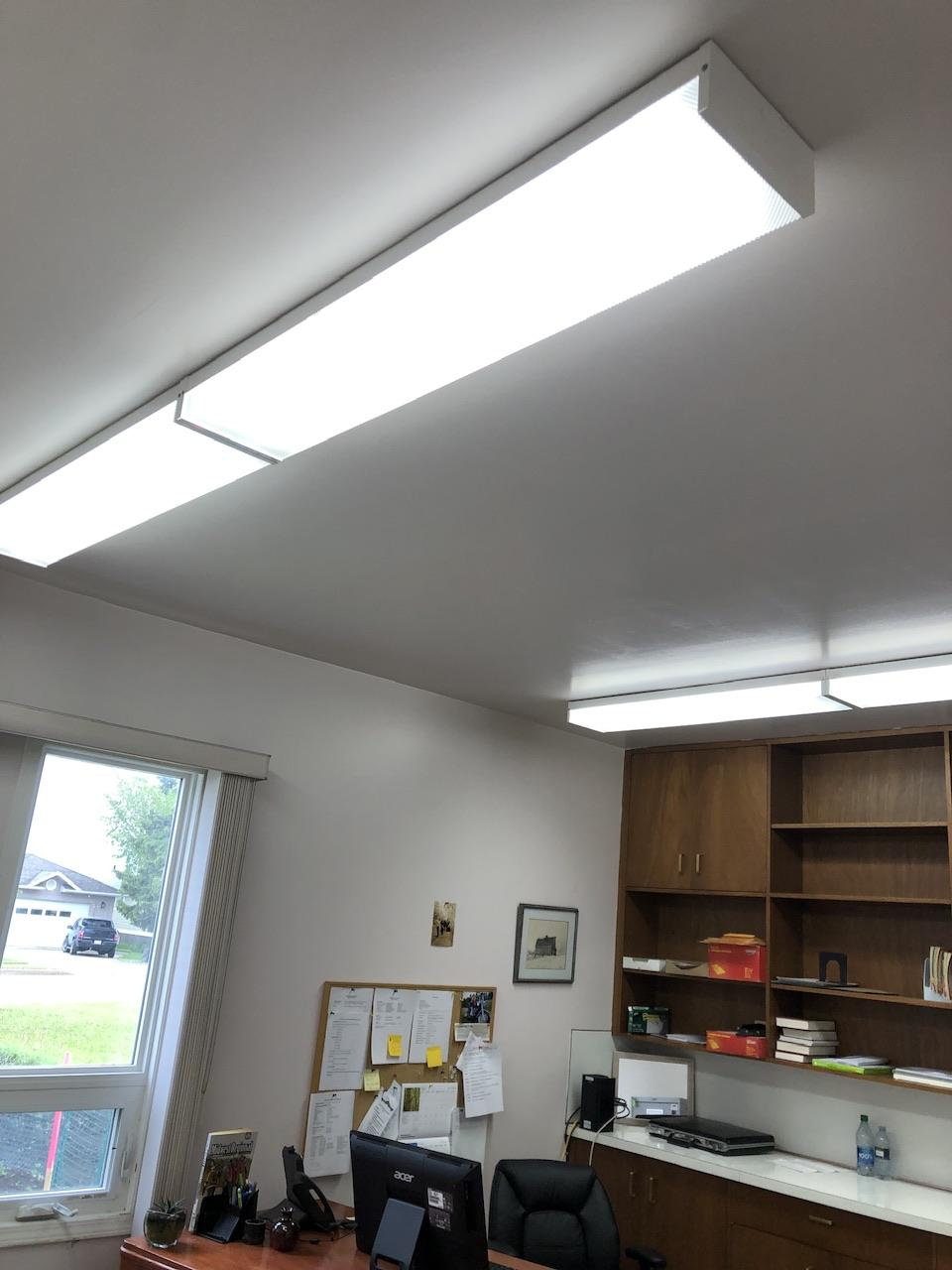
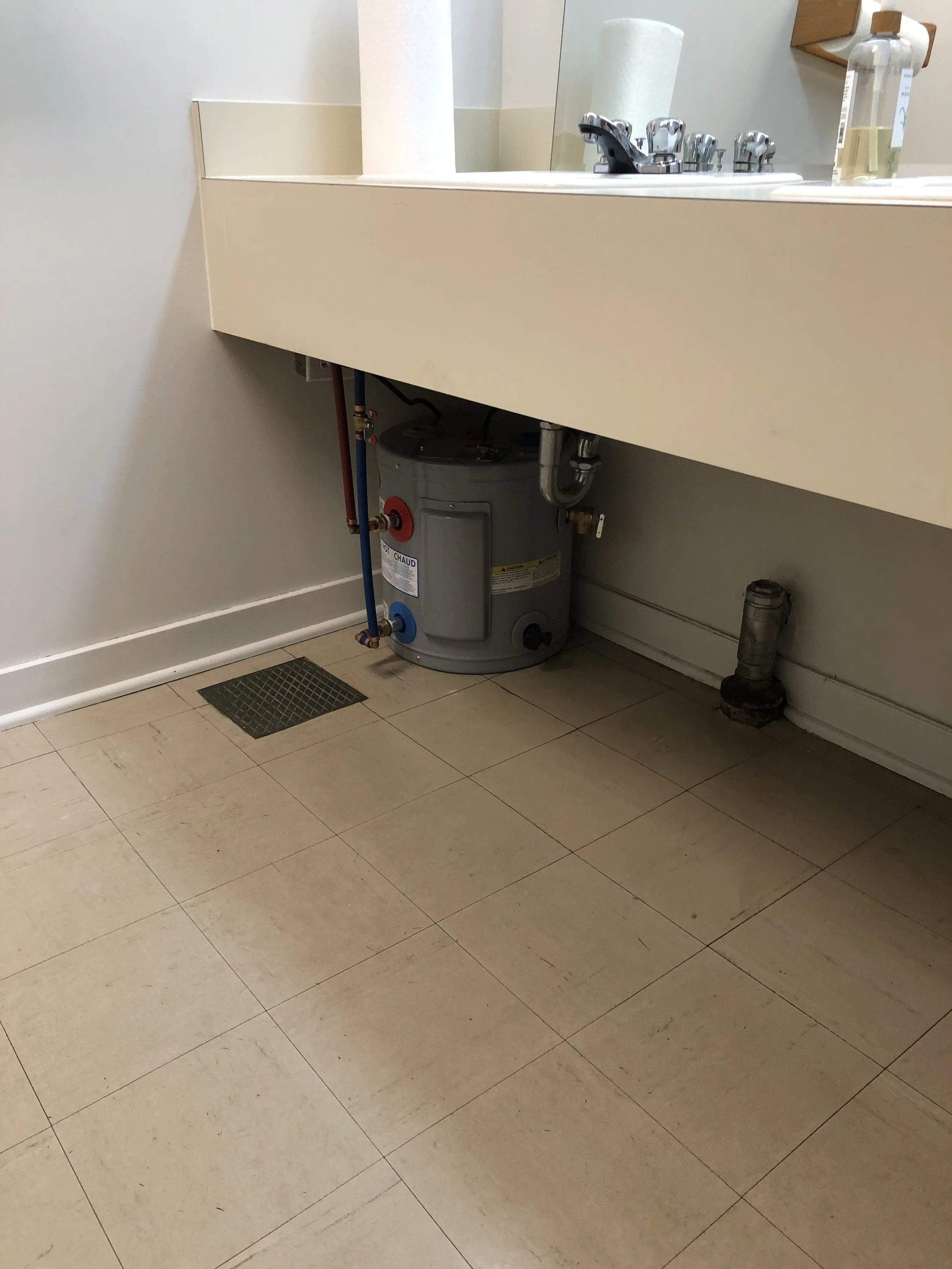
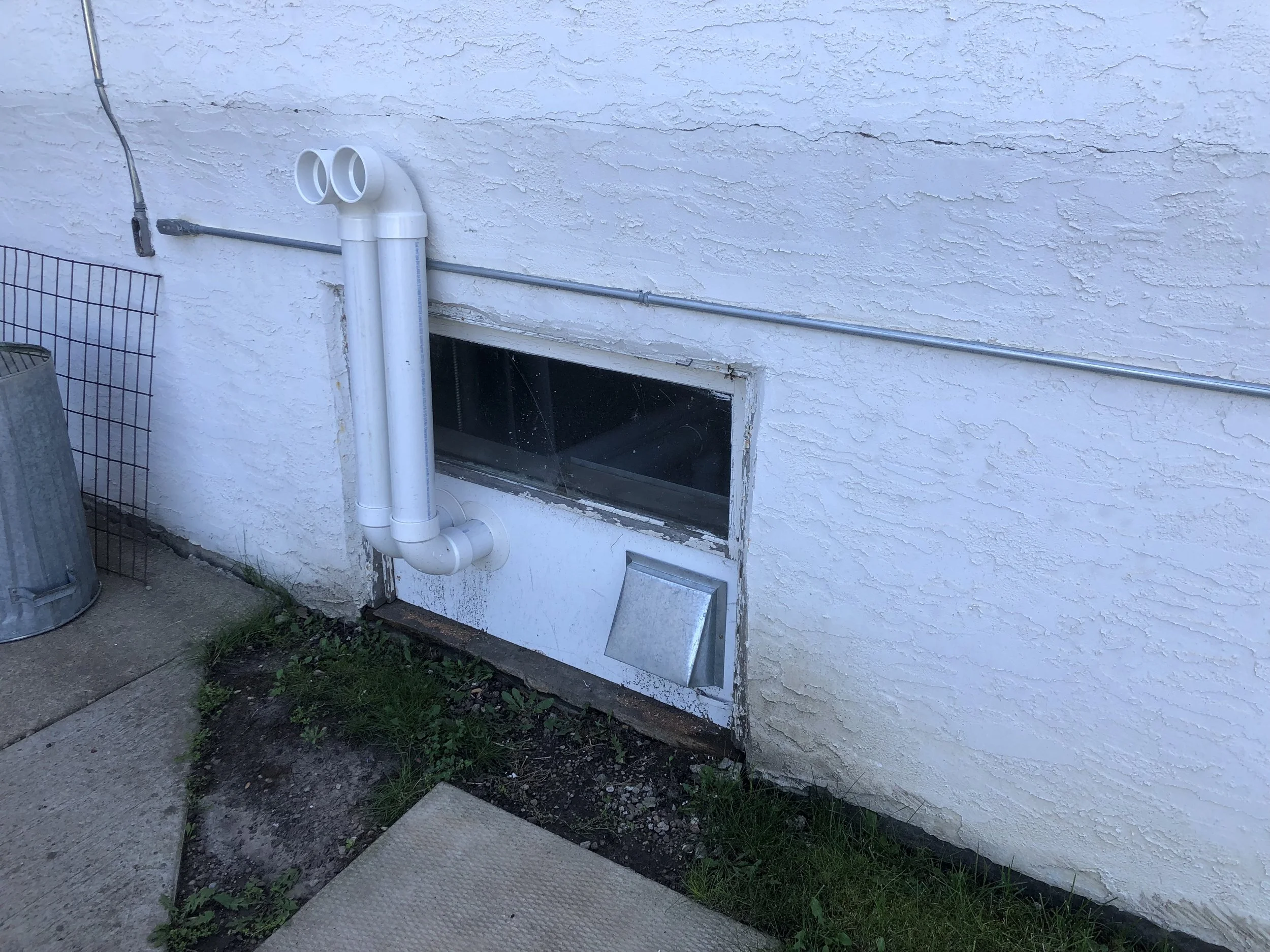
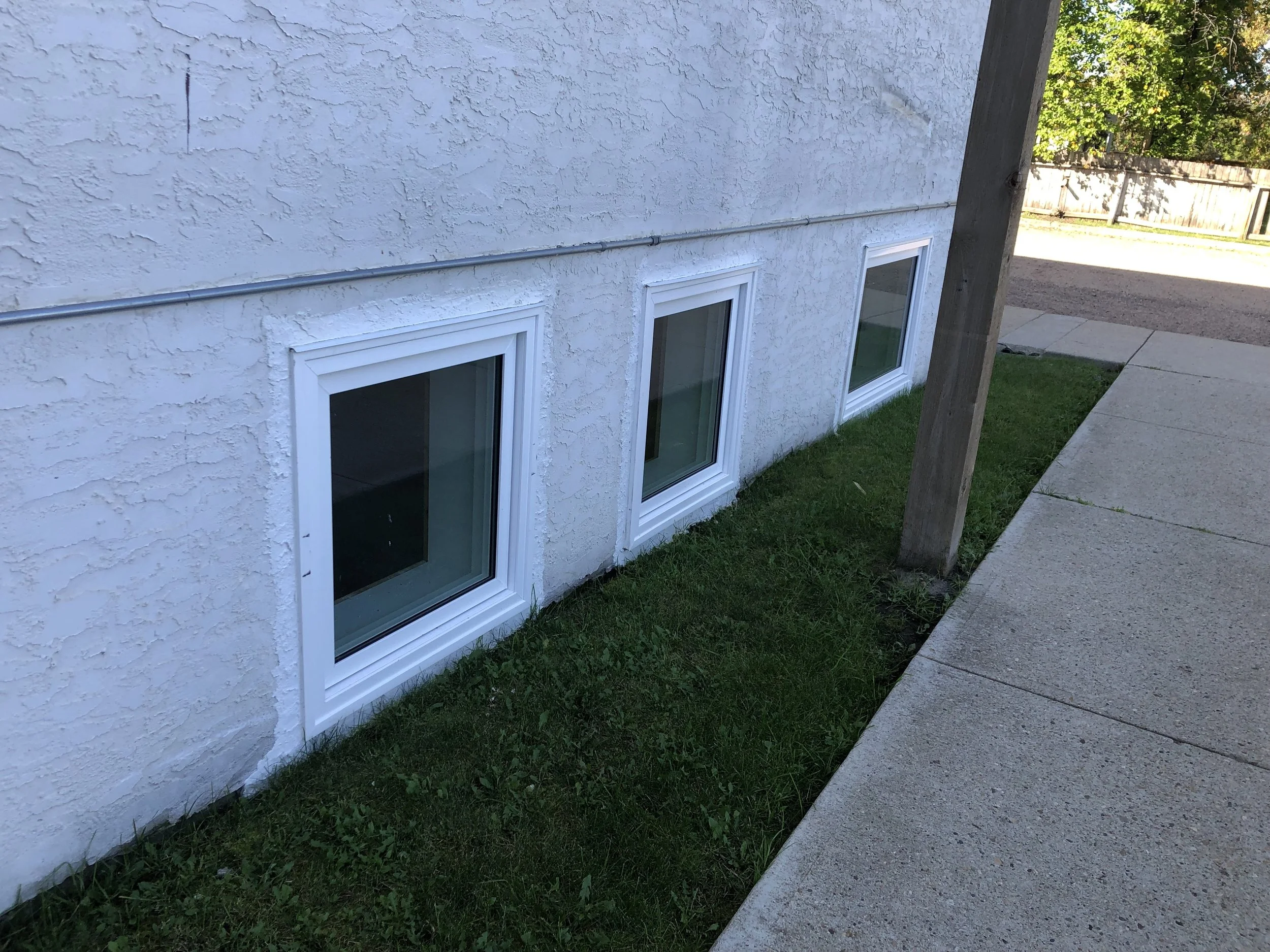
Improvements began with air sealing doors and windows using weather stripping and caulking. Lighting upgrades followed, with fluorescent fixtures in Building B replaced with LED fixtures. To reduce unnecessary energy use, heating in the office is now only turned on when the space is occupied. Aging furnaces from the 1990s were replaced with five new ENERGY STAR–certified Napoleon furnaces installed by a local contractor. Natural gas hot water tanks were removed and replaced with electric water heaters. Finally, window upgrades and insulation improvements were done in Building B’s basement and the hallway between buildings, where sealed windows were partially replaced with insulated walls and a new door, significantly reducing heat loss.
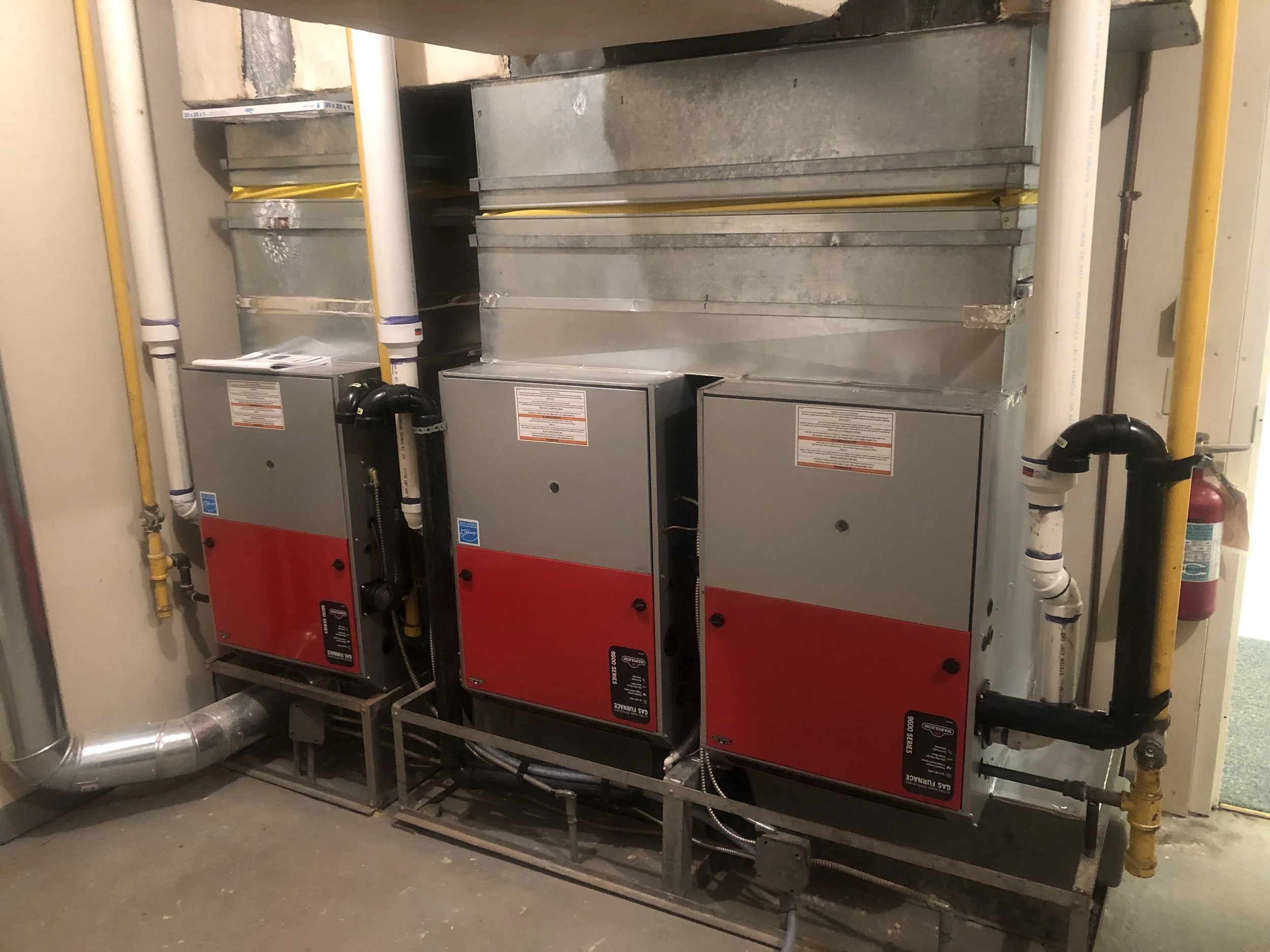
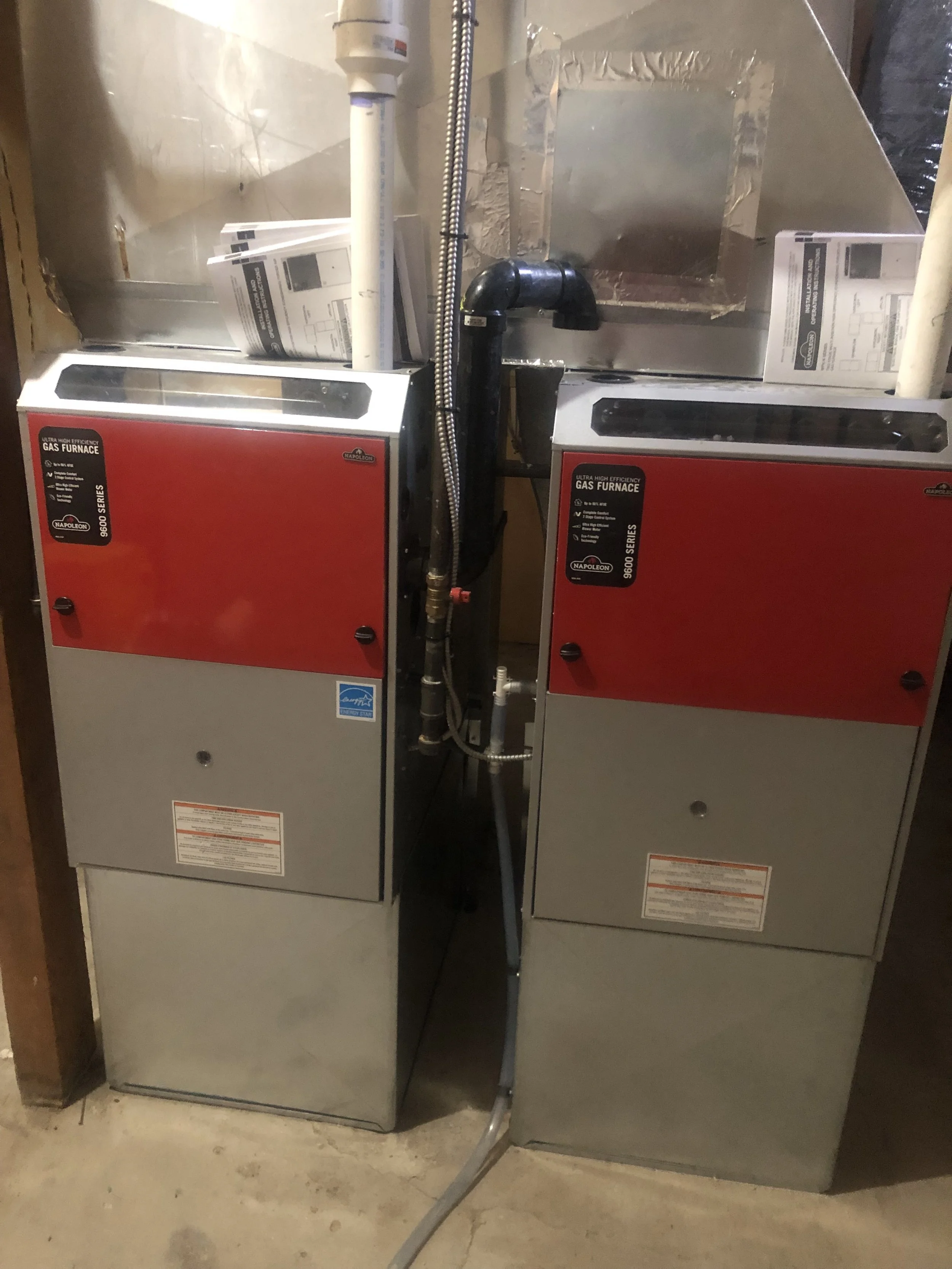

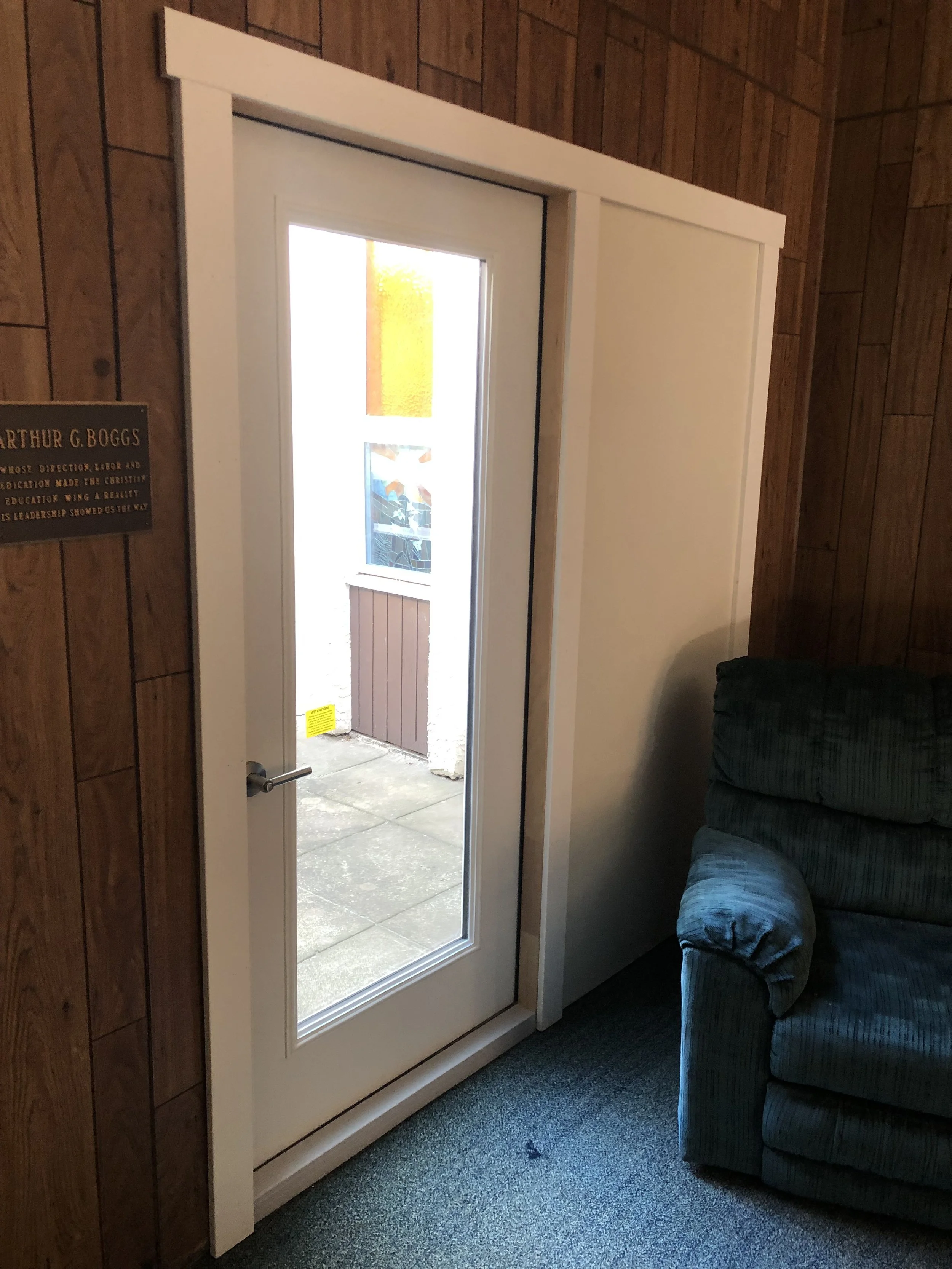
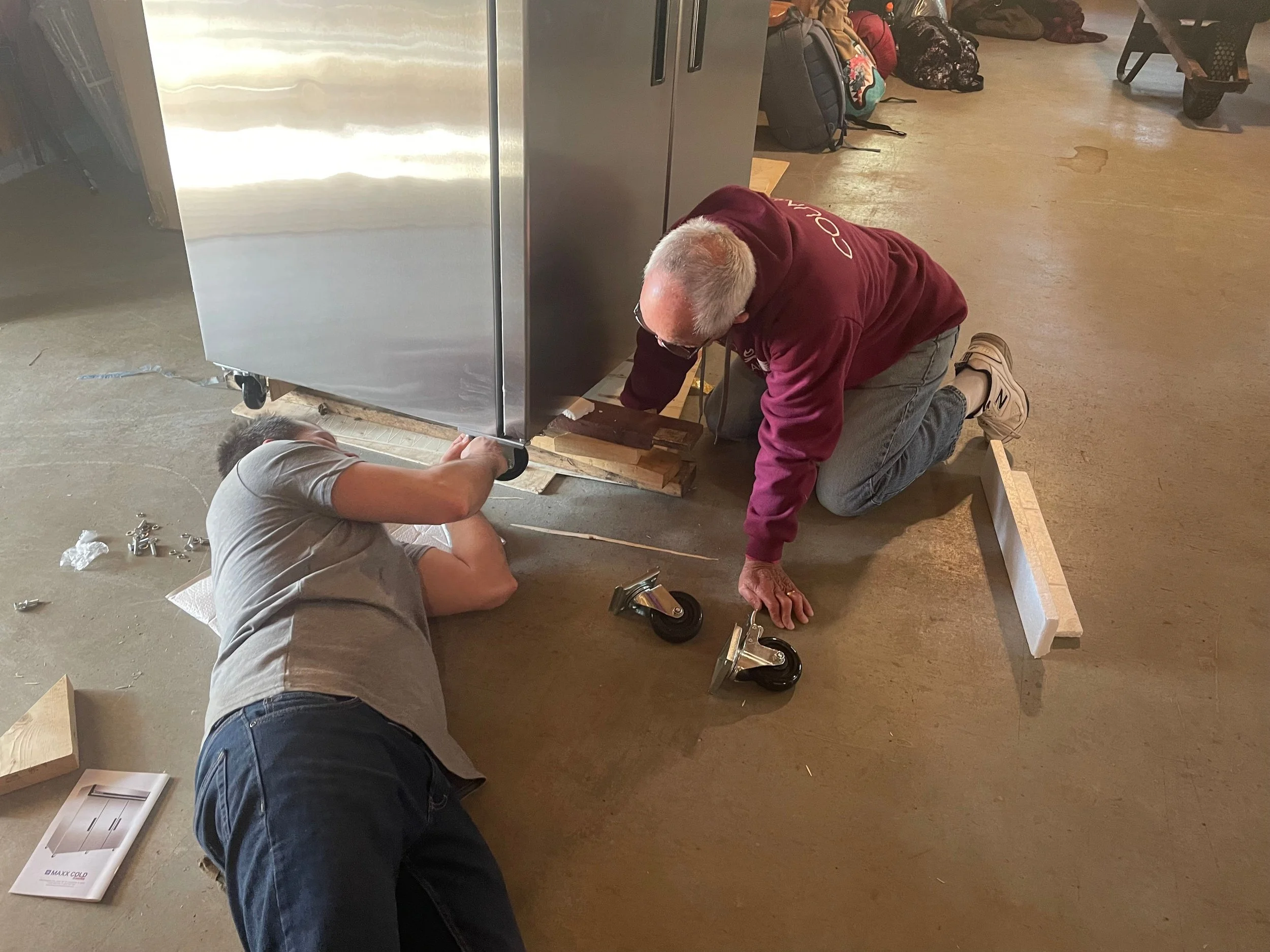
“Receiving the Faithful Footprints grant enabled our congregation to make more efficient use of the money that we spent on heating and powering our facility — making our building more economical as well as reducing our carbon footprint. The support allowed us to move forward into the future more confidently, now that our infrastructure is in tip-top shape” says Cunningham
Faithful Footprints Program
The United Church of Canada’s Faithful Footprints program offers inspiration, tools, and grants to help its faith communities reduce their carbon footprint. With the Church’s commitment to reducing its greenhouse gasses (GHG) emissions by 80% by 2030, this one-of-a-kind program offers up to $30,000 in grants towards energy conservation and renewable energy projects (conditions apply).
Faith & the Common Good is the delivery partner for the Faithful Footprints program. To date, we have engaged over 500 congregations, camps, and buildings across the country. Your participation in the program puts your faith into action and helps the Church reach its target.

More than Swapping Out Boilers: Fifth Avenue Memorial's Heating System Upgrade
In 2019, Fifth Avenue Memorial faced another critical project when its heating system unexpectedly failed. The scope of the replacement became larger than just simply swapping out its boiler and included a complete overhaul of its existing heating system.
Fifth Avenue Memorial United Church in Medicine Hat, Alberta has consistently demonstrated a willingness to step up and support important building projects in times of necessity. Historically, congregants have banded together to gather tens of thousands of dollars in a relatively short timespan. This collective effort has helped address projects such as the replacement of the church’s original roof, the repair and tuning of its pipe organ, and the restoration of its stained glass windows.
In 2019, the 1923-built church faced another critical project when its heating system unexpectedly failed.

Fifth Avenue Memorial United’s custodian’s dismay as she examines the damage to their failed steam boiler.
It all had to go
When the damage of their steam boiler system was assessed, it became evident that obtaining replacement parts would take between 8 to 10 months, and they would come at a steep price. It was revealed that even after repairs, ongoing maintenance would be necessary annually or biannually for the foreseeable future. Fifth Avenue Memorial United faced a daunting reality. The scope of the replacement became larger than just simply swapping out its boiler.
“It all had to go – The only realistic option was a total replacement. The old steam pipes were developing more pinhole leaks, the pipes were getting clogged up with corrosion and deposits, and the steam traps were, as often as not, corroded open, corroded shut, or corroded partially open.” explained Geoff Coley, Board Chair, Fifth Avenue Memorial United Church.
As a complete overhaul, Fifth Avenue Memorial United decided to replace its old, failed single steam boiler with a new hydronic heating system, with a set of three new and smaller, high-efficiency hot water boilers. This project would also involve all of the existing steam piping, steam traps, valves, and fittings being removed and replaced as needed along with removing the radiators in its basement.
“While the bigger than expected project came at an increased cost, the result is a system which is far more energy efficient than a simple boiler swap. Having three smaller boilers instead of just one gives us a safety net. If one boiler completely and suddenly fails, we will not be left without heat in the dead of winter while repairs are done.” noted Coley.
Delay in acquiring equipment & prolonged building shutdown
Upon receiving project funding approval of $30,000 from Faithful Footprints to help offset the total cost of nearly $200,000, Fifth Avenue Memorial United began their project immediately — amidst the challenging time of COVID-19.
The global supply chain disruptions led to delays in acquiring equipment, leaving parts of the building unheated throughout the winter months.
“We had a good part of one winter where we had exactly zero gas heat in the building - the old boiler had gaping holes in it and the replacement boilers had not yet arrived.”
Innovative solutions were implemented, including the relocation of activities to warmer spaces and the use of winter coats and electric heaters.
“The unfortunate timing of the heating system failure during the COVID-19 pandemic forced prolonged building shutdowns. This resulted in us having to work very hard to re-engage people to return to full attendance, full participation, and full giving. Fortunately we have a core of very faithful and dedicated people of all ages who are fully committed to seeing us rebuild and continue our mission.” shared Coley.
A Transformation in Heating Efficiency
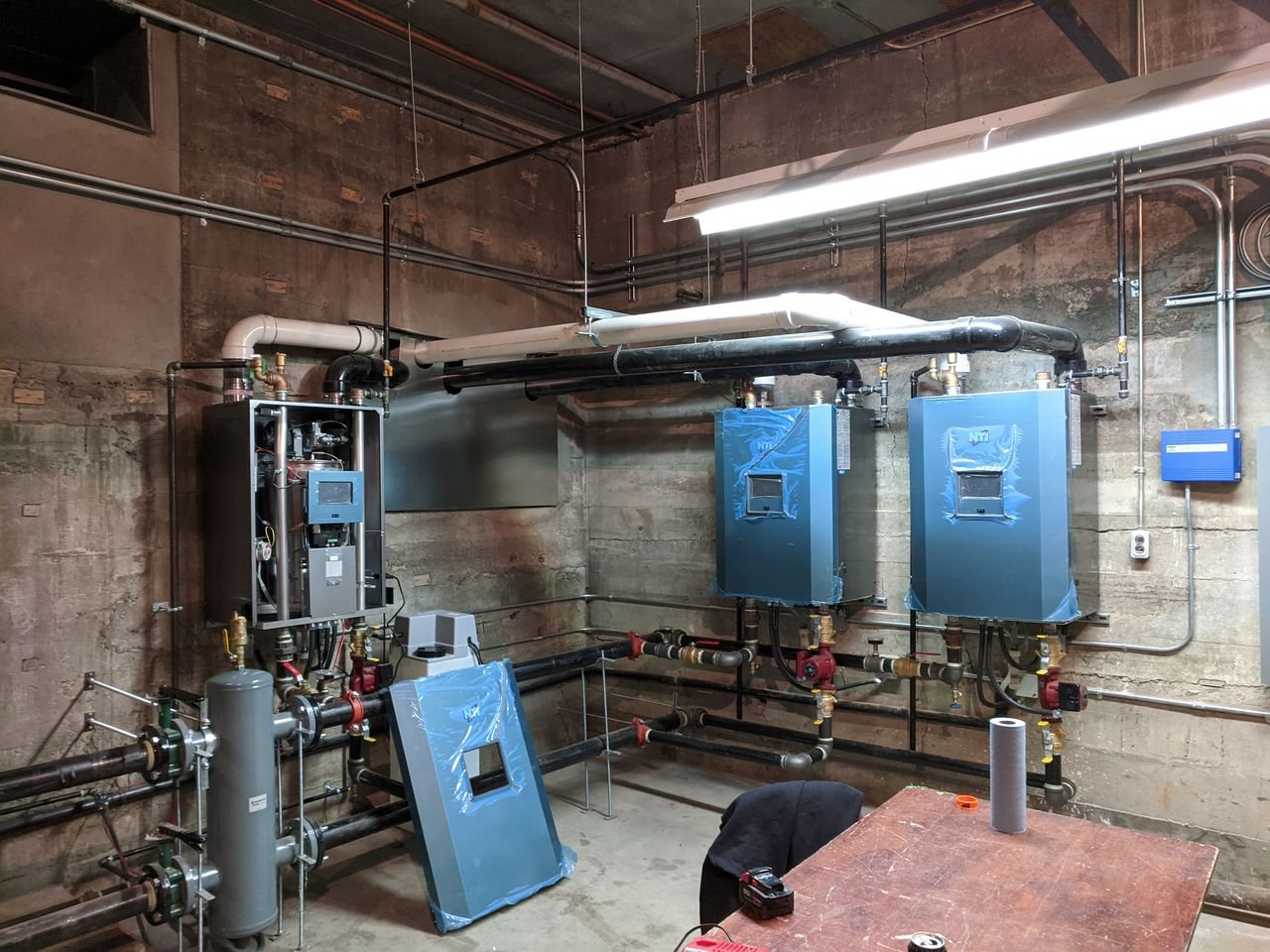
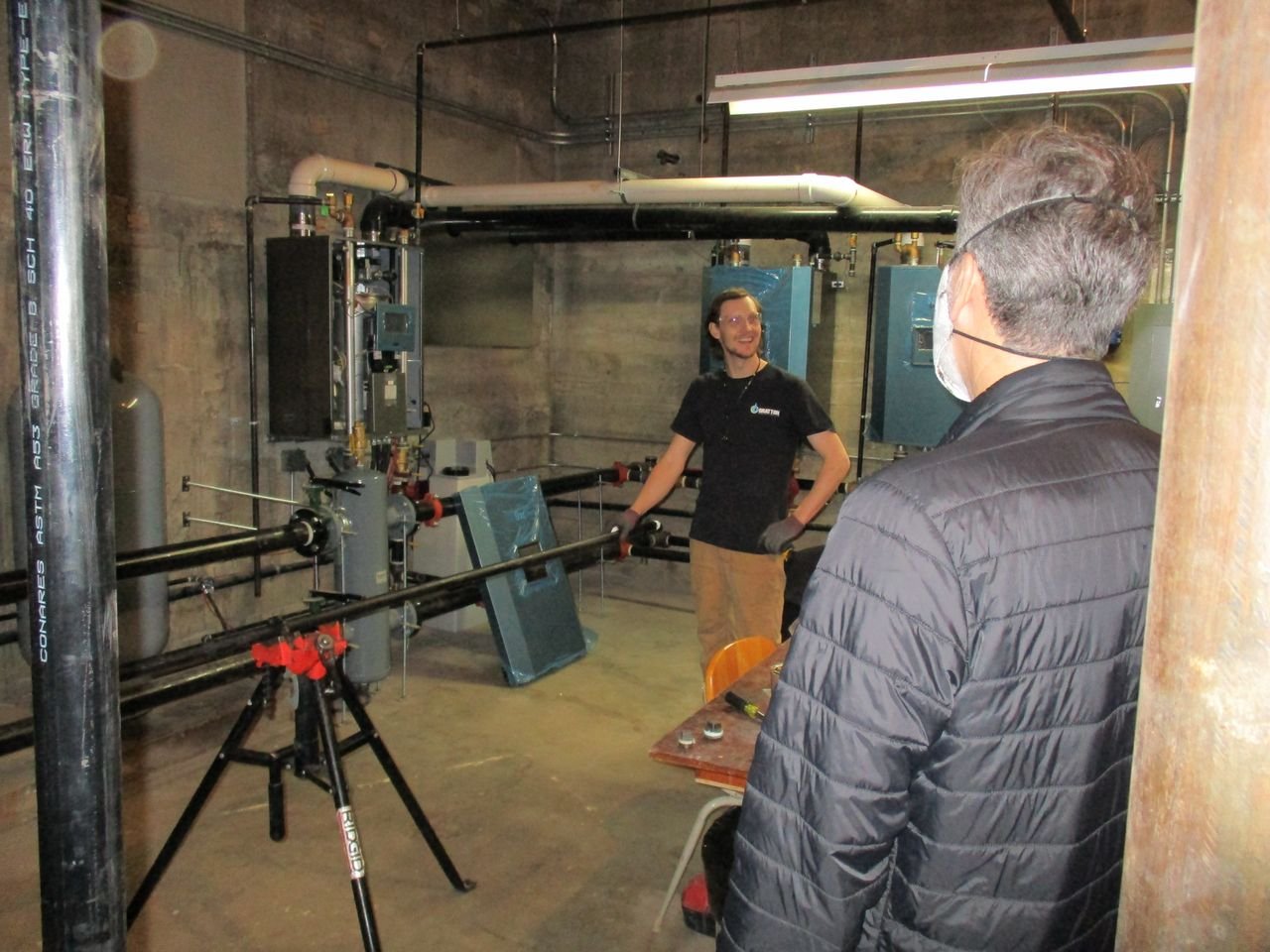
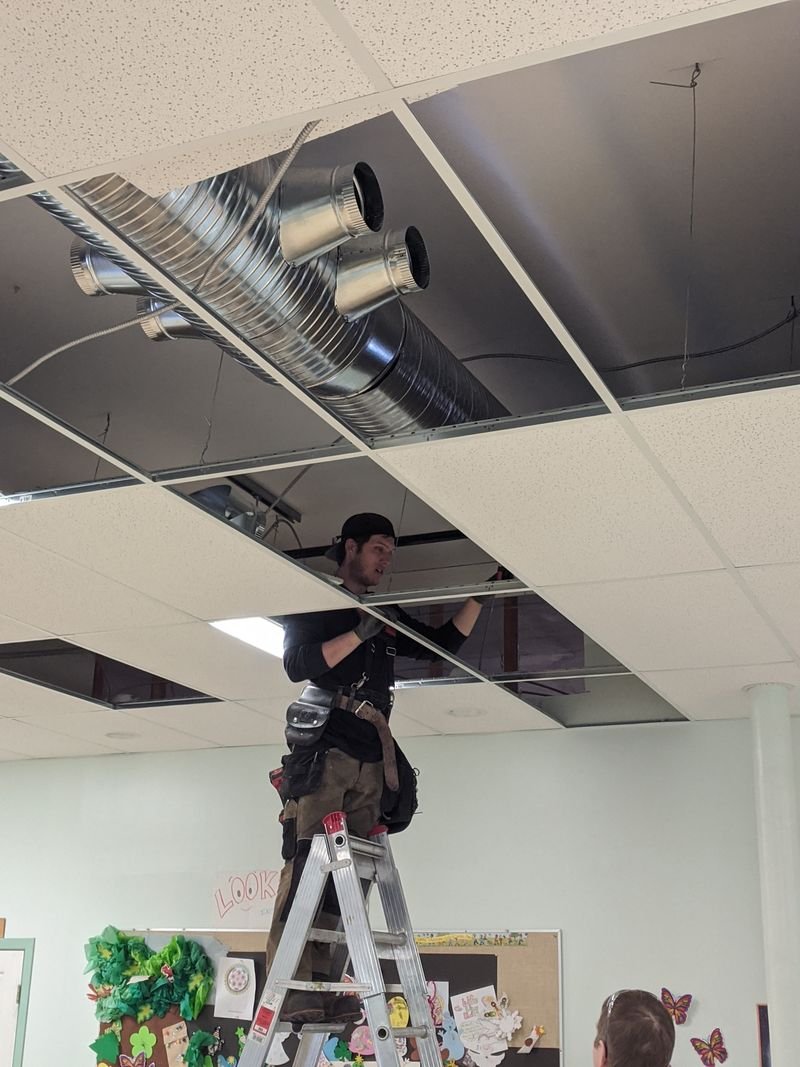
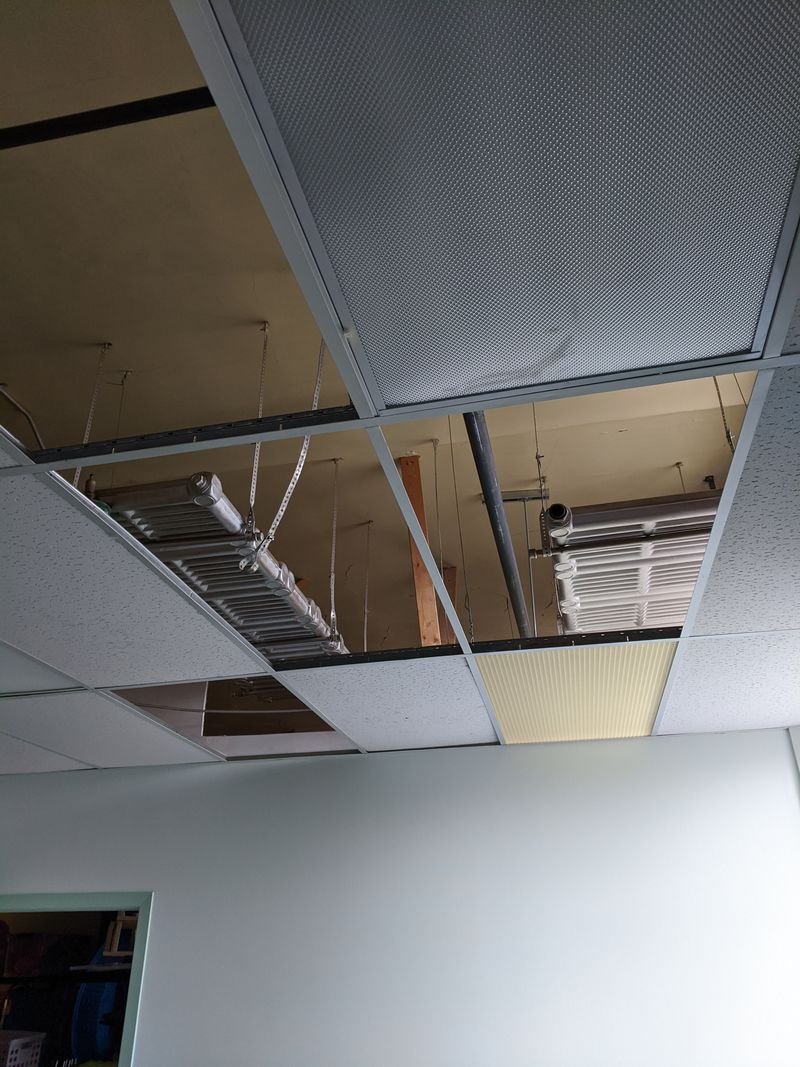
Following renovations, the sanctuary retained its familiar appearance while a significant upgrade to a new, highly efficient hydronic heating system silently improved the comfort and sustainability of Fifth Avenue Memorial United.
With a thermal efficiency rating of 94.5%, significantly higher than the old steam boiler's 79.9%, energy consumption has markedly decreased. The installation of brand-new, smooth bore pipes ensures optimal fluid conveyance, minimizing leaks and maximizing efficiency. Notably, the exhaust vents have undergone a drastic reduction in size, with each of the three new water boilers having a 4-inch vent compared to the previous 20-inch diameter vent. The switch results in a total vent area that is less than 15% of the size of the old exhaust, significantly reducing heat loss.
One year post-renovation, Fifth Avenue Memorial United achieved impressive environmental gains, including a 50.9% reduction in natural gas usage, a 46.3% decrease in total greenhouse gas emissions, and a 21.4% reduction in electricity consumption.
However, Fifth Avenue Memorial United’s heating system upgrade goes further than just environmental and climate impact reductions.
“Instead of using the money to pay utility bills; the savings from our new heating system will allow us to continue our support to the downtown community, social justice, and other areas of ministry and outreach. For example, being able to continue to offer space year-round for community events such as choir concerts, one of which has already been booked after a long drought caused by COVID-19 and a broken boiler. ” shared Coley
“Events such as these will give us the opportunity to showcase, not a new furnace, but a renovation that is reducing our carbon footprint. Each of these events will effectively be celebrations, and opportunities to share our story — that we not only have a warm sanctuary, but we have it in a way that is environmentally friendly and is going to cost us less in utility bills. It will shine a light on the various community and social programs that we can continue to support as a vital, involved, downtown church.”
Work Ahead
The larger boiler replacement project at Fifth Avenue Memorial United remains ongoing. Approximately $14,000 is yet to be covered for remaining tasks and unanticipated expenses encountered along the way. In the near future, the church plans to install a new forced air system on the basement level, hot water tanks that use heat from the boiler system, and programmable thermostats.
The new system will also provide improved zone-by-zone temperature control with programmable temperature setbacks. The newly installed system will eliminate the single-point-of-failure boiler with a modular system with backup capacity in case of a boiler failure. The new equipment is computer-controlled and can automatically troubleshoot any sudden issues remotely. This reduces the number of onsite service calls.
Looking ahead, the church is committed to further modernizing various systems through its building. This includes continuing its transition to energy-efficient light bulbs and electrical fixtures and exploring the possibility of solar panels on a section of its roof to help reduce its carbon footprint.
Faithful Footprints Program
The United Church of Canada’s Faithful Footprints program offers inspiration, tools, and grants to help its faith communities reduce their carbon footprint. With the Church’s commitment to reducing its greenhouse gasses (GHG) emissions by 80% by 2030, this one-of-a-kind program offers up to $30,000 in grants towards energy conservation and renewable energy projects (conditions apply).
Faith & the Common Good is the delivery partner for the Faithful Footprints program. To date, we have engaged over 400 congregations, camps, and buildings across the country. Your participation in the program puts your faith into action and helps the Church reach its target.
Aleyxa Gates Julien is the PR/Communications Coordinator for Faithful Footprints and can be reached at agatesjulien@faithcommongood.org.
Nurturing collaborations: Mckillop United in Lethbridge, Alberta
Across the country, United Churches are doing their part to address the climate crisis by getting their houses in order and reducing their own carbon emissions. Through a partnership with Faith & the Common Good, the United Church of Canada is offering grants and support for churches to measure their energy use and reduce their climate pollution, in ways that save money and strengthen congregational renewal.
Across the country, United Churches are doing their part to address the climate crisis by getting their houses in order and reducing their own carbon emissions. Through a partnership with Faith & the Common Good, the United Church of Canada is offering grants and support for churches to measure their energy use and reduce their climate pollution, in ways that save money and strengthen congregational renewal. The initiative, called Faithful Footprints is about living climate commitments, for future generations, and for all of creation. To inspire your congregation to get involved, we have stories from participating congregations from across the country.

Mckillop United Church in Lethbridge Alberta started with a modest proposal to renovate their kitchen which evolved into a 1.6 million dollar project.
Nurturing collaborations: Mckillop United in Lethbridge, Alberta

It started with a modest proposal for a kitchen renovation and evolved into a 1.6 million project.
“So much of our activities centers around food, so many initiatives grow from it,” says John Bolton, coordinator for the renovation committee at Mckillop United in Lethbridge, Alberta.
But for as long as he can remember, the congregation had been talking about a kitchen renovation, because they had an ancient stove out of the prisoner of war camp: “People were afraid to use it.”
Pushing to be a community hub, a federal New Horizon grant for Seniors helped pay for the kitchen. Moving on to the main hall, in terms of safety, they recognized the heating system as being antiquated; large, inefficient 1950 vintage boilers.

“The FF grant allowed us to do what we wanted to do,” says John. $30,000 funded two boilers. “What that means is that there is a significant reduction in our utility costs, allowing more funds to be directed into community outreach.”
Now, thanks to a FF grant and other monies, including fundraising, the church enjoys a commercial-level kitchen, high-efficiency furnaces, new inclusive washrooms, full-service elevator for accessibility, and several other infrastructure improvements.
Being a congregation with “a strong social justice conscience,” and the belief that they can do a lot to “make a better world,” (they work to uplift LGBTQ+ and Indigenous communities and are eco-focus, sitting as the only church on the Environment Lethbridge Committee), John says they really needed to move beyond the walls. “We couldn’t only be a Sunday morning service, we have too much potential for one day a week use.”

It was important that they look out for partnership options and organizations that mesh well with their faith pillars. “You have to look for partners that fit, they don’t just drop in your lap,” John says. Mckillop contracted with a consultant to help identify collaboration opportunities. In January of 2019, area organizations started to use the renovated facilities, including a meal-preparation program to address senior isolation, in cooperation with the Lethbridge Senior Community Organization. Coming up is the possibility for a similar program for disabled adults to run with L’Arche. “Next, we hope to continue to green the church, perhaps using solar panels--with government incentives.”
UCC Carbon Baseline Report
The United Church of Canada is committed to reducing its carbon emissions by 80% by 2050, in line with the Paris Climate Targets. With an initial focus on buildings – one of the church’s largest sources of emissions – the program Faithful Footprints will be working with 500 congregations by 2025 to reduce their energy use and energy costs.In 2016 the UCC General Council commissioned Caring for Creation, Our Communities and Our Congregations: The Case for a National Carbon Reduction Program for Faith Buildings. Faithful Footprints is the beginning of implementing those learnings.
As people of faith, we recognize that to bring truly inspiring climate leadership to our communities, we must practice what we preach. Together we can renew our congregations, care for the planet, save money, and stop climate pollution.
Stay tuned for a full feature of Faithful Footprints in the February 2020 edition of the United Church of Canada’s Mandate Magazine.

Parkdale United Creates a Change for Climate
We are inspired by the Biblical call to be good stewards of the Earth and by the warnings from the International Panel on Climate Change. We have the means to be part of the healing of the Earth. Here is what we have done so far.
Parkdale United Church in Calgary is working on Creating a Climate for Change
Pictured above are Parkdale Members Bev Delong, Eneyda Rios, Ken Coburn, and Ted Moon (left to right) getting ready to replace their old seven-pilot boiler.
The following is the text from their ‘Creating a Climate for Change’ brochure. Read more about Parkdale United in Calgary here.
We are inspired by the Biblical call to be good stewards of the Earth and by the warnings from the International Panel on Climate Change. Our community has shared books and movies further explaining the need to adapt to lessen our use of power and water. We have the means to be part of the healing of the Earth. Here is what we have done so far.
To learn about options, we engaged in an environmental audit in June 2012 by Stephen Collette organized through Faith & the Common Good resulting in recommendations for action.
To lessen our carbon output, Parkdale is:
Purchasing a boiler that will reduce our output by an annual 15 - 18 tonnes of CO 2
Anticipates the installation of solar panels will further reduce our CO2 production annually by 10 tonnes.
Plans that the auditorium roof insulation will reduce CO2 by a further 3.0 to 5.0 tonnes.
Switched many light fixtures to T8 compact fluorescent bulbs
Has replaced an elderly fridge with a more energy efficient model
Gas stopped use of the inefficient freezer in the main kitchen and
Installed foam gaskets for insulation in the exterior wall electrical outlets.
To lessen the volume of water treated, and conserve water, Parkdale has:
Installed five low flush toilets reducing water usage from 13 litres per flush to 6 litres
Water faucets have been checked to ensure there are no leaks and
1.5 GPM low flow aerators were installed to reduce hot (and cold) water consumption.
To create a healthier building, we have: moved to environmentally friendly clearing products & dishwashing liquid, removed a volume of old VOC-carrying paint cans from the church, and called for a “no-scent” policy among users of the building
To decrease production of plastics, and lessen waste going to the landfill, Parkdale has: called for called on users to minimize use of disposable dishes and cutlery and to not use styrofoam and placed paper recycling bins throughout the church.
To discourage the commercial production of water and in keeping with recommendations from the United Church of Canada, Parkdale has installed two filtered water systems and is encouraging all users of the building to use them rather than bottled water.
To enable paper recycling, paper recycling bins to be placed in conference rooms that are available for rental.
Next Steps? What would you suggest?
Are you interested in information on solar panels for your home? Perhaps you would like other information on environmental possibilities. Let us know!
Words of thanks!
Our gratitude goes to Parkdale Council, Parkdale’s Operations Committee and Faith and Justice Committee for their considerable work on these projects.
We acknowledge with thanks the financial support received from the bequest of Janet Tollefson and the work of the Committee that evaluated potential projects to be addressed by that bequest.
We also thank the people who regularly contribute to these projects at our monthly movie night.